THE iconic line from the Spider-Man comics – “with great power comes great responsibility” – is often quoted to death, yet few leaders in Malaysia have probably felt the weight of those words in recent weeks as keenly as Deputy Higher Education Minister Adam Adli.

On Feb 9, the Deputy Minister told Parliament that travel bans would be imposed on National Higher Education Fund Corporation (PTPTN) borrowers who fail to settle their loans. Youth activists were quick to draw comparisons with a statement he made in 2019, when he accused the fund’s then chairperson of “bastardising” PTPTN for suggesting a travel ban on borrowers.
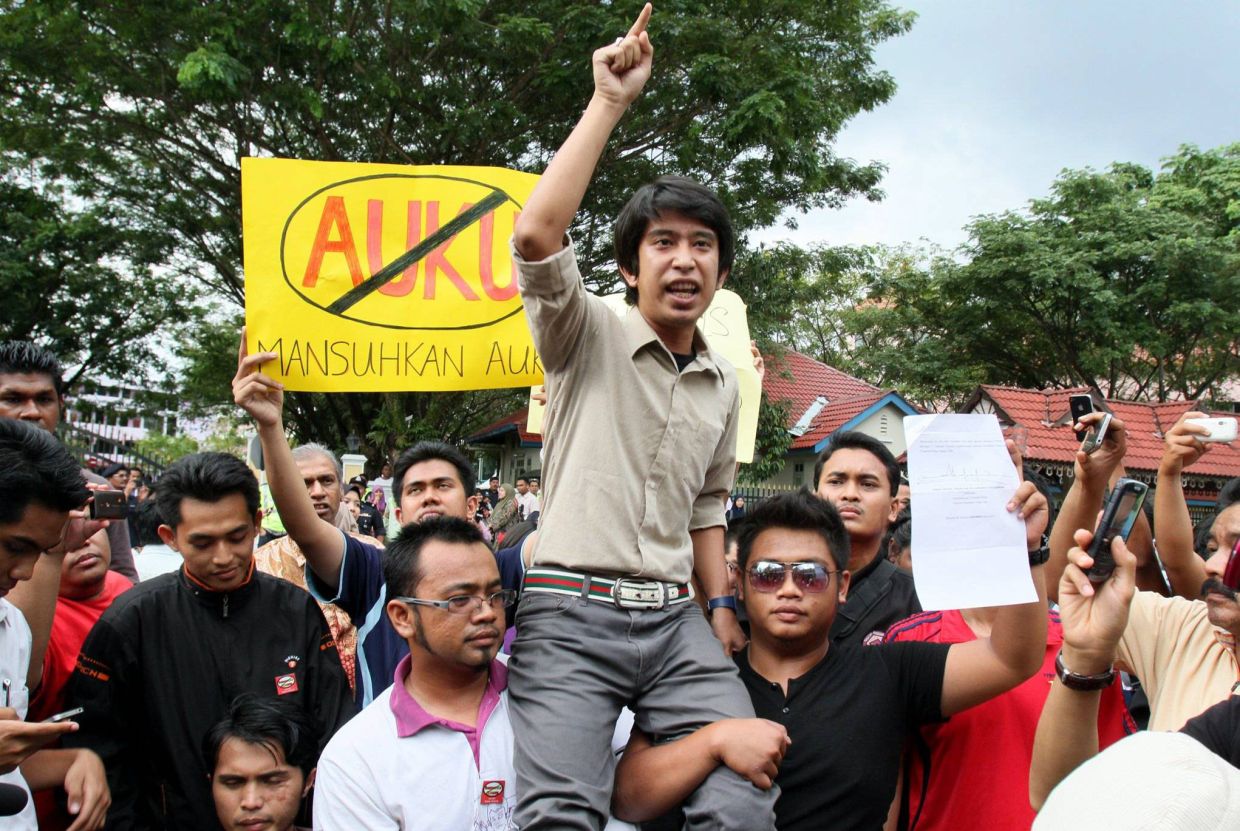
The same day, Adam received a memorandum from a group of over 40 students calling for the abolition of the Universities and University Colleges Act 1971 (UUCA). This came after the Higher Education Ministry said a week earlier that it had no plans to abolish the Act in its entirety, noting that the law had been amended eight times over the years.
To make sense of the particular scrutiny that Adam receives, you have to understand what his background is. Long before entering government, he rose to prominence as a student activist and outspoken critic of state power, most notably during his leadership in student movements that challenged restrictions on campus freedoms under the UUCA.
This lent Adam credibility among young Malaysians but also set high expectations once he crossed into formal politics. That activist past now shapes how his decisions are interpreted, and explains why shifts in his position are judged not as policy recalibration but as tests of principle.
Adam’s experience raises several questions. Does youthful idealism have to die upon entering governance, and are young people right to hold him accountable to once lofty principles?


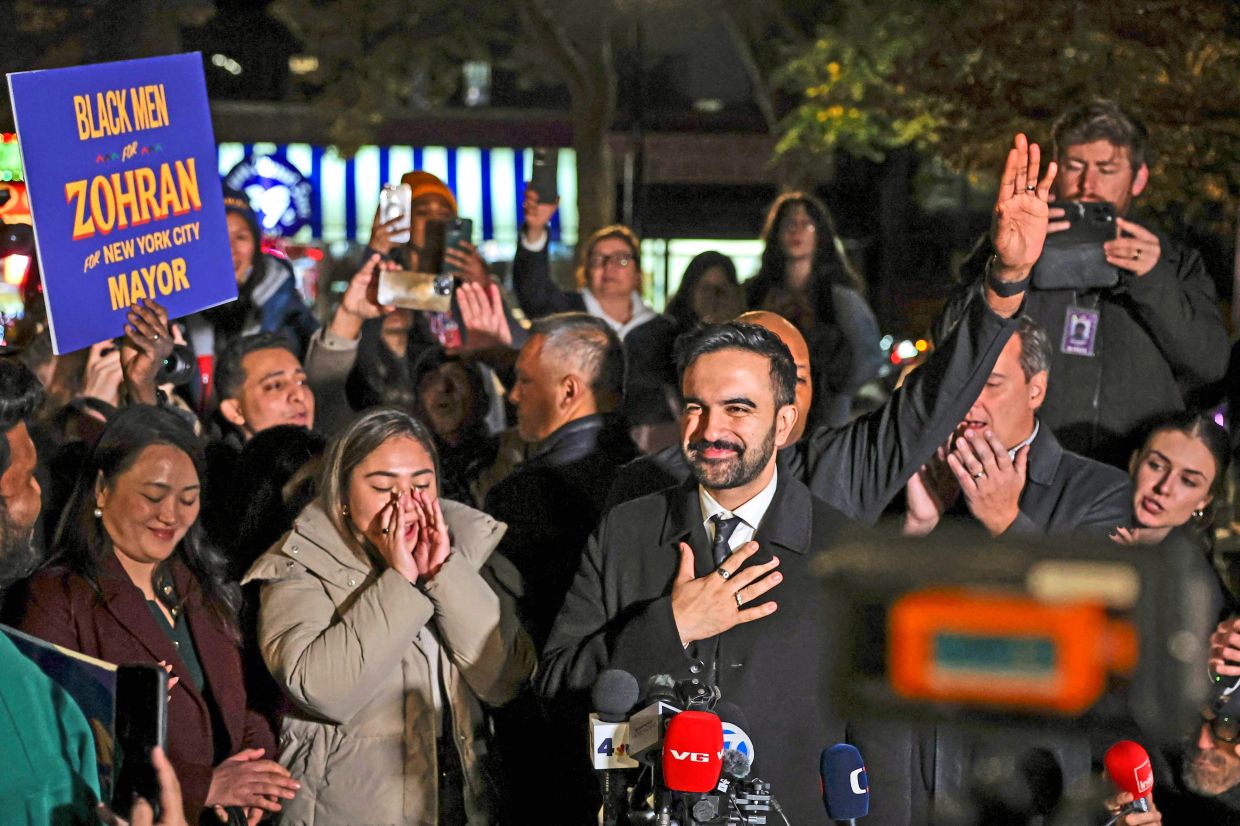
Recent developments in New York City gives me hope that the answer to the first question may not be necessarily true. The city’s newly-elected mayor, Zohran Mamdani, 34, ran on a progressive platform focusing on economic justice, with policies including rent freezes, free buses, and universal childcare.
Mamdani’s first month in office was characterised by an urgency to deliver on these promises, with key first steps including reviving tenant-protection mechanisms, signalling action against deceptive business practices, and leaning on executive authority to pursue quick, tangible gains. His governance, much like his campaign style, emphasised visibility and communication.
While these steps stop short of delivering on his more ambitious promises, they suggest a deliberate effort to translate progressive ideals into governance even as the more difficult tests of budgets, legislation and long-term delivery still lie ahead.
Observers who followed Mamdani’s campaign closely will concede that he is an extraordinary politician operating under equally extraordinary circumstances. Yet, this universal story of pushing for ideals within institutionally-inert systems and having to make compromises helps me view Adam’s predicament in a kinder light.
It shows that unfulfilled promises, especially ambitious ones, are hardly unique, and that more often than not the expectations of young voters do collide with the realities of coalition politics and legal constraints.
Yet it must be acknowledged that the unease among young Malaysians is not rooted solely in unmet policy demands. My peers, some of them student activists, share that it stems from a deeper concern about continuity; whether those who once spoke with moral clarity can still articulate what they stand for, even as the tools and timelines of power change.
Accountability, then, should not be mistaken for hostility. To interrogate Adam’s present positions against his past statements is not to deny him the right to evolve, but to insist on transparency about that evolution. Deflection will only deepen cynicism, particularly among a generation already sceptical of political sincerity.
A more constructive path forward lies ahead for Adam, for reformists more broadly, and for the youths who continue to invest their hopes in political change.
For Adam, and others who enter government carrying activist histories, the task is one of moral legibility. What struck me most about Mamdani was his ability to prioritise incremental, visible actions that signal intent and maintain public trust. Governance inevitably involves trade-offs, but clarity about first principles and red lines helps preserve continuity between past convictions and present constraints.
Reform also requires work within institutions. Change is often slow not only because of resistance, but because reformists underestimate the effort needed to build state capacity from within. Incrementalism, when guided by clear intent, can be a practical way of advancing them within resistant systems.
Youth, too, bear responsibility. Holding leaders to account should not mean freezing them in time or treating every compromise as bad faith.
Scrutiny is most effective when paired with policy literacy, including an understanding of laws, budgets, and political constraints, rather than moral outrage alone.
More constructively, young people can engage the state without being absorbed by it. Sustained involvement through research, consultation, civil society, or public service can narrow the distance between demands and delivery.
The challenge for the young generation is not to abandon idealism when it meets power, but to refine it. Leaders must show that compromise does not mean surrender, while youths must learn to hold accountability thoughtfully. If both succeed, youth idealism may yet become the engine of meaningful reform rather than its casualty.
Malaysian youth advocate Jonathan Lee Rong Sheng traces his writing roots to The Star’s BRATs programme. The views expressed here are solely the writer’s own.