
AS a winter cold snap grips Germany, Berliners have been slip-sliding on ice-covered footpaths, driving a heated debate on whether the capital should use environmentally damaging salt to melt away the hazard.
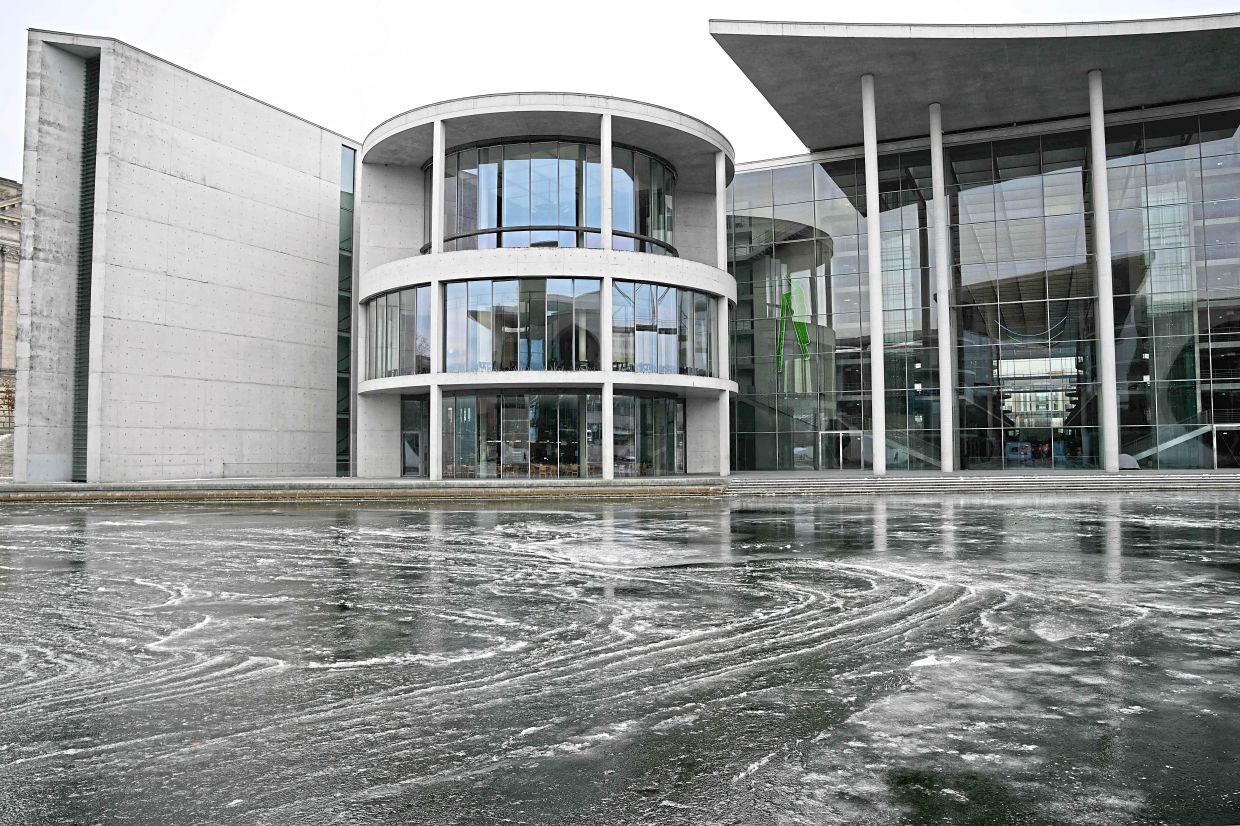
Snow, sleet and occasional icy rains have frozen over to cover much of Berlin in thin slabs of ice, which hospitals report have led to a spike in falls and injuries.
“I’ve already fallen about 10 times for sure,” said Italian student Francesca Veronese, who was considering buying crampons because navigating Berlin footpaths had become “very, very dangerous”.
The Berlin fire department reported a daily record of 2,270 emergency calls, media reported.
While German municipalities used to allow citizens to sprinkle salt on frozen walkways, this was banned years ago, in favour of just gravel, as the corrosive salt is known to attack the roots of trees.
Hamburg and other cities have now temporarily suspended the salt ban – but in Berlin, legal action by an environmental group stopped this recently. A court upheld a ban on people sprinkling salt outside their homes and businesses.
Melanie von Orlow, Berlin head of the environmental group Nabu Berlin, which filed the case, defended the salt ban.
“Road salt is a major environmental problem,” she said, adding that “trees die off after prolonged exposure”.
Salt also damages buildings, vehicles and other objects, she said, and presents “a problem for animals. Pet owners notice it on their paws. It’s simply corrosive”.
The court ruling sparked much political infighting, with the Greens party accusing the conservative mayor, Kai Wegner, of having failed to prepare for the winter hazard, and the far-right AfD labelling it a “slap across the face” for city officials.
Most Berliners have been left concentrating on getting to and from work without injury, and some can barely contain their anger.
“Yes, salt has become a political issue,” fumed Marc Ruediger, a playground inspector.
“It’s disgraceful, it’s embarrassing for a European capital that we can’t solve this problem.
“It’s an emergency, so I’d just spread it (salt). And if they say it’s not good for the trees, well ... people could die.”
Retiree Werner Strub agreed that “the conditions are so unusual that you can make an exception, because hospitals are full of people with fractures”.
Even a prominent Greens MP, Ricarda Lang, criticised the court ruling as “madness” on X, writing that “some elderly people no longer leave their homes because they are afraid of injuring themselves”.
With more ice rain forecast, the German Weather Service, meanwhile, has advised pedestrians to keep safe by wearing non-slip shoes and adopting a “penguin walk” with small steps. — AFP