THE beaver that would one day be named June was simply doing what beavers do.
Her dams, built around a lodge in Utah’s Bear River Mountains, slowed a stream and spread water across the landscape.
To June, it was instinct. To a nearby rancher, it was a problem. Flooding, he said, had caused his sheep to get stuck in the mud.
That was enough to land June in the grim category of “nuisance beaver”.
In much of the United States, that label still comes with a death sentence.
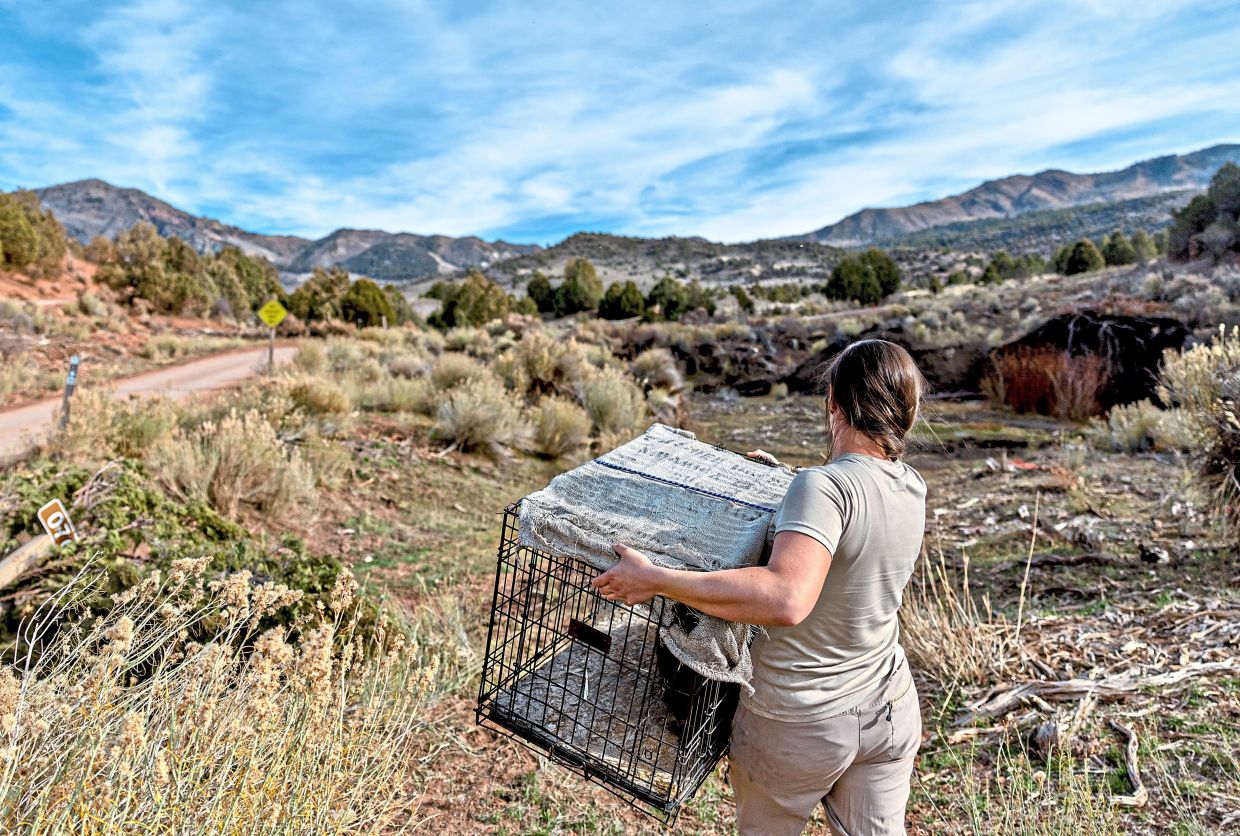
Instead, June was recruited. She was live-trapped, quarantined and released in a different watershed, part of a growing effort to harness beavers’ engineering skills to restore degraded streams across the American West.
Beavers have an unmatched drive to slow flowing water and create ponds – and the teeth, tails and instincts to make it happen.
Their dams reduce run-off, recharge groundwater, trap sediment, create habitat for fish and wildlife and carve out pockets of moisture in a drying landscape.
As wildfires intensify and drought deepens, beavers are being reimagined not as pests but as partners.
“They keep water on the land,” said Teresa Griffin, a wildlife manager with the Utah Division of Wildlife Resources. “People are really starting to see the value.”
Utah is among a growing number of states, tribes and conservation groups leading the country on beaver relocation.
While the animals remain controversial, Griffin said interest has surged.
“At first, we were just doing this in the south-west corner of the state,” she said. “Now everybody else is getting on board and becoming beaver believers.”
Coexisting with beavers is widely seen as the best option.
Relocation carries risks, including stress, predation and the possibility that animals simply leave their new homes. Where possible, managers try to modify infrastructure instead.
Simple devices can prevent water from rising too high behind dams, while fencing protects tree trunks and shields culverts and drains.
“Education should be the No. 1 priority,” said Shane Hill, who has worked on beaver-driven restoration with Utah’s wildlife agency and the non-profit Sageland Collaborative.
Still, when landowners are adamant that beavers must go, relocation can offer a second chance.
In Utah, captured beavers are quarantined for a minimum of 72 hours to prevent the spread of disease and invasive species between watersheds. That means temporary housing.
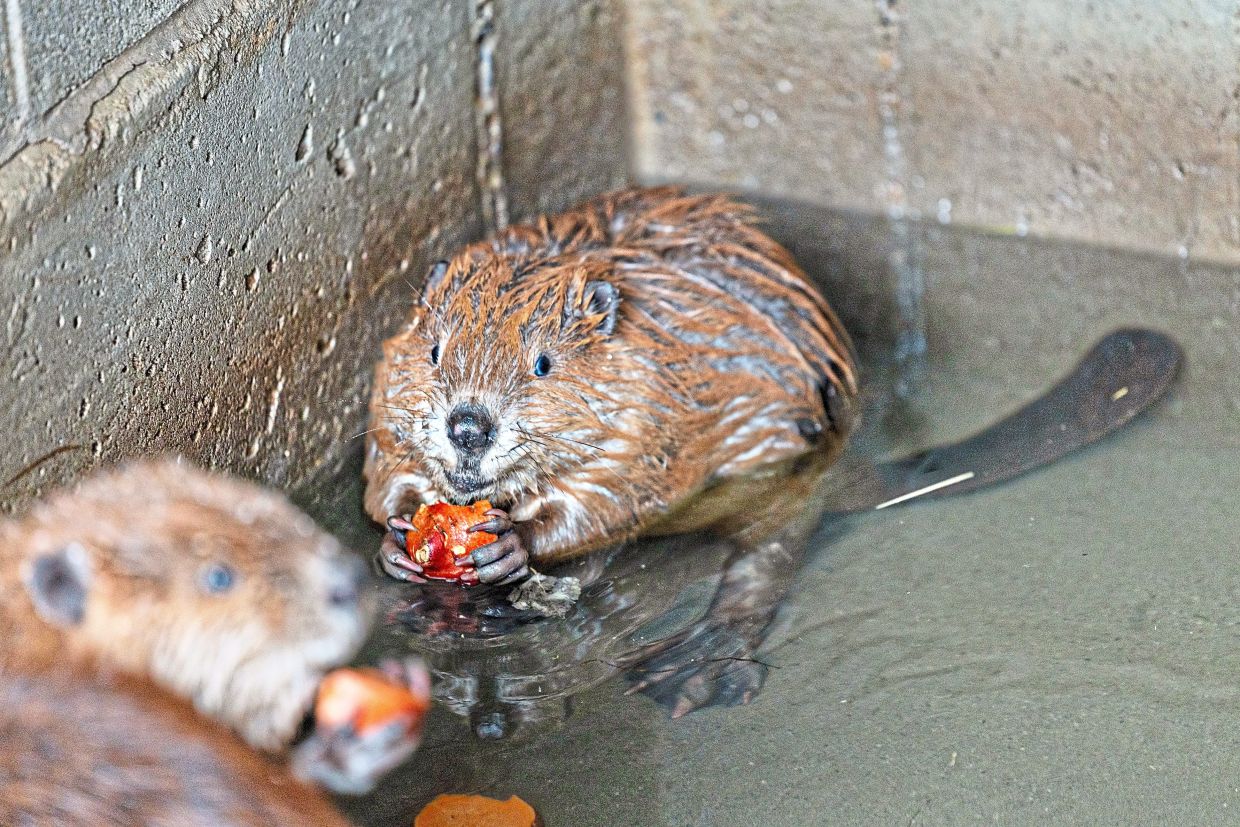
In the south of the state, beavers cool their heels in two donated hot tubs, filled with cold water. In the north, near Logan, they are checked into the Beaver Bunkhouse – a series of concrete basins run by the Beaver Ecology & Relocation Collaborative, a programme established by Utah State University.
That is where June arrived.
On check-in, beavers are examined for injuries, weighed, given microchips and – crucially – named.
Determining their sex is not straightforward – beavers show no external differences, and the process involves expressing a gland and checking scent and colour.
“It’s very interesting,” said Becky Yeager, the bunkhouse’s facility manager. “But it’s important for us to know the sex.”
Beavers mate for life and form tight-knit family units.
When possible, trappers aim to capture and relocate entire families, which are more likely to stay put. With single animals, managers try to ensure a mix of males and females at release sites.
“It does give us an opportunity to play matchmaker,” Yeager said.
Before European colonisation, beaver wetlands blanketed vast areas of North America, shaping the continent’s hydrology. By the late 19th century, the fur trade had nearly wiped the species out.
Reintroductions followed, some of them creative – including a 1948 project in Idaho that parachuted beavers into remote backcountry.
Today, an estimated 15 million beavers live in North America, far below historic numbers that may have exceeded 100 million.
Nick Bouwes, an aquatic ecologist and co-founder of Utah State’s beaver collaborative, came to relocation through frustration.
He and colleagues had been building wooden structures designed to mimic beaver dams, hoping to kick-start stream restoration.
Then the beavers showed up and did it themselves.
“I started seeing what beavers could do and how fast they could do it,” Bouwes said. “Our structures – we’re just children playing in the sandbox compared to what they’re doing.”
The collaborative now relocates about 60 beavers a year with Utah’s northern wildlife office. The southern office moves around 30 annually, while the central office jumped from single digits in recent years to 26 this year.
Many more beavers are still killed.
In Utah alone, hundreds are trapped lethally each year. Across the United States, the federal government killed more than 23,000 beavers in 2024.
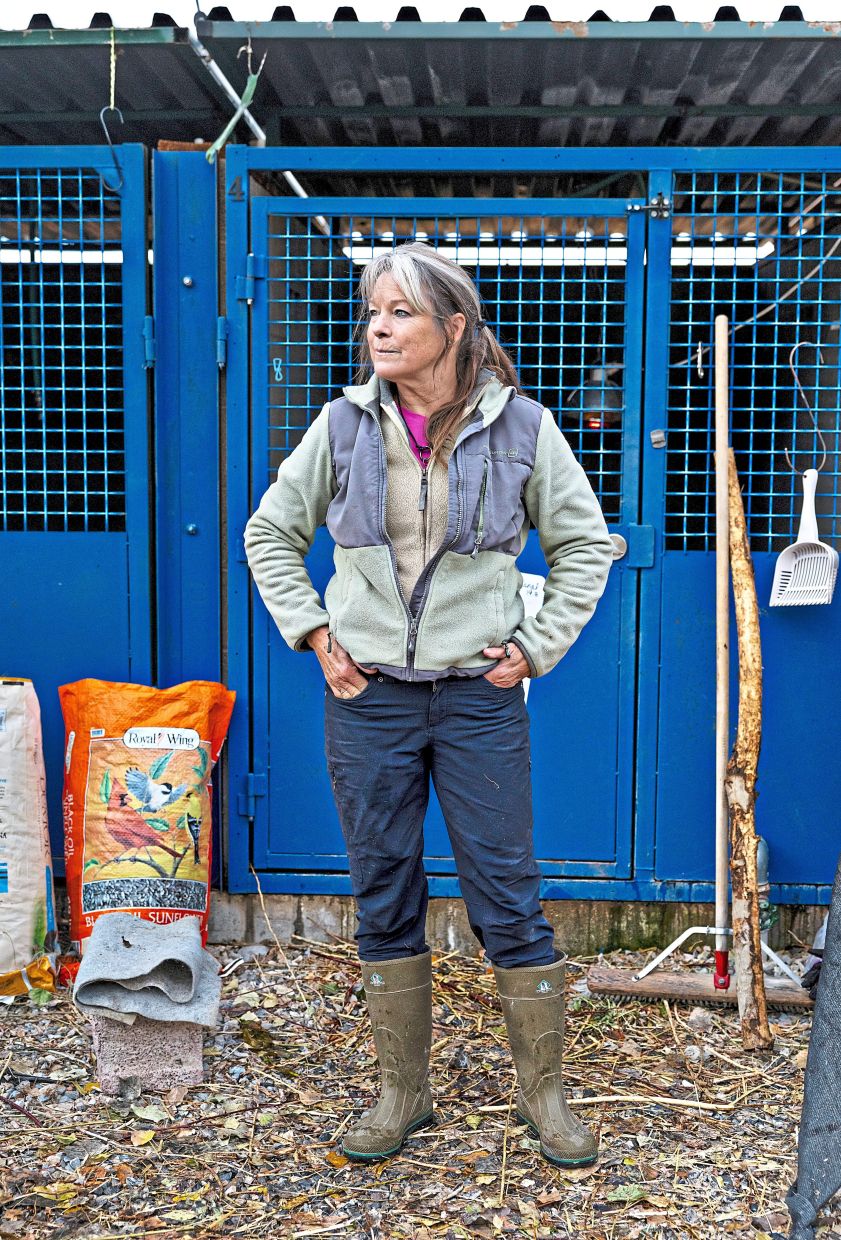
Ambrie Darley, a hunter and trapper in northern Utah, once used lethal traps that snap shut with brute force. It was easier, she said.
But in 2021, she and her late husband began working with the university collaborative, live-trapping beavers instead.
“I’ll be honest, this did turn us around,” Darley said. She no longer kills beavers.
“It’s rewarding when something can be useful somewhere else.”
The animals that get into the most trouble are often young beavers recently pushed out of their family groups, said Nate Norman, lead biologist for the collaborative.
“They’re looking for a mate and a new home,” he said. “They wander onto someone’s property and start taking down trees.”
What happens after release remains the biggest question.
Tracking beavers is notoriously difficult.
Radio transmitters placed in their tails are quickly gnawed off, and both the state and the collaborative have largely abandoned the approach.
Research suggests relocated beavers face high risks from predators such as mountain lions and bears, and many leave their release sites altogether.
Success, Norman said, hinges on choosing the right habitat – degraded enough to benefit from beavers, but not so barren they cannot survive, and not already saturated with territorial neighbours.
Norman is now working with biologists Alex Fortin and Natalie D’Souza on a new method – analysing satellite imagery to detect changes in waterways after beavers are released.
The project is only halfway complete, but the early signs are encouraging.
Among the success stories is June.
Trapped in 2022, she was released into the Raft River Mountains, where biologists hoped beavers would help restore streams and create habitat for Yellowstone cutthroat trout.
Three years later, satellite images showed widened waterways. Field visits confirmed more.
June had established a family and engineered new ponds.
On one trip, D’Souza and Fortin found anglers casting lines into water that did not exist before.
One after another, they pulled out Yellowstone cutthroat trout. — ©2026 The New York Times Company
This article originally appeared in The New York Times.