
DRAFT officers picked up Ivan at a traffic stop and dropped him at a training base.
Three days later, he went absent without leave. Since then, the 42-year-old has been hiding at home in Vylkove, a small town on the Danube in southern Ukraine, rarely venturing outside.
Almost four years into Russia’s full-scale invasion, Ukraine faces the twin challenges of insufficient troops and widespread draft avoidance.
Men aged 25 to 60 either break laws restricting them from leaving the country or play a cat-and-mouse game with conscription officers. Many simply hunker down at home.
Vylkove, a run-down fishing port often called “the Venice of Ukraine” for its canals, has become a microcosm of this trend.
“Who’s left?” Ivan asked on condition of anonymity. “Women, the elderly and men who try not to go out unnecessarily.”
National identity is weak here. The region has changed hands repeatedly – Ottoman Empire, Russia, Romania, Germany, the Soviet Union and Ukraine again.
Enthusiasm for the war is low, even though some men have gone to fight. The proximity of Romania and Moldova makes escape tempting, though deadly for some.
“Even well-prepared people got caught in currents,” said Major Oleh Mukomela of the border guard. At least 70 men have died nationwide attempting to cross rivers or marshes to flee conscription.
Vylkove’s geography – hemmed in by rivers, marshes and roadblocks – makes escape difficult. Only one road leads out, patrolled by border guards, and a highway connecting to Moldova requires passing checkpoints. Another route to Odesa was cut off when Russian bombardment destroyed a bridge.
Mariners sometimes leave for work at sea and do not return; their families visit them across borders.
Those who skirt checkpoints may dash on foot through gardens or enlist the help of criminal networks, paying steep fees to leave illegally. The consequences of draft evasion are severe.
Prosecutors have opened 290,000 cases for desertion or absence without leave. Ukrainian commanders warn that gaps in front-line positions, caused by troop shortages, enable Russian advances.
Yet Southern Bessarabia, including Vylkove, is different.
Much of the population is Russian-speaking, descended from “Old Believers” who fled persecution centuries ago. Distrust of authority runs deep.
Historian Volodymyr Poltorak called them “in a way, anarchists”.
Out of nearly 8,000 residents when the war began, only about 5,000 remain. Many of the town’s men of draft age never leave home.
“The world has shrunk completely,” said a nearly 60-year-old man, speaking anonymously. To cope, he keeps busy picking figs from his tree and making jam.
Women, meanwhile, have stepped into traditionally male roles, including fishing, which sustains the town’s economy.
The number of fishermen has fallen from 700 to about 70, mostly over 60, according to Mayor Matviy Ivanov.
“It’s women everywhere,” he said. “They enjoy it, they’ve taken over every sector and now they’re in charge.”
Two sisters – Antonina Bilovolenko, 67, and Klavdiia Moskvichova, 63 – are among the women hired by a local fishing company.
“We love it, love it above all jobs,” Moskvichova said. Before the war, such positions were closed to women; now labour shortages have opened doors.
War has also battered the town’s tourism industry.
Pelican, a company leaning into the Venice comparison, employed 50 before the invasion.
Today, it has 20 workers, mostly women and older residents, said owner Mykhailo Zhmud, 66, himself too old to draft.
The company’s mechanic is in hiding.
“When I call him, he says, ‘Let me first check if there are draft officers in town,’” Zhmud said.
Vylkove’s story underscores the broader dilemma Ukraine faces: a country sacrificing so much, yet contending with a generation of men who vanish from sight rather than serve.
For those left behind – women, older workers and the elderly – it has meant taking on new responsibilities, reshaping lives and livelihoods in a town where the war’s impact is felt in every street, canal and fishnet. — ©2025 The New York Times Company
This article originally appeared in The New York Times
Life at war
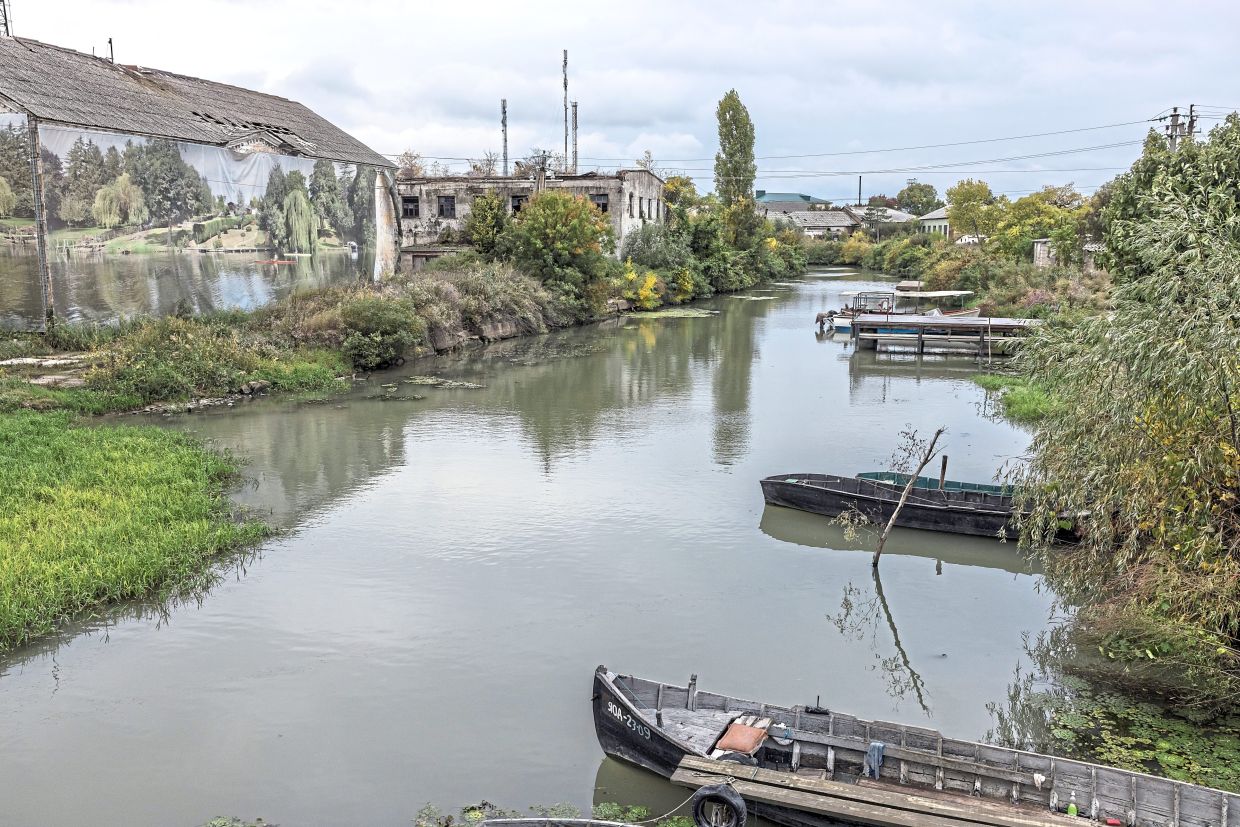
A canal in Vylkove, southwestern Ukraine. National identity is not so deeply rooted in the region, which has changed hands repeatedly between countries.
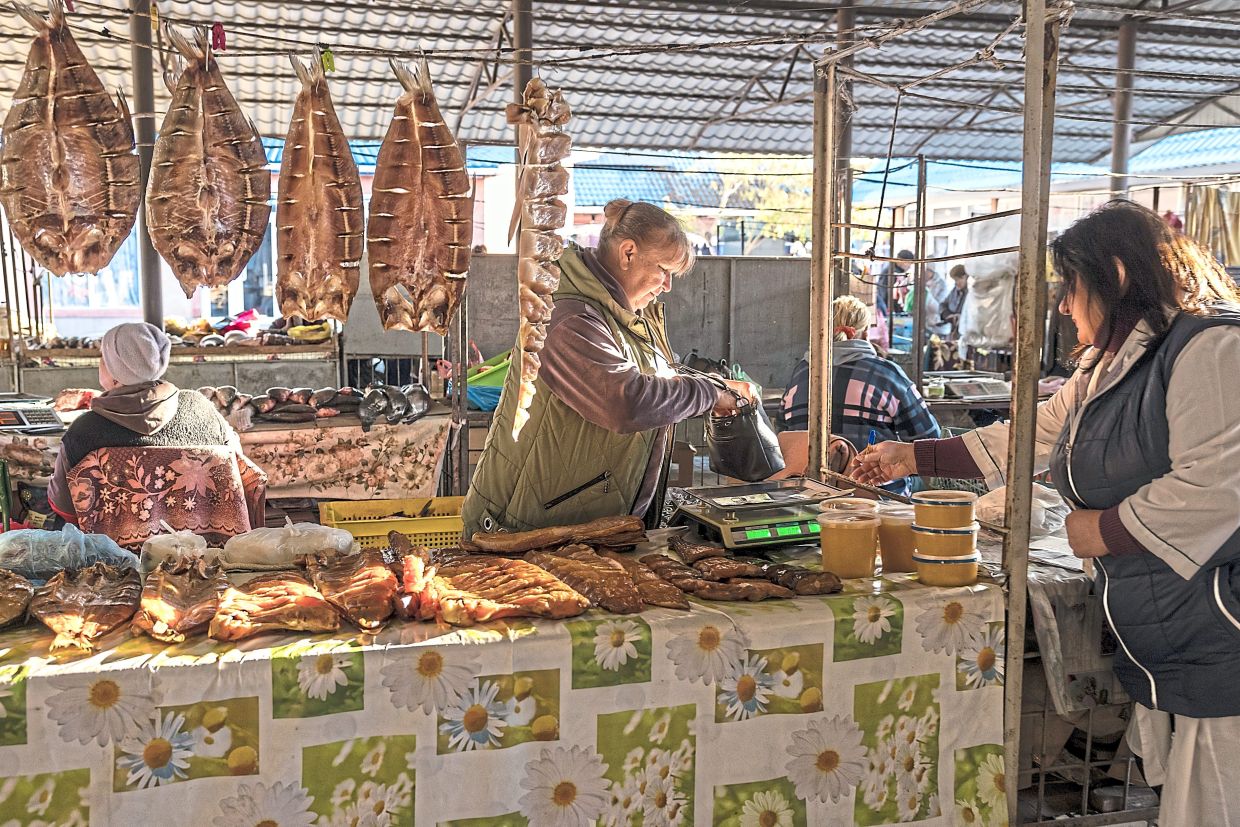
A stall selling smoked fish in Vylkove. Women can come and go freely in the town. — Photos: Oksana Parafeniuk/The New York Times
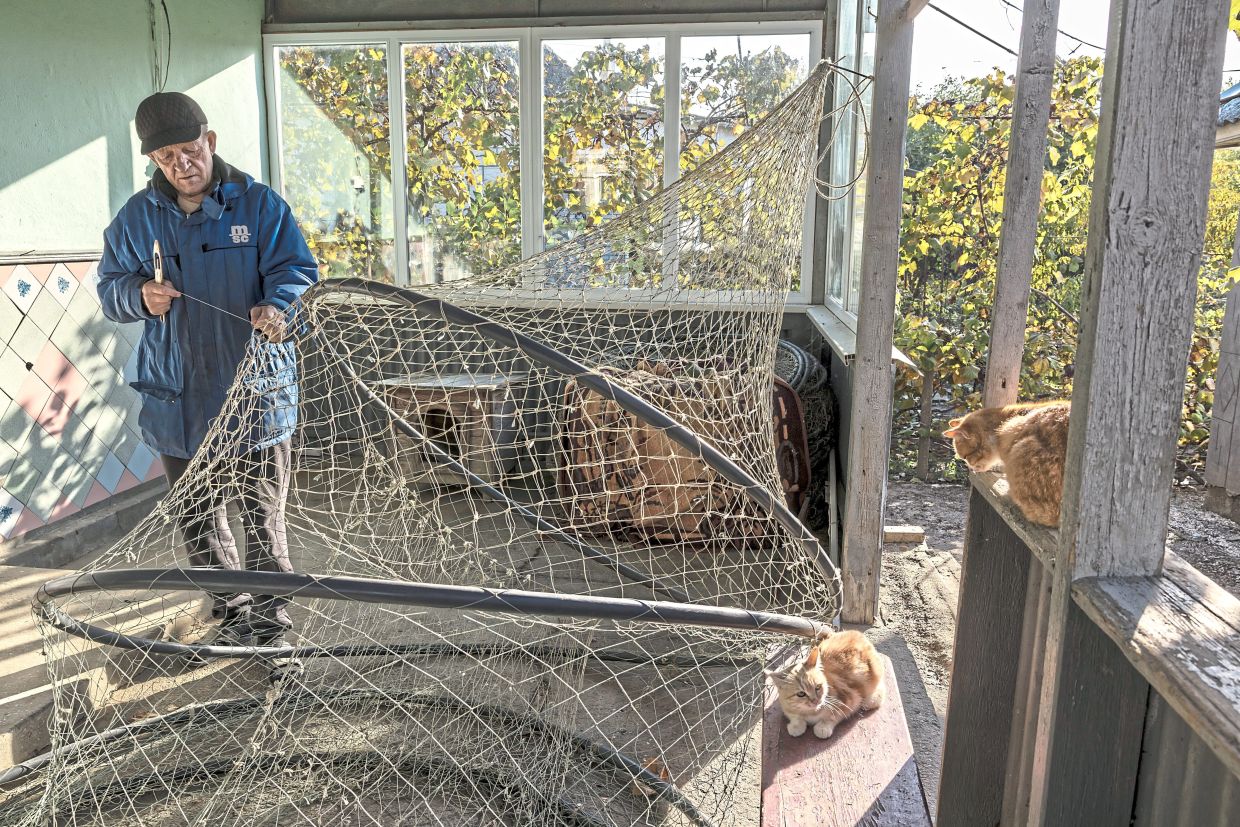
Anatoliy Unharov, brother of local fisherwomen Bilovolenko and Moskvichova, says, ‘Not all men can match them when it comes to fishing.’