



A ONCE-RARE tropical cyclone has killed more than 100 people and left dozens missing in Sumatra, delivering a stark warning on escalating climate risks and fuelling urgent calls to curb destructive land use, restore forests and invest in long-overdue early warning systems.
Tropical Cyclone Senyar, which formed over the Malacca Strait, made landfall on Sumatra’s mainland last Wednesday, Nov 26, unleashing extreme rainfall and strong winds that triggered severe flash floods and landslides across Aceh, North Sumatra and West Sumatra.
The cyclone intensified the monsoon-driven extreme weather seen in recent months. Although Senyar moved toward Malaysia by Thursday and rainfall had begun to ease, Indonesia’s Meteorology, Climatology and Geophysics Agency (BMKG) warned that extreme rain and strong winds would continue in northern and western Sumatra.
Harrowing destruction has unfolded across the three provinces.
As of Friday afternoon, the National Disaster Mitigation Agency reported 116 deaths and 42 missing persons in North Sumatra, with more than 1,000 families displaced. Aceh reported 35 deaths, 25 missing and 4,846 displaced families, while West Sumatra recorded 23 deaths, 12 missing and 3,900 families forced from their homes.
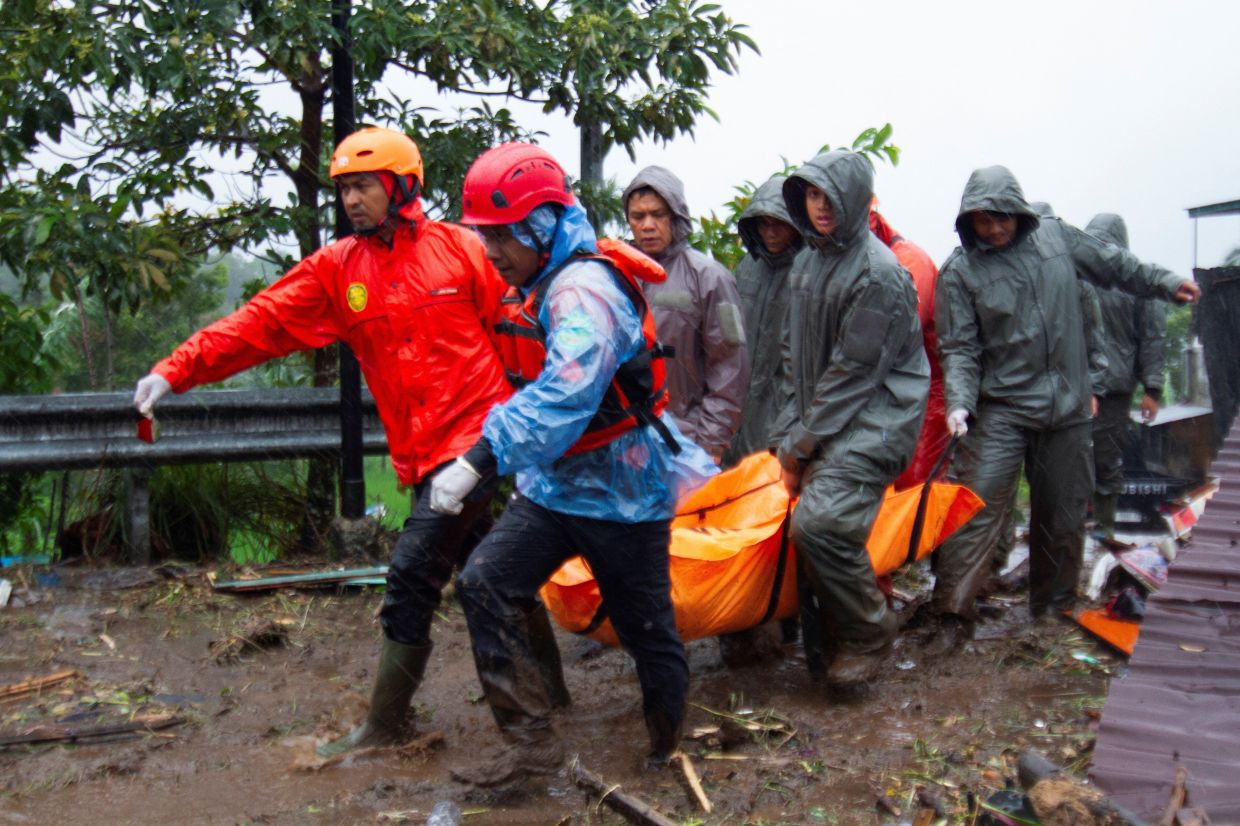
Amateur footage showed buildings submerged or swept away by floodwaters, while landslides cut off roads and isolated communities. All three provinces have declared a two-week disaster emergency status.
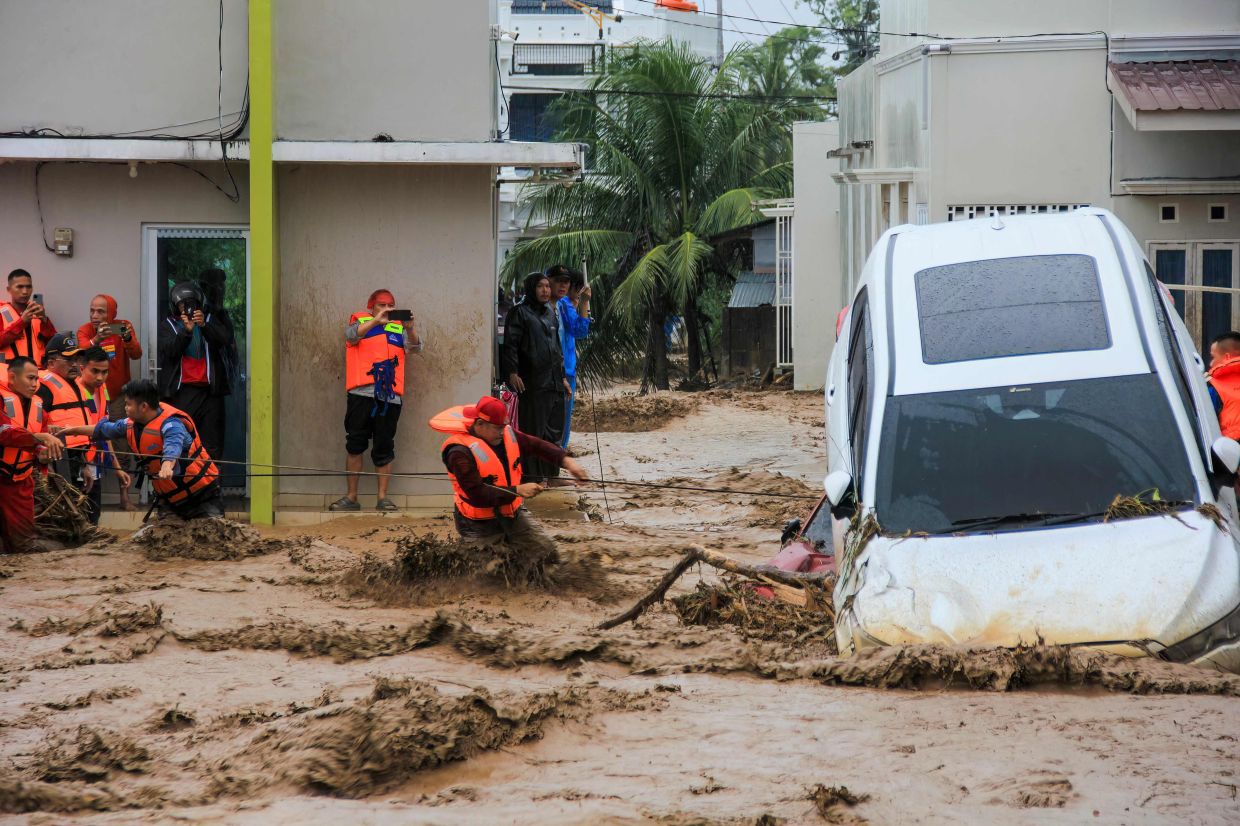
On Friday, during a Teachers’ Day celebrations in Jakarta, Indonesian President Prabowo Subianto acknowledged that some areas affected by the disaster were cut off, noting that helicopters sent to deliver aid had struggled to land. His administration has dispatched four aircraft carrying tents, rubber boats, generators, communication equipment, food supplies and medical teams to support emergency relief efforts.
“The government is moving quickly. From the very first day, we responded by sending aid by land and air, but the conditions are extremely difficult,” Prabowo said. “This [disaster] reminds us that the world is full of challenges. Climate change, global warming and environmental destruction are challenges we must face.”
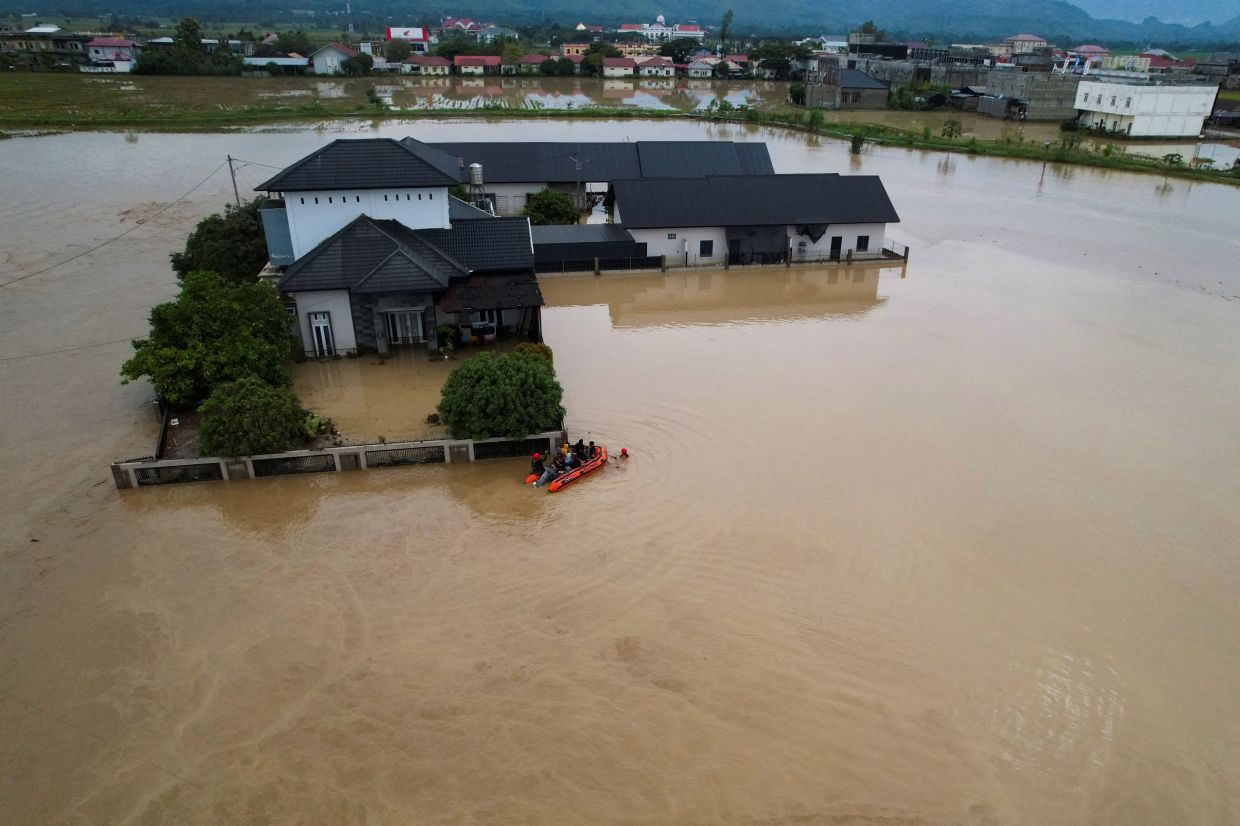
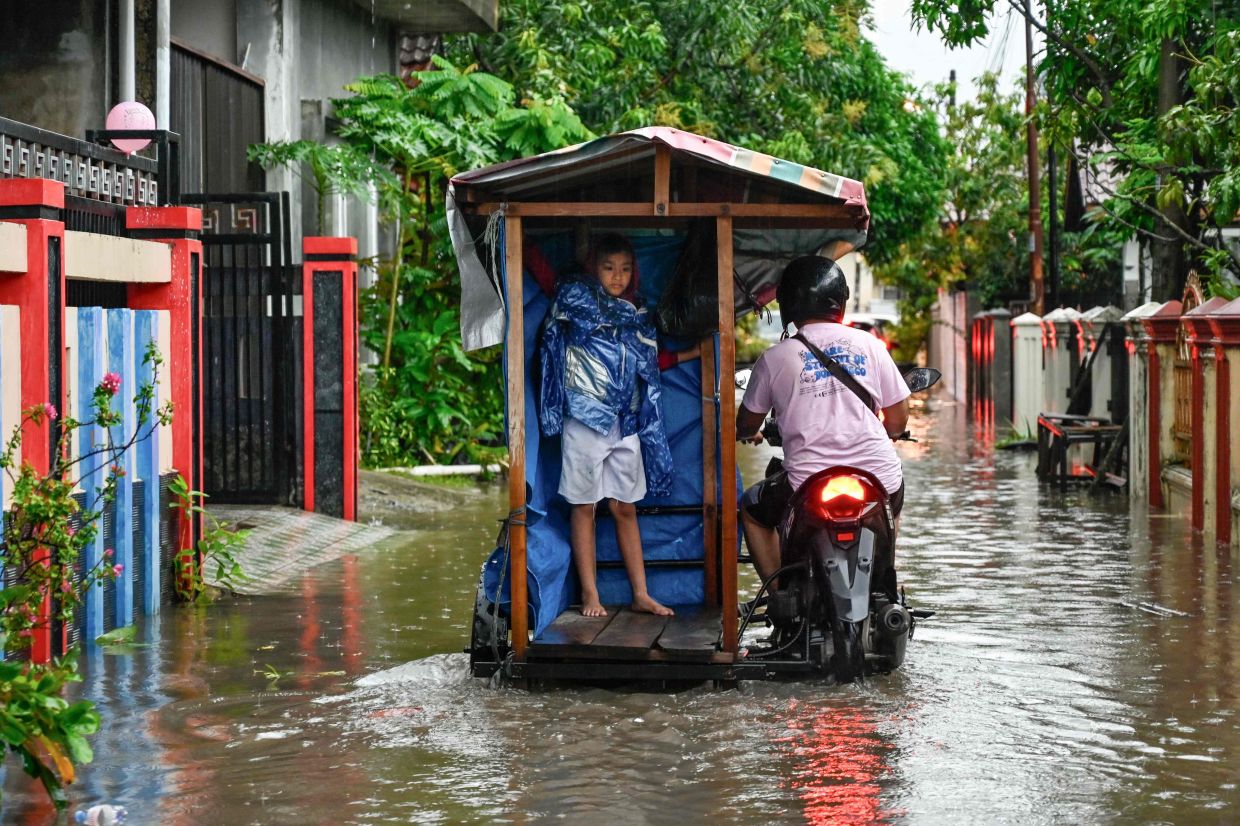
According to BMKG, Indonesia has been increasingly exposed to tropical cyclones forming in both the Indian and Pacific oceans. Senyar developed rapidly from a tropical disturbance known as 95B in the Malacca Strait.
“The potential for cyclones to form will always exist. Their frequency around the equator can increase, especially when sea surface temperatures are warmer than normal,” BMKG deputy for meteorology Guswanto said.
But, such an occurrence was once considered extremely unlikely near the equator, with studies suggesting it might occur only once every several hundred years. Scientists now say climate change is altering those assumptions. Indonesia last experienced a tropical cyclone in 2021, when Cyclone Seroja struck East Nusa Tenggara.
Accelerating climate change Erma Yulihastin, a climatology professor at the National Research and Innovation Agency’s (BRIN) Center for Climate and Atmosphere, said Cyclone Senyar had caught researchers off guard. “Given how narrow the Malacca Strait is and how close it lies to the equator, it should be almost impossible for a rotating system to form. Where would the rotational force even come from? This requires deeper investigation,” she told The Jakarta Post.
“This is a sign of accelerating climate change,” she said, warning that the disasters now unfolding should not be underestimated. “It means the climate crisis has reached a more severe stage.”
Erma added she had warned of cyclone risks for the past five years but received little government response, particularly regarding the need for tailored early-warning systems.
“What matters most is developing early detection tools that are specific and customised for this kind of situation,” she explained, noting that BRIN researchers had developed such technology in 2020. But she said the government had yet to prioritise deploying it to anticipate disasters with this level of destructive potential.
Beyond the cyclone
Environmental group Satya Bumi said the flash floods have worsened not only due to extreme weather but also by years of ecological degradation. For example, in Batang Toru, North Sumatra, extensive logging and land clearing linked to extractive industries has drastically reduced the region’s ability to absorb and retain rainfall.
“The combination of mining expansion, large-scale infrastructure development and forest loss has created mutually reinforcing pressures,” the group said in a statement.
“When water catchment areas vanish, soil weakens and the landscape is dramatically altered, the risk of flash floods and landslides rises sharply.” Satya Bumi urged the government to review extractive industry permits and land conversion, restore degraded forests and reclaim living spaces for local communities, including Indigenous peoples and farmers.
Institute for Essential Services Reform climate analyst Marlistya Citraningrum said the growing likelihood of cyclones showed that climate adaptation and disaster preparedness were urgently needed. The current disaster, she said, should be treated no less than a “serious warning”.
She noted that the root of the climate crisis lies in unchecked greenhouse gas emissions, and that Indonesia’s nationally determined contribution (NDC) still fails to reflect the urgency of the problem.
“The climate crisis brings fatal and destructive impacts, especially when combined with poor preparedness and an already altered landscape,” she said.
“A storm hitting an area without water absorption, without an early-warning system and with minimal preparation, will inevitably lead to casualties and economic losses.” – The Jakarta Post/ANN
