IN the early hours of Dec 8, 2024, a small Syrian Air jet carried a notorious cargo out of Damascus International Airport – dozens of passengers, who just hours before had been the backbone of Bashar al-Assad’s brutal regime, were now fugitives scrambling to flee.
Among them was Qahtan Khalil, director of Syria’s air force intelligence, accused of overseeing one of the civil war’s bloodiest massacres.
He was joined by former defence ministers Ali Abbas and Ali Ayyoub, both sanctioned for human rights violations, and military chief of staff Abdul Karim Ibrahim, accused of facilitating torture.
Their presence was confirmed to The New York Times by a passenger and two former officials.
Assad’s furtive flight earlier that night had taken his inner circle by surprise, becoming the symbol of his regime’s stunning fall.
In a matter of hours, the entire system of repression vanished.
Some caught flights. Others sped to coastal villas and escaped by luxury speedboat.
A few hid in the Russian Embassy, which assisted their escapes to Moscow.
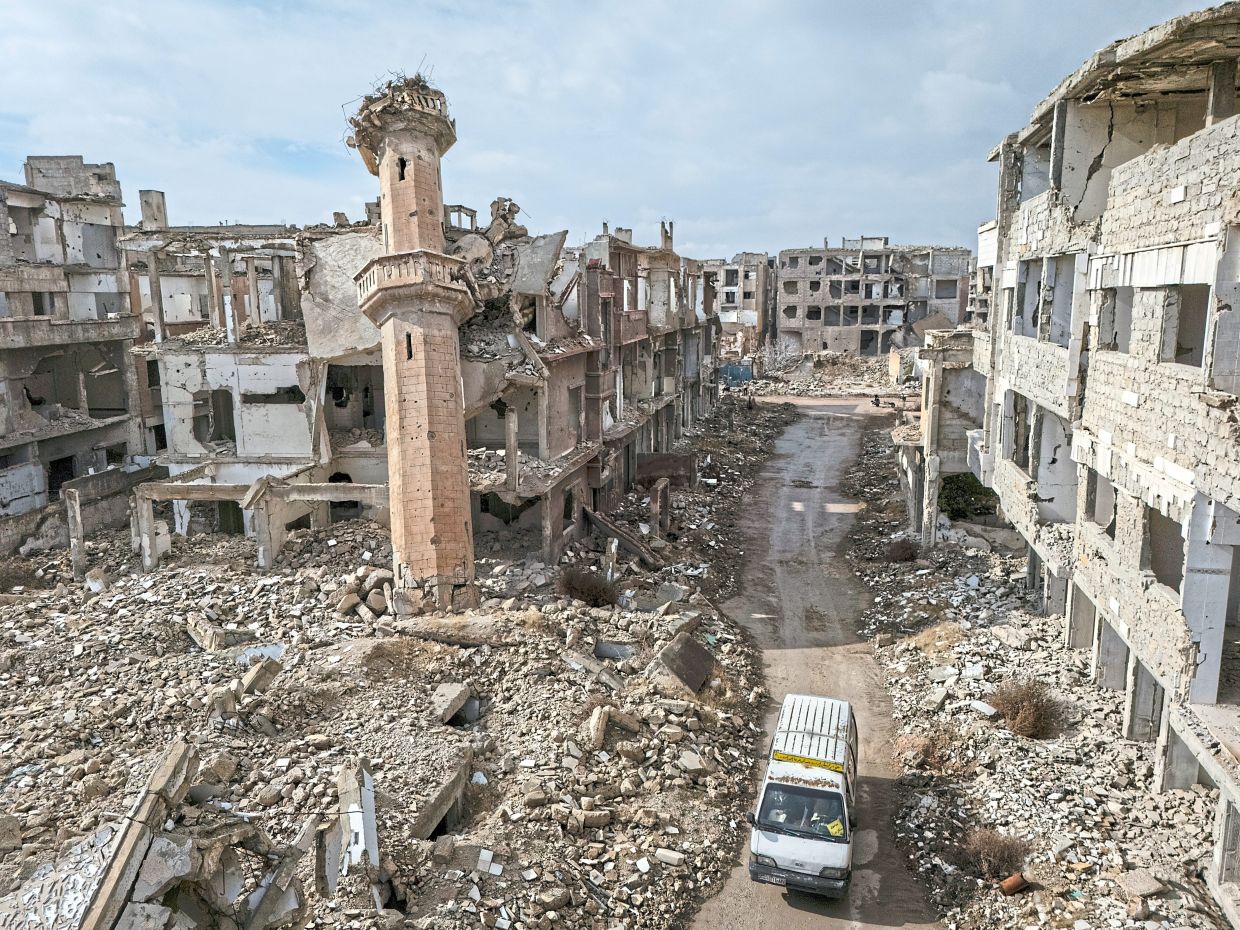
To the thousands of Syrians who lost loved ones or were tortured by the regime, their homeland had become a crime scene from which the top suspects had disappeared en masse.
Almost a year later, a shattered nation faces the daunting task of scouring the globe to hold these individuals accountable for some of the worst state-sponsored crimes of the century.
Former rebel fighters, a fledgling new government, and international prosecutors are trying to locate them through informants, digital clues and abandoned evidence.
Their targets are some of the world’s most elusive people.
Many wielded immense power for decades yet were public enigmas, with their real names and appearances often unknown – a dearth of information that has helped them evade justice.
A New York Times investigation into 55 high-ranking regime officials has worked to fill in these blanks, tracing digital trails, scouring abandoned properties and interviewing dozens of sources.
The whereabouts of many remain unknown, but the fates of a dozen reveal a wide spectrum.
Assad himself is in Russia and has cut off contact with most of his former circle.
His brother Maher, once the regime’s second-most-powerful figure, lives a life of exiled luxury in Moscow alongside former commanders.
Others, like Brig Gen Ghiath Dalla, are plotting sabotage from Lebanon, coordinating with ex-regime leaders in Moscow.
Some struck murky deals to remain in Syria.
One official, Amr al-Armanazi, who oversaw Assad’s chemical weapons programme, was discovered by Times reporters to still be living in his Damascus home.
“Some of these individuals have purchased new identities by acquiring citizenship through real estate investments,” said Mazen Darwish, head of the Syrian Centre for Media and Freedom of Expression.
“They use these new names and nationalities to hide. These people have the financial means to disappear.”
The night the regime vanished
The mass exodus began on the night of Dec 7, 2024, after a moment of stark realisation.
Top aides waiting in the presidential palace had confidently assured colleagues that Assad was there, planning a counterattack.
But the plan never materialised – and neither did Assad.
Aides tracked him to his home, only to learn from guards that Russian officials had whisked him away in a convoy.
The president summoned only two financial advisers, insiders said, likely to help access his assets in Russia.
They flew to Hmeimim, a Russian-controlled air base.
When the abandoned aides learned of the flight, panic ensued.
“He’s gone,” was all one senior aide said before ordering his family to the defence ministry.
There, they linked up with Qhatan, who had arranged an escape flight.
The Yak-40 jet left around 1.30am, its passengers “freaking out” during the 30-minute flight that “felt like forever”.
Elsewhere, Maher was arranging his own escape, calling associates and speeding off to catch his own flight.
The Russian base at Hmeimim became the primary escape hatch. Witnesses described a night of chaos, with officials carrying bags of cash and gold and discarded Syrian uniforms strewn everywhere.
Raiding the safes and dodging bullets
Back in Damascus, some 3,000 intelligence officers were still inside their compound, unaware their leaders had fled.
Their director, Hossam Louka – who oversaw mass detention and torture – had assured a friend there was nothing to fear.
Then, at 2am, Louka said he was packing to flee. He later ordered the accountant to open the headquarters safe and took an estimated US$1.36mil in cash. He is believed to be in Russia.
In the same compound, Kamal al-Hassan, head of military intelligence, also raided his office, taking a hard drive and money.
His escape was less smooth; he was wounded in a gunfight with rebels before hiding from house to house and eventually finding refuge at the Russian Embassy.
Another official who sought embassy sanctuary was Ali Mamlouk, the retired national security director who helped orchestrate the regime’s system of mass arrests and torture.
After his convoy was ambushed, he raced to the embassy. Both he and Kamal were later escorted to Hmeimim and reached Russia.
A notorious fugitive slips through
There was a tacit understanding that rebels would turn a blind eye to some loyalists fleeing toward the Alawite heartland, but such leniency would unlikely have been granted to former Maj Gen Bassam Hassan.
Accused of coordinating chemical weapons attacks and the kidnapping of an American journalist, Bassam was one of the inner circle’s most feared figures.
He was roused from sleep around 5am and arranged a three-car convoy for his family, so concerned about an attack that he separated his wife and children into different vehicles.
At a rebel checkpoint, his wife and daughter were forced from their car and robbed, but the rebels, unable to recognise Hassan, let them go.
He eventually reached Lebanon and then Iran, and has since returned to Beirut under a deal to provide information to American intelligence.
For the tens of thousands of victims of the Assad regime, the pursuit of justice seems aimless.
The new government may lack the will or capacity to aggressively pursue war crimes, and international consensus for a tribunal is unlikely.
A bitter reality remains: Assad’s top enforcers are still one step ahead.
“Assad’s men are playing cards in Moscow or lounging in some Emirati villa,” a friend of several officials said. “They have forgotten about any place that was called Syria.” — ©2025 The New York Times Company
This article originally appeared in The New York Times
Already a subscriber? Log in
Get 20% OFF The Star Digital Access
Cancel anytime. Ad-free. Unlimited access with perks.