
EXPECTING his normal catch of plaice, turbot and Dover sole, Arthur Dewhirst was surprised when his nets spilled their contents onto his ship’s deck earlier this year. Instead of shiny, flapping fish, hundreds of octopuses wriggled and writhed.
His first thought? “Dollar signs! Dollar signs! Dollar signs!” he recalled with a laugh, sitting in his trawler in the harbour at Brixham in Devon, England, last month.
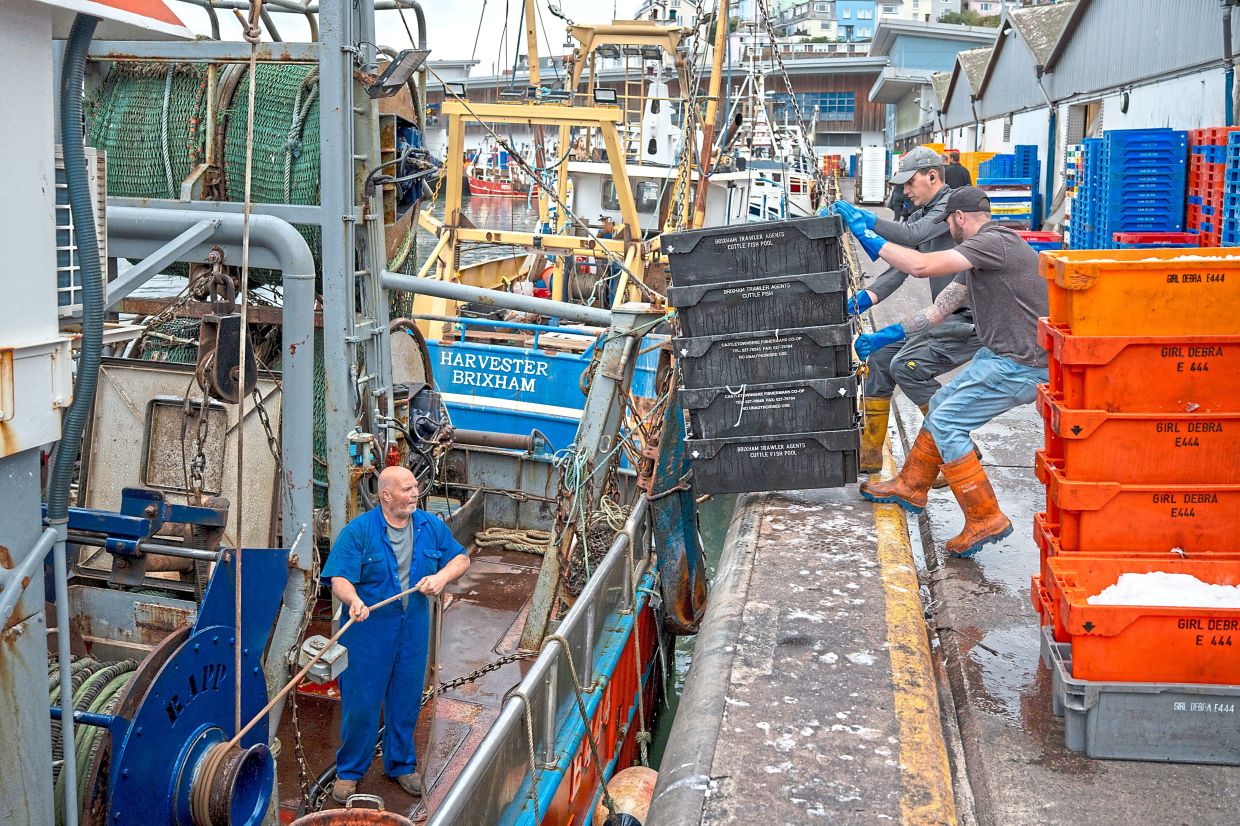
Across England’s southern coast, fishing crews reported an extraordinary boom in octopus catches this summer.
Sold for around £7 a kilo, it was sometimes worth an extra £10,000 a week to Dewhirst.
In Brixham, home to England’s largest fish market, the octopus invasion is the talk of the town.
A quay side cafe decorated its frontage with an octopus-themed mural, a restaurant offered octopus alongside its staple fish and chips and its owner demonstrated in a social media video how to cook a species still relatively unusual in British kitchens.
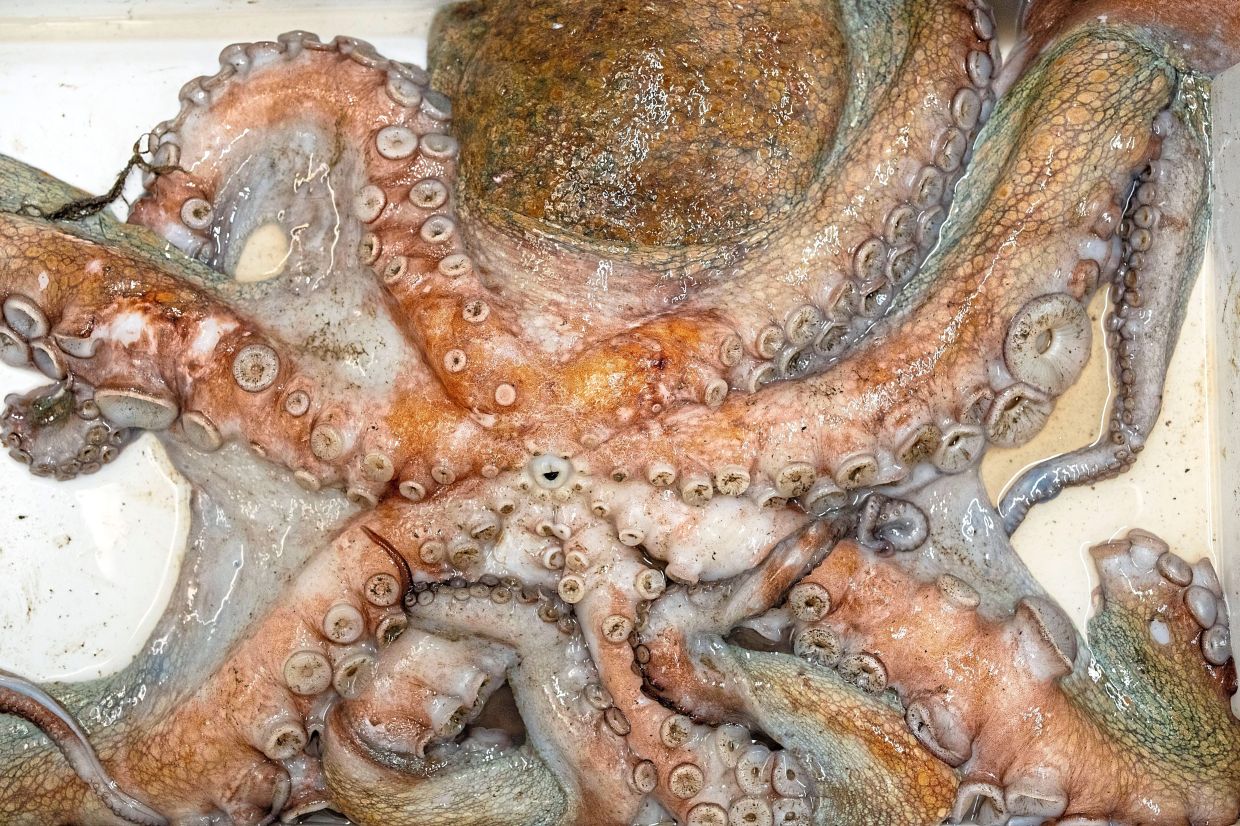
There are several theories about the causes of this puzzling phenomenon, but scientists say that warming water temperatures make the region more hospitable to this species of octopus, which is normally found off the Mediterranean coast.
According to Steve Simpson, a professor of marine biology at the University of Bristol, “climate change is a likely driver” of the population boom.
“We are right on the northern limit of the octopus species range, but our waters are getting warmer, so our little island of Great Britain is becoming increasingly favourable for octopus populations,” he said.
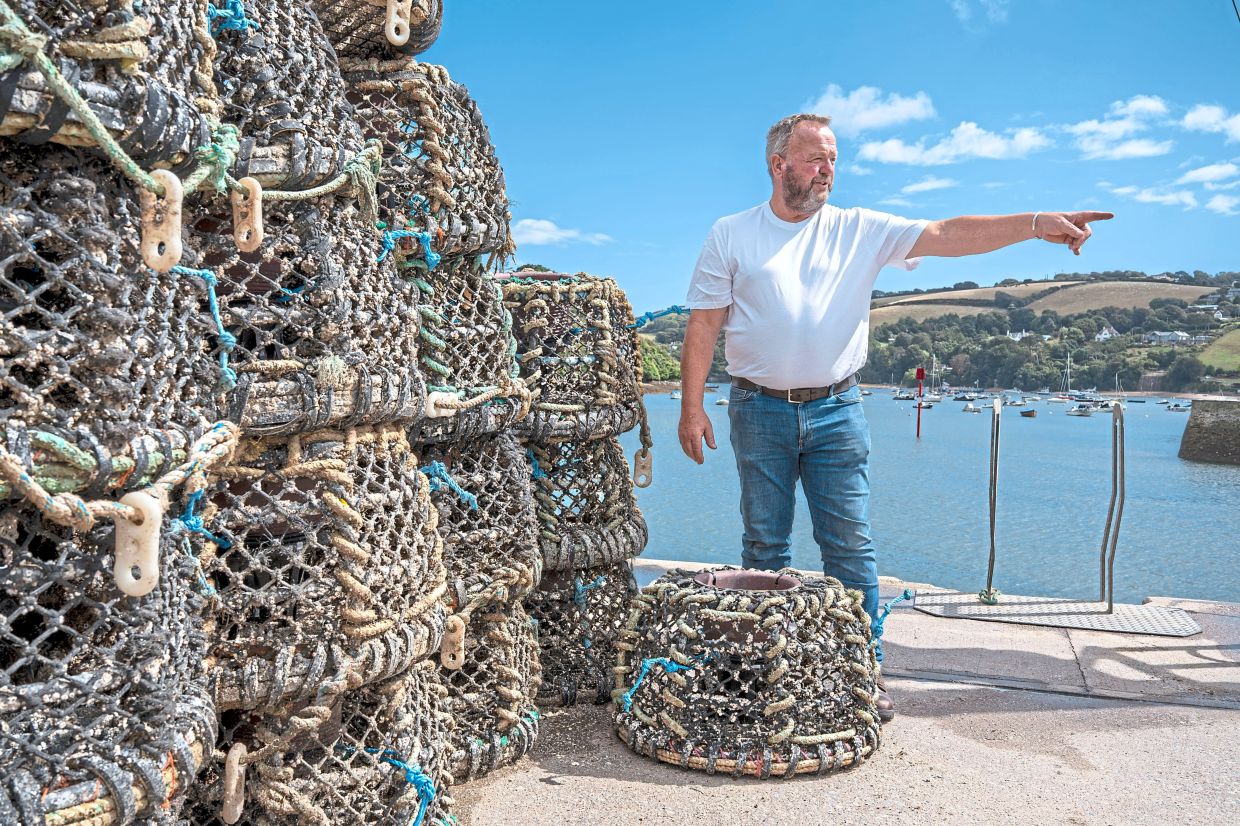
There is jubilation among many trawler crews in the scenic fishing port, but among those who fish for crab and lobster, there is anxiety.
They initially hauled up tonnes of lucrative octopus which had colonised their crab and lobster pots. But now they are increasingly finding empty shells and other skeletal remains – evidence that the eight-armed arrivals are devouring shellfish.
Just about everyone agrees that the situation is unique in recent times.
“It’s the first time I have caught them in 49 years,” said Dave Driver, 64, whose trawler has made some modest octopus catches even though he does not fish in the deep waters the species prefers.
At the fish market, Barry Young, managing director at Brixham Trawler Agents, which operates the auction, said that between January and August, 12,000 tonnes of octopus were sold, including 48 tonnes on one day alone.
“We just got invaded,” said Young. “Day on day of more and more. It was phenomenal that we were seeing these amounts, and it was a windfall for everybody.”
Young thinks that octopuses last arrived en masse in nearby waters in the early 1950s, only to vanish again within a year or two, so what happens next year is impossible to predict.
“They could turn up or they could not. We didn’t know they were turning up this year,” he said, adding with a laugh, “They didn’t ring us and say, ‘We are on our way.’”
Lately catches have been tailing off as summer has turned to fall, and, on one recent morning, just two boxes remained in the fish market at 8am – containing one creature weighing in at 5.4kg, the other at 6.8kg.
The rest of the day’s 1,200kg of octopus had sold by 6am, destined probably for Spain and Portugal, where it fetches a higher price than in Britain.
Even before the recent surge in catches, a neon image of the eight-limbed creature adorned a quay side building in Brixham harbour.
Then, in May, a mural was added to the front of Tides, a cafe.
The owner, Claire Brinicombe, chose a design that reflected what local fishermen had told her about their abundant catches, she said, adding, “It’s the year of the octopus.”
There is less euphoria further down the Devonshire coast in Salcombe, where those who rely on catching shellfish are now counting the potential cost of the octopus boom.
Crab and lobster are the main catch for Jon Dornom.
But in February, he went out to sea one morning and hauled his pots, only to be greeted by “hundreds of aliens”.
“It was a bit of a shock; we had never had to deal with them before,” he said. “They are incredibly strong when they hold on in a pot. It is all you can do to get one out.”
He added: “We were putting them in bins on the stern, and they were crawling out. They were so active we didn’t know what we were doing.”
The crew learned fast how to deal with the new arrivals and on one trip Dornom caught almost three tonnes – “a nice day” – bringing in £20,000.
But boom turned to bust as Dornom, 64, hauled in his lobster pots, only to discover them empty aside from shell and skeletal remains, with the flesh sucked out of the claws.
The shape of his business in the future will depend on whether octopuses return next year, and what damage they have wreaked on the crab and lobster populations on which he depends.
“If the boat doesn’t catch, you don’t get a wage,” Dornom said, standing at the wheel of his 15m vessel as it chugged through Salcombe harbour, reflecting on how his fate is now linked to that of the capricious cephalopod.
“I personally am terrified.” — ©2025 The New York Times Company
This article originally appeared in The New York Times