
WILDFIREs all but erased vast parts of Jasper National Park in Alberta, one of Canada’s most majestic destinations.
A year later, the devastation left behind is being mined by researchers seeking lessons to fight future fires.
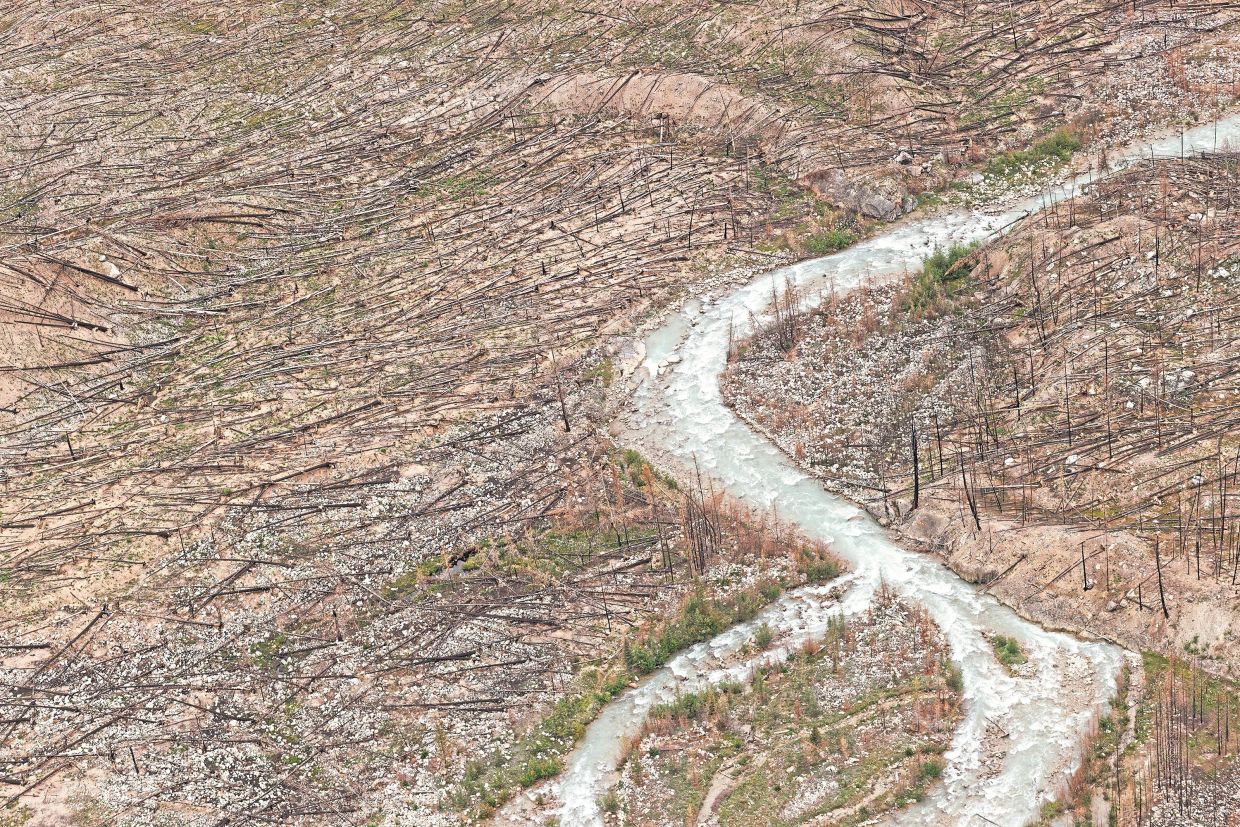
Last summer, walls of flame and ferocious winds ripped up trees, roots and all, which now lie scattered in a charred valley like straw. The fire incinerated the soil, exposed dark bedrock and stripped the bark off trees.
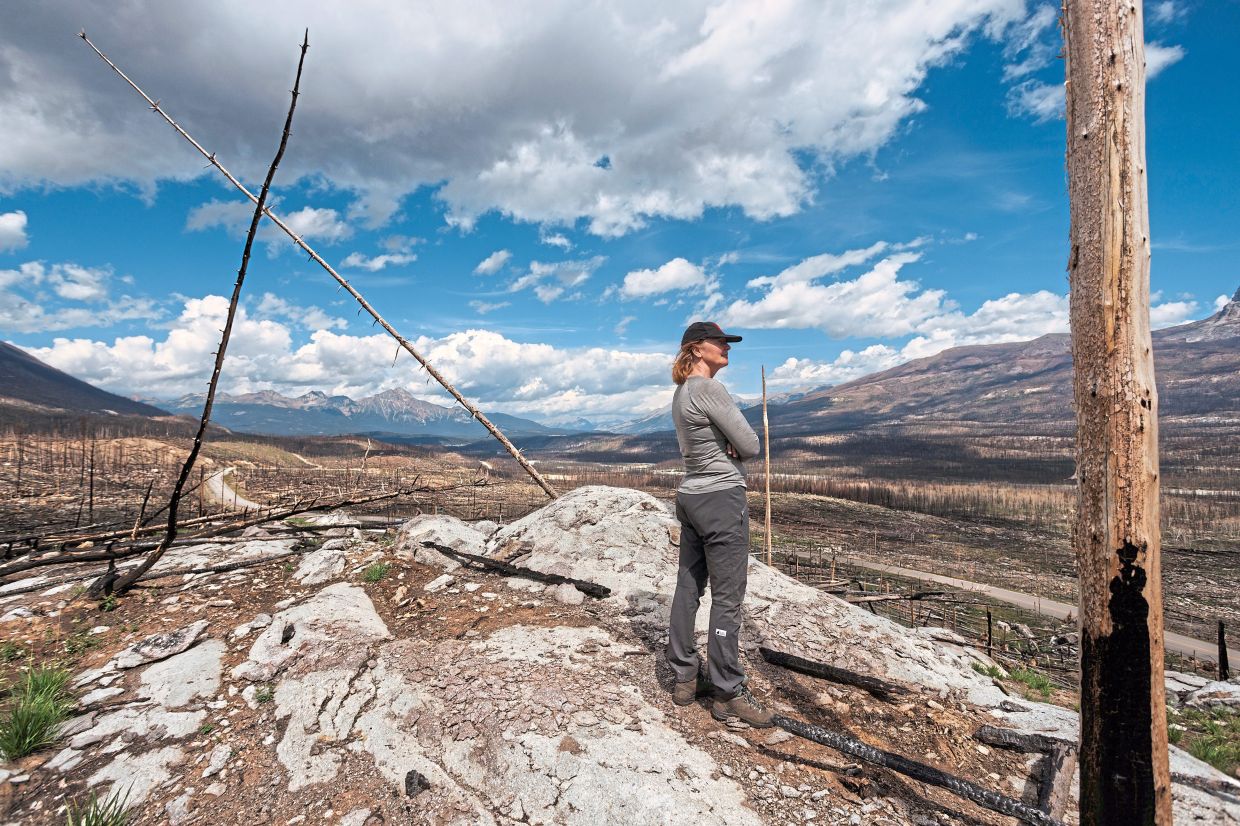
“It looks like a blast zone,” said Lori Daniels, a researcher, standing on a ridge below Jasper’s famous Marmot Basin, a ski hill in the resort town of Jasper, which has long attracted vacationing royals and Hollywood stars to Canada’s Rocky Mountains.
The fire forced 20,000 people to evacuate, destroyed hundreds of properties and shocked a country still reeling from the record destruction of Canada’s 2023 fire season.
The mind-boggling wildfire – the energy it produced reached levels experts believe had never before been seen in Canada – has transformed the park into an open-air laboratory for Canadian researchers on the frontiers of evolving wildfire science.
Jasper offers a rare opportunity. Decades of fire-mitigation strategies deployed at the park, meticulously studied and implemented, were put to the extreme test by the fire. Key to those strategies are the use of heavy machinery and prescribed fire to thin the forest and reduce the amount of flammable material.
Daniels, a forest and conservation sciences professor at the University of British Columbia, is leading field research at the site in part to determine how well those strategies worked.
What makes the Jasper fire different from other large-scale blazes Daniels has surveyed is the storm the fire generated, which uprooted or sheared off trees, offering evidence about the blaze’s intensity.
Fire seasons are expected to grow worse because of the effects of climate change, which increase the hot and dry conditions that feed flames.
Landon Shepherd, a firefighter and a wildfire expert at Parks Canada who helped lead the battle against the Jasper fire, said he had never seen a blaze so aggressive in his 30-year career.
Water bomber pilots reported that their helmets banged off the cockpit walls after their aircraft was hammered by winds generated by the fire, Shepherd said, and fire retardant dropped from planes either evaporated or was sucked sideways into the fire’s core long before it could reach its target.
Despite the fire’s intensity, Daniels said she was encouraged by early signs that past wildfire-mitigation efforts blunted the fire’s effects in some areas. Some pine trees still have their needles attached, and there are patches of green amid the charred landscape.
“There’s strong evidence of success in those treated areas,” said Daniels, who leads the University of British Columbia’s tree ring lab, where scientists study the history and behaviour of forests.
Treating a forest to lessen a fire’s harm is expensive – up to C$4,000 per acre and Canada has hundreds of millions of acres in need of potential treatment.
Daniels’ work has shown how the previous long-standing policy in Canada of extinguishing all wildfires increased the risk of bigger fires eventually.
Before Jasper was established as a park, Daniels said, the forest burned more frequently, naturally eliminating potential fuel.
“By suppressing fires, we have actually set the stage for more intense and larger fires,” said Alan Westhaver, a wildfire consultant and one of the architects of Jasper’s fire-mitigation plan.
But the devastation that the fire caused in the town of Jasper could have happened even if the fire itself were smaller, Westhaver said.
Much depends on the trajectory of embers, which are a main reason that homes and other buildings in the path of wildfires burn.
It’s why he dedicated much of his career to a programme teaching owners of private land and homes about ways to make their properties more resilient, including by trimming low branches from nearby trees and removing flammable shrubs from around structures.
Canada’s natural resources department, which houses the Canadian Forest Service and other research branches, promotes the country as a global leader in wildfire management and science.
At least a dozen nations, including the United States, have borrowed or adapted the Canadian Forest Fire Danger Rating System, a scientific model to predict the likelihood of whether a wildfire will ignite, and how it will behave if it does.
Canada’s vast forests and range of vegetation allow researchers to look at variables such as plant moisture and how different ways of thinning the forest affect wildfire behaviour.
Canada’s ability to run a variety of tests to see how fire behaves is “second to none,” said Alexander Maranghides, a fire protection engineer at the US National Institute of Standards and Technology. Its staff have traveled to Canada to collaborate on research projects, including 3D fire plume imaging and experiments that embed structures in the forest to test prescribed burns.
“Canada has a well-developed technical approach and a long-term research effort that really adds value,” Maranghides said. — ©2025 The New York Times Company
This article originally appeared in The New York Times.
Wildfire science
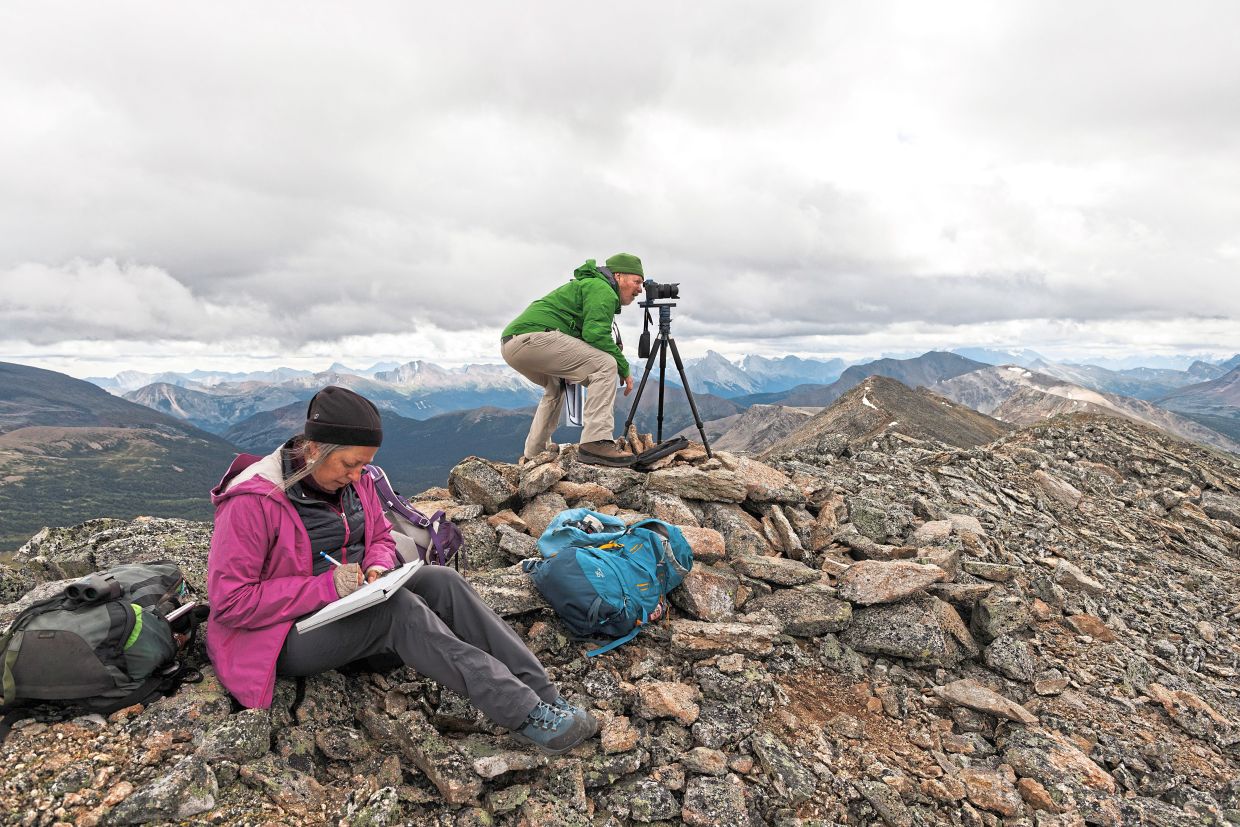



Rhemtulla making location notes while Higgs, a professor of environmental studies at the University of Victoria, checks the alignment of a camera on a mountain in Jasper National Park. — Photos: Jesse Winter/The New York Times
Members of a wildfire research team after a long day in Jasper National Park.
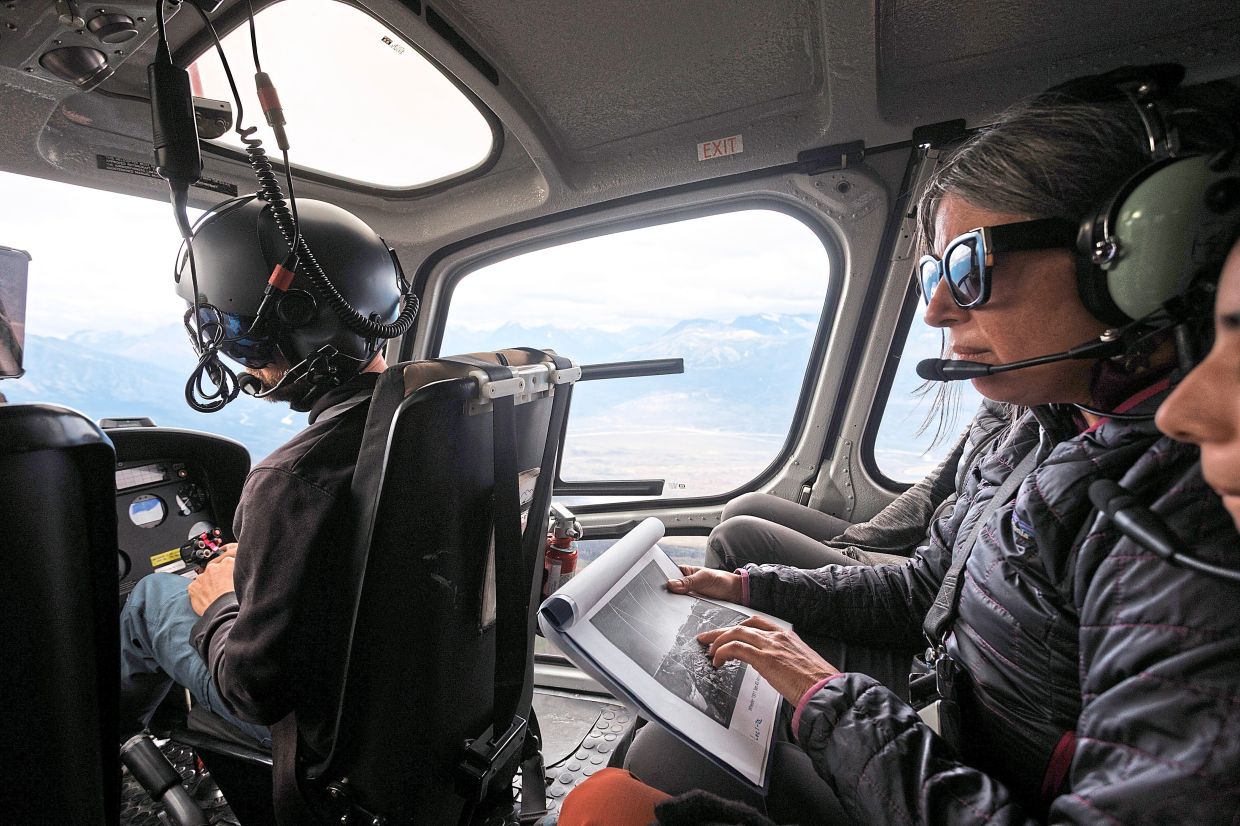
Evidence of a suspected fire tornado as seen from a helicopter above Jasper National Park.
Daniels surveying the area below the Marmot Basin in fire-scarred Jasper National Park.
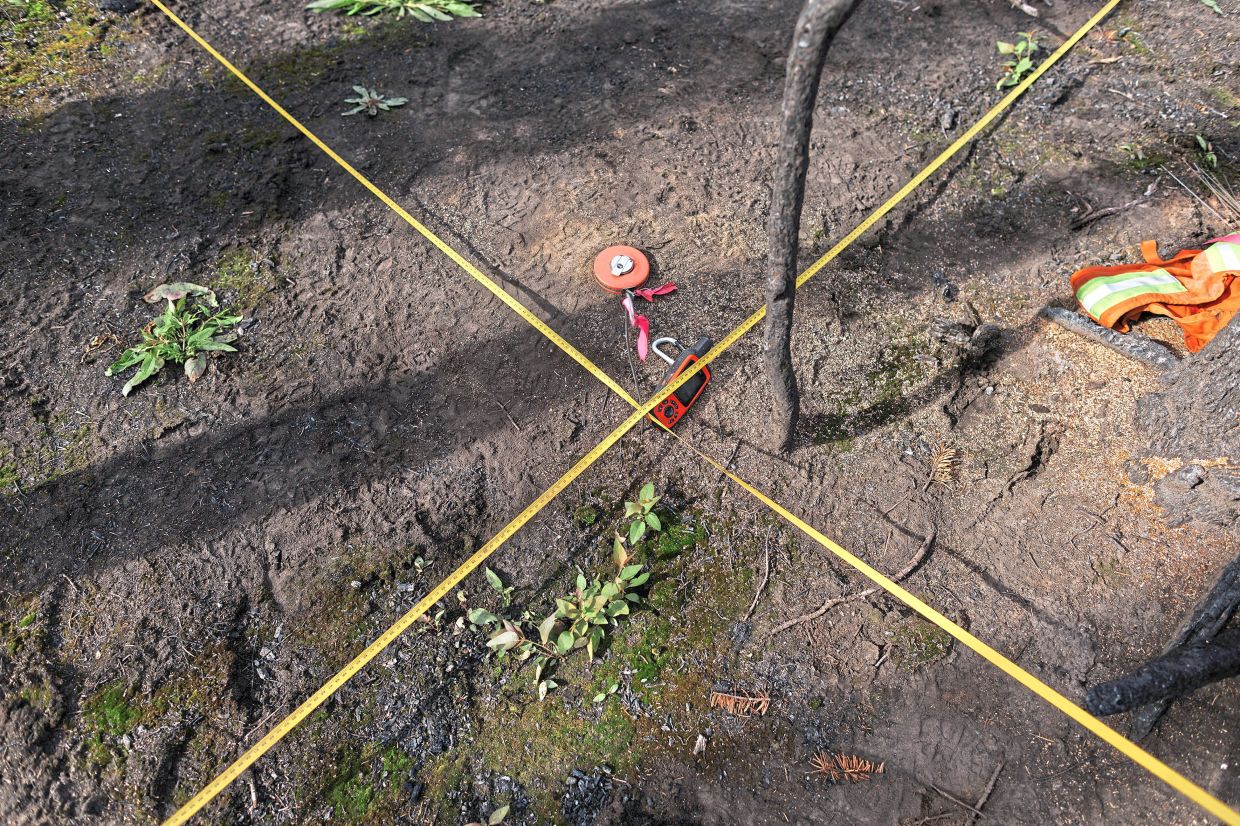
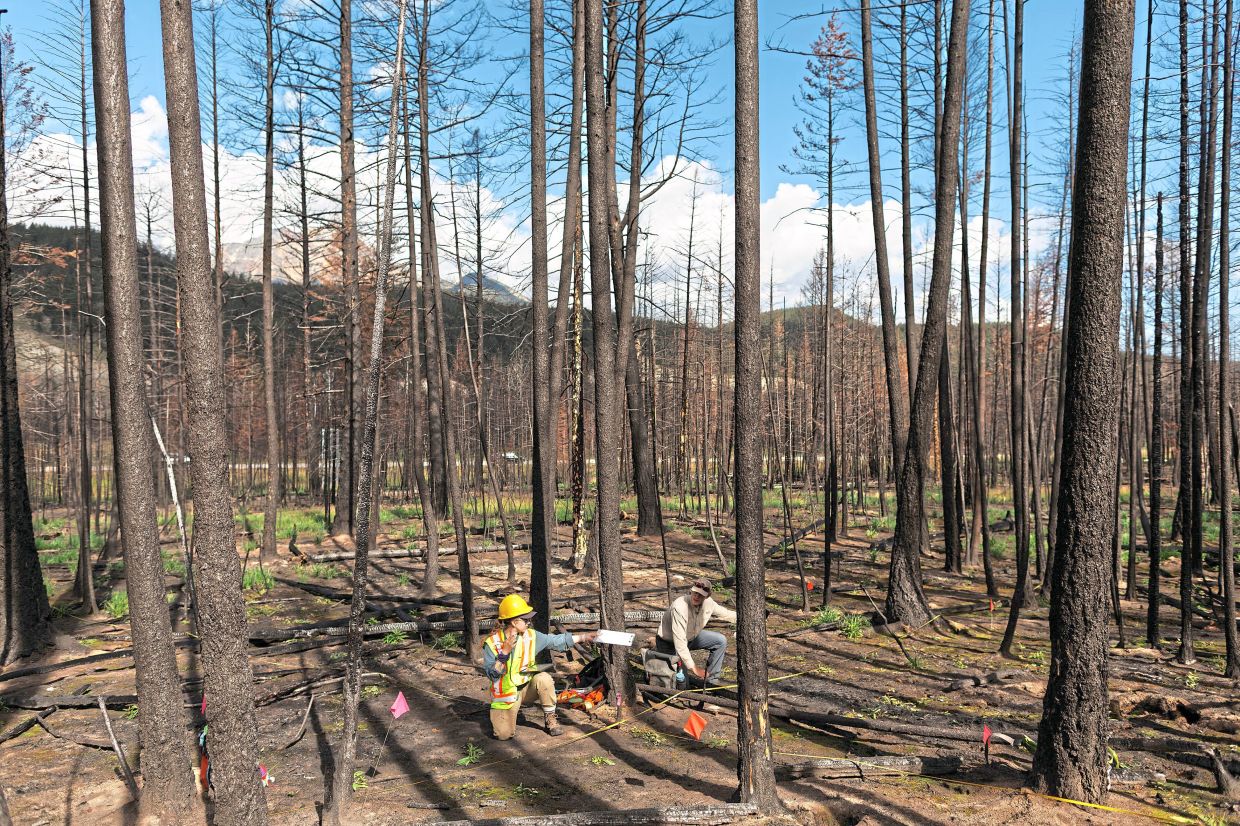
A GPS device and a flag mark the center of a plot sampled by wildfire researchers in Jasper National Park.
Canadian scientists studying wildfires are using a giant fire last year that consumed much of Jasper National Park to learn lessons for the future.
Rhemtulla using a 100-year-old survey photograph of Jasper National Park to locate a mountaintop as a way to understand how forest density and wildfire risk have changed since the park was created. — Photos: Jesse Winter/The New York Times
Trees with their bark stripped away by wildfire on a hillside in the Athabasca Valley of Jasper National Park. — Photos: Jesse Winter/The New York Times
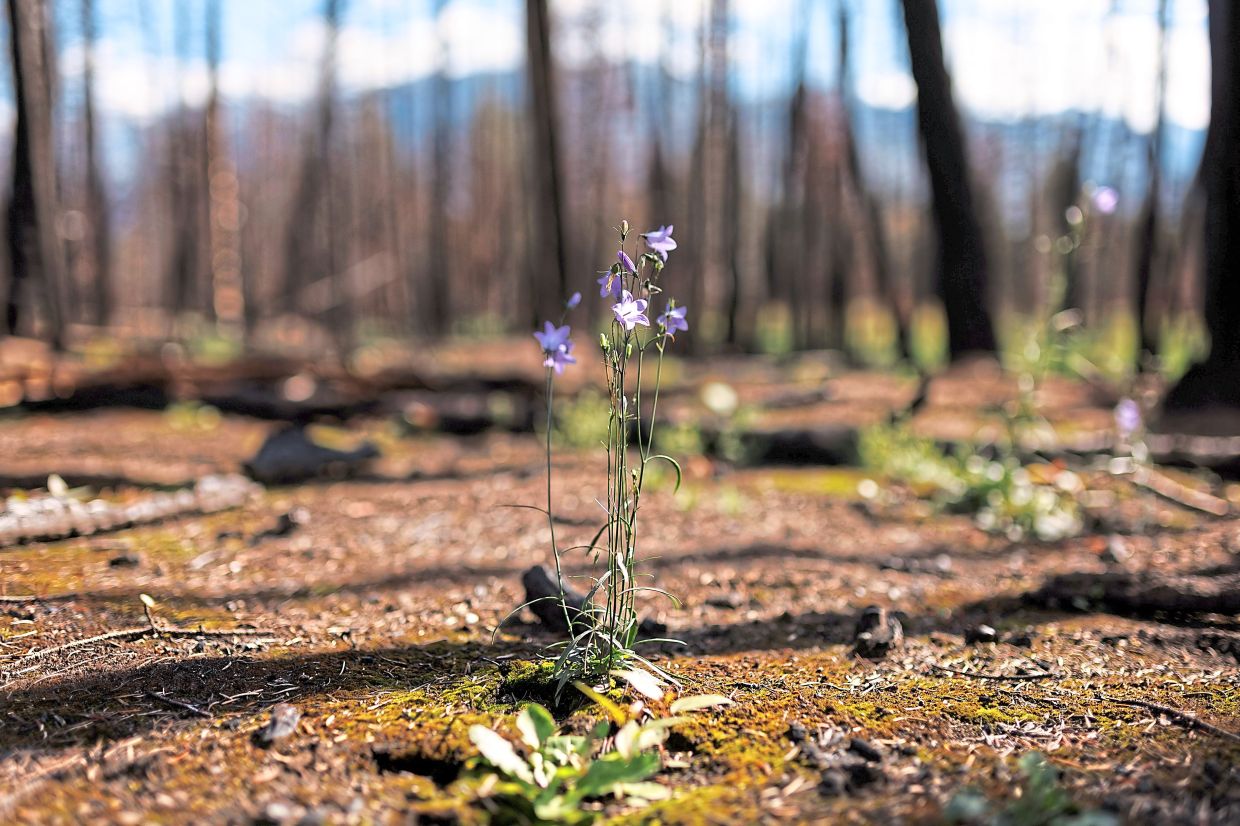
Flowers and moss grow inside parts of Jasper National Park ravaged by a 2024 wildfire. — Photos: Jesse Winter/The New York Times
Wildfire researchers laying out a plot to sample in a heavily burned area of Jasper National Park. — Jesse Winter/The New York Times
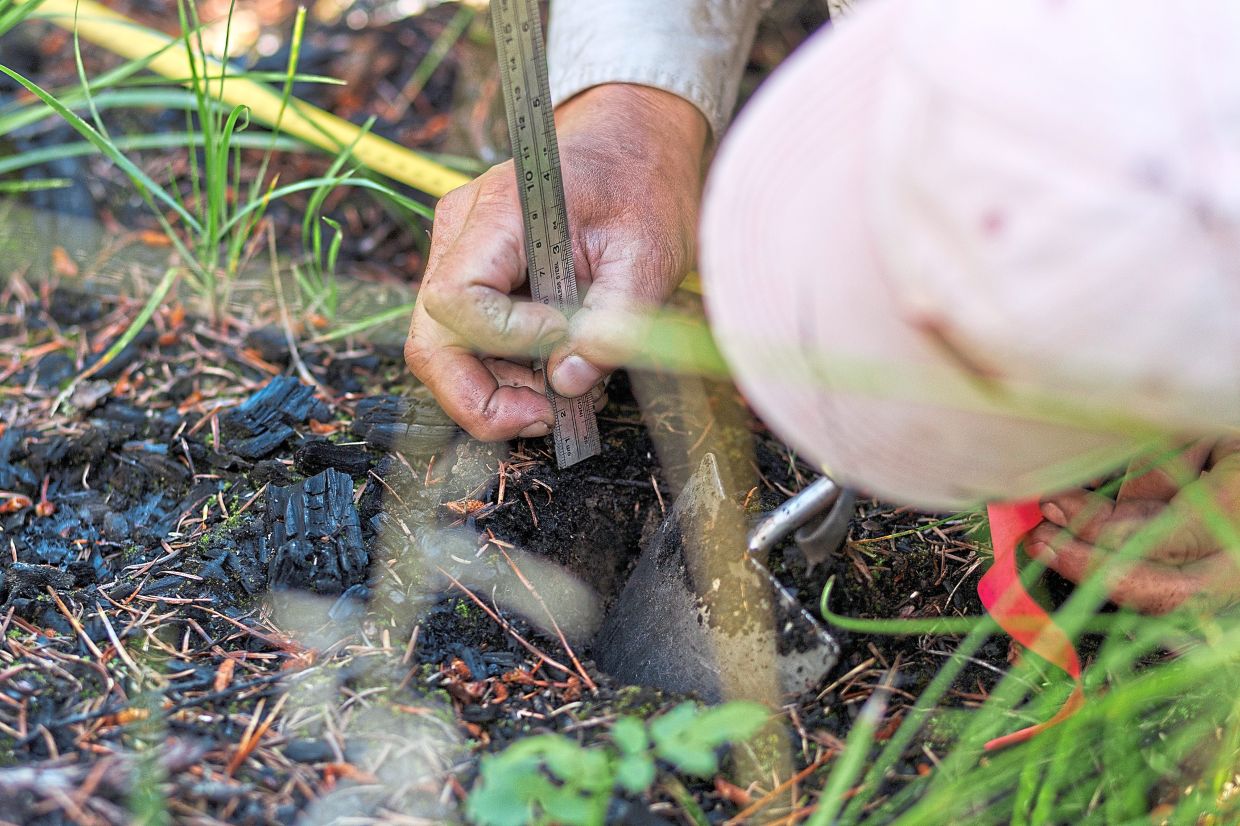
A wildfire researcher measuring the amount of organic soil remaining in a party burned area of Jasper National Park. — Photos: Jesse Winter/The New York Times