



BENEATH the waters off Kuantan, Pahang, two pieces of World War II (WWII) history – the shipwrecks of British warships HMS Prince of Wales and HMS Repulse – once rested in silence for decades, hidden from public view and frozen in time.
Under the sea, however, illegal salvaging has been eating away at them.
This continued for years until a Chinese-flagged vessel was detained with metal scraps and other artefacts suspected to be pillaged from the naval shipwrecks in 2023.
What caused a stir were the reports alleging that human remains were found among the recovered salvage. This fuelled renewed calls for repatriation from the British public.
The ongoing investigation into the case is making an already complex issue – involving legal jurisdiction, heritage preservation and respect for the deceased – even more complicated.
Important history
The sinking of the HMS Prince of Wales and HMS Repulse is a significant part of WWII history, especially for this region.
During the height of World War II in 1941, British prime minister Winston Churchill ordered a small squadron of ships to Singapore, including the battlecruiser HMS Repulse and the battleship HMS Prince of Wales, then the pride of Britain’s Royal Navy, in an attempt to deter Japanese aggression.
From Singapore, the ships were sent out to intercept the Japanese invasion fleet in the South China Sea.
They never returned.
Just days after the attack on Pearl Harbour, on the morning of Dec 10, 1941, HMS Prince of Wales and HMS Repulse – sailing without air support – were besieged by Japanese bombers and torpedo aircraft while on their way back to Singapore.
The HMS Prince of Wales was reportedly crippled after the first torpedo hit the stern and twisted a propeller shaft, but the two ships managed to shoot down four of the Japanese aircraft before they sank, according to historical records.
An estimated 842 sailors perished in the attack, which has since been described as one of the worst defeats in British naval history.
War graves
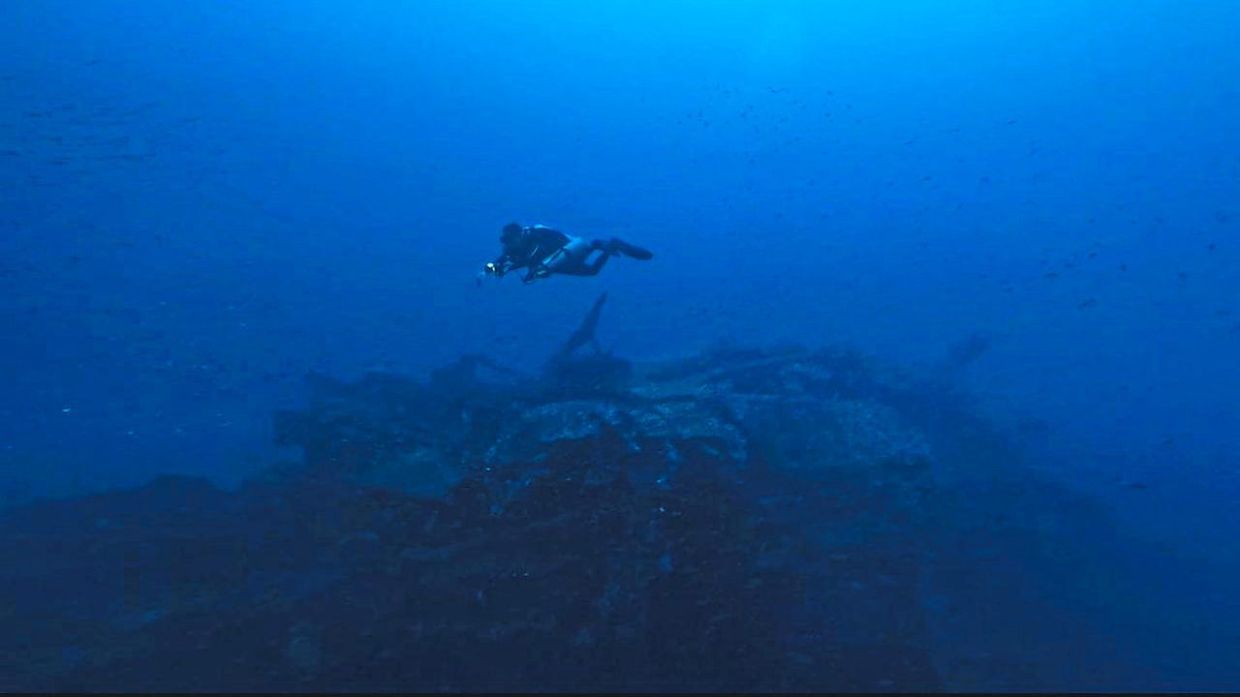
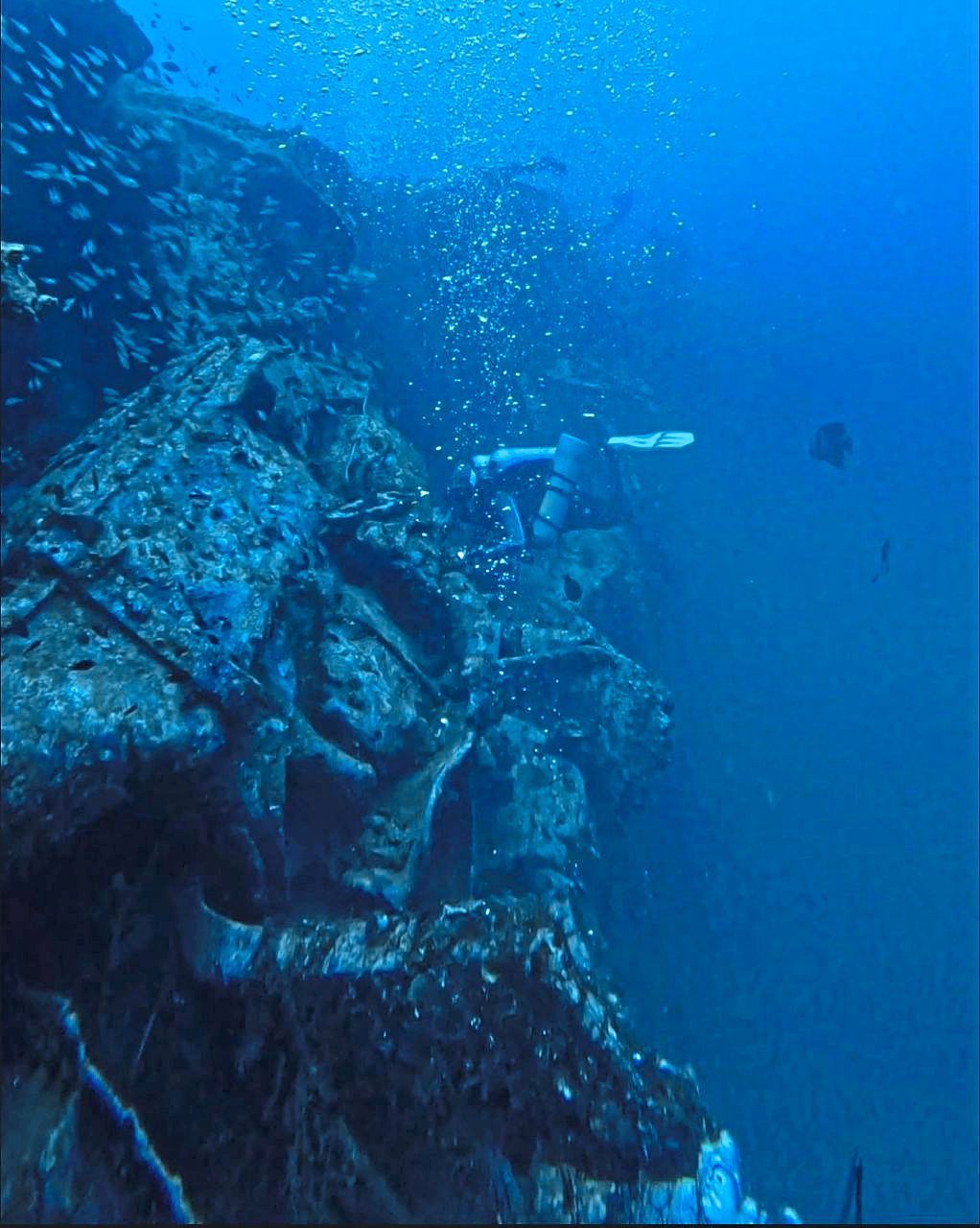
In the aftermath, the two wrecks lay nearly inverted but largely intact, in the depths of the ocean off the coast of Kuantan, a few kilometres apart.
Both wrecks were discovered after the war ended in 1945 and remained the property of the British Crown, but were left undisturbed for decades amid the more urgent task of post-war rebuilding.
Between 1991 and 1992, a 50th anniversary commemoration ceremony, sponsored by the British government and others, saw divers place White Ensign flags on the wrecks.
A decade later in 2002, Royal Navy divers recovered the ships’ bells amid growing fears of plunder by salvagers and scrap hunters.
Today, both bells are housed at the National Museum of the Royal Navy, Portsmouth Historic Dockyard in the United Kingdom.
Also in 2002, the British designated the HMS Prince of Wales and HMS Repulse as protected “war graves” under the Protection of Military Remains Act 1986. This means while diving in the protected site is permitted, it is considered an offence to interfere with the wreck in any way unless authorised by the government.
However, it has since become clear that protection has not stopped illegal salvagers from continuing to destroy the wrecks in pursuit of scrap metal.
The effects have been devastating.
As of 2025, the HMS Prince of Wales shipwreck is pretty much all gone, says Hazz Zain, a professional diver with an applied archaeology background who’s been assisting authorities in cataloguing the shipwrecks for years.
“In 2025, the HMS Repulse (shipwreck) is still there. Technical diving courses are still being done there, and they record the shipwreck’s condition every time they go down there.
“(For) HMS Prince of Wales, as of now, everything has disappeared from the seafloor. But we believe there are some artefacts left over at the sea bottom, which we would not disturb at all.
“Everything (at the HMS Prince of Wales shipwreck) has been salvaged,” she says to Sunday Star.
Lost but not forgotten
Campaigners and relatives of those who perished on the ships have long called on their elected representatives to push for the return of the artefacts to Britain, arguing that this is a matter of respect for fallen war heroes.
The debate was reignited in 2023 when a Chinese-flagged vessel was detained by the Malaysian Maritime Enforcement Agency (MMEA) in Johor.
Authorities reportedly found scrap metal and rusted armaments believed to be from HMS Prince of Wales on the vessel.
Reports also suggested that human remains were discovered among the salvage, further fuelling calls for repatriation.
However, in a June 4, 2025 written parliamentary reply, the British Defence Ministry (MOD) said it had not received any information to suggest any human remains have been found.
Later in the same month, on June 24, the MOD confirmed in another written reply that investigations into the illegal salvage are still ongoing, and they are unable to provide a response regarding the presence of human remains until the investigations have concluded.
The Malaysian Attorney-General’s Chambers did not respond to Sunday Star’s query on the latest progress on the case.
The National Heritage Department also declined to comment on this matter, citing the ongoing case.
Legal intricacies
Deciding the fate of these artefacts is not as straightforward as just handing them back, as this issue is deeply intertwined with three essential policy principles; legal ownership, heritage recognition and respect for the deceased, according to Dr Muhammad Danial Azman from the International Institute of Public Policy and Management of Universiti Malaya.
As he explains, under international law, Malaysia holds sovereign rights over wrecks located in its Exclusive Economic Zone (EEZ) whereas the United Kingdom maintains ownership of its submerged warships.
Describing the legal framework as “intricate”, he says this sets the stage for a unique diplomatic dialogue surrounding the recovery and handling of underwater artefacts.
“Any transfer of these recovered treasures requires a formal diplomatic request, accompanied by a detailed agreement outlining the handling, conservation, and transport processes,” says Danial.
“The MOD has recognised Malaysia’s primary role in investigating these wrecks, indicating a willingness to engage collaboratively.
“However, discussions have unfolded cautiously – not from a lack of interest, but because both nations must navigate a complex web of legal, heritage, and security considerations,” he adds.
To further complicate matters, the artefacts were confiscated by the authorities in response to illegal salvage activities.
“Once these materials are confiscated, they fall under Malaysian jurisdiction, which means the country has the authority to determine their future use and handling,” he says.
“The decision-making process is informed by several factors, including heritage protection laws, safety protocols concerning unexploded ordnance, and diplomatic discussions with the UK to ensure that items of historical significance are dealt with respectfully and appropriately.”
Memory or metal?
While many see the wrecks as hallowed war graves, some others view them as giant hunks of metal waiting to be stripped and sold. The wrecks are targeted for their “pre-war steel”, also known as low-background steel, which were made before the rise of nuclear power and prized for its lack of trace radiation.
“The metals extracted from these sites are highly coveted for their purity, making them ideal for manufacturing scientific and medical equipment that requires high-quality materials,” says Danial.
It is believed that the HMS Prince of Wales and HMS Repulse wrecks have fallen prey to illegal salvaging activities since at least the early 2010s, according to a Stage 2 Wreck Assessment Report by the MOD, which was based on a 2019 survey of both wrecks.
Hazz says all four propellers from both ships have been missing since at least 2012 and points to a high-profile case in 2014, where a vessel manned by Vietnamese crew was caught red-handed at the HMS Repulse wreck site.
“The fishing vessel had been modified to cater to illegal diving at the wreck site,” said the authorities at the time.
On their part, the British MOD noted in the Wreck Assessment Report that they had made various attempts in collaboration with the Malaysian government to curb illegal salvaging activity at the wrecks. While these efforts resulted in occasional success, the report goes on to note that the wrecks have still suffered extensive damage.
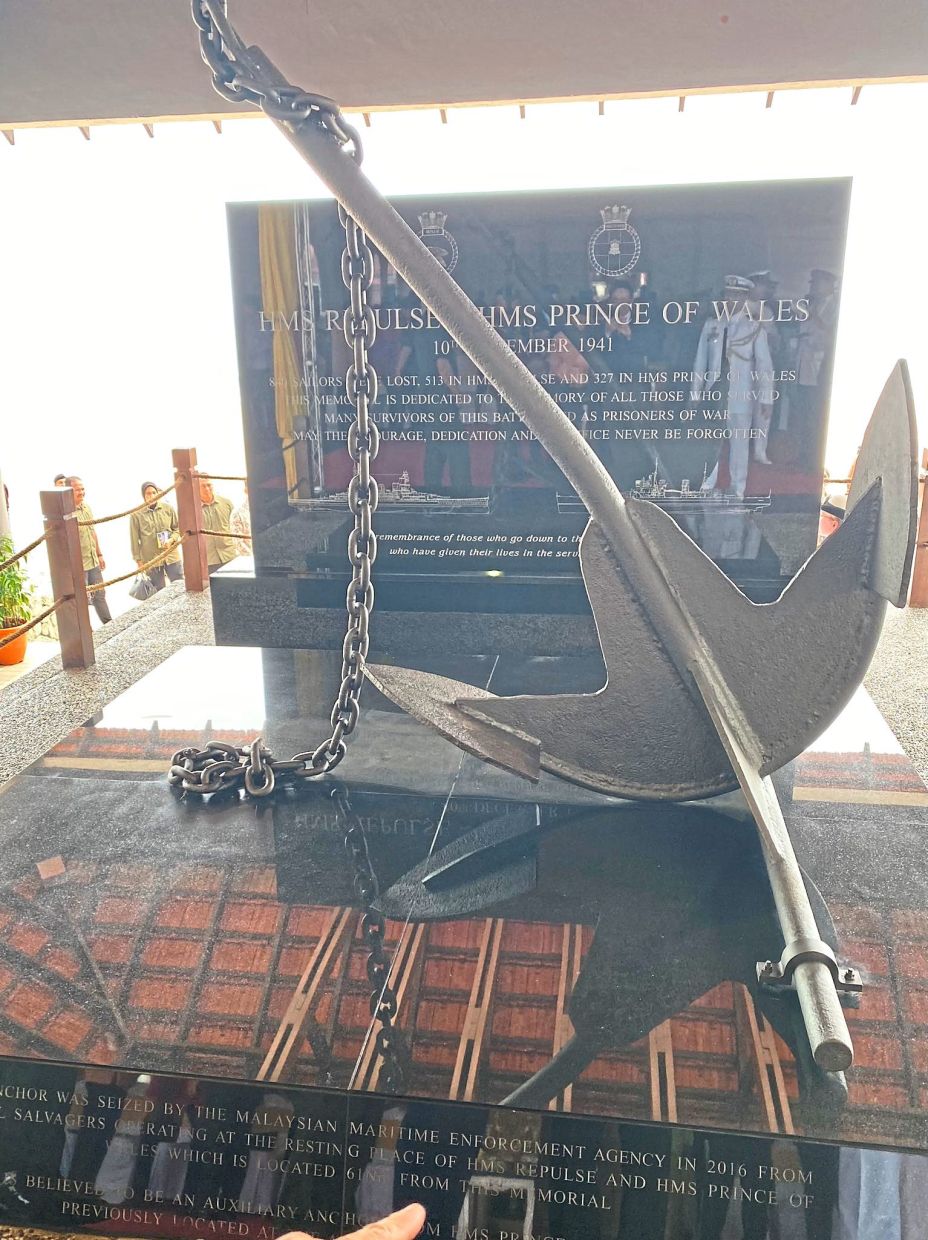
The artefacts salvaged from HMS Repulse in 2014 were returned to the British government, who then handed them to the Malaysian Armed Forces in 2016 to be exhibited in the Port Dickson Army Museum.
One of the artefacts, an auxiliary anchor from HMS Repulse, was later also included in a memorial to the two British warships in Teluk Cempedak, Kuantan, which was unveiled in December 2023 in an event graced by the 16th Yang di-Pertuan Agong, and attended by the granddaughter of HMS Prince of Wales’ captain, Henrietta Wood (née Leach), as well as representatives of the Japanese government.

