



EIGHTY years on, there are still many “lost” and unaccounted for servicemen from World War II around the world.
The missing in action includes thousands of prisoners of war and those perished in air crashes in remote jungles and deserts, as well as many hundreds of thousands more buried at sea in warships belonging to the British, American, Australian, Dutch and Japanese naval forces.
According to the US Defense Department, more than 72,000 US military members remain unaccounted while the Japan Association for the Recovery and Repatriation of War Casualties – the organisation contracted by the Japanese government to handle the recovery of the nation’s war dead – reports that the remains of around 1.12 million Japanese WWII servicemen are waiting for recovery.
There is no exact total for unaccounted British WWII military personnel, but the country’s Defence Ministry estimates there are thousands of servicemen still missing.
Most of these governments are now attempting to recover and repatriate the remains of their fallen, so that they can be honoured with the dignity and recognition their sacrifice deserves.
However, this endeavour is often complex as it involves multiple complicated factors including legal jurisdiction, international diplomacy, heritage preservation and respect for the deceased. And it gets even more complicated when a criminal investigation is involved.
A delicate process
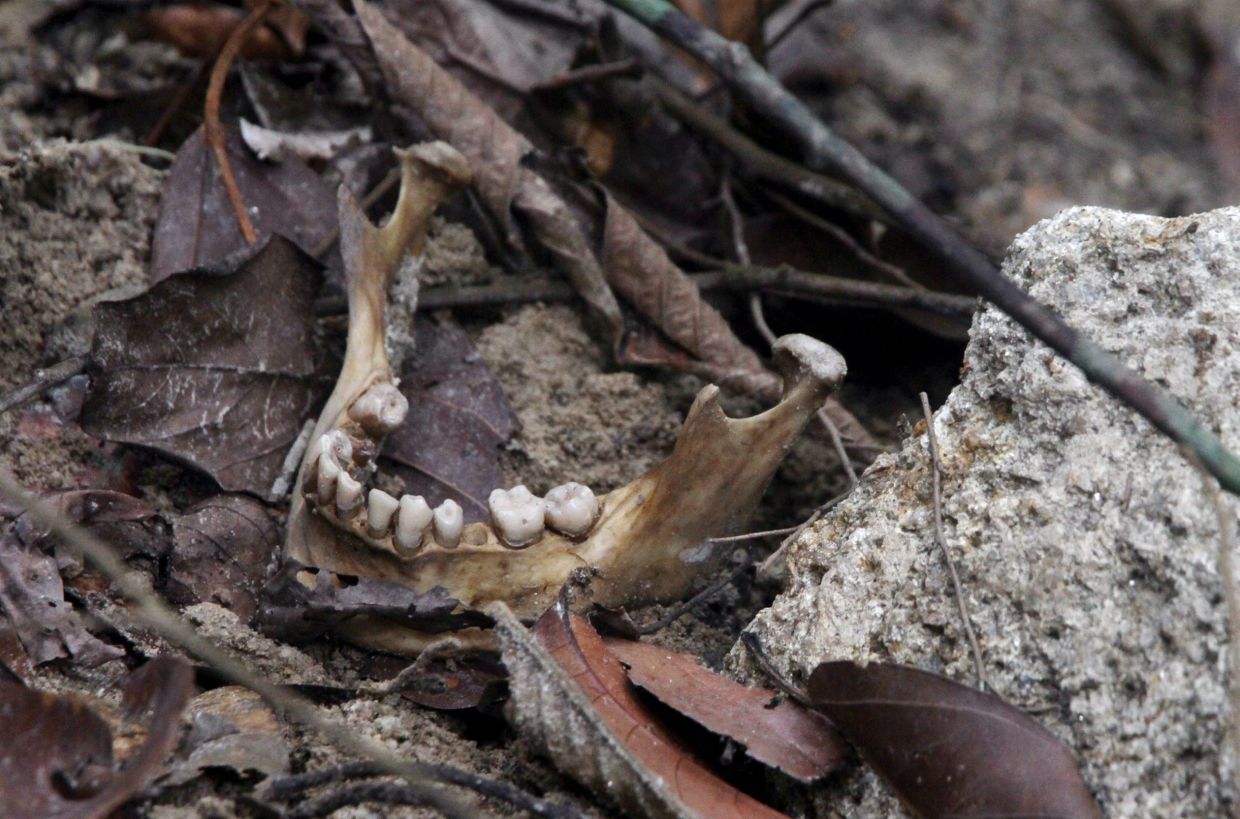
The discovery of human remains is a delicate and tightly regulated process.
Across Malaysia, whether on land or underwater, recovered skeletal material is handled with meticulous care.
Dr Suresh Narayanen from Universiti Sains Malaysia’s Centre for Global Archaeological Research (CGAR) tells Sunday Star that the first priority is always to secure the site, where possible, when human remains are uncovered.
“(This is) to prevent disturbance, looting or accidental damage,” he explains.
All discoveries must be reported immediately to the relevant authorities, such as the National Heritage Department, and any excavation or recovery is suspended until formal permission is granted, says Suresh.
When remains may be of more recent origin, forensic archaeology methods come into play to support identification.
In line with international practice, multidisciplinary teams collect post-mortem data – such as dental records, radiography, distinguishing features and, where viable, fingerprints or DNA – and then reconcile these against ante-mortem information supplied by families or institutions.
This follows the widely used Disaster Victim Identification framework, which was established by Interpol.
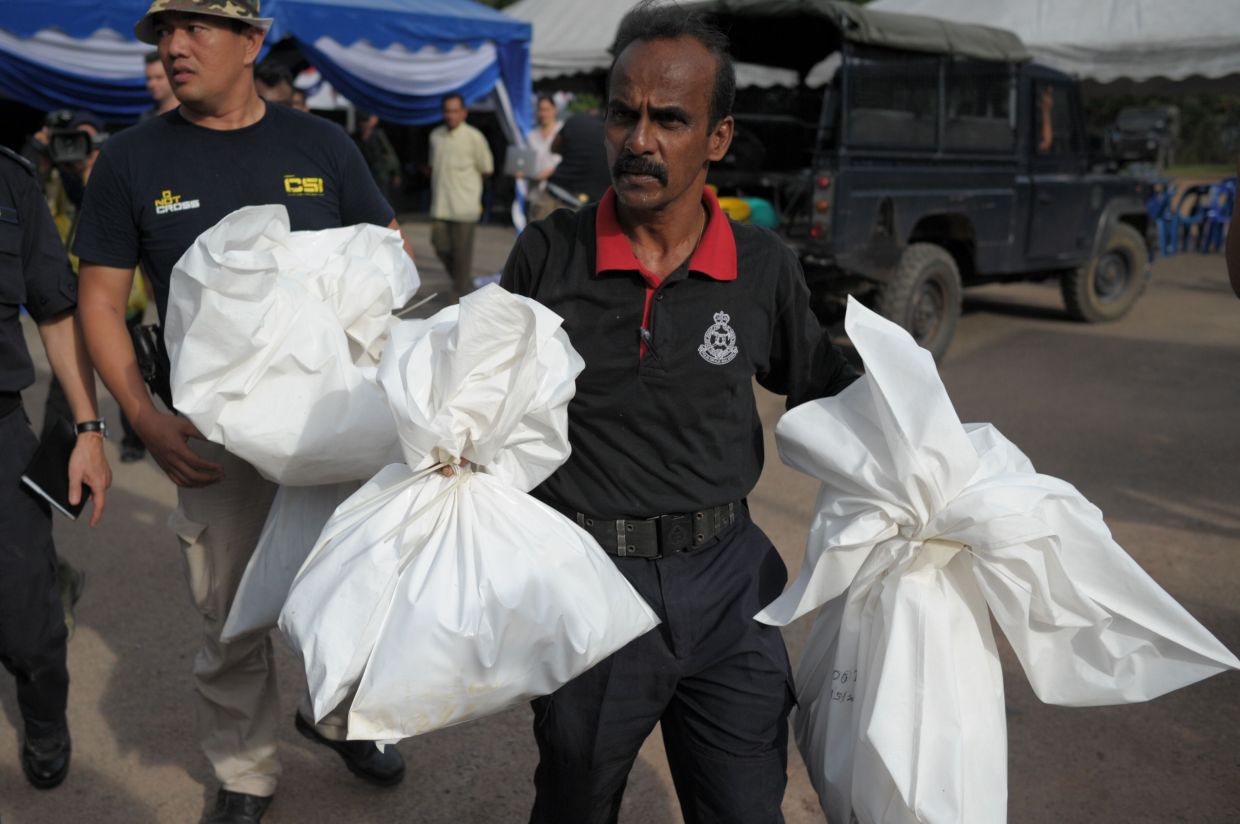
Malaysia has experience coordinating such efforts at scale.
In the case of the Wang Kelian mass graves, for example, authorities established a victim identification centre to process numerous sets of remains, applying these phased procedures to manage evidence securely and match identities where possible.
The same emphasis on dignity and formal custodianship applies to remains from earlier conflicts.
In 2009, a privately-funded expedition unearthed the remains of eight British World War II airmen in the jungle of Kuala Pilah.
Following careful recovery and verification, the eight servicemen were finally buried on a hillside overlooking Kuala Lumpur in a burial service with military honours in 2012.
The service was attended by the families, and members of the Queen’s Colour Squadron bore the single coffin carrying the remains to their final resting place.
Then in 2015, human remains recovered from the crash of a US military transport plane in 1945 were returned to the US by the Malaysian government. It was reported at the time that a US Defence Department lab would attempt to identify the remains.
Global standards
Malaysia follows global archaeological standards when it comes to the protocols for documenting and preserving human remains, which involve systematic recording of context, careful cataloguing and protective conservation measures.
However, these practices are also shaped by our tropical environmental challenges and ethical responsibility.
“This ensures that human remains are preserved as valuable scientific resources while also being treated with dignity and cultural sensitivity.”
First, says Suresh, the burial context is meticulously documented prior to removal, including the orientation and position of the skeleton, the association of any grave goods, the soil composition and so on.
“In the Malaysian excavations, this step is especially critical because the tropical environment accelerates bone decay, making contextual evidence equally important for interpretation.”
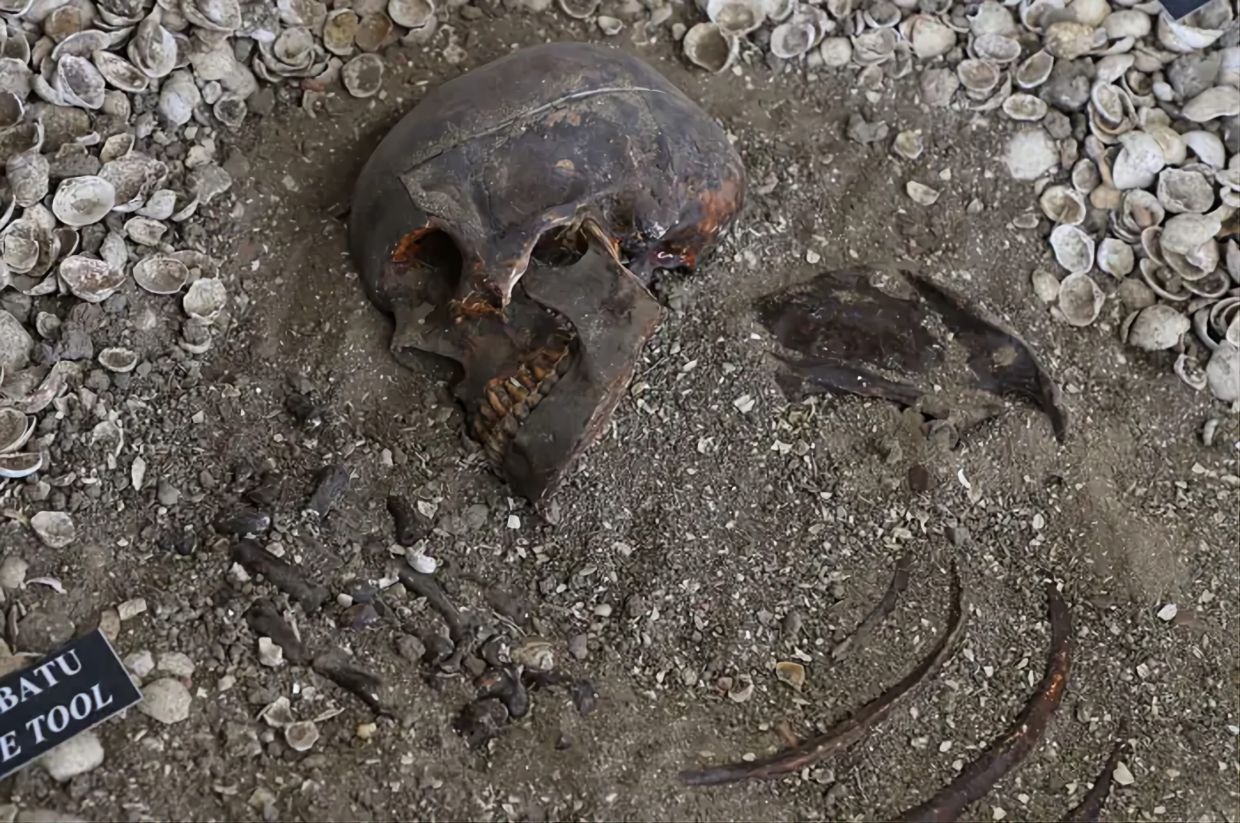
Then the burial is photographed by multiple angles throughout the process, complemented by scaled drawings. Mapping is also carried out to record the precise spatial position of the skeletal remains.
Finally, each skeleton and its associated bone fragments are assigned a unique reference number that is systematically linked to excavation records.
Before the skeletons can be removed from the site, on-site conservation is carried out to stabilise the remains and their surrounding context.
Suresh says this will ensure the fragile bones and associated materials are protected during excavation and transport.
“To strengthen fragile or crumbling remains, consolidants such as diluted Paraloid B-72 are applied to prevent disintegration during handling.
“Protective coverings including acid-free tissue, aluminium foil and plaster bandages are also employed to support delicate remains.”
These measures will ensure that the skeletal material and its archaeological context remain intact until they can be safely transported to a laboratory for detailed analysis, says Suresh.
Then comes the issue of storage, which Suresh describes as “one of the most critical aspects of archaeological practice” as bones and teeth are fragile and highly susceptible to deterioration, particularly in humid tropical climates like Malaysia.
In general, Suresh notes that the National Heritage Department serves as the official custodian of Malaysia’s archaeological collections, and thus skeletal remains recovered in archaeological contexts or designated as heritage items are usually handed over to them for long-term care.
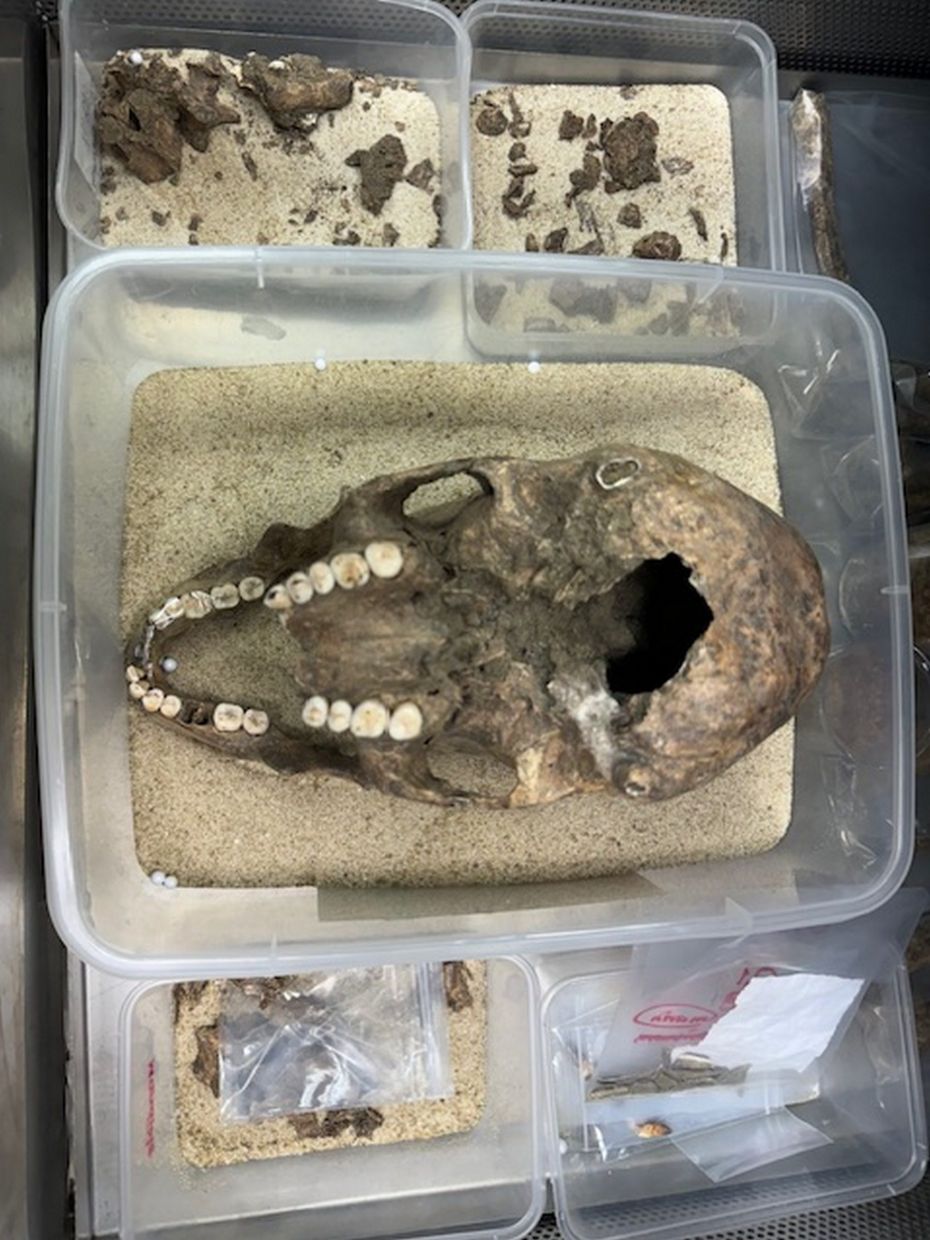
Storage generally takes place in two phases: initial storage and permanent storage.
“During the initial storage phase, skeletal remains are placed in acid-free boxes with fragile specimens further protected by wrapping them in acid-free tissue paper, bubble wrap or polyethylene foam.
“In the permanent storage phase, the skeletons are curated in designated facilities,” he says.
He gave the example of excavations carried out by USM, where the skeletal material is first stored at the CGAR laboratory.
“Here, the remains are kept under controlled conditions to ensure long-term preservation and to support future study.
“In terms of security, CGAR maintains dedicated repositories where human remains are stored in restricted-access areas to prevent theft, vandalism or misuse.”
To further bolster security, entry is limited to approved researchers and authorised staff only.
“Once the analytical work is completed, the skeletal material is formally transferred to the National Department of Heritage, which serves as the official custodian for Malaysia’s archaeological collections,” Suresh says.
Any decisions regarding long-term storage or museum display are then made collaboratively, ensuring that the remains are treated with both scientific care and cultural respect, he says.

