
HENDRIK Dierendonck, a second-generation butcher who has become, as he describes it, “world famous in Belgium” for his curated local beef, thinks Europe’s way of raising cattle results in varied and delicious cuts that European consumers prize.
“They want hormone-free, grass-fed,” Dierendonck explained recently as he cut steaks at a bloody chopping block in his Michelin-starred restaurant, which backs onto the butchery his father started in the 1970s. “They want to know where it came from.”
Strict EU food regulations, including a ban on hormones, govern Dierendonck’s work. And those rules could turn into a trade war sticking point.
The Trump administration argues that American meat, produced without similar regulations, is better – and wants Europe to buy more of it, as well as other American farm products.
“They hate our beef because our beef is beautiful,” US Commerce Secretary Howard Lutnick said in an interview recently. “And theirs is weak.”
Questions of beauty and strength aside, the administration is right about one thing: European policymakers are not keen on allowing more hormone-raised American steaks and burgers into the European Union.
Further opening the European market to American farmers is just one ask on a laundry list of requests from Trump.
US negotiators also want Europe to buy more American fuel and trucks, to change their consumption taxes and weaken their digital regulations.
Trade officials within the European Union are willing to make many concessions to avert a painful and protracted trade war and avert higher tariffs. They have offered to drop car tariffs to zero, buy more gas and increase military purchases.
Negotiators have even suggested that they could buy more of certain agricultural products, like soy beans.
But Europeans have their limits, and those include America’s treated T-bones and acid-washed chicken breasts.
“EU standards, particularly as they relate to food, health and safety, are sacrosanct – that’s not part of the negotiation, and never will be,” Olof Gill, a spokesman for the European Commission, the EU’s administrative arm, said at a recent news conference. “That’s a red line.”
It is not clear how serious the Americans are about pushing for farm products like beef and chicken.
But the topic has surfaced repeatedly.
When US officials unveiled a trade deal with Britain on May 9, for instance, beef was part of the agreement.
But according to Britain, the deal would simply make it cheaper for Americans to export more hormone-free beef to the country and not weaken British health and safety rules, which are similar to those in the European Union.
When it comes to the European Union, the United States can already export a large amount of hormone-free beef without facing tariffs, so an equivalent deal would do little to help American farmers.
But diplomats and European officials have repeatedly insisted that there is no wiggle room to lower those health and safety standards.
And when it comes to meat-related trade restrictions more broadly, there is very little. Chicken, for instance, faces relatively high tariffs, and there is limited appetite to lower those rates.
That’s because Europe is protective of both its food culture and its farms.
Where America tends to have massive agricultural businesses, Europeans have maintained a more robust network of smaller family operations.
The 27-nation bloc has about nine million farms, compared with about two million in the United States.
Subsidies and trade restrictions help to keep Europe’s agricultural system intact.
The European Union allocates a big chunk of its budget to supporting farmers, and a mix of tariffs and quotas limit competition in sensitive areas.
EU tariffs on agricultural products are around 11% overall, based on World Trade Organisation estimates, though they vary hugely by product.
And the bloc could place higher tariffs on US farm goods if trade negotiations fall through. Its list of products that could face retaliatory levies includes beef and pork, along with soy products and bourbon.
But it’s not just tariffs limiting European imports of American food. Strict health and safety standards also keep many foreign products off European grocery shelves.
Take beef.
Dierendonck and other European farmers are banned from using growth stimulants, unlike in the United States, where cattle are often raised on large feedlots with the use of hormones.
European safety officials have concluded that they cannot rule out health risks for humans from hormone-raised beef.
To Dierendonck, the rules also fit European preferences. The lack of hormones results in a less homogenous product.
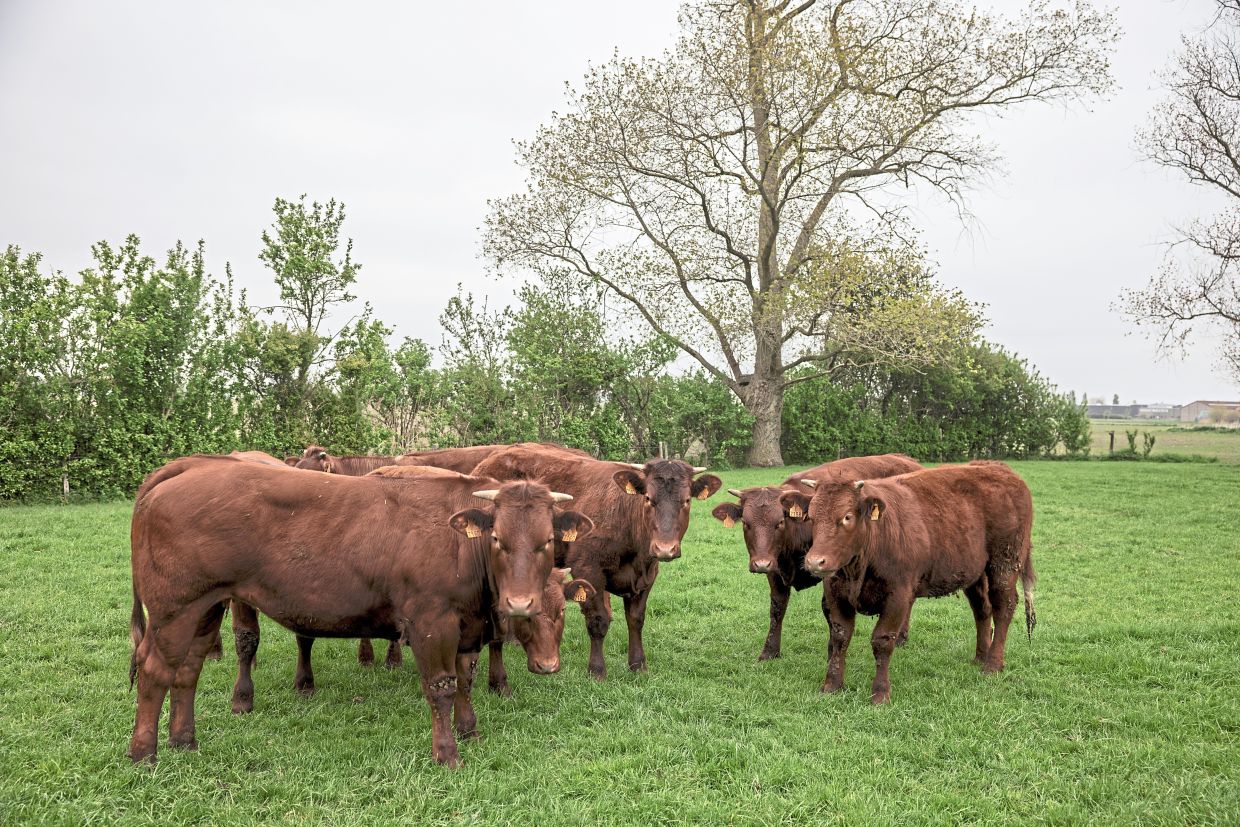
“Every terroir has its taste,” he explains, describing the unique “mouth feel” of the West Flemish Red cow he raises on his farm on the Belgian coast.
But farming beef without hormones is more expensive. And American exporters have to adhere to hormone limitations when they send steaks, hamburgers or dairy products to EU countries, which European farmers argue is only fair.
Otherwise, imports produced using cheaper methods could put European farmers out of business.
“We cannot accept import products that do not meet our production standards,” said Dominique Charge, a cattle farmer from the west of France who is also president of La Cooperation Agricole, a national federation representing French agricultural cooperatives.
The result is that the United States does not sell much beef to Europe. It makes more economic sense for US farmers to sell into markets that allow hormone- raised cattle.
In Europe, including at Dierendonck’s butchery and farm, there’s a value placed on the old-fashioned, small-scale way of doing things, policymakers and farmers agreed.
Dierendonck does buy some American beef for customers who ask for it – it’s easy to cook, he said – but it’s a small part of the business.
“I like American beef very much, but I don’t like it too much,” said Dierendonck, explaining that to him, the beef his European suppliers provide is varied, like fine wine.
“For me, it’s about keeping traditions alive.” — ©2025 The New York Times Company
This article originally appeared in The New York Times
Already a subscriber? Log in
Get 20% OFF The Star Digital Access
Cancel anytime. Ad-free. Unlimited access with perks.