
THE inland city of Chengdu in southwestern China is often ridiculed for its slow-paced and leisurely lifestyle.
It is portrayed as a haven for slackers, lacking the unrelenting, hardworking culture found in wealthy coastal trade centres like Shanghai, Guangzhou and Shenzhen.
For decades, industrious young people left Chengdu and other landlocked urban centres to pursue opportunities near the coast, where money poured in as China opened its factories and exported its goods to the rest of the world.
Even before China’s trade war with the United States, more young people were turning away from the hypercompetitive work culture found in the country’s megacities, opting for a more chill life in Chengdu, which has earned the reputation of being “China’s happiest city”.
Chengdu is one of the fastest-growing cities in China. Its population has surged 30% in the past five years to 21.5 million and its real estate market is booming.
The appeal of Chengdu, an ancient city with a history dating back more than 2,300 years, reflects a budding disillusionment among young people who see an economy that is no longer creating the opportunities it once did for their parents.
Better pay and a successful career are not a guaranteed trade-off for endless workdays and the grind of living in crowded and unaffordable cities.
Wuhan, another inland city and the capital of Hubei province, has also experienced a significant increase in residents over the past four years.
Jobs in Chengdu generally pay less than those in other major cities, and the opportunities for career advancement are more limited. But it is a less stressful place to live.
“Chengdu is more friendly to young people in every aspect,” said Wang Di, a history professor at the University of Macau who has written extensively about the city.
He compared Chengdu to Austin, Texas – another city known for its embrace of art and counterculture.
Chengdu also has a thriving hip-hop scene and a plethora of teahouses.
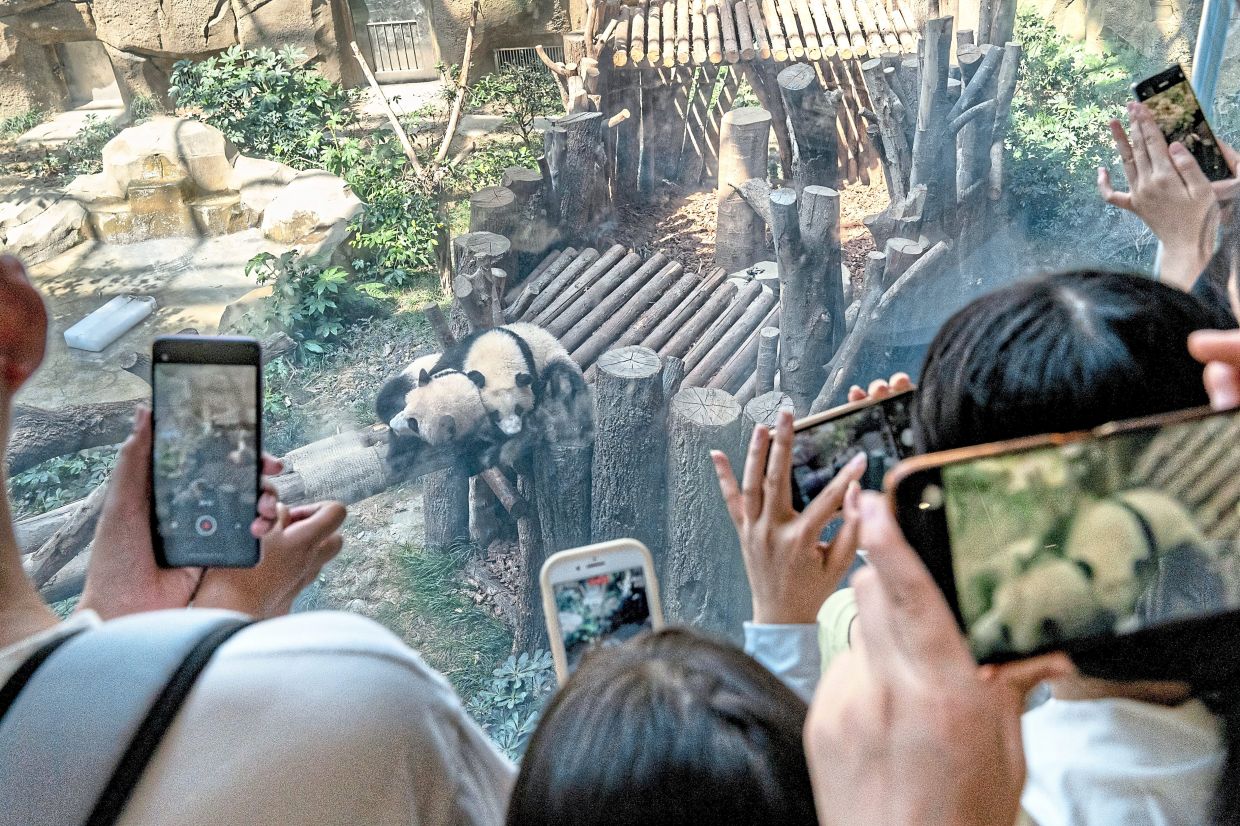
And, of course, there are the pandas: Chengdu is home to hundreds of giant pandas.
The Chengdu Research Base of Giant Panda Breeding attracted more than 12.2 million visitors last year, according to Chinese state media.
With an influx of transplants and returnees, housing prices in Chengdu have increased at a faster rate than in any other major city in China.
Since 2021, the average home price per square metre rose 16.8%, compared with a 5.4% increase on average for 10 major Chinese cities, according to statistics from China Index Academy, a real estate research firm.
Hu Sheng, 36, moved to Chengdu from a smaller nearby city in Sichuan province to work in the construction and renovation industry.
He has been looking for a three-bedroom apartment. But prime properties go off the market quickly, he said.
“There are a lot of people buying homes now,” Hu said.
“Everyone is scrambling for those apartments.
As China’s westernmost major city, Chengdu has long played a role in national security.
Starting in the 1960s, the government invested heavily in moving military defence and transport manufacturing inland as a way to protect critical industries from potential foreign invaders.
Chinese leader Xi Jinping has pledged to bolster the country’s industries for cutting-edge technology such as semiconductors and reduce its reliance on foreign firms.
Economists have speculated that a similar focus on strategic domestic industries may bring more companies to Chengdu and other inland cities.
About 70% of Chengdu’s economy derives from the service sector, which includes spending from tourism and dining at the city’s popular spicy hotpot restaurants.
Chengdu is not as reliant on manufacturing as other locations are, insulating it from the most devastating impact of the tariff battle with the United States.
There is also a thriving entertainment sector in Chengdu.
The animated film Ne Zha 2, which became China’s highest-grossing movie ever upon its release this year, was produced by a studio in Chengdu.
The city has also become a hub for video game development, driven in part by Chengdu’s emergence as a centre for the esports industry.
Huang Xue, a general manager at the Chengdu branch of China Index Academy, a property market data provider, said housing prices in the city were more in line with wages than in other cities.
Ultimately, though, people are turning to Chengdu because at a time of economic uncertainty across China, she said, “people should enjoy life when they can”.
Three years ago, Emma Ma, 30, left Beijing to move to Chengdu, where she is running a studio producing music videos with her partner.
She said she was renting a two-bedroom apartment for about US$400 a month, which would barely cover the cost of a bedroom in a shared apartment in Beijing.
She and her partner also hired a helper to do chores and make dinners for them.
“I feel it doesn’t cost a lot to be happy here,” Ma said.
Wang said the negative perception of a slower lifestyle had changed in China after the Covid-19 pandemic, when cities such as Shanghai were locked down for months.
The relative stability of daily life in Chengdu, once considered dull, became more appealing, he said. — ©2025 The New York Times Company
This article originally appeared in The New York Times
Already a subscriber? Log in
Get 20% OFF The Star Digital Access
Cancel anytime. Ad-free. Unlimited access with perks.