
Deb Taylor emerged empty-handed from her branch of budget fashion retailer Primark in Southampton, southern England, complaining that “even the cheap stuff’s not cheap anymore”.
The 63-year-old cleaner was echoed by Antonia Alden, a stay-at-home mum of three who was on a rare shopping trip looking for a birthday present.
“Other than that, I don’t even bother going to the shops,” the 30-year-old said.
Both women are struggling to make ends meet after months of high inflation and soaring energy bills, and epitomise the drop in confidence and spending among lower-income shoppers shown in a succession of British surveys.
While the bottom fifth of households by income account for just a tenth of UK consumer spending, their reluctance or inability to open their wallets is a headwind for a government that has made growth its top priority – and a political risk too.
The Labour Party, elected last July, is already under pressure from Nigel Farage’s right-wing Reform party which is having success in targeting those Britons who feel left behind.
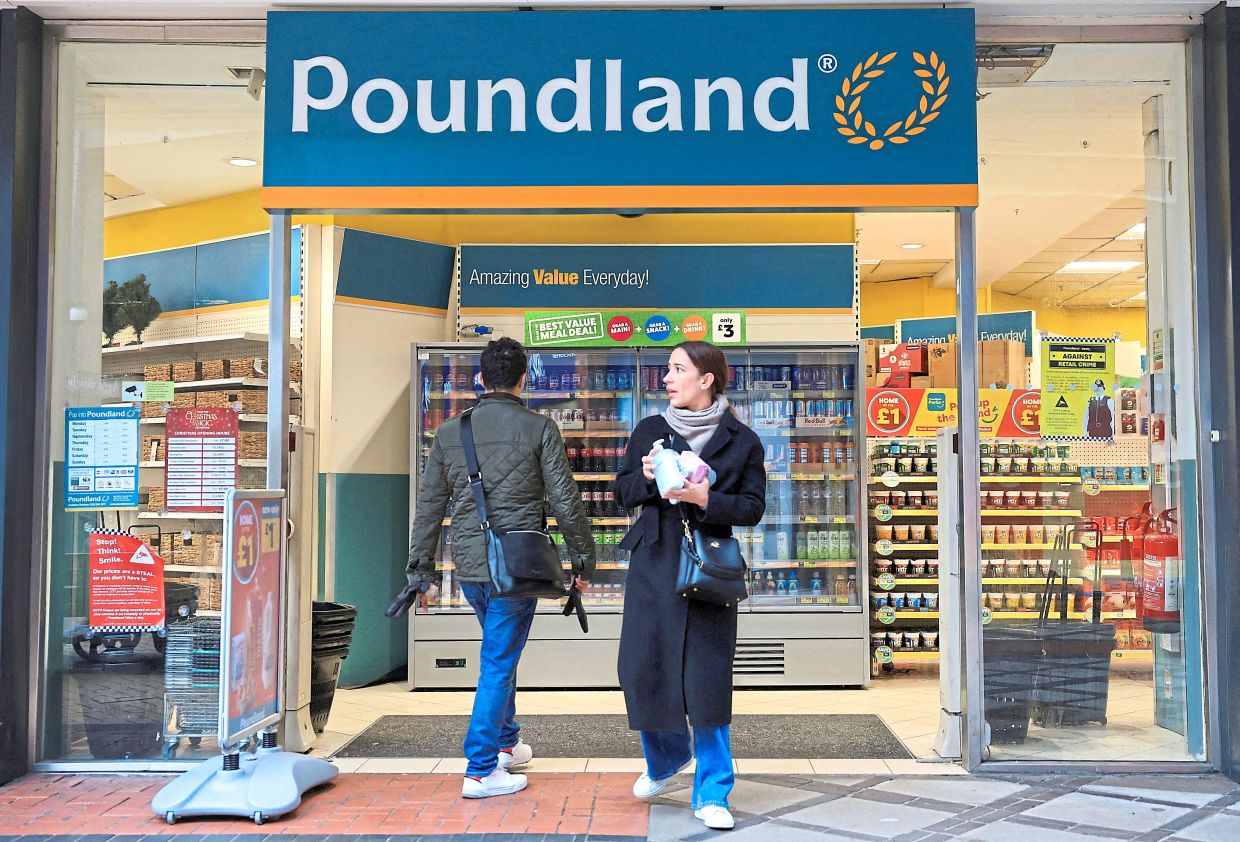
The financial stress is also bad news for retailers reliant on less affluent shoppers, with the likes of Primark, discounters Poundland and B&M, baker Greggs and sportswear group JD Sports all struggling in the key Christmas quarter.
In contrast, mid-market retailers such as Marks & Spencer and Next performed well.
“Clearly there is a huge disparity between the haves and have nots, and this appears to be getting worse – not better – at the start of 2025,” said Neil Bellamy, consumer insights director at market research firm GfK.
Many business executives had hoped that Labour’s landslide election victory would bring some stability to Britain following 14-years of often chaotic Conservative rule dominated by the departure from the European Union.
But its first budget announcement in October, with a £2bil tax raid on companies to fund investment and public services, has left them reeling.
While interest rates are slowly coming down and earnings adjusted for inflation are rising at the fastest pace for more than 20 years, the jobs market has weakened and the economy has flatlined.
Retailers warn of price hikes due to higher costs, the Bank of England sees overall inflation rising back to 3.7% this year, and employers have said they expect to rein in pay awards.
Britain has long used its minimum wage to support the lowest paid and it has risen almost 50% since before the Covid-19 pandemic – but even with that, large increases in the cost of energy and food have hit the lowest paid disproportionately hard.
Eoin Tonge, finance director of Primark parent Associated British Foods, told Reuters the budget had not helped: “If anything, uncertainties remain for elements of society, with unemployment and also part-time work being challenging.”
The pressures can be seen in a monthly Income Tracker from supermarket group Asda and the Centre for Economics and Business Research, which calculates how much UK households have left to spend after paying taxes and bills.
Top- and middle-income households saw their weekly disposable income grow in December, up 9.9% year-on-year to £894 for the most wealthy, and 18.6% for those in the middle.
But for the UK’s lowest-earning 20% of households, it fell by 0.3%, leaving a shortfall of £70 per week.
GfK said confidence levels in households with incomes under £14,500 a year fell 11 points in its January survey to -46. In contrast, households with incomes over £50,000 saw a drop of just 4 points to -1.
Similarly, the Institute of Grocery Distribution said its most recent survey found 41% of shoppers who earn below £21,000 plan to cut grocery spend in the next few months, and more than half plan to eat out less.
On top of money worries, concerns around job security have risen.
Supermarket groups Tesco, Sainsbury’s and Morrisons have announced 3,600 job cuts in recent weeks.
John Jones, who runs a shop and online store Philip Morris and Sons in Hereford, western England, may cut two of his 22 staff as he faces a £100,000 jump in his annual costs from April due to policy changes in the budget.
“When you’ve already got no growth and probably no prospect of growth because the consumers aren’t feeling very confident, that’s a lot of money to be finding,” he said.
Outside Primark, Alden is bracing for a tough year: “I don’t see it getting any better.” — Reuters