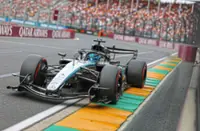
AS GEORGE Russell gears up for another thrilling season with Mercedes-AMG PETRONAS Formula One Team, his excitement is palpable, especially when it comes to the groundbreaking work being done by PETRONAS.
Russell’s journey with Mercedes-AMG PETRONAS began in September 2021, a pivotal moment in his career.
“Joining the team was a huge milestone for me. I’ve joined the most successful team in F1,” recalls the 26-year-old after finishing this season’s F1 at No 6 in the driver standings.
His debut race in Brazil in 2022 marked another significant milestone, but it was his visit to Kuala Lumpur that truly opened his eyes to the innovative spirit of PETRONAS.
“Seeing the PETRONAS Towers and visiting various locations within PETRONAS, I was amazed by the innovation happening there,” he says.
And the anticipation of the 2026 shift to sustainable fuels is particularly thrilling for Russell.
“This is a really exciting moment for the sport and for PETRONAS as we move towards a more sustainable future,” he tells a roundtable session with journalists, organised by PETRONAS recently.
Driving innovation
Russell is particularly excited about the technological advancements driven by PETRONAS.
“The efficiency and high standards of the fluids and fuels from PETRONAS directly impact our performance.”
When the F1 fully adopts sustainable fuels, Russell sees a significant crossover between F1 technology and everyday use.
“The information we gather through F1 will directly impact daily road users and potentially sustainable aviation fuels in the future.”
For Russell, PETRONAS’s technology remains impactful on the team’s performance.
“Firstly on reliability and secondly, the fluids that we have been using in our car to cool-down things such as the electrical recovery system has an impact on the aerodynamics.
“If you have a system that is cooling the car more efficiently, you can make your race car narrower and this is always better for aerodynamics.
“The Mercedes power unit, PETRONAS fuel and fluids are certainly the most competitive on the F1 grid.”
Thrill of victory, challenge and tech
The 2023-2024 season has been a rollercoaster for Russell and his team. The victory in Las Vegas was a testament to their hard work.
“It has not been a straightforward season. We’ve had strong performances in some races and struggled in others,” Russell admits.
The key, he emphasises, is consistency.
“We need to ensure the work we do in the winter helps us perform well across all 24 races, not just a handful.”
As Russell looks ahead to the next season, he remains grounded.
“Right now, there are no expectations because we are racing against the lap time, the stopwatch. We know the improvement that we will make, but if our rival make the same improvement that we have made over the winter, (then) we’ll be in the same position.”
Reflecting on his first victory of the season in Austria, Russell shares how it felt like redemption after a missed opportunity in Montreal.
“Montreal was a victory that slipped through our fingers. The win in Austria was so deserving for the whole team and made up for the loss in Canada.”
Looking ahead to 2026, Russell highlights the significant regulation changes that will impact both the engine and chassis.
According to reports, the changes also include redesign of F1 machines, which will see shorter and narrower cars.
“The year 2026 will be the biggest regulation change we’ve ever seen in F1. The challenge will be balancing development for the current car while preparing for the future within the constraints of the financial cost cap.”
Lead and compete
As the lead driver for Mercedes in the upcoming season with Lewis Hamilton’s departure, Russell feels ready for the challenge.
“After three years with the team, I’m absolutely ready for this next chapter,” he asserts. With a new young driver, Andrea Kimi Antonelli, joining the team, Russell is eager to mentor and collaborate.
“For the team, it is going to be a fresh start now with a new young driver coming in. Both Kimi and myself are from the Mercedes Junior programme (driver development programme). I know absolutely what is required, from myself as a driver, and also as the most experienced of the two.
“Kimi is a young kid with a lot of energy and speed. He will bring a fresh perspective to the team.”
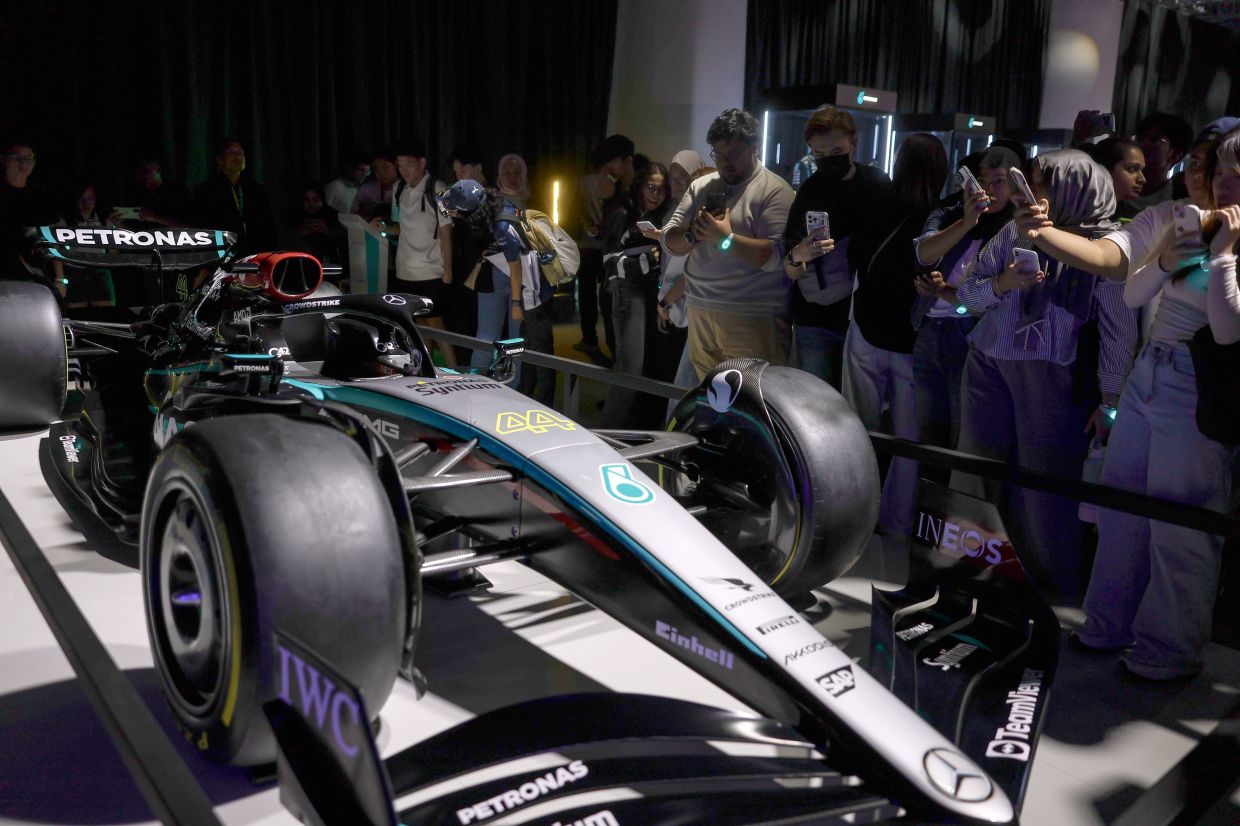
Russell also acknowledges the formidable challenge posed by Max Verstappen but remains optimistic.
“Max is hard to beat when he’s in the fastest car, but he’s not unbeatable. And we saw this season during the first seven races, he won six of them and maybe he should have won all seven without the DNF (did not finish) in Australia.
“He’s without a doubt, the benchmark in F1 for the moment. But if you take the final 10-12 races that we have achieved, he has won only one. It doesn’t mean that he is unbeatable.”
The focus, he insists, is on ensuring they have the fastest car for the next season.
“So as drivers, we are ultimately at the mercy of our race cars. Every time we finished a race first position, 75% of the time, I had my teammate in the second position. So that goes to show that the car’s performance is better than everybody else’s. This is just the nature of F1.”