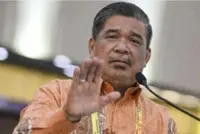
Guided by principle


In happier times: Musa (right) seeing Dr Mahathir and wife (now Tun) Datin Seri Dr Siti Hasmah Mohd Ali off on a trip to China in 1985. — Filepic/GARY LEONG/The Star

TUN Musa Hitam celebrated a significant life milestone this year: the former deputy prime minister turned 90 years old in April.

The low-profile veteran statesman does not often give press interviews, but with so many decades as a first-hand observer of Malaysia’s political landscape, he has plenty to share about the state of the country once he gets started.

In conversation with Sunday Star recently, the nonagenarian relates some of his experiences over his long life, the lessons he learned, his thoughts on freedom and democracy in the country, including the recent government move to introduce new licensing requirements for social media and Internet messaging services that have at least eight million registered users in Malaysia.

> You recently celebrated your 90th birthday. Did you expect to live this long?

I don’t think about those things. Life is life.

If you want me to define my life ... God!

I don’t even celebrate my birthday. Others celebrate my birthday but I don’t bother too much about it.

But because you asked that question, I will tell you: Nowa-days, reaching 90, I often ask myself, “Eh, really, I am 90?”

Many years ago, there was some occasion and I was standing next to (former prime minister) Tun Dr Mahathir Mohamad. We were out of the government already but we were there.

Suddenly, I turned to him, in front of people, and I said, “Eh, you don’t die now, ah.”

This is my language with him, I don’t think he likes it, but he did not care, I do not care, we say what we want to say.

That day, it was very light-hearted, what I said.

He asked “What are you talking about?”

I said, “No, I want you to live. Do you know why? You are my benchmark. If you die now, I will die at your age.”

In his usual look at me, he was not upset, he thought it was a joke, I think, knowing him.

Animated: Musa looking far from his age during a lively interview. — AZMAN GHANI/The Star

> What’s your secret to living to 90?

Simple. Being myself. Full stop.

I look after myself. Number one, healthwise. Number two, in terms of faith. Number three, inclusivity in social contact. These are the things that will make me want to live.

Neverending contact with genuine friends. As an example, I have two handsful of friends who have been close to me, and we get together often enough, particularly in golf. Golf seems to take a lot of time, which is good and healthy, and we get together socially, we eat together, and that’s the basic activity I indulge in. We play once every two weeks or so.

Other than that, I’m very proud to tell you, I receive lots of invitations to talk about politics with diplomats, foreign ones, and journalists.

My attitude is simple: when I meet other human beings, I learn a lot. That’s the reason why I like to meet people, not the other way around.

That’s how I learn, and how I keep myself in touch. The difficult thing in terms of these invitations is that my health is not as good as it could be.

ALSO READ: Living life Musa Hitam's way

> Do you get angry easily?

Very rarely, but when I do, you should look out!

For example, in politics, you know how I left government (in 1986).

After he (Dr Mahathir) told everybody that this man is bad – he did not mention my name – the next day I went to his office at the Defence Ministry, just as Musa meeting Mahathir. Old friends, I thought.

I asked, “Last night, who were you talking about?”

His answer was very terse: “You, lah.”

Immediately I said, “Oh no, this cannot work then.”

I did not tell him then but I want to tell it now: Look, I am your deputy, expected to be 100% with you, yet that deputy is accused of wanting to “kill” the boss in politics.

“Macam ni, I have to resign,” I told him. He did not expect it.

Sorry, he thought I was just an ordinary politician, you don’t mean what you say. No, when I said “macam ni”, I meant it. He was so surprised.

I do not make decisions unless thought out very carefully in detail, in terms of implications. In this particular case, I was very conclusive.

(Musa shares details of this meeting in his 2016 book, Frankly Speaking.)

> There is no regret over that decision when you look back?

No. I am sorry to be arrogant but it was no big deal. So what?

I was the only one, if I may say so, in a position like that, to leave it. What made me really irritated when I heard people talking about me was when the Malays said, “Dia tak ada rezeki (he does not have fortune)”.

I was so angry. I don’t regard my job as a political leader is to look for rezeki (fortune). I am there to serve, to offer service.

So many of my so-called friends got angry with me when I left (because, they said) they lost their periuk nasi (rice bowl) from working for Musa. That mentality, that’s service for yourself, not service for society.

> At the time, you left the government and the deputy prime minister position but what about your position as an Umno deputy president?

The position of the deputy prime minister was the right of the prime minister. When the prime minister says he has no confidence, I have to leave.

My approach was very clear and systematic.

But then, what about my position as deputy president of Umno? I said no, that would be left to Umno.

Now, when it comes to the position of deputy president, that is another long story.

One point I must take the opportunity to tell you is all these things that happened to me, many would never appreciate because they cannot imagine Musa, the deputy prime minister, only one step more to become prime minister, would leave.

They said I was stupid. They did not understand.

I hate to use the word principle, but it was a simple principle. You have to leave, you have no choice.

I believe, and behave, in accordance with why I was, what I was. I did not want to behave like the deputy prime minister, I accepted this, and the way I accepted this is the way people accepted me.

> How well do you know Prime Minister Datuk Seri Anwar Ibrahim and how would you rate his performance so far?

It is not my business to rate but, yes, I am close enough with him, but don’t forget, at the same time, I have always been close to all the prime ministers of the country, even Dr Mahathir.

It is to the point I make a joke, I tell people, I only have one best friend in this country – it is the prime minister, whoever it is. (Laughs.)

But it is true I know each and every one of them to the point of being friends.

My relationship with Anwar is simple and straightforward. I met him much, much earlier when he was with Abim (Malaysian Islamic Youth Movement). When he was very active in Abim, I was (executive) secretary of Umno.

As it happened, in those days Universiti Malaya would have The Great Economic Debate every year. In English in those days. Very popular, very well-attended, and followed by the undergraduates as well as invited guests. Participation in this debate was much valued by other politicians.

People like (first prime minister of Singapore) Lee Kuan Yew, (former PAS president) Asri Muda, MIC’s Athi Nahappan, (Gerakan co-founder) Tan Chee Khoon would appear at the economic debate and, strangely enough, me, plus Dr Mahathir.

We would make regular appearances because we were in the government. They were interested to whack away at government people.

It happens that (former prime minister) Tun Abdul Razak Hussein had confidence in the two of us in this.

During one of those sessions, I was there. During the Q&A, lots of questions targeted the government, and the government meant Musa, lah.

One young man got up and whacked away. Wah, corruption, misuse of power, maladministration, all sorts of things.

That was Anwar Ibrahim. Wah, (the crowd was) clapping and cheering. You know, in those days, the students did not worry. They were not afraid.

I told them, “I am 100% in agreement with you. Not for anything, you are right.”

There was quiet.

“But young man, thank you for telling me these things. I want to see you after you graduate. Maybe five years later, or even 10 years, you come back to me. Think about today. Look at me straight in the eye. Then, by then, you can tell me, ‘Datuk, I am clean’. That’s what I want.”

Oh, the students did not know what to say.

That was all I knew about Anwar.

Fast-forward, Anwar became the Finance Minister. He turned out to be a reasonably good minister. Whatever responsibilities were given to him, as far as I can see, he was functioning.

Now, there are worse people who are holding office, but if you look at any personality from then to now, surely there are differences.

I’ve been asked to comment on the political situation in the country vis-a-vis leadership.

For example, on Muhyiddin Yassin, Najib Abdul Razak, Anwar. I can tell you, referring to all and each one of them, I feel they are qualified to lead the country. Each and every one of them.

I am talking about the quality of leadership then that was available. I use my words selectively.

But on Anwar, yes, he’s qualified. He can be a good prime minister. Same with Najib, as with Muhyiddin.

That does not mean Musa is trying to praise everybody. I am not known as an “ampu-ist” (sycophant).

I make my own assessments whenever necessary.

I am not going to say, “You are very good”, when I meet Muhyiddin. No, no, no, I talk to him (but) I don’t tell him “You are so good”. Most people would do that because they can get contracts. I’m sorry to put it bluntly.

Najib has always been very good to me and respectful of me. He showed lots of good personality traits.

And yet people don’t understand. (They say) “Musa, he supports everybody”.

An assessment is an assessment.

> What are your thoughts on the state of freedom and democracy in the country?

We are not used to being democrats in the true sense of the word. What do I mean?

So many people asked me, “Eh, Musa, you launched Tengku Razaleigh Hamzah’s book. Why?”

They thought they were clever by asking me why.

I firmly said, “You don’t understand”. In politics, democracy, you may curse each other in public or in private, but when you come across each other, you are friends.

Tengku Razaleigh has been my friend for so long. On and off, against and for. When he asked me to come, yeah, of course. I launched (KU LI: Memoir 205 was launched in May).

Another thing about Tengku Razaleigh.

When the issue of deputy president arose for the Umno election, I was the incumbent, but Tengku Razaleigh was kind enough, gentlemanly enough, democratic enough to come to my office and he said, “I’m here to ask you, if you are not going to fight Mahathir, I will go.”

Good of him to ask me. I will never forget.

We shook hands and we fought. And the rest is history.

(The pair were defeated in the 1987 Umno elections after leading “Team B” against “Team A” led by Dr Mahathir and Tun Ghafar Baba.)

The meaning of freedom, democracy, inclusivity. That is what it is all about. It does not seem to work (in the country).

But I’d like to think things are improving. Nowadays, in terms of tolerance and statements and criticisms, I think things are better.

I know you might not agree with me. I am just making this statement to say that, as I can see it now, compared with the past, things seem to be slightly better and improving.

> What do you think about the recent news that the government wants to impose a licensing requirement for social media providers to operate in the country?

I feel a bit disturbed but it is not conclusive yet because I don’t know what is happening.

I hope there is one way out for both sides, ie, the government and those opposed to it to sit down and come to an agreement whereby the principles of democracy are upheld and the opposition and criticisms could also be encouraged.

> Do you see any promising up-and-coming young leaders among the present line-up of politicians?

I don’t know because I am not in touch with them.

But I can tell you, incidentally at the Istana Negara, I noticed so many ministers, most of them never met me before.

Particularly two or three days ago, during tea, I was with other ministers. A young man was near me. Separately, I approached him too. I said, “You, what do you do?” He said he is a deputy minister. I am impressed by him.

From my experience, in those days when I was serving Umno, Tun Razak and Tun Ismail Abdul Rahman, they used me, if I may say so, to look for new talents.

Believe you me, I named names.

The leadership must want it. The leadership must be conscious of it.

Get 20% OFF The Star Digital Access

Monthly Plan

RM 13.90/month

RM 11.12/month

Billed as RM 11.12 for the 1st month, RM 13.90 thereafter.

Best Value

Annual Plan

RM 12.33/month

RM 9.87/month

Billed as RM 118.40 for the 1st year, RM 148 thereafter.


Follow us on our official WhatsApp channel for breaking news alerts and key updates!
politics , history , memoir , Dr Mahathir , Anwar

Next In Focus

Planning for a fit take-off
Different risks with little travellers
Holiday hiccups
Ukraine ruins Crimean summer
Open war, closed border
The world’s unlikeliest EV frontier
Where the birdsare the business
Plight of the mothers who search
Bowhunting ‘Frankenfish’
City in the kill zone

Others Also Read