SAUDI Arabia has stepped up the arrest of citizens for social-media posts related to the Israel war on Gaza as the kingdom signals a readiness to agree to diplomatic relations with the Jewish state – if it commits to Palestinian statehood.
Detaining people for online comments and restrictions on free speech and political expression are the norm in Saudi Arabia. Yet the recent spate of arrests is motivated by security concerns specifically linked to the Gaza war, according to Riyadh-based diplomats and human rights groups.
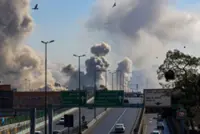
Israel’s retaliatory bombardment of Gaza has killed close to 35,000 Palestinians and left many more in urgent need of food and health care. That’s triggered a popular anti-Israel backlash across the Arab world and in Western countries including the United States, where violent clashes have taken place on university campuses. Hundreds of demonstrators were arrested in the US last Wednesday.
Saudi Arabia and regional allies like Egypt and Jordan have been alarmed by the trend, fearing that Iran and Islamist groups could exploit the conflict to incite a wave of uprisings, said some of the people, who asked not to be identified. Memories of the Arab Spring more than a decade ago remain fresh among regional rulers, who are desperate to avoid a repeat.
Recent Saudi detentions have included an executive with a company involved in the kingdom’s Vision 2030 economic transformation plan – a cornerstone of Crown Prince Mohammed bin Salman’s agenda – according to people inside and outside Saudi Arabia with knowledge of the matter. The detainee expressed views on the Gaza conflict deemed by authorities to be incendiary, they said.
A media figure who said Israel should never be forgiven has also been arrested, the people said, as has an individual calling for the boycott of American fast food restaurants in the kingdom.
The Saudi Interior Ministry and the government’s Human Rights Commission did not respond to requests for comment.
A person familiar with the Saudi government’s thinking acknowledged the arrests and attributed them to what he called a high level of alertness post-Oct 7 and a desire by authorities to deter people from making online statements about the war that might impact national security.
Saudi opposition figures and activists were in the US last Thursday, holding their largest conference since the murder of Washington Post columnist Jamal Khashoggi, a royal-court-insider turned critic, by Saudi agents in 2018. They planned to unveil what they call “the people’s vision” for the kingdom which prioritises free speech and release of all political prisoners.
The Saudi arrests for Gaza-related posts indicate Prince Mohammed’s regime will take a hard line against citizens not toeing the line when it comes to normalising ties with Israel – a topic the kingdom was working on with the US before the Israel war on Gaza muddied the waters.
Riyadh and Washington resumed their talks on a defence pact and US cooperation in launching a civilian nuclear programme earlier this year, and, with an agreement close, Israel will be invited to join a three-way pact or risk being left behind.
Since Oct 7, Saudi Arabia has harshly criticised Israel for its war in Gaza and demanded an immediate cease-fire, while indicating it remains open to warmer relations if Prime Minister Benjamin Netanyahu withdraws troops and commits to the establishment of a Palestinian state. The latter outcome remains a distant prospect, however, especially while Netanyahu’s far-right coalition remains in power.
A clampdown on pro-Palestinian sentiment on social media may be a sign Riyadh is serious about normalisation with Israel, said Jane Kinninmont, a Gulf expert who is policy and impact director at the European Leadership Network.
“If they want to change their policy and go and visit Israel and have Israelis come to Riyadh, when the war looks different, then they do not want there to be a kind of established pro-Palestinian movement that would be protesting at that sort of thing,” she said.
There are no precise figures on the number of people Saudi Arabia has arrested since Oct 7.
One Saudi man, who regularly visits a family member held for a pre-war online post in a prison south of Riyadh, said his relative has told him of a significant increase in prisoners at the maximum-security facility over the past six months.
This was corroborated by several diplomats in the Saudi capital and human-rights organisations, who said they have been tracking a spike in social media-related arrests since Oct 7.
However, they said the reasons included comments about other Saudi issues such as the cost of living, or anything critical of the kingdom or its leadership.
“People are very upset about what’s happening in Palestine and expect a strong response from their country but they don’t see it,” said Yahya Assiri, a London-based Saudi opposition leader who founded a group that tracks human-rights violations in the kingdom.
Anger over the war in Gaza is often linked to discontent over other government policies, particularly on the economic front, said Assiri, who was granted political asylum by the United Kingdom in 2017.
“These linkages are very worrisome for them but their fears are exaggerated,” he said, referring to Saudi security services. — Bloomberg