Businesses go cashless


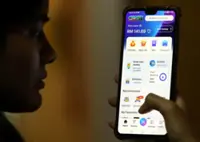
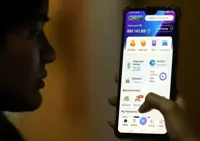
Faster and safer: As Malaysians begin embracing the new normal, businesses are reporting a surge in cashless payments.

AMONG the many lifestyle changes that we have seen since Covid-19 is growing customer acceptance towards cashless payments. Businesses are reporting a surge in e-wallet usage by customers as Malaysians begin embracing the new normal.

Lat Tali Lat co-owner Joanne Lie, 30, observes that the usage of cashless payments have "increased tremendously" at her restaurant after the pandemic.

Before Covid-19, Lie says that about 80% of her sales would be in cash terms, with the remaining 20% via cashless transactions. Now, the rate is 60% cash and 40% cashless, including e-wallet, credit and debit cards. The past few weeks have seen an exceptionally high e-wallet usage, says Lie, due to the Finance Ministry's ePenjana credit programme which aims to boost consumer spending.

"When the pandemic hit, there was a switch of behaviour and people became more careful. Many customers asked if we had a cashless payment option before I could even offer it to them," she tells Sunday Star.

"I was surprised to see that the older generation are now more open to using e-wallets. One of the first questions they ask when paying is if we accept cashless payments," she says, adding that many of her customers who are above 60 have made the change to e-wallets.

Lie also sees cashless transactions as a safer option because she does not need to carry physical money to the bank anymore.

"I support this shift, and I feel that it is safer for business owners," she says. Lie adds that cashless transactions also limits the physical contact needed when paying with money, which is a welcome thing during a pandemic.

Chin Yong, 46, who owns home furnishing store Naren Home Decor, also notes an increase with people requesting payments with e-wallets, especially among those between the ages of 20 to 40.

He suggests that one reason for its popularity among youths is that it is a viable alternative for those who may not yet qualify for credit cards. This is in addition to the convenience of e-wallets and the need to limit physical contact during the pandemic.

Nor Suraya, 32, who operates a home-based baking business, has been using e-wallets for her business ever since the start of the movement control order (MCO) and finds that it has helped her run her business more efficiently.

“Nearly everyone in the city has an e-wallet account, and sometimes people just don't want to log into their banking apps to make payments, ” she says.

Although she plans to continue using e-wallets, Nor Suraya wishes that there was a single use platform to streamline all the different e-wallet providers to make things even more convenient.

“Customers also do not want to carry much cash around and they also want to earn some points, ” she says, adding that e-wallets are not yet as popular among her customers aged 55 and above.

Stephanie Yim, 29, co-owner of Mean Mince restaurant also noticed an increase in awareness about cashless payment methods, particularly after the eTunai and ePenjana programmes.

“During and after the MCO, many businesses also discouraged cash terms, Mean Mince being one of them. This practice has helped steer customers to go cashless with e-wallets and credit and debit cards, ” she says.

“It also gives both giver and receiver peace of mind when using e-wallets during the pandemic. E-wallets cut down the risk of transmission of virus/bacteria as there is no handling of cash which is likely one of the biggest factors why people are using e-wallets now, ” she explains.

As a business, Yim also finds that some e-wallets work well as a customer-retention tool with its cashback and points collection features.

“The cashback and rewards encourage customers to come back and continue using the same e-wallet. It’s a win-win situation for all parties.”

Shira Ruslan, 30, however, has yet to make the move to e-wallets for her business selling cosmetic products.

“Most of my customers prefer to pay by cash, bank transfer, or through cash deposit machines as they are more familiar with that process, ” she says.

“I never really explored e-wallets as I thought it was only for big businesses. I didn’t know small businesses are also eligible. Actually, since you brought this up, I will now consider it!, ” she says with a laugh.

Shira notes that the convenience of e-wallets and not having to log into a bank account every time to make payments would make the process easier for her customers.

Hanif, 37, who operates a burger stall in Kuala Lumpur has yet to embrace e-wallets.

“I work on a cash basis. e-wallets are convenient but my hands can get greasy when I cook and that makes handling my phone to check on transactions difficult. It is especially tough because I manage the stall alone and have to multitask, ” he says.

However, Hanif provides his account number for customers who wish to make payments via online transfer and does not plan to make the change to e-wallets anytime soon.

“If the stall is busy it is hard for me to manage online orders, ” he says.

Get 20% OFF The Star Digital Access

Monthly Plan

RM 13.90/month

RM 11.12/month

Billed as RM 11.12 for the 1st month, RM 13.90 thereafter.

Best Value

Annual Plan

RM 12.33/month

RM 9.87/month

Billed as RM 118.40 for the 1st year, RM 148 thereafter.

Follow us on our official WhatsApp channel for breaking news alerts and key updates!

Next In Focus

Cultural talks a milestone
Who research is really for
Silicon riches, salary struggles
Gold fever in Ebola’s deadly grip
US-Saudi deal prompts fears of a global nuclear arms race
Editorial: US exhibits lawlessness in its call to dismantle ICC�
Navigating the AI slop
Preparing for the retirement reality
'Golden roomies': A different kind of retirement
Class of AI-dea makers

Others Also Read