
‘Budget 2027 needs to ensure autonomy in education’
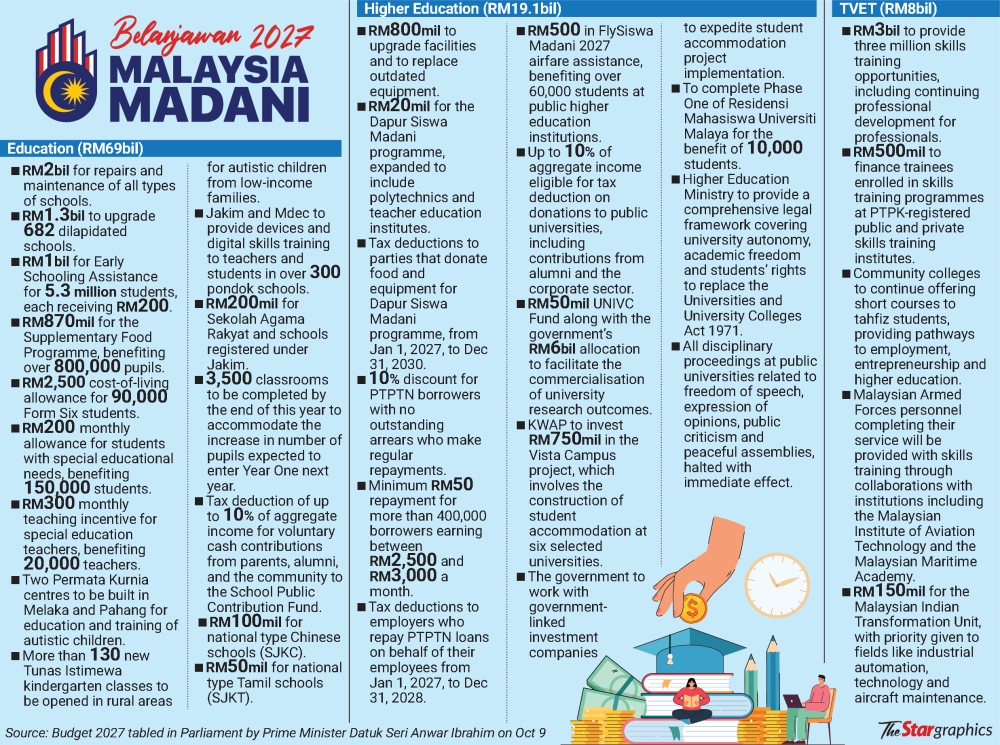
Malaysia spends generously on education. And, like previous years, the education sector again gets largest share of the national budget (see infographic).
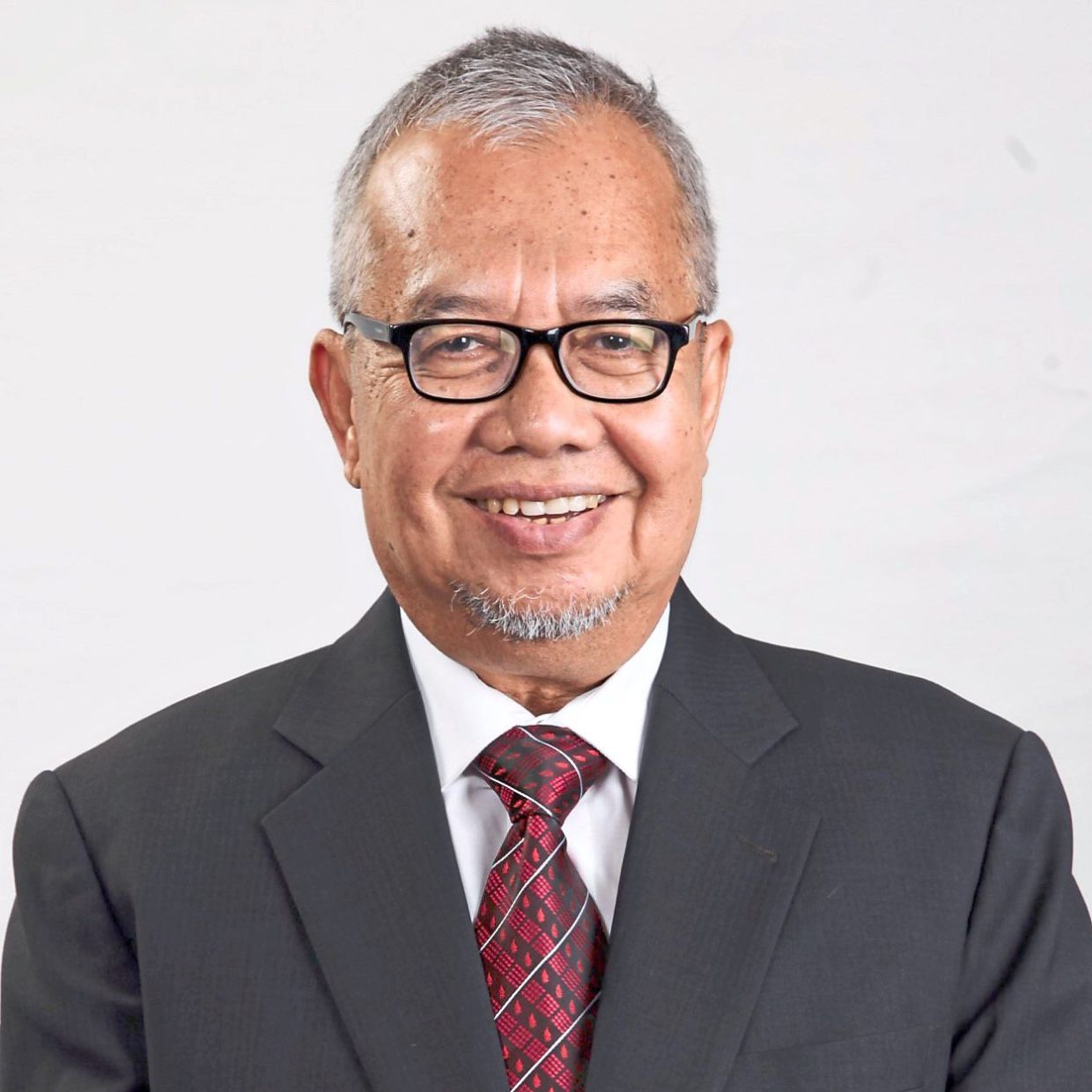
Logically, that should bring good returns, said Prof Datuk Dr Ahmad Ibrahim from the UCSI University Tan Sri Omar Centre for Science, Technology and Innovation Policy Studies, but this is dependent on how we manage the allocations and where we’re directing it.
“Where the money (Budget 2027) goes matters.
“But what matters more is knowing what kind of system the money is meant to build.
“A system that clutches every decision in its hands is bound to be slow, detached, and out of touch,” he said, adding that a system that trusts professionalism and lets those closest to the ground make the call is far more likely to turn investment into real outcomes.
Prof Dr Ahmad, who is also Universiti Malaya Ungku Aziz Centre for Development Studies Adjunct Professor, said the current education system is highly centralised. Schools, consumed by directives, reports, and targets, have lost the room to adapt.
“Beyond teaching, teachers are buried in data entry.
“School leaders rarely get the chance to make meaningful decisions based on their own context — the community they serve, the needs of their students.
“Everything is governed by rules from that may not be effective on the ground,” he said.
Calling for reins on schools to be loosed, he said such a move was necessary if Budget 2027 is to fulfill its aspirations.
“We need to allow schools to be what it was always meant to be: a place where professional educators, responding to their own communities, take responsibility for every child,” he said.
But this is not to say that simply “devolving power” solves everything. International experience also shows that in weak systems, decentralisation done carelessly can widen gaps, he said. Devolution must come with genuine support — empowering principals and teachers, not dumping burdens on them, he said, recommending the measures below to ensure effective implementation of the Budget:
> Reduce burden on schools
The data reporting system is well-intentioned, but in practice it has become a crushing load for teachers and principals. Data should serve teaching, not the other way around.
> Pilot autonomy in phases
Start by giving a group of capable schools autonomy over scheduling, budget use, and some staffing decisions. Build the evidence, then expand.
> Separate diagnosis from selection
The nation needs to know how students are doing, but the results of that assessment must never become a tool for ranking schools. Assessment is meant to help students, not punish schools.
Despite education being well-funded as compared to the other sectors, nearly 60% of our students have failed to reach even basic proficiency in mathematics, and close to half fell below the minimum level in science, he said, lamenting how more than half did not achieve basic reading proficiency.
“These are not abstract numbers. They mean that when our children leave school, they may not be able to adapt to a rapidly changing world,” he said.
Citing excerpts from Malay College Kuala Kangsar (MCKK) Foundation’s book, “Breaking but Not Broken”, Prof Ahmad said the book pulls no punches in pointing out that even a once-illustrious elite school like MCKK has been declining.
Its students’ language abilities, critical thinking, and even spirit of service are said to be weaker than before, he said, pointing to how if even the best schools are struggling, one can only imagine the situation elsewhere.
“At the book’s launch in August, the Sultan of Perak remarked: the education system needs to be ‘reimagined and re-equipped’ for the age of artificial intelligence.
“This tells you how urgent the problem has become.
“Letting schools decide some things for themselves — how to organise time, and deal with problems, can make education more grounded and responsive,” he said, noting that in systems with mature institutions and clear accountability, school autonomy can improve student outcomes.