Budget 2027 encourages more Malaysians to pursue higher education as a pathway to better prospects but its measures must be supported by opportunities to develop.
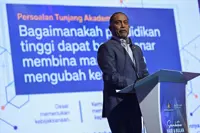
Unitar University College Kuala Lumpur vice-chancellor and chief executive Dr Jagdeep Singh Jassel (pic) said the minimum wage increase and the RM2,500 starting minimum salary can help young Malaysians establish themselves and support their families.
He, however, stressed the need for universities and employers to share the responsibility of preparing graduates who can contribute confidently, solve problems and adapt as industries evolve.
“Employer-designed projects, meaningful industry placements and continued learning will be essential to translating these wage aspirations into sustained productivity and career progression,” he said, adding that the RM6.6bil allocation for entrepreneurship can help widen economic opportunities by supporting business development and job creation.
For graduates with the ambition to build a business, access to financing, mentorship and practical business knowledge can help turn an idea into a viable livelihood, he said.
“Varsities can contribute by developing entrepreneurial judgement alongside academic and technical skills, so graduates can create opportunities for themselves and others,” he said.
The extension of tax relief to artificial intelligence (AI) subscriptions, he said, is a step towards making these tools more accessible to those who are from outside the Klang Valley and lower incom groups.
“As educators, our responsibility is to help learners use AI effectively and ethically, assess its outputs critically and exercise sound professional judgement,” he said, adding that universities must contribute to the successful implementation of the Budget through relevant content, closer industry collaboration and flexible learning that responds to the needs of both young people and working adults.
“Close collaboration across the education and employment ecosystem will help turn these initiatives into lasting gains for Malaysia’s workforce,” he said.
Prof Dr Ismi Arif Ismail, of Universiti Putra Malaysia’s Faculty of Educational Studies, said whether the RM800mil for university infrastructure delivers meaningful improvements hinges on if it is used to address urgent, high-priority needs, or if the funding is spent on maintenance backlogs, ageing buildings, growing student populations and substantial equipment replacement across multiple varsities.
“The issue is not simply the size of the allocation, but how it is prioritised and implemented.
“Allocation decisions should not rely solely on equal distribution across institutions, because universities differ considerably in size, age, location, infrastructure condition and student demand,” he said.
Meanwhile, the Malaysian Institute of Accountants said initiatives to increase funding for higher education, coupled with tax incentives to enable public universities to secure additional funding, will enable institutions to strengthen their training and capacity-building initiatives, particularly for educators.