Few would imagine that the job also involves public roadshows, community outreach and stepping in as a receptionist when needed.
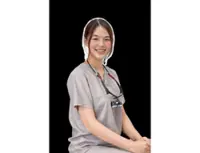
Yet, that has become part of everyday life for Dr Ng Wei Lin (pic).
As a child, Dr Ng did not dream of becoming a dentist. But with her brother already in the field and encouragement from her parents, she eventually chose dentistry without fully knowing what it would demand.
Now a dentist serving in the public sector, the 27-year-old said the learning – and the challenges – never really stops after university.
“For example, during oral health roadshows, busking is used as a way to engage and entertain the audience while delivering oral health education messages,” she said.
Two years into practice, she has come to understand that the job is not defined by a single role.
“You always have to brace yourself for hardship,” she said.
What does a typical workday really look like?
Dr Ng: It depends on whether I’m assigned to a school or a clinic. During one of my recent postings at a primary school, I was responsible for treating around 287 students over seven weeks. My mornings were spent carrying out treatments, and in the evenings, I documented what I had done. This routine repeated every weekday.
If I’m allocated to a clinic, my schedule is usually packed. I handle both appointment and walk-in patients, attending to about 20 patients a day from 8am to 5pm.
On some days, I may be sent to rural clinics to educate pregnant mothers and toddlers on oral health. At times, I take on receptionist duties due to staff shortages. I’m also part of a busker team, performing with my cajón during promotional events in my district.
What skills or mindset matter more than grades?
Dr Ng: Dental skills are important, but social skills matter just as much. You constantly interact with patients and coworkers, so maintaining good relationships makes work much smoother.
Resilience is also key. Hardships and unfair situations are inevitable, so you need to learn how to deal with them, stand up for what you believe is right and understand how people function in a workplace. Being mentally strong and adaptable also really matters.
What is one common misconception about this job?
Dr Ng: Many people think dentists only treat teeth, but that is not true. Dentistry includes many specialties.
An example is oral and maxillofacial surgery, which involves fixing broken jaws after accidents, treating defects in the lower third of the face (especially congenital conditions), removing oral cancers and even helping improve a patient’s confidence by reshaping their jaw.
What is the most challenging and most rewarding part of the work?
Dr Ng: One challenge is that dentists come from different training backgrounds, so there can be differences in knowledge and approaches. These discrepancies can be tricky to navigate, so referring to international guidelines becomes very important when in doubt.
The most rewarding part can be simple. It only takes one kind word of appreciation from a patient to brighten the rest of my day.
At the same time, I value honest feedback, whether it is positive or negative. It’s the best
way for me to gauge where my skills stand, although it’s just as important to know which feedback to act on and which to set aside.
What advice would you give to students considering this path?
Dr Ng: Only choose dentistry if you really have a passion for it. If you’re after wealth, this isn’t the career for you. Location is also important – if you want to work in a certain country, it’s easier to get your qualification there, as some countries only accept degrees from specific universities for licensing.
Many universities in Malaysia offer dentistry programmes, but students should always refer to the Malaysian Dental Council’s website for the latest official information.
Dentistry is constantly evolving, and what you learnt five years ago may already be outdated. So, be ready for lifelong learning – and the costs that come with it – even after you begin practising, as many dentists also invest in courses to keep their skills up to date.
*Individuals are featured in their personal capacity. Views expressed do not represent any organisation.
Factbox
Full name: Dr Ng Wei Lin
Job title: Dentist (public sector)
Professional experience:
Two years
Highest qualification: First class
in Doctor of Dental Surgery
Isabel, 15, a student in Johor, is a participant of the BRATs Young Journalist Programme run by The Star’s Newspaper-in-Education (Star-NiE) team. This feature is part of a series highlighting young working adults who share insights into their jobs and offer practical tips on thriving in the workplace. For updates on the BRATs programme, follow@starbrats on Instagram.

With the theme of the article in mind, carry out the following English language activities.
1 In pairs, play “Guess My Job”. Take turns guessing each other’s secret job. Ask yes-or-no questions (maximum 10) to figure out the job. For example: “Do you work indoors?” and “Do you work with children?” You can include less common jobs such as paramedics or zookeepers.
2 If you could create your own job, what would it be? What skills would it require, and why would this job be important? Share your ideas with the class.
The Star’s Newspaper-in-Education (Star-NiE) programme promotes English language learning in primary and secondary schools nationwide. For Star-NiE enquiries, email starnie@thestar.com.my.