The more intelligent the machines, the greater humanity’s value
When I was a young doctor, patients never asked where I had studied or what grades I had achieved at school or university. They assumed I was qualified. What they really wanted to know was something far more important. Could they trust me as a doctor?

That question has never gone away. In fact, it has become even more important.
For generations, society has rewarded knowledge. We encouraged people to collect qualifications, degrees and professional titles because knowledge was valuable and often difficult to obtain. Those with the most knowledge usually had the greatest advantage.
But something remarkable is happening. Artificial intelligence (AI) can now answer questions in seconds. It can explain complex ideas, summarise research papers, analyse data and even help write computer programs.
Information that once took years to acquire is now available to almost anyone with an Internet connection. Knowledge has not become unimportant. But it has become more accessible.
History shows that when something becomes abundant, its value falls. Knowledge is becoming abundant. Character is becoming scarce, and therefore more valuable. That is why I believe character is becoming our greatest competitive advantage.
AI can provide information, but it cannot exercise integrity. It has no moral compass, cannot take responsibility for difficult decisions, or earn trust through consistent behaviour.
These qualities remain uniquely human. This matters because, in almost every profession, success depends on more than technical competence.
As a doctor, I learnt that patients rarely judged me by the accuracy of my diagnosis alone. They judged me by whether I listened, explained honestly, admitted uncertainty and treated them with dignity. They wanted competence, but they also wanted character.
The same is true in business, education, engineering and public service. Think about the people you most admire at work. They are probably knowledgeable, but that is not the first quality that comes to mind.
More likely, you remember that they keep their promises, remain calm under pressure, treat others fairly and accept responsibility when things go wrong. These are qualities that cannot be printed on a certificate.
Employers understand this well. Very few people are dismissed because they suddenly forget how to do their job. More often, they lose it because they cannot be trusted, cannot work with others or refuse to take responsibility. Their knowledge may be excellent, but their character lets them down.
In contrast, organisations often invest heavily in employees who demonstrate integrity, curiosity and resilience because technical skills can usually be developed. Character is much harder to teach.
This should make us rethink what education is really for. Universities must continue to produce graduates with strong professional knowledge. But knowledge alone is no longer enough.
When facts are available in seconds, education must increasingly develop judgement, ethics and wisdom. Graduates must be able to work with people whose views differ from their own. They must be willing to admit mistakes, continue learning and place the interests of others above personal gain.
These qualities will matter even more as AI becomes increasingly capable. Ironically, the more intelligent our machines become, the more valuable our humanity becomes.
Parents have an important role in this. Character does not suddenly appear at university. It begins at home through countless small lessons about honesty, kindness, responsibility and respect. Schools reinforce these values, and universities should continue that work by creating opportunities for teamwork, community service, reflection and ethical decision-making.
Character is not built in one dramatic moment. It is built through thousands of everyday choices. It is choosing to tell the truth when a lie would be easier. It is admitting an error instead of hiding it. It is helping a colleague without expecting recognition. It is continuing to learn when nobody is checking.
These habits quietly shape the kind of person we become. As technology continues to advance, employers will increasingly ask not only, “What can you do?” but also, “Can I trust you?” That may become the defining question of the AI age.
Degrees and professional qualifications will always open doors. They remain essential and deserve respect. But once those doors are open, it is character that determines whether opportunities continue to appear.
Knowledge may get us noticed. Character is what makes people remember us, trust us and choose us again. In a world where information is becoming cheaper every day, character may prove to be the one quality whose value continues to rise. Qualifications may get us hired, but our character determines whether people will trust us with greater responsibility.
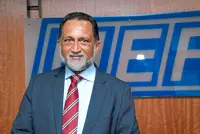
Prof Dr David Whitford is vice-chancellor and chief executive of University of Cyberjaya. He earned a doctorate from Cambridge University and has held leadership roles in medical education. With over 70 research publications on disadvantaged communities and quality healthcare delivery, his academic journey includes positions at the Royal College of Surgeons in Ireland, in Dublin and in Bahrain, where he established community-based teaching and led postgraduate studies. The views expressed here are the writer’s own.