
Experts stress sustainability, digital skills in construction education as new green building certification takes shape
LEARNING about construction and civil engineering has moved beyond mastering the principles, science and hands-on skills needed to erect buildings.
Once a predominantly technical and vocational field, practitioners now need to possess strong knowledge of sustainability concepts as well as the latest digital technologies, say experts.
ALSO READ: Time to adapt to climate risks
This shift has become even more pressing as Malaysia moves to develop an internationally recognised green building certification.
Housing and Local Government Minister Nga Kor Ming announced on July 30 that Malaysia is partnering with the University of Cambridge to develop a new certification that would give developers greater international recognition while boosting confidence among homebuyers and investors.
ALSO READ: Works Ministry: Tech key to greener infrastructure
Monash University Malaysia Department of Civil Engineering head Prof Sudharshan N. Raman said sustainability in the construction sector focuses on decarbonising the processes in construction, optimising operational energy and resource consumption, valorising waste resources, improving structural resilience, and delivering practical solutions that support the transition towards sustainable and climate-resilient communities.
These efforts contribute to both climate mitigation and climate adaptation, he told StarEdu.

Students, said Prof Sudharshan, need to understand these hazards as well as how to manage them.
He shared that engineering students at Monash University Malaysia develop practical competencies in sustainability assessment, carbon emissions quantification, designing for decarbonisation, sustainable water resource management, and applying engineering solutions that balance environmental, social and economic considerations.
Future-ready buildings and cities, the Monash Climate-Resilient Infrastructure Research Hub director stressed, must be low-carbon, resource-circular, climate-resilient and digitally connected.
“Crucially, they must embrace universal design principles to ensure accessibility, safety, health and comfort for people of all ages,” he said, adding that this would require interdisciplinary collaboration, evidence-based policies and continuous innovation in materials, technologies and urban planning.

Prof Sudharshan added that strong engineering and urban planning fundamentals must be complemented by expertise in sustainability and the circular economy, climate resilience, systems engineering, digital engineering and innovation, professional leadership and collaboration, and ethical and inclusive design.
“These skills are essential to prepare graduates to develop evidence-based, practical solutions that shape more sustainable, resilient, inclusive and liveable built environments for future generations,” he said.
Agreeing, MTTC College programme director-cum-lecturer Mas Amelia Mas Abdul Rahman said sustainablity and its concepts need to be woven into teaching and training, as is done at the college.
Students, she added, need to be exposed to this idea from their diploma years.
“We need students to realise the moment they step into the field, they are the one who’s holding the pen and paper and the mouse and the keyboard to do the drawing.
“What we’re really teaching them is to not cause harm (to the environment and to society) through design and architecture, and to sustain the building, the culture and the surroundings,” she said, adding that it is the responsibility of every designer entering the industry to care for the environment.
Tech tools
At the college, said Mas Amelia, trainees and students can carry out construction simulations virtually, allowing them to experience the real-time progress of construction on site.
“We can only rely on this technology to plan, execute and assist us in a way. It’s more of an assistance rather than a solution because we really have to go back and understand what the clients need.

“This is where judgement and design thinking come in, and that can never be fully recreated through the use of technology alone,” she said.
MTTC building information modelling (BIM) lecturer Siti Alia Aisya Mohamed Rusli said while much of the work in building construction is hands-on, using digital technology to teach the skills does not replace the practical aspect.
“We still rely on our own ability to comprehend the information and streamline it into the project. This technology that we’re investing in is actually enhancing our ability to do it better and more efficiently,” she said.

Meanwhile, Universiti Kebangsaan Malaysia (UKM) Smart and Sustainable Cities Research Centre (Sutra) head Assoc Prof Dr Siti Fatin Mohd Razali said while sustainability theories are necessary, having a strong foundation in engineering principles and digital technology is equally important.
Explaining further, UKM Faculty of Engineering and Built Environment civil engineering undergraduate programme head Assoc Prof Dr Shahrizan Baharom said artificial intelligence (AI) is now a game changer in the industry, with BIM software also used to ensure a smoother process at the planning stage.
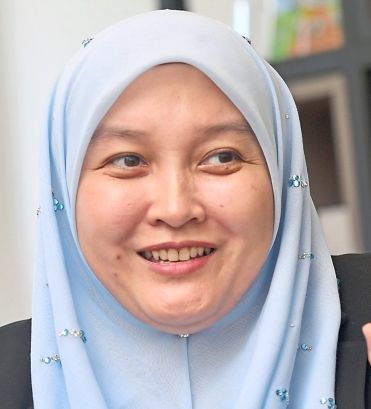
BIM, he explained, integrates architecture, geographical information system, mechanical and electrical systems, and water systems inside one software.
“The software is then able to detect clashes and other hiccups before the project actually begins at the construction site,” he said.
Beyond technology and education, Prof Sudharshan said developing sustainable construction and infrastructure is a shared responsibility that requires collective action from academia, industry, government and communities.
“Ultimately, sustainable construction and infrastructure aim to create built environments that are environmentally responsible, economically viable, socially inclusive and resilient to future climate challenges,” he said.
Construction Industry Development Board (CIDB) chairman Datuk Yusuf Abd Wahab said the board continuously looks into sustainable methods that can be adopted by the industry to avoid destroying the environment during construction.
Describing the board as the “custodian of the Malaysian construction industry”, he said it also informs and updates contractors on the latest technologies and methods available to achieve their sustainability goals.
“We can preserve the environment around us while developing the country to the next phase of development,” he said when met after the officiating ceremony of the 19th East Asia-Pacific Conference on Structural Engineering and Construction on July 13.
Students on sustainability

Designing a sustainable building can help improve people’s lives and protect the environment. For example, we can reduce energy consumption by using large windows that allow plenty of sunlight in, reducing the need to turn on lights during the daytime. More windows would also mean ventilation is improved and those using the building can get more fresh air, leading to healthier living.
Lai Man Hoong, 20, interior architecture student

Designing a building is about planning ahead and deciding what we want out of it. This includes its sustainability, such as how it’s going to be maintained as it ages. We also need to plan for what the surroundings of the building are like, including the climate, flood risks and traffic. We need to take into consideration ways to enhance the building like improving airflow while keeping construction costs low.
Khoo Xiao Fong, 21, digital construction technology student