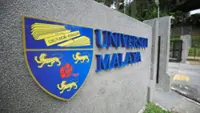
AMID intensifying competition across the region, Universiti Malaya (UM) has retained its position among Asia’s top 20 universities for the ninth consecutive year.
The feat comes despite the varsity slipping two places to 17th in the Quacquarelli Symonds (QS) World University Rankings: Asia 2027.
Ranked third in South-East Asia and first in Malaysia, the country’s oldest varsity also received the Global Engagement Champions Award in recognition of its growing international influence and global partnerships.
UM scored a perfect 100 in four of the 11 indicators – Academic Reputation, Employer Reputation, Inbound Exchange Students and International Student Ratio.
It also achieved near-perfect scores of 99.9 in International Research Network, International Faculty Ratio and Outbound Exchange Students.
UM vice-chancellor Prof Datuk Seri Dr Noor Azuan Abu Osman said the dual recognition is a testament to the varsity’s growing global standing and its commitment to excellence beyond rankings.
“Asia’s higher education landscape is entering a new era of competition for talent, ideas, innovation and intellectual leadership.
“Malaysia must not merely be a recipient of the world’s greatest ideas and discoveries; we must become a nation that creates and leads them.
“UM intends to be at the forefront of that transformation, shaping leaders, driving discoveries that matter, and establishing a lasting Malaysian intellectual legacy on the world stage,” he said.
The latest QS rankings, released on Nov 3, saw eight Malaysian universities make it into Asia’s top 50.
Malaysia was also the eighth most represented higher education system, with 55 universities featured in the rankings.
Placing second in the country and entering Asia’s Top 20 for the first time at 20th position is Universiti Kebangsaan Malaysia (UKM). It was followed by Universiti Putra Malaysia at 24th, Universiti Teknologi Malaysia (UTM) at 25th and Universiti Sains Malaysia at 27th (see infographic).
UKM vice-chancellor Prof Datuk Dr Sufian Jusoh said the varsity’s achievement reflects its ability to remain competitive alongside leading institutions in Asia.
“This is an encouraging development for UKM and shows that the university is moving in the right direction in strengthening our standing in Asia.
“We see this progress as motivation to continue improving the quality of education, research and collaboration with international institutions,” he said.
Describing Asia as one of the world’s most competitive higher education regions, UTM vice-chancellor Prof Dr Mohd Shafry Mohd Rahim said the varsity’s continued presence among Asia’s top 25, alongside improvements in nine of the 11 indicators, showed “real momentum”.
“As an engineering and technology university, our aim is to turn research into sustainable solutions that help industry and humanity prosper. This achievement belongs to our staff, students, alumni and partners, and we thank them for their dedication,” he said.
Meanwhile, Taylor’s University retained its position as the country’s top private institution for the sixth consecutive year, ranking 32nd. UCSI University placed 36th while Sunway University climbed eight spots to 47th.
Taylor’s University vice-chancellor and president Prof Barry Winn said the university remains focused on the quality of education it provides and the opportunities it creates for students.
“We will continue to strengthen the quality of our teaching, research and partnerships, and ensure that these contribute to our students’ development.
“Our responsibility is to prepare students to navigate an evolving world with confidence and sound judgement. This means giving them opportunities to apply their knowledge, test their capabilities and learn through experience, supported by academics and industry practitioners who challenge them to do their best.”
UCSI University president and vice-chancellor Emerita Prof Datuk Dr Siti Hamisah Tapsir said Asia is where economic growth, technological breakthroughs and talent converge.
“Universities here are expected to produce graduates who can navigate disruption, consequential research and lasting partnerships.
“That is the standard we must hold ourselves to. We will continue to invest in research that serves society, in graduates who lead with integrity, and in collaborations that bridge academia, industry and government,” she said.
QS senior vice president Ben Sowter said Malaysia has more than doubled the number of universities in the top 100 of the QS World University Rankings: Asia over the past decade.
“With an ambitious blueprint for higher education up to 2035 released earlier this year, Malaysia’s higher education system has potential to excel and grow even further,” he said.
The QS World University Rankings: Asia 2027 features more than 1,720 universities from 26 higher education systems, with 195 new entrants this year.
The University of Hong Kong retained the top spot in the region, followed by Peking University and Tsinghua University in China.