
In recent months, conversations about artificial intelligence (AI) in education have become increasingly urgent.
In classrooms, at home and even on social media, students are turning to AI tools to complete homework, solve problems and generate explanations – often with impressive speed.
Yet behind this convenience lies a growing concern over whether students are truly learning or simply retrieving answers.
Having witnessed this tension firsthand, Universiti Malaya Centre for Foundation Studies in Science (PASUM) lecturer (Mathematics) Amirul Mohamad Khairi Mannan noted that while students are able to complete tasks quickly with the help of AI tools, many struggle to explain their reasoning or apply the same concepts independently when similar problems are presented in a different form.
The issue, he said in a press statement, is not a lack of ability but an over-reliance on AI as a shortcut rather than a learning aid.
“Without proper guidance, AI risks weakening critical thinking, deep understanding and academic integrity. This is why ethics matter in AI-supported learning. AI is neither inherently good nor bad; its impact depends on how it is used.
“When students are not taught to question AI outputs, verify accuracy or reflect on underlying concepts, technology can quietly replace thinking instead of strengthening it,” he warned.
Banning AI, however, is neither realistic nor productive, Amirul Mohamad Khairi pointed out.
“AI is already embedded in students’ daily lives – from navigation apps and recommendation systems to automated content generators.
“The real challenge is to educate students on how to use AI responsibly, critically and meaningfully, particularly within science, technology, engineering and mathematics (STEM) education, where reasoning and problem-solving are essential,” he said.
He shared that this pressing reality led to the development of AiSTEMeX, or AI, STEM and Exploration, at PASUM.
AiSTEMeX is an approach that integrates AI into STEM learning through exploration-based activities. Instead of treating AI as a shortcut to answers, students are guided to question how AI works, where it helps and where its limitations lie. Learning becomes active, collaborative and reflective, rather than passive and answer-driven.
The approach was recently put into practice through a STEM explorace programme at PASUM, conducted in collaboration with Maxis. Held on Nov 15 and 16 last year, the programme involved 100 Form Four students from 10 secondary schools around Kuala Lumpur, many from B40 backgrounds.
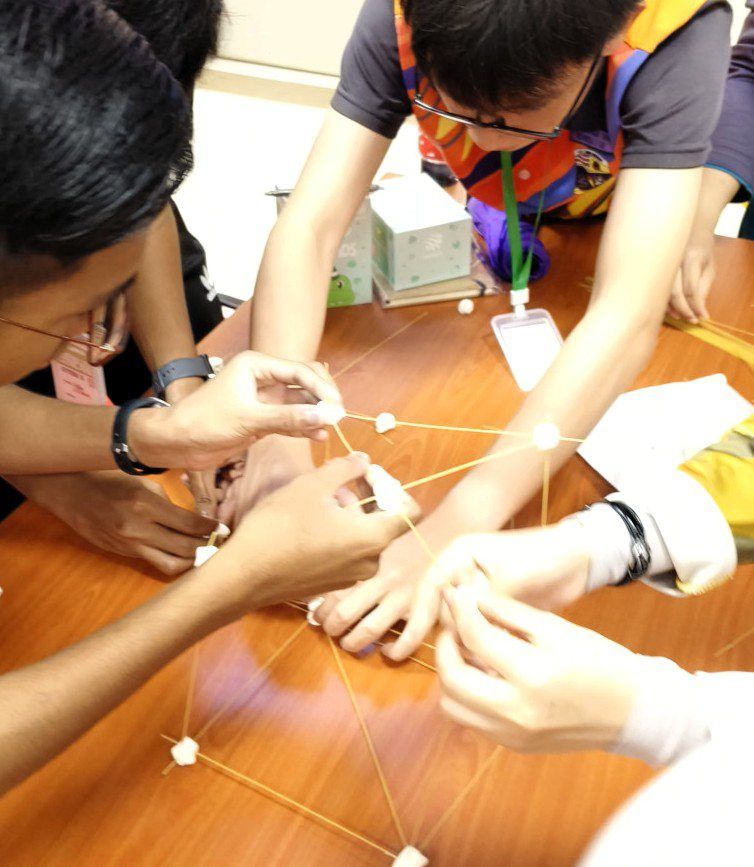
Rather than listening to lectures, students rotated through interactive learning stations focused on exploration and teamwork. In one activity, they identified AI technologies already present in their daily lives and discussed both benefits and risks, including privacy and misinformation.
In another station, students used guided AI tools to complete simple creative tasks, such as drafting posters or campaign messages. Facilitators emphasised ethical use, including checking accuracy, avoiding plagiarism and acknowledging AI assistance.
“For many students, this was their first exposure to the idea that responsible AI use is a skill that must be learnt,” said Amirul Mohamad Khairi.
Students were also challenged to design simple AI-based ideas to address real-world problems in areas such as education, health, safety and the environment.
To ensure alignment with the school curriculum, the programme included subject-based stations in biology, physics and mathematics.
Students explored biodiversity using AI-supported identification tools, experimented with physics simulations to understand cause-and-effect relationships, and solved mathematical problems manually before comparing their reasoning with AI-generated solutions.
“This comparison reinforced an important lesson: AI can support understanding but it cannot replace thinking,” Amirul Mohamad Khairi explained.
The programme concluded with a reflection session, where students shared what surprised them most about AI and what responsible use meant to them.
“Many expressed greater confidence – not in letting AI think for them, but in thinking alongside AI.
“Feedback from participants was overwhelmingly positive. Students reported higher engagement, clearer understanding of STEM concepts and greater awareness of ethical AI use.
“Facilitators also observed improved teamwork, curiosity and confidence – outcomes that are difficult to measure through examinations alone, yet critical for long-term learning,” Amirul Mohamad Khairi said.
He emphasised that strengthening STEM education is a long-term effort.
“It requires continuous innovation, ethical awareness and collaboration across all levels of education – from early schooling to tertiary institutions – in line with Malaysia’s national STEM goals.
“Preparing future-ready learners is not only about what students know, but also about how they think, question and make decisions in an AI-powered world.
“As AI continues to shape education and society, initiatives like AiSTEMeX demonstrate that the most effective response is not resistance, but responsible integration – one that places ethics, understanding and exploration at the heart of learning,” he concluded.