Under the 2027 school curriculum, the Education Ministry will introduce six new subjects aimed at strengthening basic skills and character development during the early stages of schooling.
These are Alam dan Manusia: Pembelajaran Bersepadu at Level I; Eksplorasi Sains dan Teknologi: Pembelajaran Bersepadu at Level II; Eksplorasi Seni dan Dunia: Pembelajaran Bersepadu at Level II; Teknologi dan Digital (TnD); Bahasa Isyarat Malaysia (BIM); and Bahasa Arab Komunikasi.
According to Nooraini, these subjects are designed to foster inclusivity, hands-on learning, and practical application, preparing students for cognitive, emotional, and social development.
Since 2021, she said the curriculum team has conducted extensive studies and gathered feedback from over 61,000 respondents through consultations with experts, educators, parents, and stakeholders.
“Children today are growing up in a very fast-changing environment, which makes their learning styles, interests, and abilities different.
“This is why we will be removing certain subjects and introducing other new ones that incorporate elements of subjects that were taken away,” she said.
Alam dan Manusia: Pembelajaran Bersepadu, she explained, combines elements of science, arts, music, health, technical and vocational education and training (TVET), and digital — all under one umbrella.
“This subject will replace Science, Health Education, Visual Arts Education and Music Education in the existing curriculum, in addition to being implemented through co-teaching methods.
“Co-teaching supports multidisciplinary elements in this subject and teachers complement each other and support students’ learning needs,” she said.
Elaborating, she said by Level III (Years Five and Six) up to Forms One to Five, students will be introduced to TnD, a project-based subject designed to encourage experiential exploration and the practical use of digital applications.
“Lessons will focus on inquiry, exploration, and collaborative problem-solving. When children are allowed to ask questions, experiment, and engage actively, they develop critical thinking skills, resilience, and empathy.
“This aligns with our goal of cultivating not just academic success but human maturity. Thus, the curriculum introduces co-teaching, project‑based learning, and hands-on activities,” she said, adding that teachers become facilitators, guiding students as they explore, design, and build real projects.
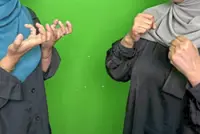
She also said BIM will be offered as an additional subject in mainstream schools and will be introduced gradually, starting from Year One, in schools with integrated special education programmes for hearing impaired students.
“Meanwhile, Bahasa Arab Komunikasi will be introduced as a new, additional language subject at the secondary level (starting Form One) in daily schools and residential schools, excluding religious residential schools,” she said.
New assessment framework
Separately, Nooraini said as the KP2027 moves away from exam oriented culture, it will be placing more emphasis on school-based assessment (PBS).
To simplify student assessment, she explained that the framework will be continuous, formative, and authentic.
She also said there will be a review process to check whether students have achieved literacy and numeracy benchmarks, as well as mastery of skills in analysing and producing innovations.
“If students have not reached the expected outcomes, interventions are provided to help them catch up, ensuring the curriculum’s learning goals are fully met,” she added.