When I first received news that I had been selected as one of 10 students from the School of Communication, Universiti Sains Malaysia (USM), to participate in the International Community Engagement Programme in Yogyakarta, Indonesia, I felt a wave of excitement and nervousness.
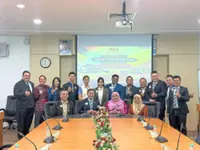
Under the guidance of Assoc Prof Dr Nik Norma Nik Hasan, our group spent a week, from Sept 28 to Oct 3, engaging in academic dialogues at Universitas Muhammadiyah Yogyakarta (UMY) and immersing ourselves in community activities in Desa Brajan, a small village near the university.
The project, jointly organised by USM and UMY’s Faculty of Social and Political Science, was supported by the Mobility Matching Fund 2025 from USM’s International Mobility and Collaboration Centre.
Its main goal was to strengthen cross-cultural understanding between Malaysia and Indonesia through dialogue and collaboration – a true “Asean-style classroom” where learning transcended borders and languages.
Sharing Malaysia’s story of unity
During the programme, I had the honour of being selected as one of the dialogue participants to discuss how young journalists harness artificial intelligence and social media for community engagement. It was a topic close to my heart.
In my presentation, I shared how Malaysian youth and journalists reignite the spirit of unity through “Keretapi Sarong”, an event where Malaysians from all walks of life don traditional attire and travel together by train to commemorate Malaysia Day. Through photos, videos and social media storytelling, young journalists capture this as a powerful symbol of national harmony.
It was a proud moment to share Malaysia’s story of togetherness. But what made it even more meaningful was that my two fellow panellists and I chose to present entirely in Bahasa Malaysia (BM).
Overcoming fear
Initially, I was uncertain about speaking in BM, fearing that our Indonesian peers might not understand. Another part of me worried about whether my language skills were “good enough” to represent my university on an international stage.
So, I began practising every day. I translated my slides from English to BM line by line, carefully selecting words that sounded both natural and professional. I even searched online using queries like “how to say creative storytelling in Malay”, and in the process, discovered a newfound appreciation for the richness of my own language.
During rehearsals, Dr Nik Norma commended my content but reminded me to refine my flow. Still, the nerves persisted. At one point, when I stumbled during practice, she gently said, “It’s fine if you prefer to present in English.” I smiled, but deep down, I knew I wanted to speak in my national language.
So, I reminded myself: “Speak as if you’re explaining something to a child: simple, clear and heartfelt.”
When the day of the dialogue arrived, the hall was filled with some 100 students and lecturers. My hands were cold, my chest tight with nerves. But as I began speaking in BM, I focused on meaning, not vocabulary. I slowed down, ensuring every sentence was clear. Midway through, something magical happened: the audience was listening, nodding, smiling. They understood me.
When I concluded with, “Sekian, terima kasih”, the hall erupted into applause. Their warm smiles and sincere applause dissolved my fear. In that moment, I realised that true communication is not about perfection; it is about connection.
From the heart
That day, I learnt that communication is not measured by flawless grammar, but by sincerity. Words carry power not through elegance, but through honesty.
In that Asean classroom where two nations met in dialogue, I learnt that cross-cultural engagement is not just about exchanging ideas, but also about listening, understanding and speaking with heart, even when your voice trembles.
The Yogyakarta trip became more than a university programme. It became a turning point - a journey of self-discovery, courage and growth. I may not have spoken perfect BM, but I spoke with authenticity. And that, I believe, was enough.
CHONG QI JUN
School of Communication
USM