
Following an exciting week of data and sample collection at the Al-Sultan Abdullah Royal Tiger Reserve, Pahang, a team of multidisciplinary researchers is now working on a scientific report to shape long-term conservation strategies, contribute to the reserve’s biodiversity inventory, and support efforts to protect the state’s natural heritage.
Fourteen research teams comprising 60 scientists, mountain guides and field staff took part in the scientific expedition, a press release dated May 20 read.
The expedition – which saw the group navigating the peak of Gunung Aais, wading through the rocky riverbed of Sungai Tembeling and its tributaries, and trekking across steep terrain – was the first of its kind to the newly gazetted reserve.
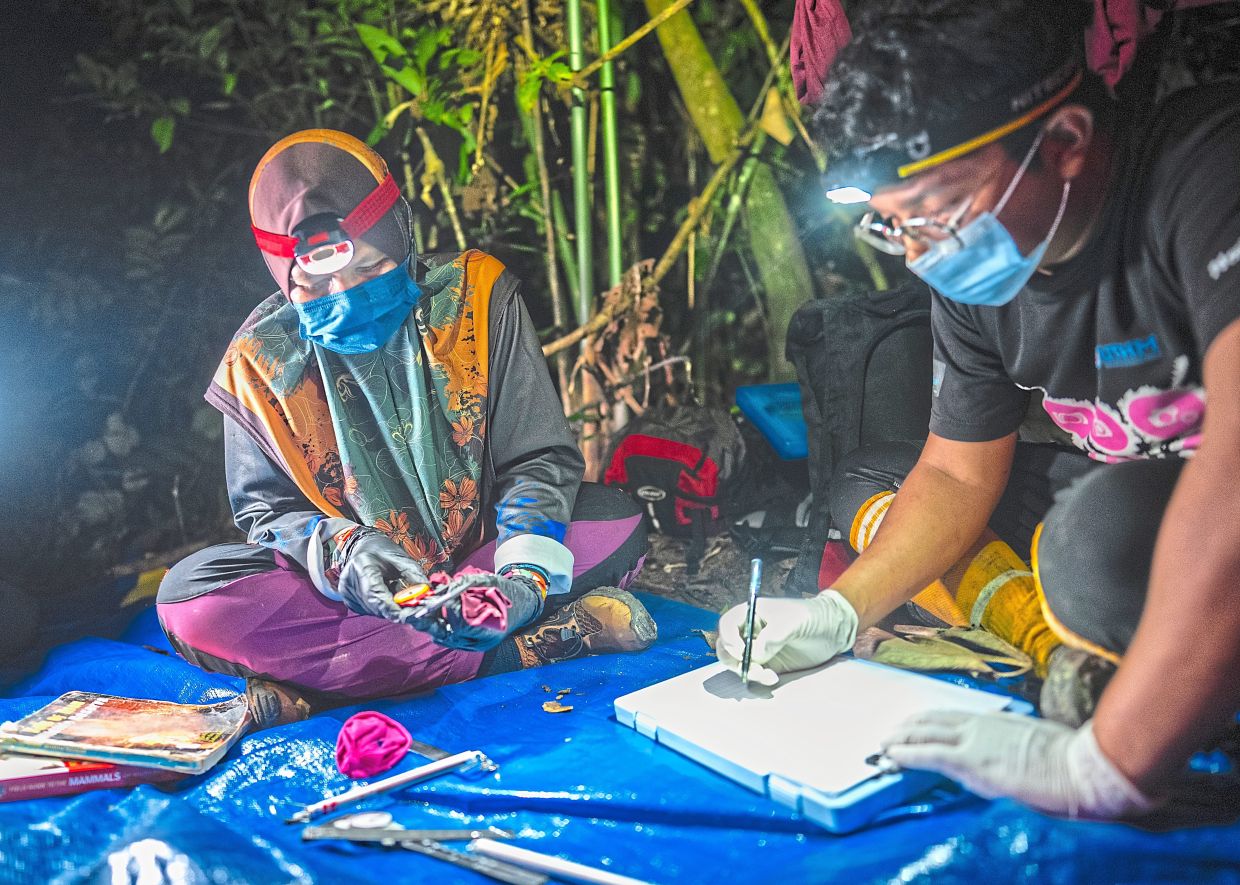
Preliminary findings have scientists excited about the possibility of confirming rare species of flora and fauna within the 331,573-acre protected area.
Led by The Habitat Foundation (THF) programme director Dr Ahmad Zafir Abdul Wahab, the researchers – from institutions including Universiti Sains Malaysia, Universiti Malaysia Terengganu, Universiti Malaya, Universiti Kebangsaan Malaysia, and Forest Research Institute Malaysia (FRIM) – studied everything from geology, fungi, mosses and plants to freshwater fish, bats, small mammals, birds, amphibians, reptiles, insects and spiders.
“We had a very successful expedition – it was a true collaboration between the scientific and local community for the common goal of conservation.
“Every night, our local guides listened intently to the scientific sharing sessions, full of excitement for what might be discovered the next morning.
“Through this joint effort, we have recorded species not found on record for many years, species potentially new to science, and an array of biodiversity that shows how special the Al-Sultan Abdullah Royal Tiger Reserve is,” said Ahmad Zafir.
These findings are part of a joint effort between the Pahang State Parks Corporation and Enggang Management Services to establish a comprehensive biodiversity baseline for the reserve.
The research initiative, funded by the European Union, was also supported by implementing partners Bringing Back Our Rare Animals, Nature Based Solutions, Panthera and THF.