
WHILE Malaysia strives to embed artificial intelligence (AI) into its economy and industries, there simply isn’t enough AI talent available.
According to the 2024 Amazon Web Services (AWS) Report on AI Skills in the Workplace, 81% of Malaysian employers struggled to hire AI talent, despite 90% prioritising these skills.
Asia Pacific University of Technology & Innovation (APU) vice-chancellor Prof Dr Ho Chin Kuan said the rapid AI adoption across almost all sectors has created intense competition for a limited pool of qualified professionals.
Given the situation, the production of AI talent by higher education institutions (HEIs) has not kept pace with demand.
“While universities are expanding their AI programmes, it takes time to train new graduates,” he told StarEdu.
Challenges in talent creation
Besides the time required to train the future workforce, Prof Ho said HEIs face several other challenges.

Adding to this, Universiti Kebangsaan Malaysia (UKM) senior lecturer (Information Science and Technology) Dr Nurhidayah Bahar said the lack of AI-specific courses in Malaysia is further contributing to the small talent pool.
She noted that, most of the time, AI is included as a subject, topic or chapter within computer programming courses at universities.
“Hiring managers cannot assess a candidate’s AI skills based on transcripts alone if it is not its own subject,” she said.
She added that while undergraduates are becoming more familiar with AI tools like ChatGPT, their overall AI literacy remains uncertain.
“To meet the growing demand for AI talent, students need to explore a broader range of AI tools and technologies beyond just language models like ChatGPT,” she said.
Industry’s role
While it may seem ideal for undergraduates to be fully trained for the workforce before graduation, Nurhidayah said limited funding and access to AI software make this difficult.
“Universities need to invest in AI-focused curricula and provide students with opportunities to apply AI in real-world scenarios. Only then can we bridge the skills gap and meet industry demand,” she said.
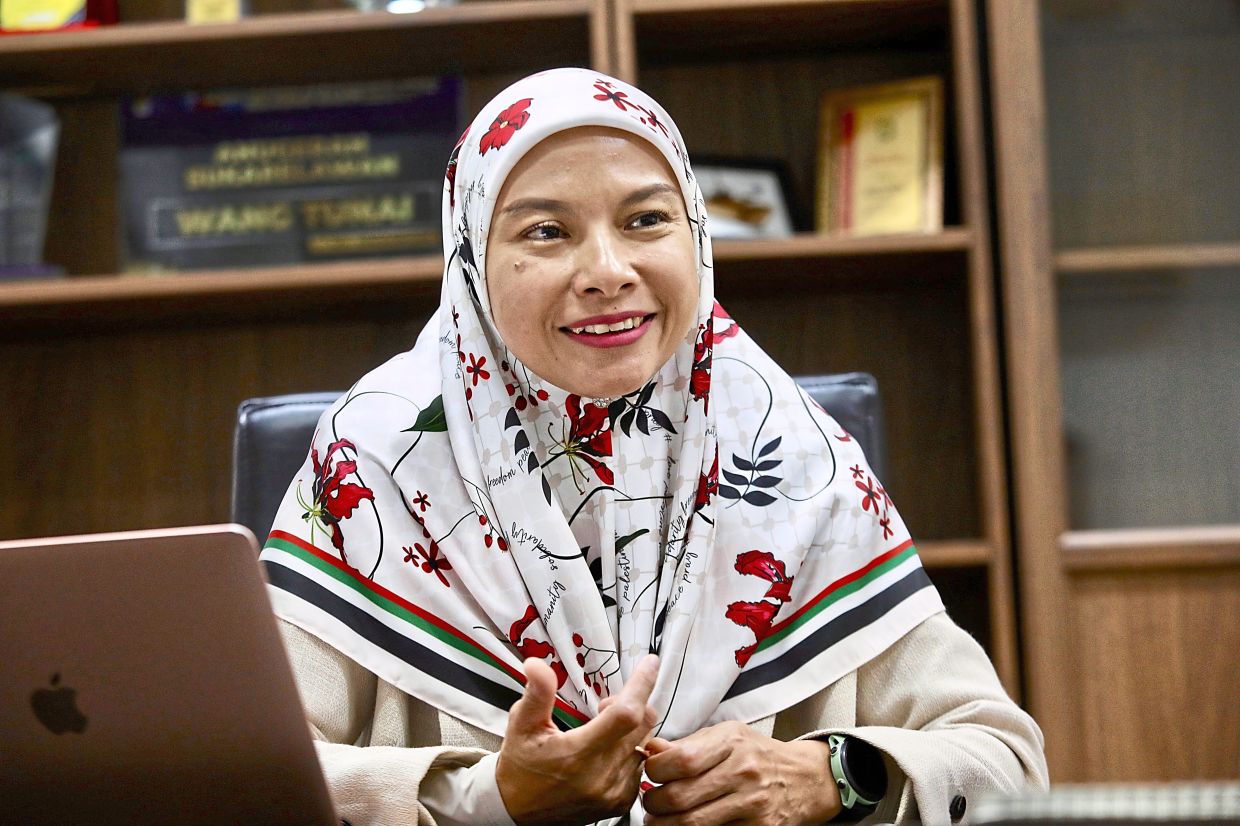
She called on employers and industries to play a more active role.
“As lecturers, we are limited by time and resources. We always welcome industry players to give guest lectures and expose students to real-world applications.
“Take this opportunity not just to promote your company but also to teach students some of the skills you are looking for,” she said.
She added that employers can provide training to undergraduates, particularly by being part of their final-year projects.
“This is a good time for industry to give students real-world problems to solve and, at the same time, train them to use AI software,” she said.
Nurhidayah also emphasised the need for the government to create an ecosystem involving universities, industries and international partnerships to address the AI talent shortage.
This can be achieved through funding and incentives for universities to develop AI-focused curricula aligned with industry needs; and grants or platforms for startups and academic institutions to team up on research and development.
“To produce undergraduates who are equipped with AI expertise, they must gain both formal education and hands-on experience,” she stressed.
Strengthening AI foundations
Prof Ho asserted the importance of teaching AI fundamentals alongside the latest tools at universities.
“Strong maths, statistics and computer science foundations help students adapt to any new AI development,” he said.
He also stressed the need for students to develop learning skills.
“Learning to learn is the most valuable skill to master.
“Students should master reading technical papers, experimenting with new technologies, building proof-of-concept projects and contributing to open-source initiatives,” said Prof Ho, who is an expert in data science, AI, machine learning and complex systems.
At the same time, industry integration must also be part of the education process, including regular curriculum reviews with tech companies and project-based learning using real industry problems, he added.
The first edition of the QS World Future Skills Index suggested that governments activate their HEIs to enable future economic growth, as across the globe, employers require a workforce with skillsets – AI, digital and green skills – that did not exist 20 years ago.
“To support economies in making this workforce transition, higher education systems need to build greater agility through modular learning and curricula advancement to ensure that the skills that businesses need are available in the fifth stage of education,” said QS Strategy and Analytics vice-president Matteo Quacquarelli in the report released on Jan 17.
National efforts
Several national initiatives are already in place to boost AI talent development, including the Malaysia Digital Economy Blueprint and the MyMahir training programmes, which aim to equip 50,000 Malaysians with AI, programming and data analysis skills by 2025.
The AI Talent Roadmap 2024-2030, launched in May 2024, focuses on building a future-ready workforce equipped for Malaysia’s evolving industries.
Last month, Human Resources Minister Steven Sim announced an RM20mil allocation to provide skills training to up to 5,000 Malaysians in three key sectors, namely, cybersecurity, data science and AI this year.
According to the AWS report, AI adoption could boost productivity by 57%, with 65% of workers expected to use AI for 5-20% of their work activities,
Moreover, the implementation of generative AI itself could unlock US$113.4bil (RM503.5bil) in productivity, which is equivalent to a quarter of Malaysia’s gross domestic product (GDP) in 2022.
Prof Ho warned that Malaysia’s shortage of AI talent is costing the country a significant portion of its economic potential.
“The potential gains from AI are significant, with the manufacturing, wholesale and retail trade sectors being key areas of lost opportunity,” he said.
HR and employer insights
Depending on the industry, most fresh graduates have at least played around with AI tools. However, it is probably harder to find those who have used them in areas related directly to future employers’ needs. Unless they are qualified professionals in traditional roles like doctors, lawyers, engineers or accountants with clearly correlated degrees, chances are they may not have fully relevant industry knowledge. Speaking purely from my experience working across five industries (about 10 companies) over the last three years, I have found that, thankfully, one in two fresh graduates coming in for interviews are typically comfortable using AI, though they may not be considered skillful yet. Those who are not as skilled need not worry. They may be assessed on their learning curve and agility, such as the speed at which they can pick it up and use it to their role or organisation’s advantage.
MYHRC Services managing consultant Deepa George
The demand for graduates with AI skills is extremely high, driven by the rapid adoption of AI technologies across industries such as healthcare, finance, retail, manufacturing, services and plantation. Graduates with AI skills are seen as valuable assets, capable of contributing to AI-driven projects, such as developing machine learning models, automating tasks, or analysing large datasets. However, the supply of qualified AI candidates falls short of demand, making it challenging for employers to find and hire graduates with the right expertise. Even though HEIs are offering more AI-related courses and degrees, the number of graduates with practical AI skills remains limited. Many graduates have theoretical knowledge but lack hands-on experience with real-world AI projects.
Malaysian Employers Federation (MEF) president Datuk Dr Syed Hussain Syed Husman