It was 5.30pm and the school corridors were empty, except for Yusuf, who lingered alone.
“Where’s your father?” Puan Bawani asked Yusuf gently.
His shoulders slumped and his eyes darted away.
“I’m not sure, Cikgu. He was a bit unwell this morning, but he never forgets to pick me up,” Yusuf said, looking downcast.
“Never mind, let me send you home. Then, I can head home too.”
Puan Bawani didn’t know much about Yusuf’s father, but she recalled him always being the one to pick up Yusuf and attend school events.
“Yusuf, Yusuf... We’ve arrived... Do you want to go in? Do you have a key?”
Startled awake, Yusuf quickly reached for his bag.
“Yes, Cikgu, thank you,” he said, opening the car door and heading for the gate.
Moments later, Puan Bawani was jolted by his shriek, “Cikgu!”
She ran into the house and saw a man lying on the floor, motionless. He was still warm, but she couldn’t see any breathing movements.
“Call 999, Yusuf! We need to do cardiopulmonary resuscitation (CPR), but I don’t know how!”
Yusuf’s father did not survive the heart attack. If Puan Bawani had learnt how to do CPR, maybe Yusuf would not have become an orphan. It is something she regrets to this day.
And while we cannot change the past, nor can we predict the future, one thing is certain – CPR saves lives.
Everyone should know CPR, as the rapid initiation of CPR by bystanders increases the chance of survival in patients with cardiac arrest.
We could all be Yusuf’s father. We might also find ourselves in Puan Bawani’s shoes. What happened in Yusuf’s story illustrates the potentially impactful role the community can play in saving lives.
Recognising a cardiac arrest, calling for help early, performing high-quality CPR, and using the automated external defibrillator (AED) can all be effectively carried out by trained members of the public to improve the chances of survival for out-of-hospital cardiac arrest (OHCA) victims.
In Malaysia, the survival rate from OHCA is only 0.5%, while other Asian countries, such as Singapore and Korea, have rates ranging from 2.5% to 8.5%. This poor rate of success is largely attributed to the lack of basic skills and knowledge in performing bystander CPR, as well as the readiness to use the AED. There is also a lack of a unified and sustainable basic life support (BLS) training module for laypersons in Malaysia.
Although the Education Ministry has incorporated the theory of BLS into the national curriculum, simply knowing the theories does not equip youths with the confidence and psychomotor competency to perform BLS.
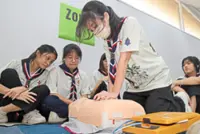
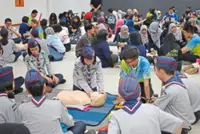
Recognising this gap, we, the team from the Faculty of Medicine at Universiti Malaya, have come together to develop a hybrid, multi-modal and bilingual BLS training module that effectively trains the public to assume the role of lay rescuers.
Our project, “Empowering Youths: From Bystanders to Lay Rescuers”, involves students and teachers from five participating secondary schools in the Petaling Jaya and Lembah Pantai areas.
With the successful development of this tested BLS training module, we hope to unify the provision of BLS training for youths and make the module accessible to governmental and non-governmental organisations alike, to continue to create a first-rescuer culture in the community and, in the long run, increase the OHCA survival rate in Malaysia.
This is a force for positive change. We should know better and do better. Let’s empower the community to save lives.
DR MAYURA DAMANHURI and PROF DR INA ISMIARTI SHARIFFUDDIN
Universiti Malaya
Note: Names have been changed to protect the privacy of the parties.