BACHOK: If her life had once been filled with pressure and the adrenaline of saving patients in the operating theatre, a former cardiac anaesthesiologist at Universiti Sains Malaysia Specialist Hospital (HPUSM) has now found a new sense of peace in sheep and goat farming.
Dr Saedah Ali, 59, who began her career as a medical doctor in 1992 and was involved in pioneering cardiac surgery services at HPUSM in 2001, ventured into livestock farming in June 2018, about four years before taking optional retirement in 2022.
She said her interest in the field was sparked after seeing her late father's 1ha inherited land left overgrown with bushes and undergrowth, prompting her to develop it into a livestock farm as a side activity.
"At first, I only rented out the land to villagers for about RM100 a year but over time, I developed the idea of venturing into livestock farming, as it is also considered a sunnah.
"There is a form of communication and emotional connection when raising livestock. Although it can be exhausting, especially when I had to stay up at night when the animals were sick or giving birth, it actually became a form of therapy to relieve work-related stress," she told Bernama recently.
According to her, the stress of being an anaesthesiologist was very different from the stress of managing livestock.
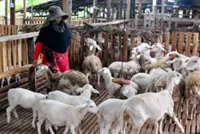
Starting with just eight goats, the farm she runs has since grown to include about 250 sheep and 90 goats.
Dr Saedah said she focused on the Dorper breed, a cross between Dorset and Persian Blackhead sheep that is known as a premium meat breed, with nearly 90% of the breeding stock imported from Australia.
Besides sheep, she also raises Boer goats and Boer crossbreeds for meat production. To ensure operating costs remained efficient and sustainable, she prioritised the use of natural feed sources by reducing dependence on bran and pellets.
"More than 70% of the livestock feed at this farm consisted of Napier grass and Bermuda grass grown on-site, in addition to silage, which is fermented grass," she said.
However, she acknowledged that the local livestock industry was facing various challenges, including an influx of cheap imported goats that had affected local breeders.
According to her, some of the imported livestock were believed to consist of older or lower-quality goats but they continued to attract demand due to their lower prices.
"Over the past three to four years, many local breeders have been forced to shut down because operating costs could no longer be sustained by current selling prices.
"Besides that, we were also facing rising feed prices due to global geopolitical factors, as well as weather-related challenges such as droughts and floods," she said.
In this regard, she hoped the government and relevant agencies would intervene by introducing certain controls on the entry of imported supplies to protect the local livestock industry and strengthen the country's food security.
Besides generating income, Dr Saedah's farm also contributed to the local community through a Corporate Social Initiative (CSI) collaboration with the prison authorities by providing employment opportunities to parolees over the past two years.
According to her, the farm also frequently served as a practical training centre for students from various educational institutions, including Universiti Malaysia Kelantan, Universiti Putra Malaysia, Universiti Sultan Zainal Abidin, vocational colleges and the Institut Pertanian Titi Gantung in Perak.
Her success in livestock farming was also supported by her husband, an ear, nose and throat (ENT) specialist at HPUSM, who often helped treat sick livestock after working hours.
Concluding the interview, Dr Saedah advised professionals to engage in outdoor activities or hobbies to avoid excessive work-related stress.
"Professionals greatly need outdoor activities to avoid burnout. Whether it is gardening, fishing or raising livestock, find an activity that you enjoy so that when retirement comes, you can remain active and healthy," she said. – Bernama