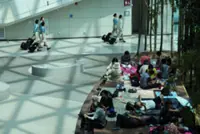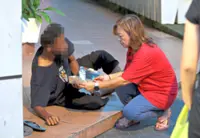
LAST month, I braved the downpour on a Saturday night with several volunteers to distribute meals to the homeless near Pudu, Kuala Lumpur.
While volunteers distributed the food, I spoke with some of the homeless and learned how they were estranged from their family and had no financial means to turn their life around.
Homelessness in the city has received extensive media coverage, attracting the attention of many interest groups and individuals.
Despite this, there is still no solution in sight to the problem.
While the Destitute Persons Act (DPA) 1977 does not cover the issue of homelessness, it has come to be the law that the authorities rely on in addressing the problem in recent times.
The Act, which was introduced to deal with vagrants causing public nuisance, does not empower the authorities to house homeless individuals at any particular place.
This means the homeless placed at shelters are free to leave at any time, thus complicating efforts to rehabilitate them.
So what about the Anjung Kelana transit centre in Taman Desa set up by the Federal Territories Ministry last year?
This is where the homeless are given skills training to prepare them for employment and they can leave the centre after three months.
The law relied upon by the authorities to relocate the homeless during the Covid-19 pandemic is the Infectious Diseases Act 1988.
The authorities said that taking the homeless off the streets was a proactive move to curb the spread of Covid-19.
But now that many have been vaccinated, the impact or effects of relocating the homeless to Anjung Kelana is unclear.
On July 15, 2020, the Women, Family and Community Development Ministry announced that it was planning to review the DPA.
Amendments to the Act will help clear the air as to which government agencies are responsible for the homeless.
On Aug 3, Prime Minister Datuk Seri Ismail Sabri Yaakob announced that a committee would be formed to review the problem of homelessness.
A former high-ranking officer at Kuala Lumpur City Hall (DBKL) once shared his frustration on the issue.
“DBKL should not be tasked with rescuing the homeless. That is the Welfare Department’s (JKM) responsibility.
“City Hall is only helping the homeless as part of its voluntary social initiative,” he said.
A JKM official, meanwhile, said the issue cuts across multiple government departments, furthering the need for a revamped DPA to outline its jurisdictional power.
According to media reports on Feb 19, a study on the DPA is ongoing, with findings to be revealed in September next year.
This study reportedly will take into account the roles of Federal and state governments, as well as the local authorities.
Given what is at stake, updates to the Act must not be delayed, if not expedited.
Another aspect that needs attention in the revised DPA is the lack of enforcement power given to the authorities.
DBKL is against non-governmental organisations’ uncoordinated distribution of food to the homeless, following complaints of excess food being left on the streets, which has angered many premises’ owners in the city.
Several locations in Kuala Lumpur have also turned into hotspots where the homeless congregate to wait for food, raising safety concerns among workers and pedestrians.
In response, DBKL has designated two spots – Medan Tuanku and Chow Kit – for Good Samaritans to donate food.
However, many welfare activists still prefer going in search of the homeless and DBKL is unable to stop them.
Some quarters familiar with the issue say the lack of cooperation from such activists could derail the authorities’ efforts to help the homeless.
Poor coordination in aid giving might encourage the homeless to opt out from government-sanctioned programmes aimed at their long-term improvement.
At this very moment, thousands of homeless still roam the streets.
For their sake, and ours, the government must make a concerted effort to deal with homelessness in the city.
Already a subscriber? Log in
Get 20% OFF The Star Digital Access
Cancel anytime. Ad-free. Unlimited access with perks.