Programme channels household spending to local shops
Selangor is tying social welfare aid directly to local sundry shops across the state instead of relying on simple cash handouts.
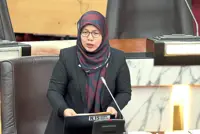
State women and social welfare development committee chairman Anfaal Saari said the strategy centres on the “Bantuan Kehidupan Sejahtera Selangor” (Bingkas) programme – an initiative under the Iltizam Selangor Penyayang (ISP) framework designed to ease household expenses while boosting neighbourhood trade.
She was replying to Mohd Razali Saari (PN-Sungai Panjang), who asked about the effectiveness of Bingkas and its socio-economic impact on retail traders, during the Selangor State Assembly sitting at Bangunan Dewan Negeri Selangor in Shah Alam yesterday.
Anfaal said Bingkas was created mainly to help families buy basic necessities.
“As we extend its reach to diverse demographics, including gig workers and small-scale operators, its secondary economic footprint is proving equally vital.
“Although the programme does not directly subsidise small retailers, its structured disbursement model functions as an indirect economic stimulus.”
Anfaal, who is Taman Templer assemblyman, said Bingkas channelled vital cash flow straight into neighbourhood sundry shops because recipients must spend their aid at registered panel merchants.
“So far, 52 local grocery stores have integrated into the Bingkas panel network, creating a localised loop of consumption and supply,” she said.
Anfaal said the programme’s implementing agency Selcare Management Sdn Bhd was leading an expansion drive to bring more small-scale traders and sundry shops into the combined Bingkas and “Baucar Kita Selangor” (BKS) network.
“For local retailers, participation offers an immediate cushion, an expanded customer base, amplified sales volume and closer ties to surrounding consumer markets,” she said.
For residents, she said, this meant easy access to daily essentials within walking distance of home.
It thus combined social welfare with neighbourhood convenience, she added.
“To ensure vulnerable groups do not fall through the cracks, Selangor continually refines Bingkas using academic research,” said Anfaal.
According to her, studies by Universiti Malaya and Universiti Teknologi Mara show that recipients credited the aid with easing financial stress, while transaction data showed staples such as rice made up the bulk of purchases.
She said combining data-driven research with local shop participation turned welfare aid from a temporary safety net into a driver of lasting economic stability.