SELANGOR is reviewing the locations of 414 existing closed-circuit television (CCTV) cameras for possible relocation to strengthen public safety monitoring.
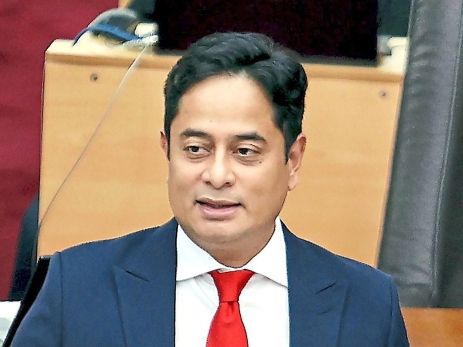
State Islamic affairs and innovation culture committee chairman Dr Mohammad Fahmi Ngah said another 250 artificial intelligence (AI)-equipped cameras were also being installed across Selangor.
He was responding to a supplementary question from Preakas Sampunathan (PH-Kota Kemuning) on whether police were consulted when local authorities selected CCTV locations.
“The locations of the 250 new cameras will be decided jointly by local authorities and the police,” Mohammad Fahmi said during the Selangor State Assembly sitting at Bangunan Dewan Negeri Selangor in Shah Alam yesterday.
The new units are being installed across all 12 local authorities, with completion expected by March 2027.
Mohammad Fahmi said priority would be given to flood-prone areas, illegal dumping hotspots and locations affected by traffic congestion.
Earlier, in reply to Preakas’s original question on the use of AI in surveillance systems, Mohammad Fahmi said Selangor currently had 1,781 CCTV cameras statewide.
“Of these, 872 units or 49% are equipped with AI capabilities, including vehicle number plate recognition, crowd and traffic monitoring, illegal dumping detection, flash flood detection and landslide risk monitoring.
“With the addition of the 250 new units, Selangor will have 2,031 CCTV cameras, including 1,122 equipped with AI,” he said.
He further said that data gathered through the cameras would be channelled by local authority control centres to relevant enforcement and disaster management agencies.
“For suspected criminal activities, recordings can be forwarded to police to assist investigations, while flood monitoring data can help agencies coordinate early response,” said Mohammad Fahmi.
According to him, some AI-equipped units had already been integrated into existing monitoring systems, while efforts were under way to link local authority CCTV networks to the Smart Selangor Operation Centre for centralised coordination.
On traffic management, Preakas asked whether AI-equipped cameras could help ease congestion through intelligent traffic systems.
Mohammad Fahmi said the cameras were currently used to collect and analyse traffic flow data rather than directly control traffic lights.
He said introducing AI-based traffic optimisation statewide was complicated by roads falling under different jurisdictions, including local authorities and the Public Works Department, which use different signal controllers and timing systems.
“All this hardware must first be integrated before we can introduce a smarter and more efficient AI system,” he said.
He added that the state was assessing suitable AI traffic management systems through proof-of-concept projects.
Mohammad Fahmi also disclosed an initiative to develop a digital twin system for towns and roads in Selangor, allowing proposed road developments to be simulated before construction and enabling AI to recommend traffic flow improvements on existing roads.