Water quality at Petaling Jaya’s Taman Aman lake has improved from Category D to C over the past year following the rollout of the Taman Aman Rehabilitation Project, according to the Global Environment Centre (GEC).
Under the National Lake Water Quality Criteria and Standard developed by the National Water Research Institute of Malaysia (Nahrim), Category C lakes are designated for the preservation of aquatic life and biodiversity, whereas Category D lakes are managed for minimum preservation.
However, GEC director Faizal Parish cautioned that addressing decades of urban runoff and accumulated sediment remained an ongoing challenge.
“This lake is affected by significant pollutants from urban environments, particularly phosphate from sewage and other sources.
“High phosphate levels stimulate algal growth, making it a critical parameter to reduce.
“Originally a tin-mining pond, the lake has very little natural vegetation around its edges to absorb incoming pollutants.
“Because it functions as a stormwater retention pond, it also receives water channelled from surrounding urban areas containing runoff from kitchens and gardens,” he explained.
The Taman Aman Rehabilitation Project aims to improve water quality over a 10-year period using nature-based solutions (NbS).
Launched in September 2024, the project is funded by Google, in partnership with Petaling Jaya City Council (MBPJ) and local community group Friends of Taman Aman (Fota).
“The project’s master plan comprises four main elements: community empowerment, lake education, pollution management and lake water treatment through NbS,” said Faizal.
“We are developing a floating wetland, planting wetland species along the edges and constructing small wetlands around the inlets to trap pollutants.
“Combined with aeration, these measures will reduce pollution and improve water quality.”
The NbS infrastructure is scheduled for completion in August 2027, followed by seven years of post-monitoring.
Faizal said while water quality had improved to Category C, the goal was to maintain a “high C” rating for Taman Aman lake.
He added that achieving Category A was unlikely, as it was an urban lake rather than a pristine natural forest lake.
“We are working with Nahrim to make Taman Aman lake a model urban lake in Malaysia that is holistically managed – not just for recreation or flood control, but as a space rich in biodiversity.”
The project’s educational component features the newly launched Taman Aman Lake Education and Stewardship cabin, which serves as an education hub for Fota to conduct nature trails and awareness campaigns.
Fota president R. Thayakugan said NbS measures had proven effective where previous council attempts fell short.
“The presence of algae is now markedly reduced; it was disheartening to see the lake covered in algae over the last decade.
“We track this through regular testing by the Taman Aman Lake Rangers, our citizen science group comprising local residents and students.”
Thayakugan expressed hope that water quality could eventually reach Category B, which would make it suitable for recreational activities involving secondary body contact.
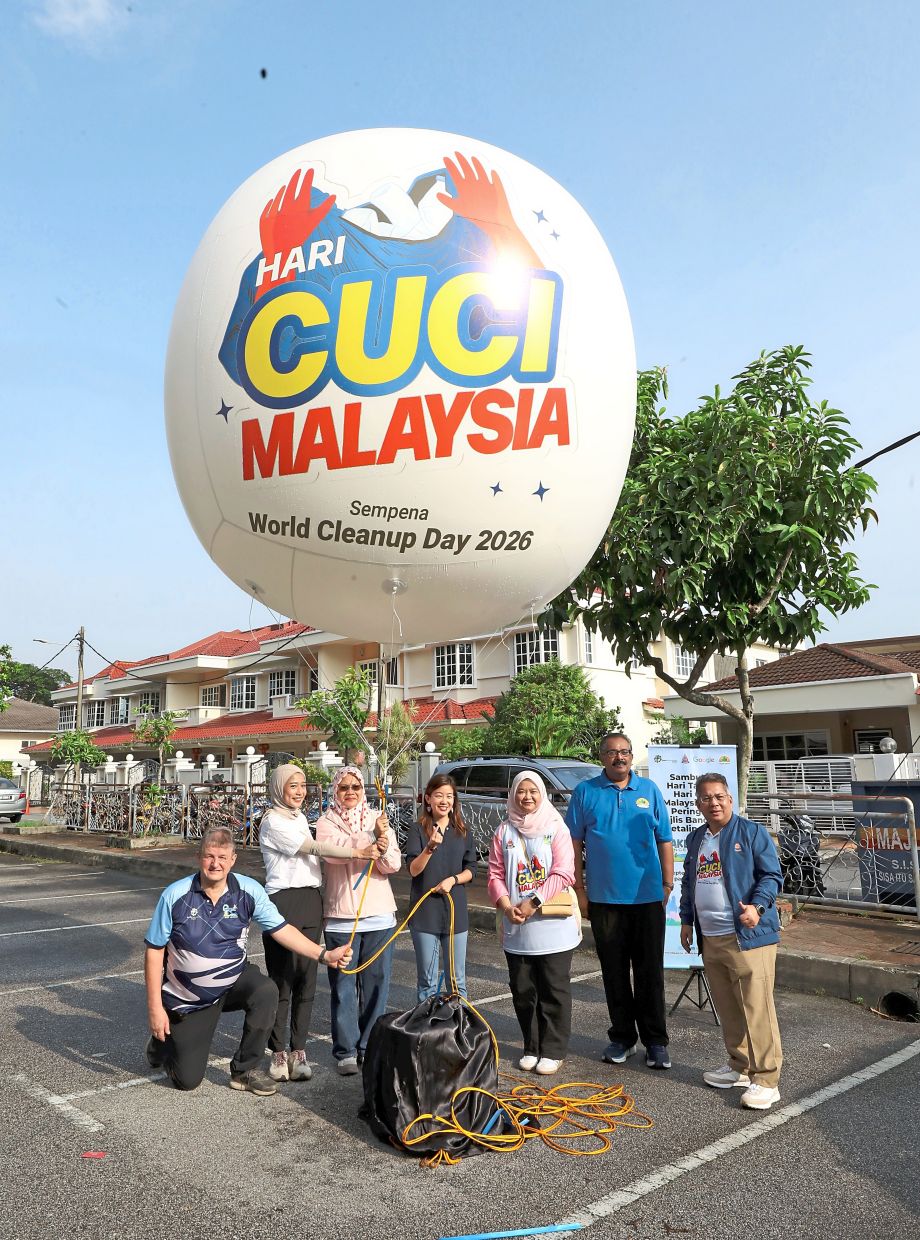
The cabin launch coincided with MBPJ’s World Lake Day and Malaysia Clean-Up Day event at Taman Aman, which was launched by Petaling Jaya deputy mayor Sharinaz Samsudin.
Also present were Kampung Tunku assemblyman Lim Yi Wei, Google Asia-Pacific community and workforce development manager Arina Dafir, MBPJ deputy secretary (development) Zain Azly Abdul Rahman and MBPJ Solid Waste Management and Public Cleansing Department assistant director Nur Wahidah Zakaria.
The event saw volunteers clearing up rubbish around the park and nearby residential areas, while anglers participated in a programme to catch invasive species to manage the lake’s fish population.
In her speech, Sharinaz highlighted that Petaling Jaya’s lakes served as vital ecological assets that managed stormwater, mitigate flood risks and support urban biodiversity.
She added that in support of Malaysia Clean-Up Day, which was held nationwide on Sept 26, MBPJ gathered some 250 people to simultaneously clean three locations in the city – Taman Aman, Taman Bandaran Kelana Jaya and Kampung Selamat – from which a total of 381.85 kg of solid waste was collected.