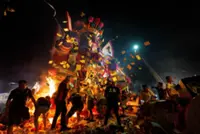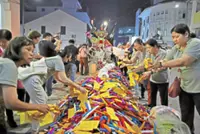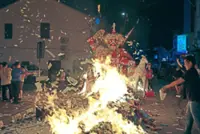
MULTIPLE events are being held to mark the Hungry Ghost Festival in Penang this year.
Penang Teong Guan Association chairman Steve Yap said 200 committees are organising prayers, dinners and fundraising activities.
This is in addition to prayer rituals honouring Tai Su Yeah (King of Hades and ruler of the underworld).
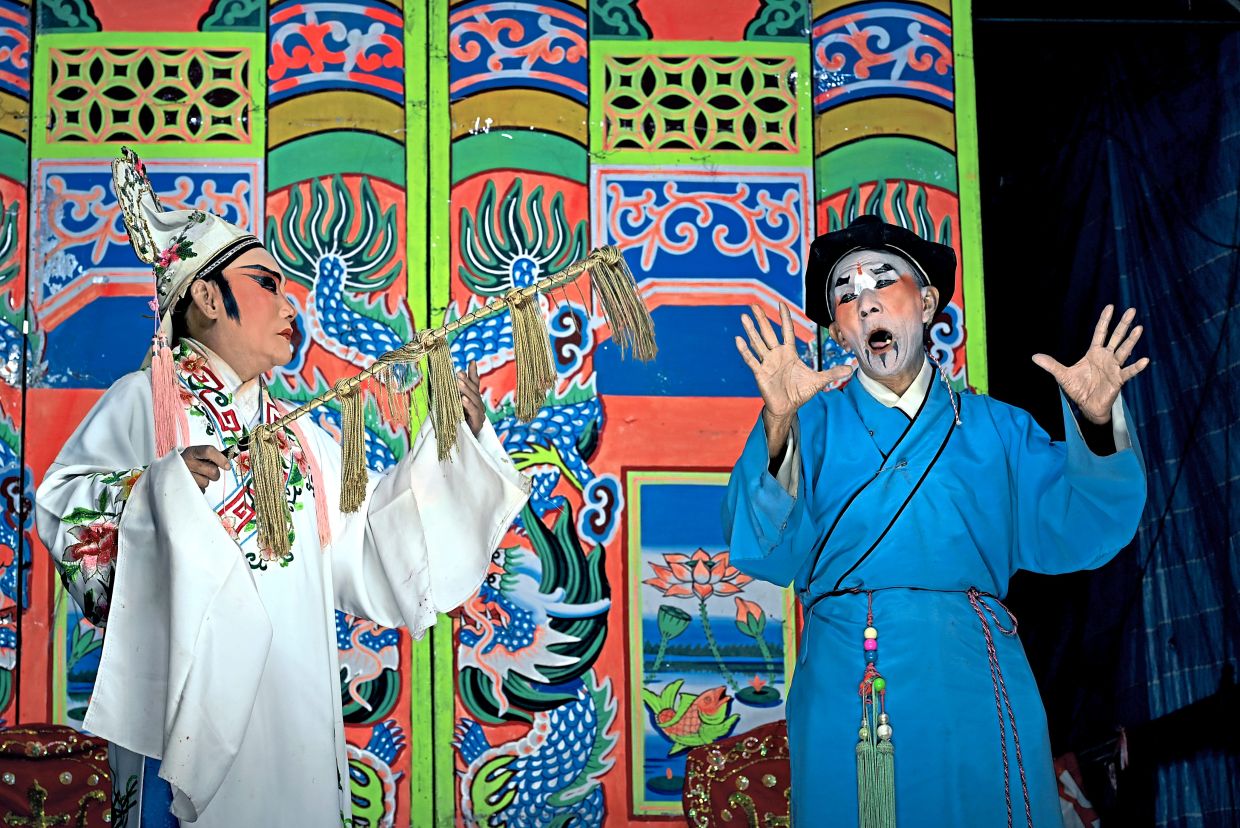
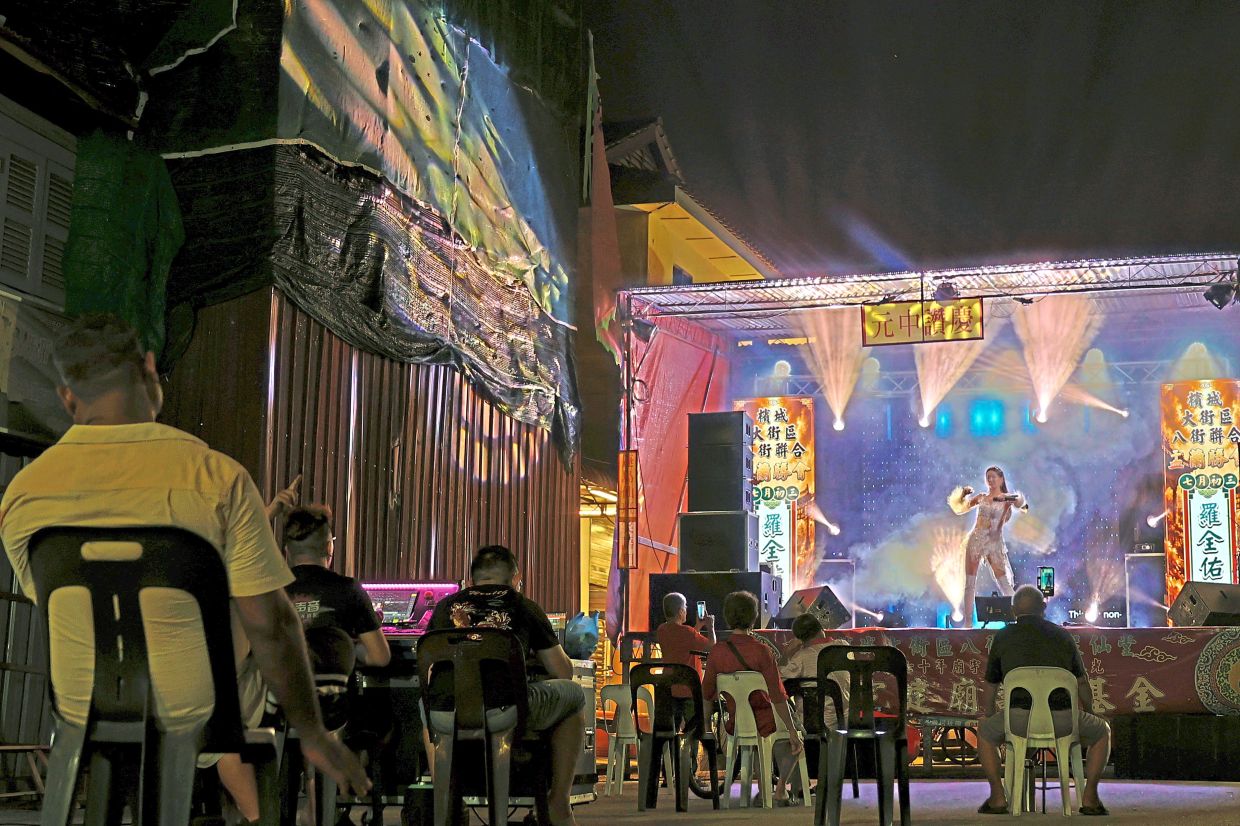
Chinese opera, puppet shows and ge tai (singing stage shows) are also being held to entertain the community and “wandering spirits”.
Known as Yu Lan in Mandarin or Phor Thor in Hokkien, the festival is observed during the seventh lunar month, which this year runs from Aug 13 to Sept 10.
According to Chinese beliefs, the Gates of Hell open during this period, allowing spirits to roam the human world for a month.
Traditionally, Phor Thor committees in predominantly Chinese areas would set up makeshift canopies to house the King of Hades and offer prayers in the belief that this would bring peace and prosperity.
Street dinners are also held after the burning of paper effigies, bringing together people from all walks of life to sit and feast.
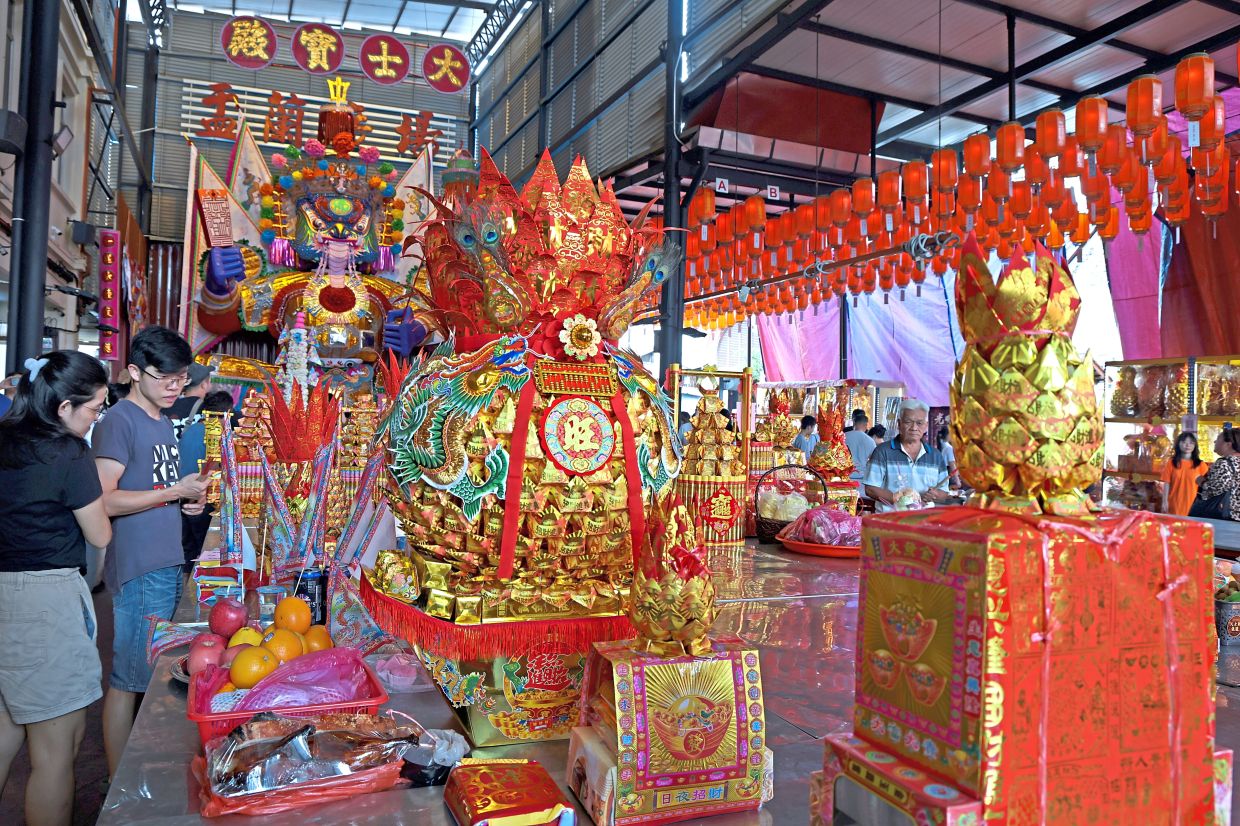
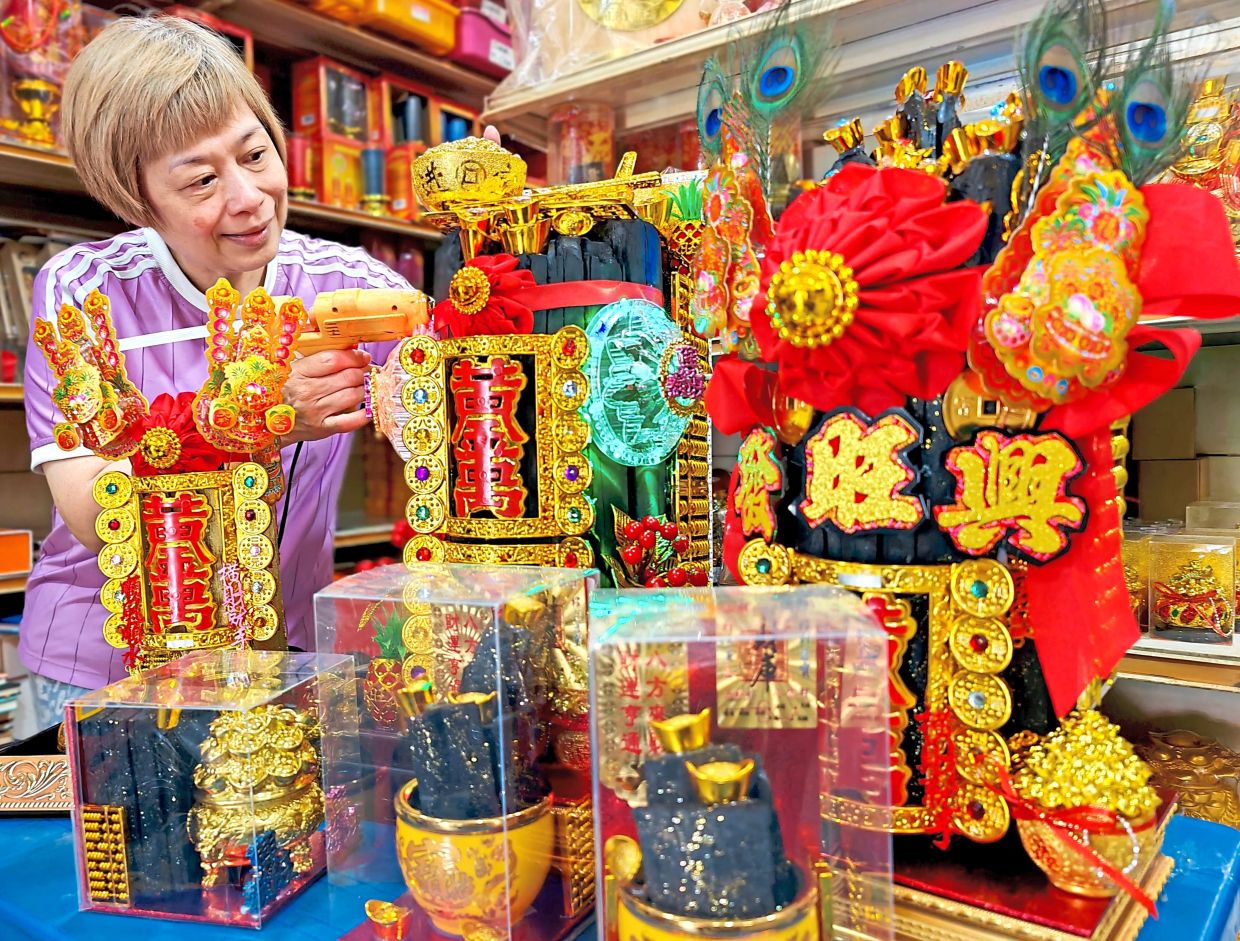
Offerings to Tai Su Yeah typically include food, fruit, drinks, incense and joss paper, as well as elaborate decorative items such as “black gold” or charcoal logs.
Other items include liquor, deity figurines and auspicious decorative items.
Yap said these items were either sponsored by well wishers or locals in the neighbourhoods.
“These items will be put up for bidding, which is part of the celebration and also helps support the groups’ activities.”
Yap said it had also become a tradition for the community to raise funds for education and other charitable causes during the dinners.
Usually, a donation box is placed at each table, with the funds used to help needy students and equip Chinese schools with smart classrooms.
“This year, we hope to raise RM2mil for SJK (C) Heng Ee in Bayan Lepas.
“When we collect donations, people know the purpose and where their money will be channelled.”
On concerns that younger generations were less interested in the festival, Yap said interest among the young was in fact growing, although some traditional practices might not be followed as closely as before.
“We encourage people to share the celebrations on social media so younger people can understand and participate.
“Traditional practices include making offerings to wandering spirits, burning joss paper, praying to Tai Su Yeah and holding Chinese opera or puppet shows during the festival.
“Some devotees also observe taboos such as avoiding swimming and staying out late at night.
“While younger people may not follow every practice, their interest in the festival is growing,” he noted.
Yap said the most important aspect of the festival was respect, regardless of whether people believed in its religious aspects.
“When the Gates of Hell are opened, the most important thing is to pray and show respect.
“Even if you do not believe, this festival should teach us to respect others and their traditions,” he said.
Established in the 1970s, Penang Teong Guan Association serves as the umbrella body for Phor Thor committees across Penang and coordinates the annual festival.
As a key organiser, it works with local residents and traders to organise rituals and raise funds through charity dinners for Chinese schools and other educational causes.
The association helped raise RM4.3mil for SJK (C) Kuang Yu in Batu Kawan in 2025 and 2024.
Towering effigies
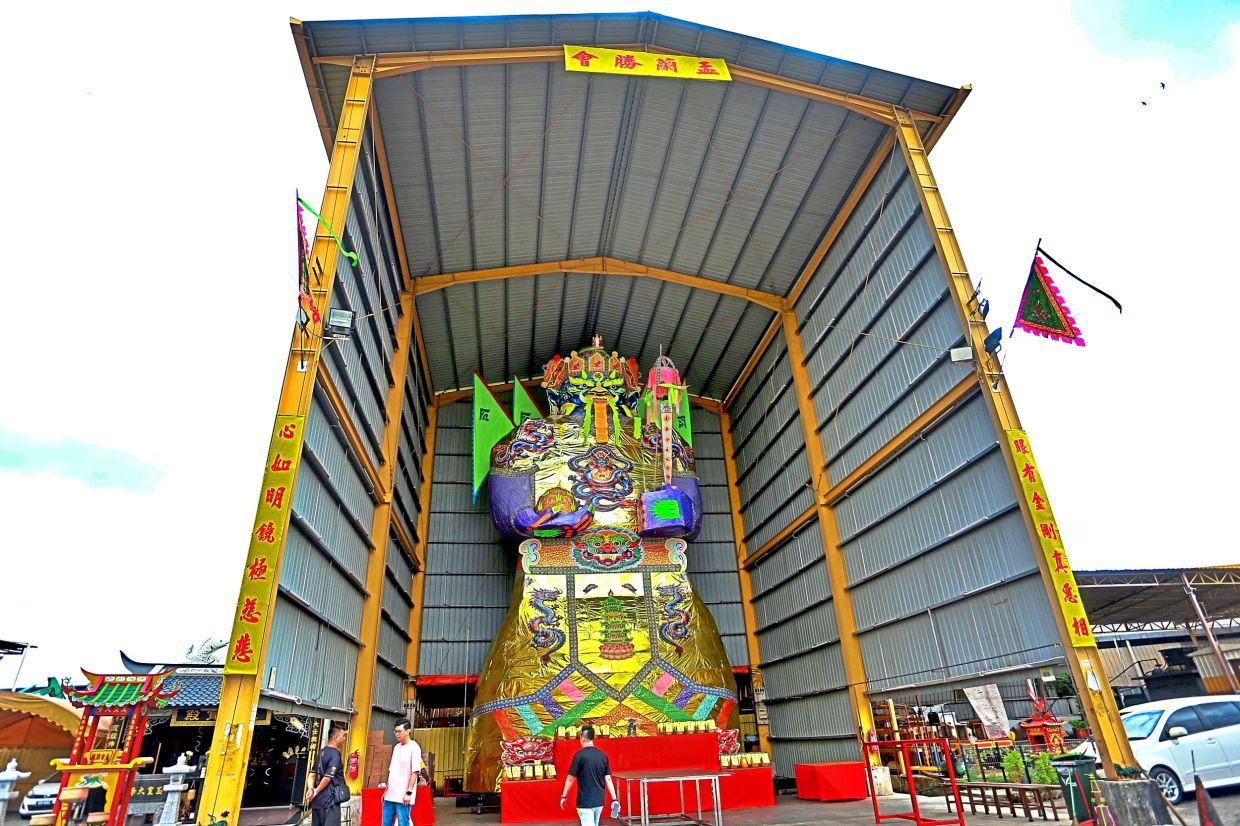
Rising to 8.9m, about 6cm taller than last year, the largely blue King of Hades effigy is now standing at the Pertubuhan Perayaan Yu Lan Bukit Mertajam building in Jalan Pasar, Bukit Mertajam.
The effigy has gold armour decked with red accents and multi-coloured flowers and fixtures.
It grows in size every year in line with the belief that it will make things better for all.
The paper effigy holds a “ling pai”, which translates as a command tablet or authority token, and is hailed as one of the largest of its kind in the country.
The effigy was transported to the site in three sections (head, torso, legs) by lorries from Berapit, about 3km away.
Veteran effigy maker Ng Chi Wang, who has been crafting such effigies since 1984, then assembled it on-site with his team of 20.
“It took us one and a half months to make the effigy.
“The same colour palette is always used, namely blue, gold and red with other vibrant shades added to the mix.
“Everything is the same design-wise, only the height is different and its body is wider as it is believed that bigger is better,” he said when met after the effigy was assembled at the organisation’s building.
Ng said he used bamboo strips to build the effigy’s frame and decorated it with thousands of coloured paper.
“There is no plastic or metal involved in making it.
“We did place a few wooden panels inside to support the structure as it weighs half a tonne.
“To paste the paper together, we made our own glue from starch and this time we used 30kg of flour for the entire structure.”
Pertubuhan Perayaan Yu Lan Bukit Mertajam chairman Datuk Seri Peh Weng Khim said this year marked 139 years of uninterrupted observance, with the consecration on Aug 15, signalling the start of the 15-day celebration.
“People can come to light joss sticks. The festival will culminate in a grand send-off ritual, during which the effigy will be set ablaze on the 17th night of the seventh lunar month, which falls on Aug 29.
“We are expecting a good turnout as we expect not just locals but those from neighbouring countries like Singapore and Taiwan to join in.”
On Aug 29, the giant effigy will be wheeled out to the middle of Jalan Pasar to be set ablaze.
In Alor Setar, a 15.24m-tall Tai Su Yeah effigy towers over the Hungry Ghost Festival celebrations at Tow Boo Keong Temple in Mergong.
Billed as the tallest Tai Su Yeah effigy in South-East Asia, it remained the same height as last year as the shelter built for it had reached its maximum height, the temple said.
Temple secretary Chah Boon Chuan said: “It is so big that it will take about two to three hours to move it out for the burning ceremony.”
The effigy will be displayed for 10 days until Aug 24, when the send-off and burning ceremony will be held.
Chah said the temple has been holding the celebration for about 20 years, with the effigy growing considerably since it was first introduced.
“We started with an effigy that was only 5.49m tall. Over the years, it grew bigger and bigger.”
The giant Tai Su Yeah has since become a major feature of the temple’s annual Hungry Ghost Festival celebrations.
In 2015, the effigy stood at about 6.6m, up from 5.5m the previous year. By 2019, it had reached 10m.
The 2022 effigy, measuring 12.98m, was recognised by the Malaysia Book of Records as the country’s tallest Tai Su Yeah effigy. It continued to grow, reaching 14.8m in 2024.
Chah said this year’s celebrations would feature other activities alongside the giant effigy including ge tai stage singing and cultural performances.