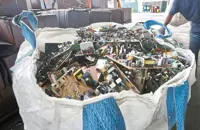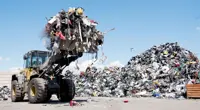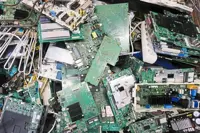
SELANGOR is planning to expand the network of accessible e-waste collection centres at every local authority.
State public health and environment committee chairman Jamaliah Jamaluddin said this would be done through community programmes, existing recycling centres and initiatives such as Selangor Recycling (SELKitar).
“This is important to ensure that the public has convenient channels for disposing of e-waste, thereby reducing the risk of e-waste being discarded together with ordinary solid waste.”
She said the state was developing the Selangor Green Economy Roadmap (SAGE) Volume 2: Circular Economy, which covered the collection, recycling and safe disposal of end-of-life solar panels, batteries, inverters and related components.
Jamaliah was responding to Jefri Mejan (PN-Ijok) on the state’s preparations to address the potential increase in end-of-life electric vehicle (EV) batteries and solar panels, particularly in terms of collection, recycling, disposal and hazardous waste management.
She said the state had taken preparatory measures involving regulation, recovery, licensing and legal compliance to ensure such waste was managed safely.
“In addition, the Department of Environment (DOE) requires scheduled waste, including used batteries, to undergo a recovery process in line with the cradle-to-cradle concept,” she said at the Selangor State Assembly sitting in Bangunan Dewan Negeri Selangor, Shah Alam, yesterday.
Waste owners or producers were required to send end-of-life EV batteries and solar panels to DOE-licensed recovery facilities.
“EV batteries will undergo collection, sorting, discharge and recovery processes to extract valuable materials such as lithium, cobalt and nickel before being reprocessed using approved technologies.”
To handle specialised waste, Selangor houses two off-site recovery facilities licensed by the DOE for SW103 (lithium EV batteries). Additionally, the state operates 11 full-recovery and 21 partial-recovery facilities for SW110 (e-waste).
New premises carrying out recovery activities involving EV batteries and solar panels are subject to the Environmental Quality (Prescribed Activities) (Environmental Impact Assessment) Order 2015.
“Project proponents are required to submit an Environmental Impact Assessment (EIA) report for review before approval is granted under Section 18(1) of the Environmental Quality Act 1974.
“This approach ensures recovery operations do not pose a risk of pollution to the environment or public health,” said Jamaliah.
Jefri had also asked about action taken against those who illegally dispose of e-waste.
Jamaliah responded that it could result in a fine of up to RM10mil and imprisonment of up to five years.
“The Federal Government is developing special guidelines for the management of solar panel and electric vehicle waste.
“This is being done by the Natural Resources and Environmental Sustainability Ministry, through the Malaysian Green Technology and Climate Change Corporation.”
Jamaliah added that this would ensure scheduled waste, under codes SW110 and SW103 in the First Schedule of the Environmental Quality (Scheduled Wastes) Regulations 2005, are managed in an environmentally sound manner.