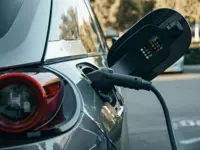
With electric vehicle (EV) sales surging nationwide, city planners are faced with the challenge of balancing motorists’ needs while expanding electric vehicle charging bays (EVCBs) to keep pace with growing demand.
As Klang Valley motorists adapt to the changing use of shared public spaces, they are increasingly having to contend with parking bays being converted into EVCBs.
This move has inadvertently reduced the number of bays for conventional vehicles.
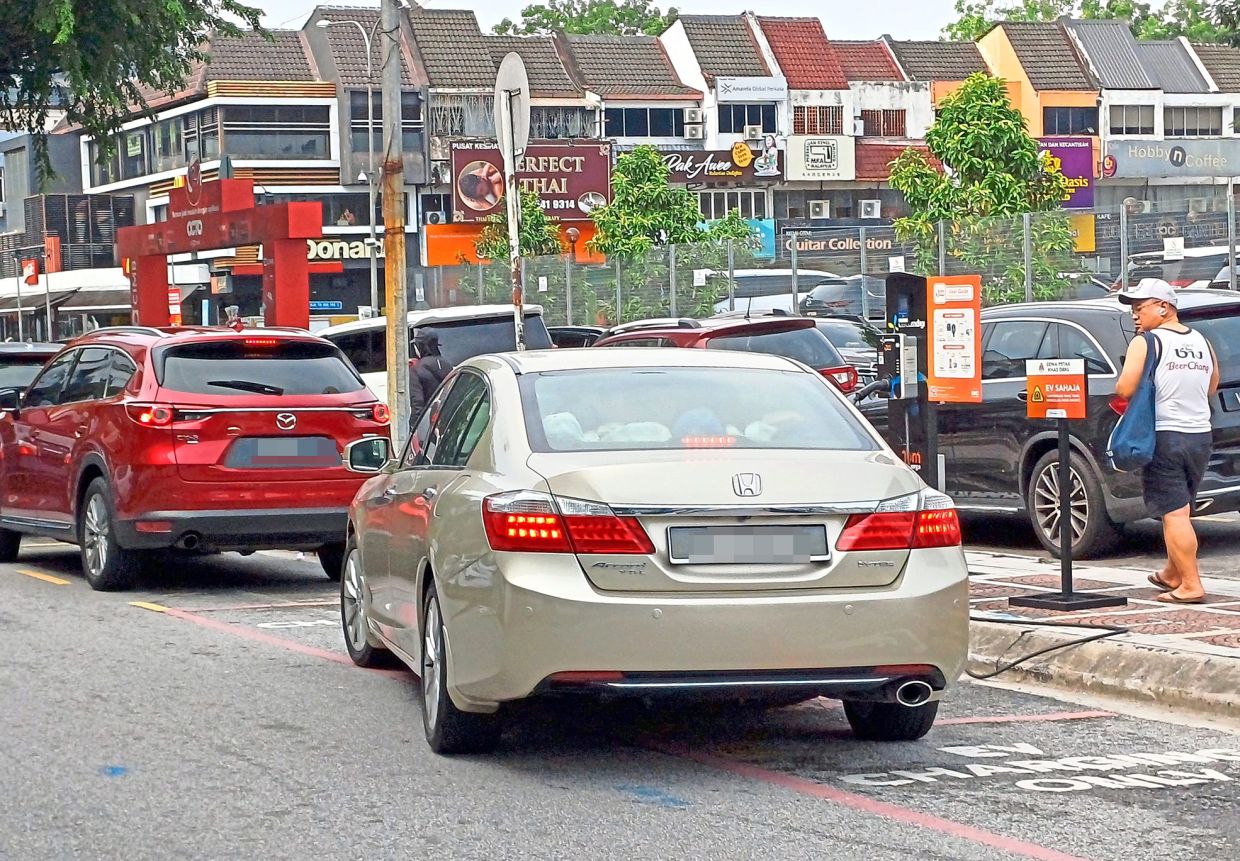
The growing EVCB network has also highlighted issues such as charger hogging, where vehicles occupy charging bays long after charging is complete, as well as non-strategic placement of charging stations affecting accessibility and traffic flow.
Yet, as motorists grapple with these challenges, Malaysia’s public charging infrastructure is still falling short of national targets.
According to a report in The Star, the Investment, Trade and Industry Ministry (Miti) said 6,416 public EV chargers had been installed nationwide as of May 31.
This comprises 2,143 direct current (DC) fast chargers and 4,273 alternating current (AC) chargers.
The figure is 3,584 charging bays short of the 10,000 public charging bays targeted by Miti.
Based on the Road Transport Department (JPJ) statistics
published on data.gov.my, there are 156,983 registered EVs in Malaysia as of July 10.
This translates to roughly one public charger for every 24 registered EVs.
Designated EV spots
There is a growing need to balance EVCB allocation to meet the needs of both EV and non-EV users.
Salesman Mark Cheng, 32, who drives a standard internal combustion engine (ICE) vehicle, finds it frustrating when EVCBs take up public parking bays in busy commercial areas like Taman Tun Dr Ismail (TTDI).
“It is always tough finding a parking spot and it annoys me further that vacant EVCBs are taking up council bays.
“These chargers should not replace public parking,” he said.
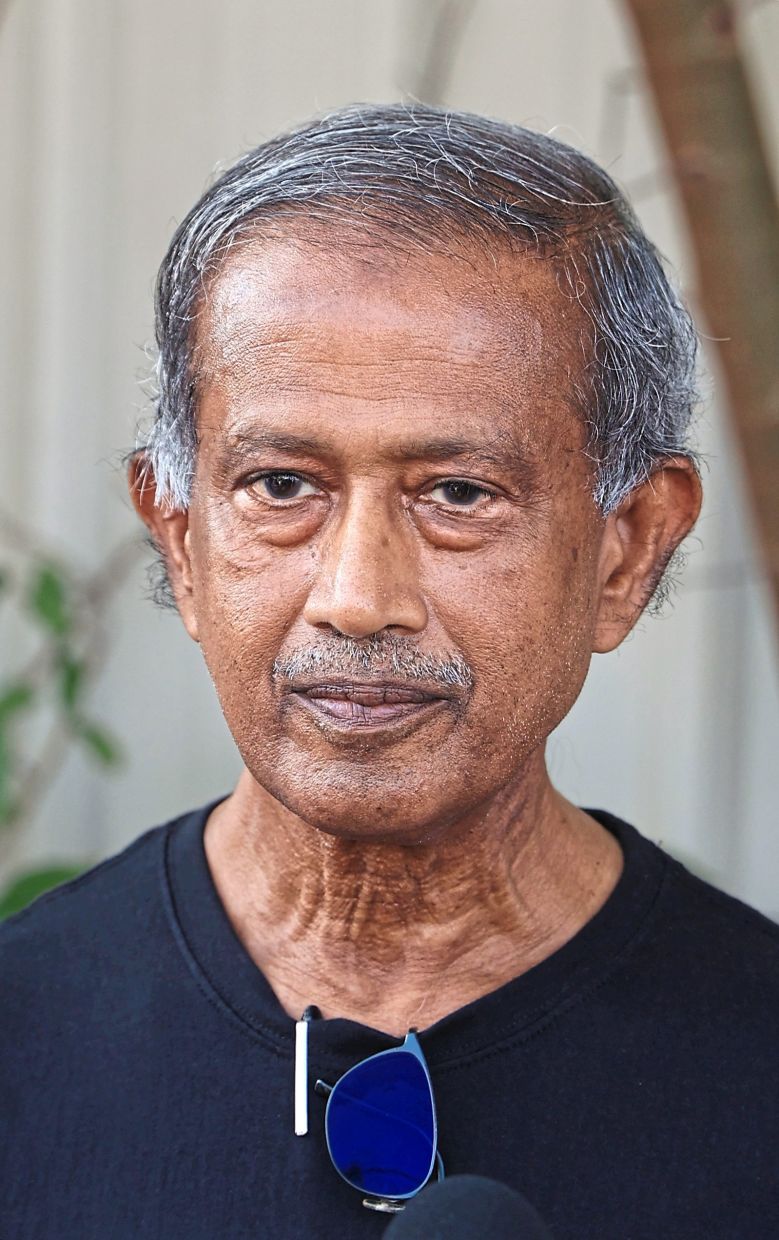
Community activist Yee Poh Ping, who earlier highlighted a similar issue in the Kepong commercial area, said EVCBs should be installed at petrol stations.
“This is the same scenario as when Natural Gas for Vehicles (NGV) was introduced and placed at petrol stations,” he said.
“If charging bays are to replace public parking bays, then instal them at places with ample bays or redesignate a new area for EVCBs.”
Yee suggested that demand studies be conducted to ensure charging bays benefit both charge point operators (CPOs) and users.
“For example, the charging bays at Jalan Rimbunan Raya in Laman Rimbunan, Kepong are wasting parking space as they are often unoccupied,” he said.
Save Kuala Lumpur chairman Datuk M. Ali said EVCBs should be considered at Kuala Lumpur City Hall (DBKL) community centres, sports complexes or nearby recreational parks.
He said over installation of EV stations could overload the localised grid and cause blackouts, as current infrastructure may not be able to handle such high-amperage loads.
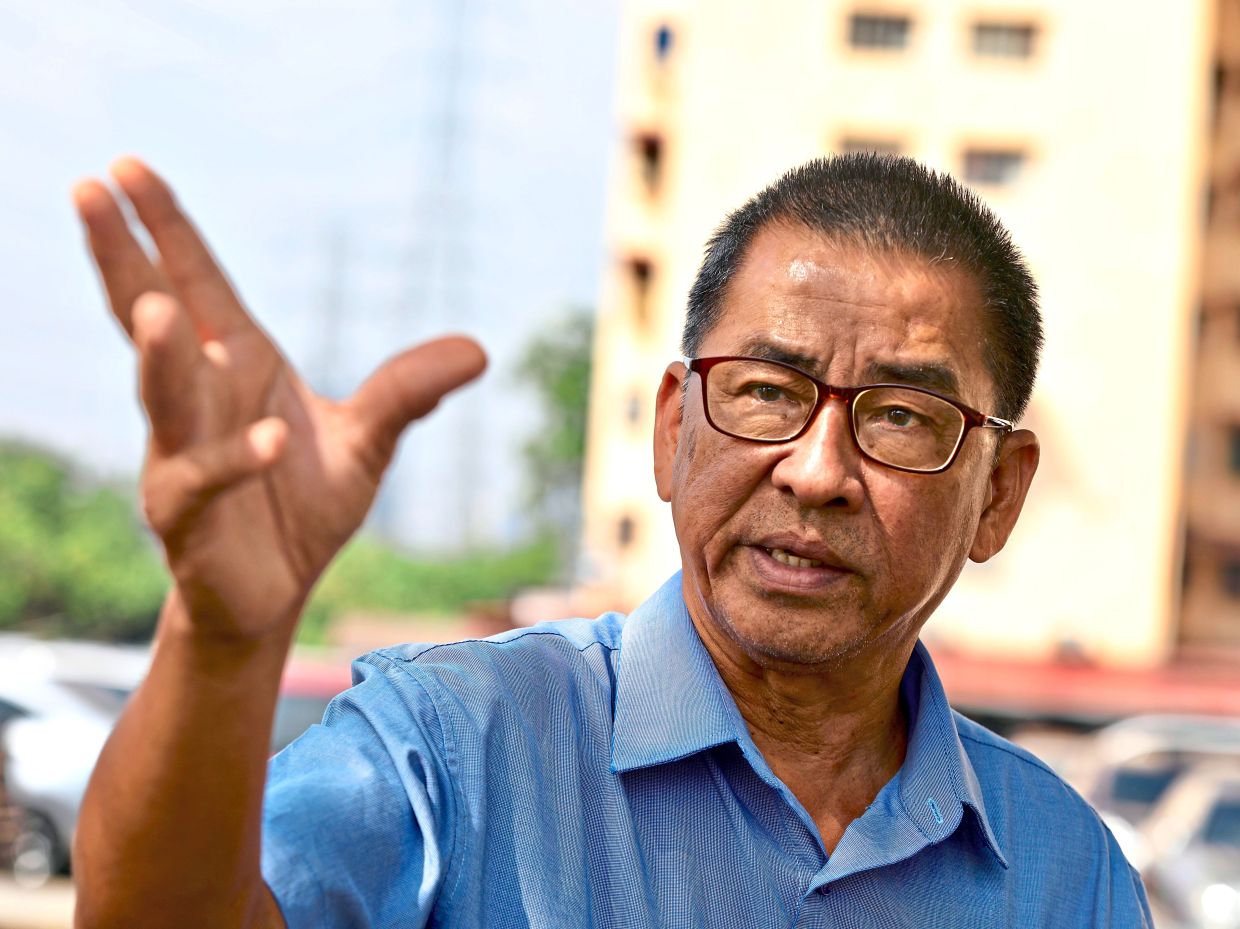
“Dedicated direct power supplies must be considered despite the cost,” he said.
“Tenaga Nasional Bhd (TNB) and other providers must ensure power is boosted to cater to these new needs, as even private home EV facilities are not yet effectively catered for.”
EV owner Jeffery Ng, 39 said Kuala Lumpur did not have enough fast-charging bays.
“The charging bays are insufficient. Owners are concerned that their EVs might run out of charge,” he said.
“The same cannot be said for petrol cars because there are plenty of petrol stations in the city.”
Ng, however, said he rarely relied on EVCBs found at public street parking.
“I prefer charging my EV at the DC charger near my home,” Ng said.
Meanwhile, Icaur Owners Club Malaysia member Lim Kea Hiang from Bukit Mertajam, who travels to Klang Valley regularly, said street parking charging bays were a bonus find.
“Most Penang EV owners prefer charging their vehicles at home and rarely rely on outside chargers.
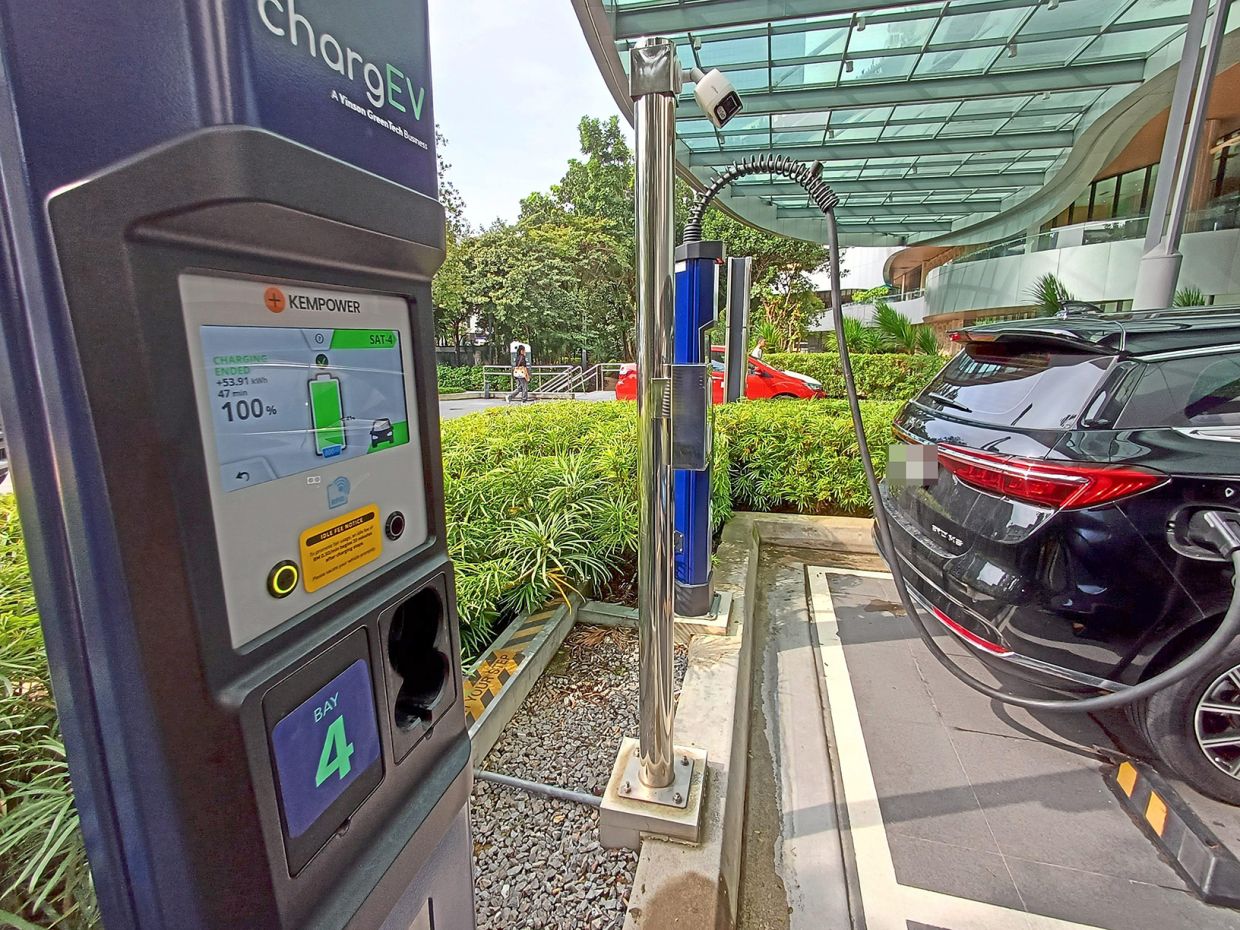
“In Klang Valley, EV drivers tend to hog the bays even though their cars are fully charged.
“They might be away running an errand and are oblivious that their cars are fully charged, hence preventing other users from using the bays,” said the 35-year-old content creator.
Lim said Malaysia should emulate Thailand, which has provided designated EVCB without having to sacrifice public bays.
“Most importantly, instal DC or fast charging bays so EV owners only spend 20 minutes waiting, and do not necessarily have to run errands.
“Charging bays are most effective when built at petrol stations, rest and relaxation (R&R) areas as well as along the main arterial roads,” he said.
KL achieves target
The Town and Country Planning Department’s (PLANMalaysia) 2025 statistics show that Kuala Lumpur was the only state or Federal Territory to surpass its 900 EVCB target.
DBKL installed 1,192 bays to achieve a 132% completion rate.
City Hall said there was a rising trend in EVCB applications via its One-Stop Centre (OSC) counters.
The OSC received 13 applications in 2024, 81 in 2025, and 67 as of May this year.
Kuala Lumpur Advisory Board member Lee Bing Hong said DBKL was currently pushing for EVCBs at high-traffic petrol stations.
“This was brought up during a recent DBKL meeting where we suggested that new petrol stations should also include EVCBs.
“We think private premises as well as council-owned buildings like public markets and complexes should be given priority for the installation of EVCBs,” he said, adding that DBKL had also received complaints on EVCBs occupying public parking bays, especially in high-traffic commercial areas.
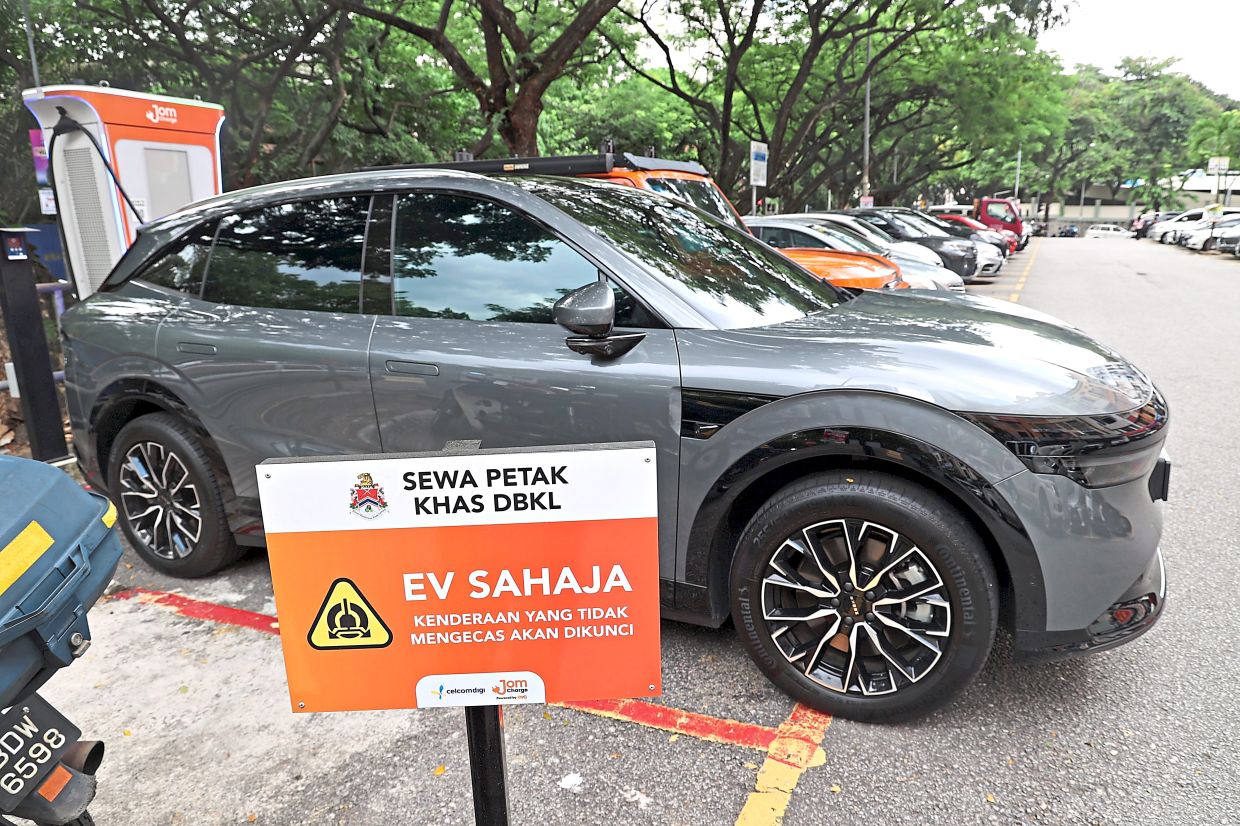
To address the parking bay shortage in Kuala Lumpur, DBKL will no longer convert existing parking bays into EVCBs.
In a statement, DBKL said that for new EVCB applications, companies or CPOs must submit proposals to construct additional parking bays at suitable locations rather than utilising existing space.
“This approach ensures the development of EV infrastructure can continue without compromising public parking facilities.
“It also reflects our ongoing commitment to strengthening the capital’s green mobility ecosystem while supporting the government’s EV aspirations,” the statement said.
S’gor seeks EVCB partners
Selangor has the highest target for EVCB in the country at 4,000 bays, PLANMalaysia said.
As of March 31 last year, a total of 1,276 EVCBs were installed, achieving a 32% completion rate.
Selangor state investment, trade and mobility committee chairman Ng Sze Han acknowledged the EVCB shortage in the state, given the surge in EV demand due to the energy crisis earlier this year.
“EV companies, including Tesla, have been engaging closely with the state government since last year.
“While private entities are willing to invest in EVCBs, the primary challenge is the return on investment (ROI) that CPOs can achieve within a stipulated timeframe.
“If selected spots are far from the existing power grid, CPOs face additional infrastructure investment costs.
“Private CPOs naturally prefer locations with easy grid access within high-demand areas to maximise profitability,” he said.
“Furthermore, local councils currently operate under different approval processes and mechanisms, including fee structures.
“On top of that, the state must identify locations where EVCBs are both technically feasible and economically viable,” he told StarMetro.
Ng said the state believed the initiative should not be driven solely by commercial considerations, as providing accessible EVCBs was part of the government’s responsibility to support public mobility.
Selangor also entrusted Shah Alam City Council (MBSA) last year to develop statewide EVCB guidelines to standardise processes and procedures.
Worldwide Holdings Bhd, through its energy subsidiary Worldwide Energy Development Sdn Bhd, is acting as anchor lead to attract investment partners and accelerate Selangor’s goal of 4,000 EVCBs by 2030.
Ng said local authorities such as MBSA, Subang Jaya City Council (MBSJ), Hulu Selangor Municipal Council (MPHS), Ampang Jaya Municipal Council (MPAJ) and Selayang Municipal Council (MPS) had submitted location requests.
“Worldwide Holdings will also adopt a balanced approach to ensure EVCBs cover less profitable, lower-demand zones where charging facilities are genuinely needed, such as Hulu Selangor and Sabak Bernam.
“Meanwhile, USTEU Hong Kong Limited has signed an agreement with Worldwide Holdings to expedite the installation of its first 500 EVCBs this year.
“We continue to seek additional partners, including local players, to help the state reach its 4,000 EVCB target by 2030.
“A growing number of local CPOs have also approached Worldwide Holdings to collaborate with the state,” Ng said.
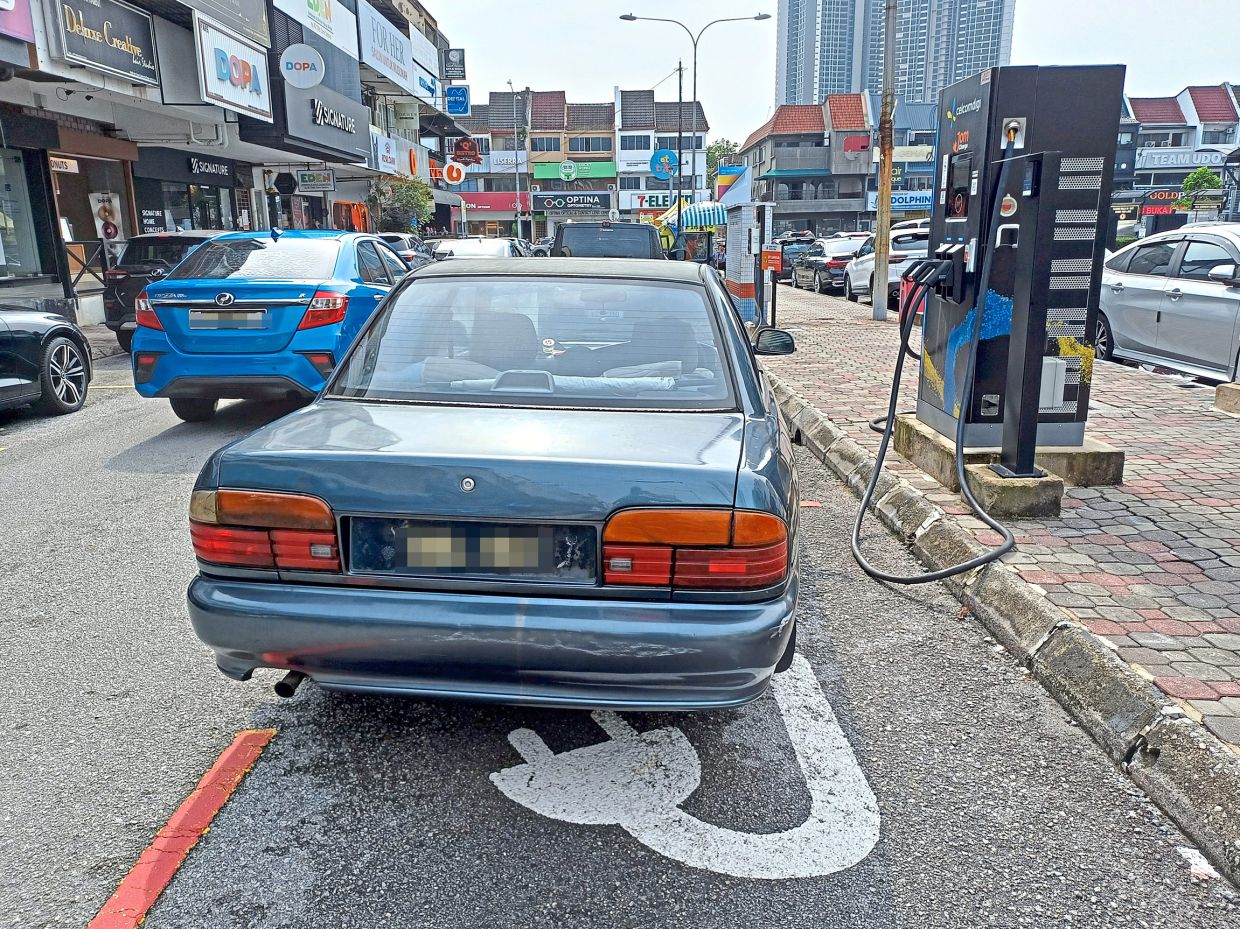



An ICE vehicle hogging an EV charging bay along Jalan Tun Mohd Fuad 3 in Taman Tun Dr Ismail, Kuala Lumpur.
An EVCB monitor showing that the car is fully charged but remains plugged in at Damansara Uptown, Petaling Jaya.
A man looking at an ICE vehicle taking up an EVCB spot at Jalan Tun Mohd Fuad 3 in Taman Tun Dr Ismail, Kuala Lumpur.
DBKL will no longer convert existing parking bays into EVCBs to preserve public parking capacity.
Lee says DBKL is pushing for EV charging bays at high-traffic petrol stations.
Yee suggests carrying out studies on demand for charging bays so it benefits both operators and users.
Ali says EVCBs should be considered at DBKL, community centres, sports complexes or nearby parks.
Lim says having charging bays at street parking spots is just a bonus find.
Ng says there are not enough fast-charging bays in Kuala Lumpur.