Petaling Jaya City Council (MBPJ) is coming up with new and updated business regulations to keep up with the times.
Mayor Datuk Mohamad Zahri Samingon said it had been actively engaging with councillors, stakeholders and relevant authorities since 2024 to develop the guidelines.
“Since 2024, MBPJ has introduced more than 30 new and updated business guidelines to ensure a more vibrant economic environment in the city.
“From August, the council will roll out some of these guidelines covering five sectors: logistics and courier services, domestic and regional tourism, online-based businesses, animal care businesses and the green economy.”
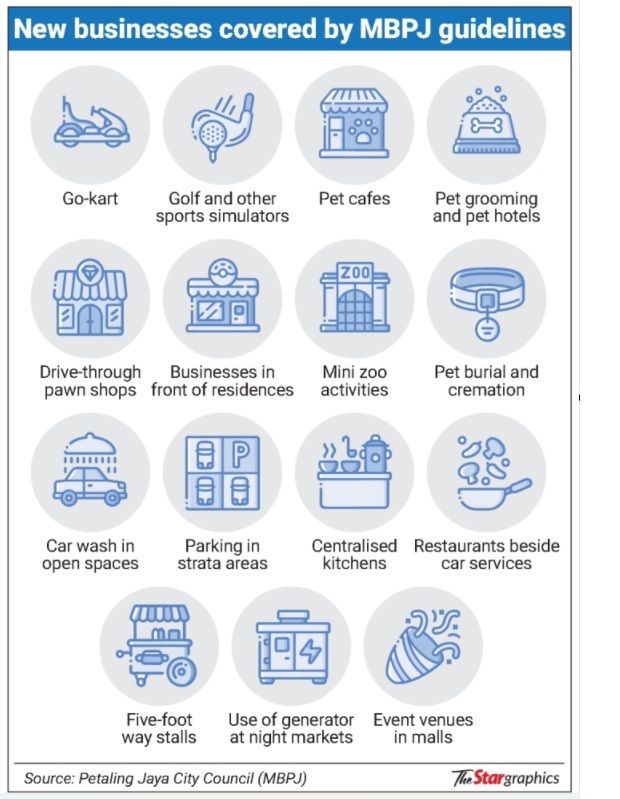
There are new guidelines (see chart) to govern activities such as pet cafes, aesthetic treatment centres, centralised kitchens, stalls on the five-foot way, event venues in malls and simulator sports facilities.
The guidelines for other businesses such as courier services and eatery operators, have been updated.
The mayor said MBPJ’s approach was to allow such activities with appropriate regulations rather than impose restrictions.
“We want to strike a balance between economic growth, ease of doing business and the interests of Petaling Jaya residents.”
He added that the development of the new guidelines was carried out in accordance with the Petaling Jaya City Council (MBPJ) Trade, Business and Industrial By-Laws 2007, specifically By-Law 54 which provides that any business activity not listed in the schedule may be subject to a licensing fee as determined by the local authority.
Mohamad Zahri said the guidelines also took into account sunrise industries, namely businesses that are expected to grow and contribute to the economy.
MPBJ councillor Quratulain Atiqah Norzahirul Anuar welcomed the development.
“Laws and regulations must keep pace with technological advancements, changing social trends and current issues, while guidelines should be updated to support modern-day activities,” she said at MBPJ’s full board meeting last month,
“I hope that outdated guidelines and by-laws, both at the local authority and state government levels, will be reviewed and amended accordingly so that our legal framework remains relevant to current needs and keeps pace with technological advancements.”
Fellow councillor John Leong also lauded the move, saying MBPJ must keep abreast with current trends, citing centralised kitchens as an example.
“Several fast-food chains already operate centralised kitchens to support food deliveries.
“With more restaurants now having online delivery services, the need for specific guidelines is greater.
“We have to keep up with changing business trends and tailor our guidelines accordingly.”
Catering to pets
MBPJ now has a guideline for pet cafes, hotels and grooming services.
MBPJ Licensing Department director Sharinaz Samsudin said the guidelines for pet cafes was developed based on international best practices, including regulatory approaches adopted in Japan, South Korea, China, Germany, Indonesia and India.
“We wanted to ensure our regulatory framework remains relevant to evolving industry trends.”
She said the guidelines were also formulated with input and expertise from various stakeholders, including the Veterinary Services Department (DVS), Health Ministry, Selangor State Economic Planning Unit (Upen), Selangor State Treasury, MBPJ’s technical departments, and industry representatives through a series of engagement sessions.
There are also new guidelines for pet cremations.
The three categories are crematoriums with pet memorial ceremonies, crematoriums without memorial services, and pet memorial facilities without cremation or composting activities.
Sharinaz said such facilities should be located in light industrial areas, subject to approval from MBPJ’s Planning Department and compliance with the Environment Department (DOE) regulations.
“Incineration must take place in enclosed facilities, and the ashes must be properly managed.
“There must be a record of every animal that is cremated and the procedures carried out.
“Operators must also comply with the code of conduct set by DVS,” she added.
Eateries and stalls
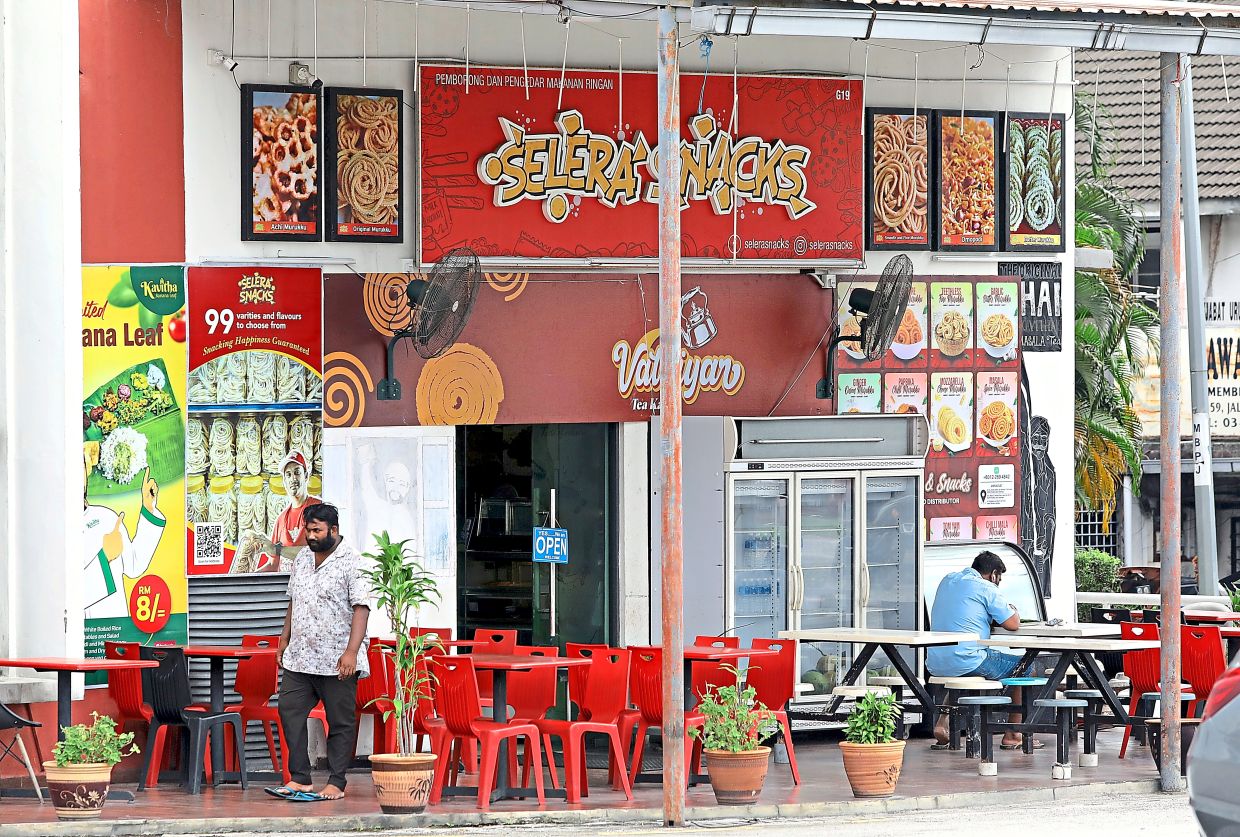
Sharinaz said that under the Selangor government’s 2008 circular, restaurant operators were allowed to place tables and chairs on walkways, road shoulders, extended walkways, side lanes between shoplots, dead ends and selected low-traffic parking bays.
Under the new guidelines, operators must instal speed breakers and reflectors where outdoor dining areas are located, and provide barriers around the dining space.
Only one-way pedestrian flow will be permitted, with separate entry and exit points.
A three-strike rule will also be enforced, allowing MBPJ to revoke an operating licence after three warnings.
“Outdoor dining is permitted in two sessions: from 7am to 2pm and from 6pm to 3am,” she said.
She added that there was no fixed limit on the number of tables and chairs allowed, as approval depended on MBPJ’s assessment.
However, pedestrian access must be prioritised and neighbouring businesses must not be adversely affected.
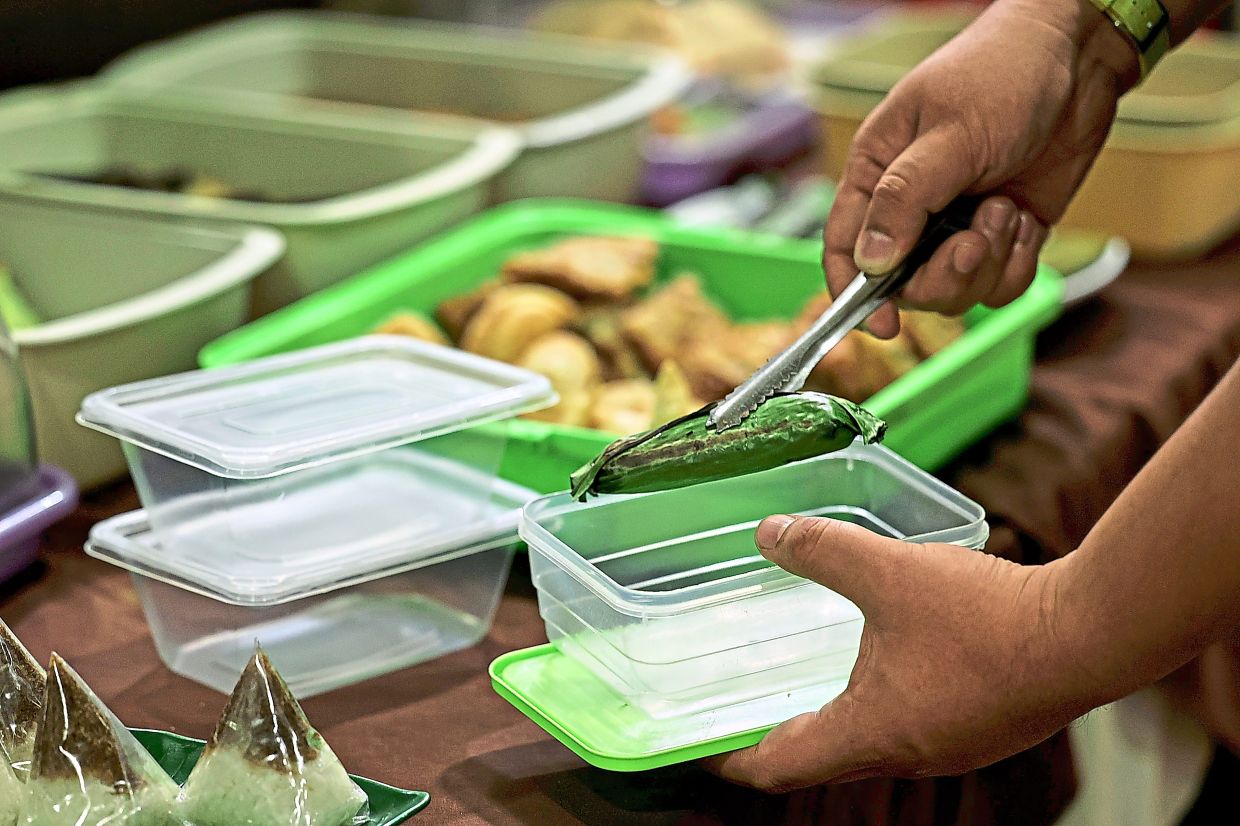
As for stalls operating on the five-foot way, only ready-to-eat food may be sold.
Each stall must be no wider than three feet, with its designated area marked by yellow tape on the ground.
The licence fee is RM400, with a refundable deposit of RM1,000, Sharinaz said.
“A three-strike rule will be enforced.
“After three warnings for breaching licence conditions, the business owner will forfeit the RM1,000 deposit,” she said.
Food preparation must not be carried out at the stall, she added.
Beauty and fitness trade
Facial spas will not be allowed to carry out aesthetic treatments without obtaining approval from Health Ministry.
MBPJ will also specify the procedures permitted at such premises to facilitate the licensing process.
Sharinaz said the city council would verify each aesthetic clinic’s approval status through the Health Ministry before processing licence applications.
Additional requirements include ensuring CCTV systems are operational at all times, servicing ventilation systems every three months, carrying out scheduled maintenance of equipment, and keeping treatment and maintenance records up to date.
Regulations governing 24-hour gyms are also being updated but this requires state approval, said Sharinaz.
She said there must be maintenance of gym equipment with records to show this and adequate ventilation throughout operating hours.
“If these guidelines are not followed, we may revoke the operating licence.
“There is growing demand for such facilities here and with the state’s approval, we can regulate them accordingly,” she added.
National Beauty Board secretary-general Hasnidza Ahmed Redza said there were two types of aesthetic procedures: those performed by qualified doctors and aesthetic services offered by beauticians.
“The problem now is that some individuals providing aesthetic services are performing procedures that they are not authorised to carry out, including administering injections.
“These procedures can leave customers with dangerous and permanent side effects.
“Many victims suffer in silence and do not lodge reports because they are afraid,” said Hasnidza.
Hence, she welcomes guidelines requiring these service providers to obtain MBPJ licences as well.
Centralised kitchens
Sharinaz said MBPJ would consider licence applications for centralised kitchens in commercial areas, subject to compliance with its newly drawn-up guidelines.
“Only one centralised kitchen occupying up to two adjoining units will be allowed in a row of shoplots.
“Even after approval is granted, the operation will be closely monitored to ensure it does not affect other businesses in the area.
“Operations must be managed to minimise disturbances and there must be no repeated complaints against the same premises.
“Vehicle movements must also be properly managed,” she emphasised.
Courier services
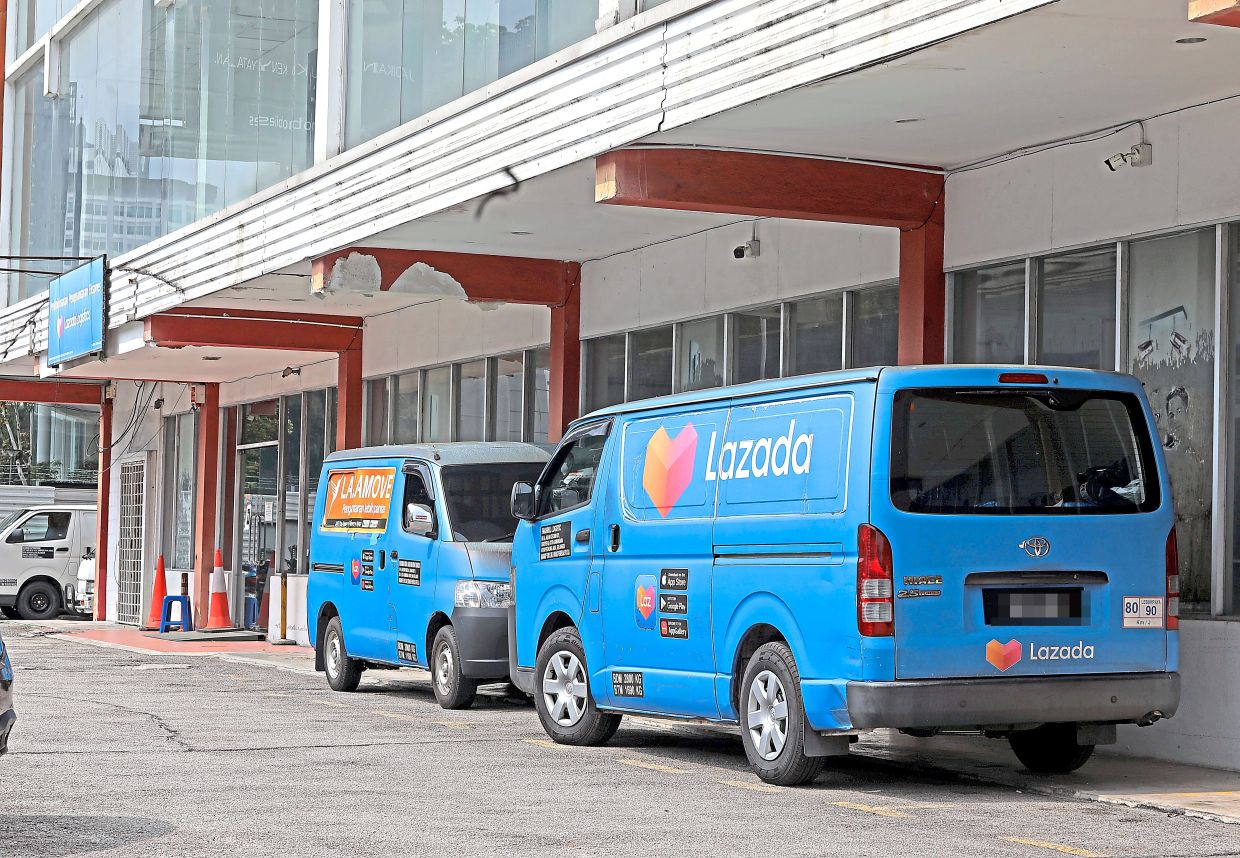
Courier services are now divided into two categories: collection and delivery services, and large-scale operations involving packaging, wrapping and distribution using lorries and rider services.
Such businesses are allowed to operate from commercial buildings, business and shopping complexes, shoplots, mixed commercial developments, industrial areas and standalone buildings in commercial and industrial zones.
Sharinaz said courier services would not be permitted in terrace housing areas, high-rise residential developments, landed property and open public spaces such as parks.
She added that premises owners must provide written consent confirming compliance with the city council’s guidelines.
Sports simulators
The guidelines also cover sports simulator businesses, including golf, baseball, football, volleyball, badminton and table-tennis.
“These businesses will now be allowed to operate until 1am under the Entertainment Enactment and Entertainment Places regulations,” said Sharinaz.
“Applications to convert premises into sports simulator facilities must be submitted to MBPJ’s Planning and Building Department.
“Any structural modifications required for the sporting activity must be approved by the Building Control Department.”
She said applicants in strata developments must submit the joint management body’s views.
“Complaints about noise pollution will be referred to the Occupational Safety and Health Department (DOSH),” she said.