URBAN communities across Selangor are increasingly embracing low-impact practices such as qigong, tai chi and aerobics in public exercise sessions.
Apart from individual groups holding such sessions in their neighbourhood playgrounds, the city councils of Petaling Jaya, Shah Alam and Klang are providing outdoor programmes.
They have adopted inclusive and accessible initiatives to boost older adults’ physical and mental well-being, strengthen social ties and support active community participation.
Community-driven organisations are in partnership with the three city councils to provide free exercise sessions.
Selangor Mentri Besar Datuk Seri Amirudin Shari said low-impact exercise programmes offered by the city councils were a good approach to improve public health, reduce social isolation and provide effective, non-pharmacological interventions for age-related health issues.
Qigong, tai chi and low-impact aerobics are being integrated into urban planning and public health initiatives to support an ageing population, he said.
He also said Selangor was working closely with the Federal Government to increase the quality of recreational spaces throughout the state.
“By mid-2026, at least one public park in each of the 12 local councils will complete refurbishment works with better facilities for both young and old folks in Selangor,” he told StarMetro in an interview at Bangunan Sultan Salahuddin Abdul Aziz Shah in Shah Alam.
Amirudin said the recent National Health and Morbidity Survey by Health Ministry painted an alarming picture for senior citizens in Malaysia.
“In 2018, the number of people aged above 60 living alone in the country was 6.3% of the population.
“In 2025, this has risen three-fold,” he said.
“Similarly, three in 10 senior citizens are living physically inactive lives and only 14.7% are ageing well.”
At the turn of the century, he said, the average life expectancy in Malaysia was just over 70.
“In Selangor, people are expected to live to nearly 80. That is an additional 20 years after the current retirement age.”
He stressed that it was fundamental for senior citizens to take full advantage of public spaces like recreational parks.
The demographic data for last year as seen in the Department of Statistics Malaysia website showed that 908,400 individuals from Selangor’s 7.4 million population are senior citizens.
Amirudin said that as people age, high-impact activities become difficult.
In urging younger adults to join the free exercise sessions to help them manage stress, he said being healthy could help senior citizens contribute to the state’s development.
He added that local councils’ team-up with non-governmental organisations to offer free exercise sessions had attracted a steady turnout, which augured well for ongoing community well-being.
Qigong in garden sanctuary
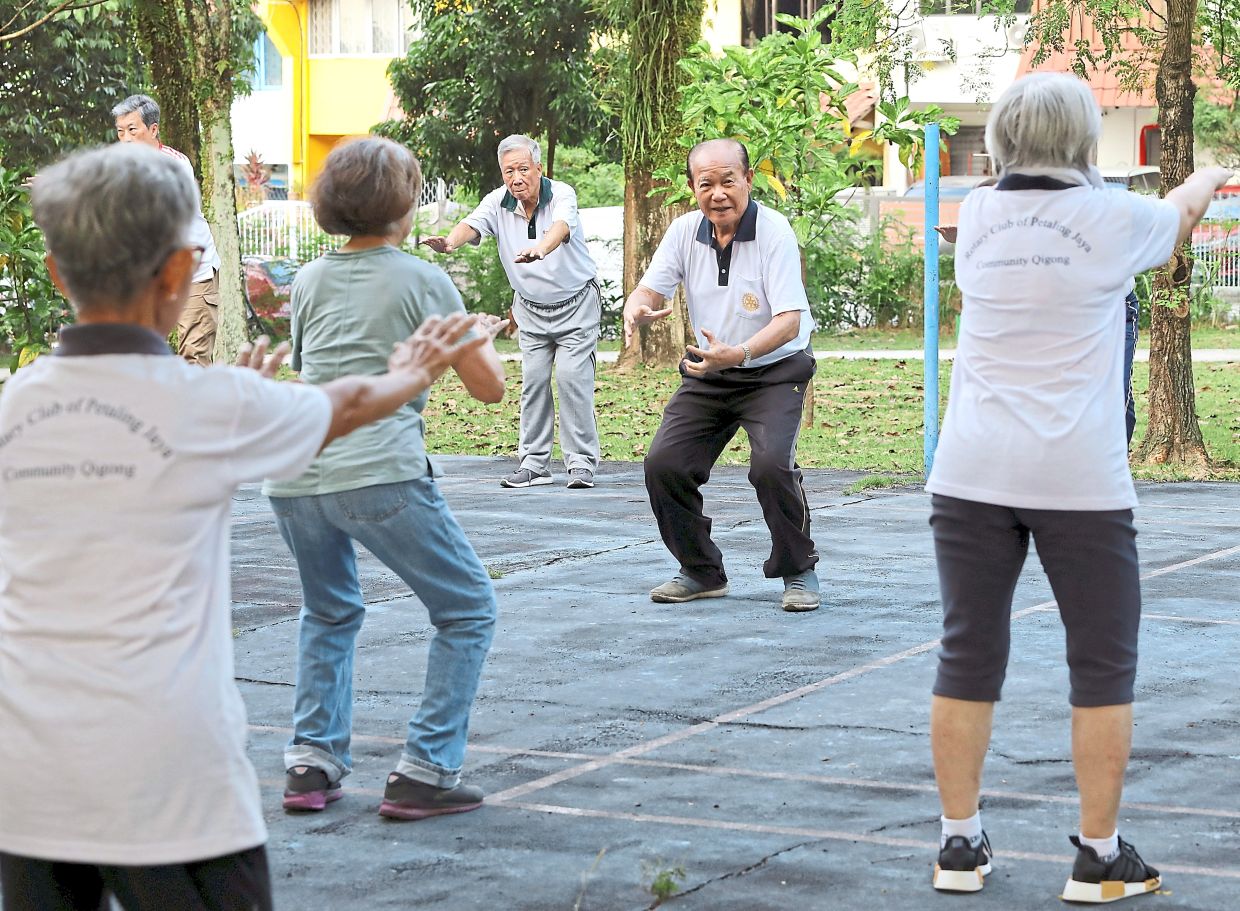
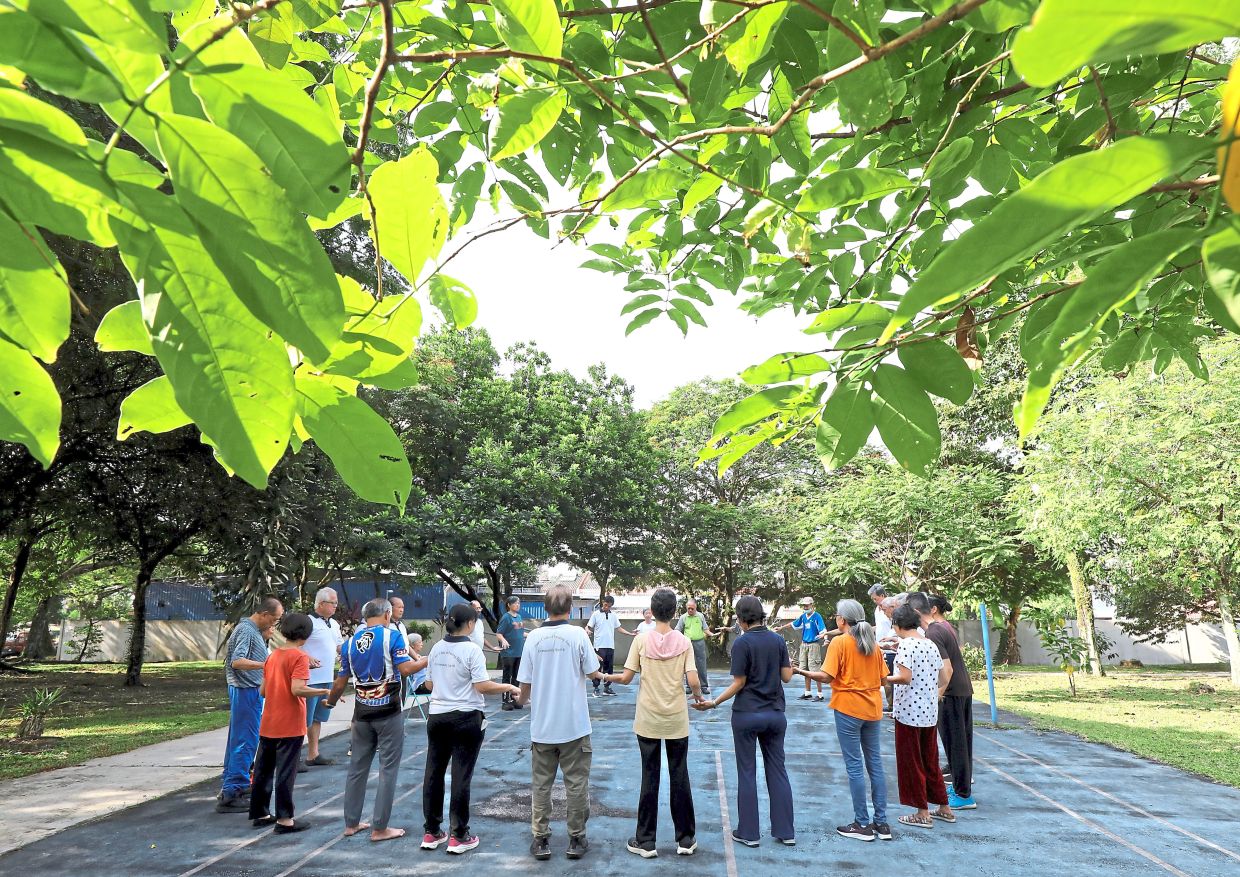
The Rotary Club of Petaling Jaya (RCPJ) Community Qigong Group, in Taman Megah, draws at least 60 regular participants for over an hour starting 8am every Saturday.
Currently the session attracts participants aged 55 to 90.
They learn breathing techniques and gentle movements under the shade of tall trees in a garden at SS24/1.
Participant Yung Seng Fook, 81, said qigong sessions were powerful, therapeutic and a deeply tranquil experience.
The garden, he said, acted as a “natural sanctuary” that fostered a deep connection between the practitioner and surroundings.
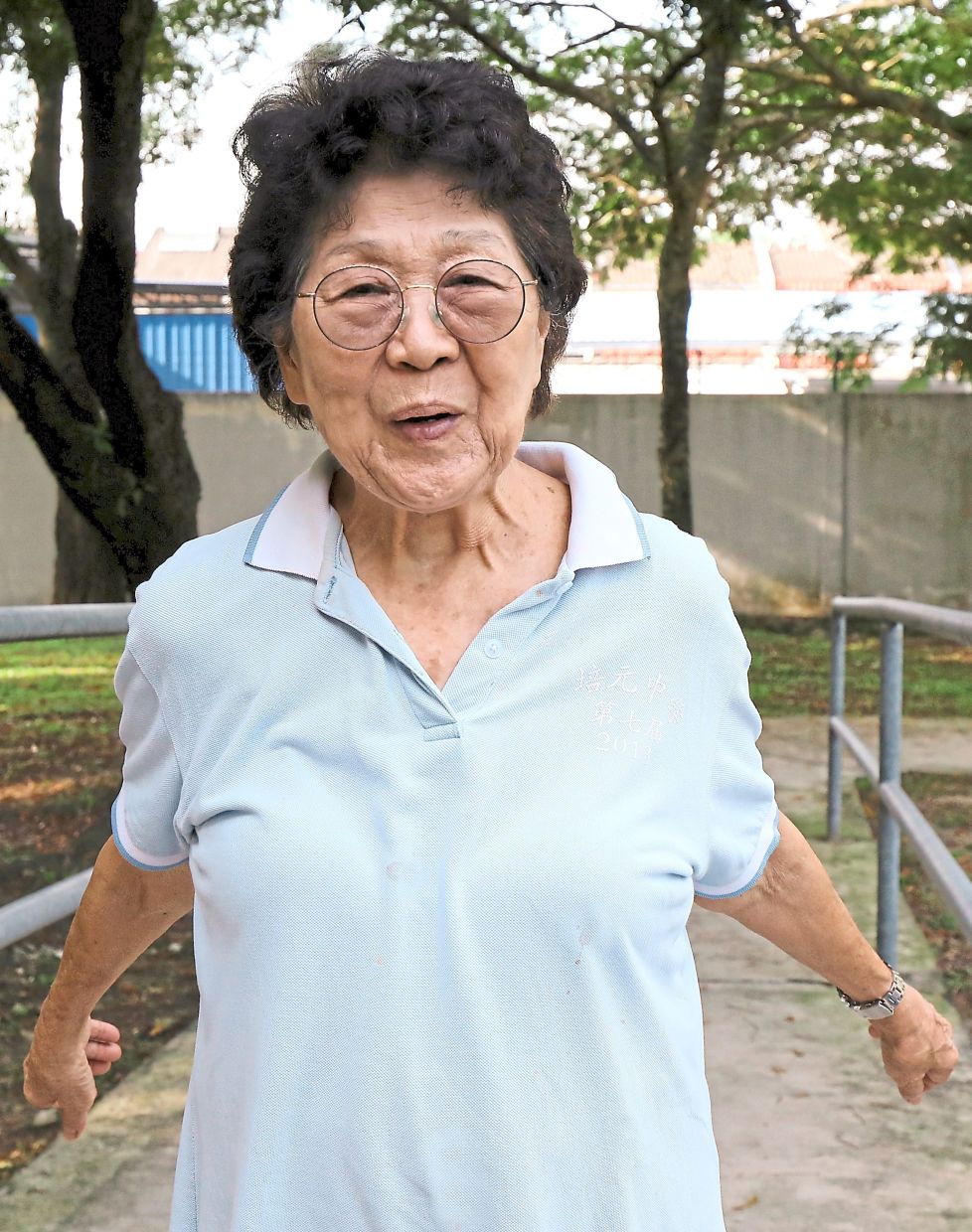
Pat Lim, 82, was grateful to Petaling Jaya City Council (MBPJ) for allowing them use of the garden.
She said exercising near trees helped draw “tree qi” (living energy) to balance with grounded energy, leading to a profound sense of inner joy.
RCPJ past president Dr Tarcisius Chin, who conducts the weekly qigong session, said the exercise was highly regarded as an effective, low-impact practice for seniors, as it offered a way to build vitality, improve balance and maintain health without causing strain or injury.
Chin said qigong combined gentle movement, deep breathing and focus, and was designed to cultivate “qi” and reduce stiffness in joints.
“Deep, long abdominal breathing allows the diaphragm to take in a lot of oxygen into the body at once,” he said, adding that lung capacity was expected to improve through these exercises.
Qigong was also about balance and fall prevention, said Chin.
“Repetitive exercise movements have shown to strengthen legs, improve gait in adults
and coordination, thus significantly reducing the risk of falls.
“Consistency over intensity is important. Gentle, flowing movements is highly beneficial for waking up energy and improving mobility,” he added.
Petaling Jaya mayor Datuk Mohamad Zahri Samingon said the weekly sessions helped promote an active lifestyle, social connection, overall well-being and a healthy community.
“It is an understanding where MBPJ offers the open space while RCPJ leads a community-based initiative, an approach designed to promote public health, enhance community well-being and strengthen social cohesion,” he said.
Mohamad Zahri added that with growing number of senior citizens, such group exercise in public parks was encouraged.
Tai chi for all ages
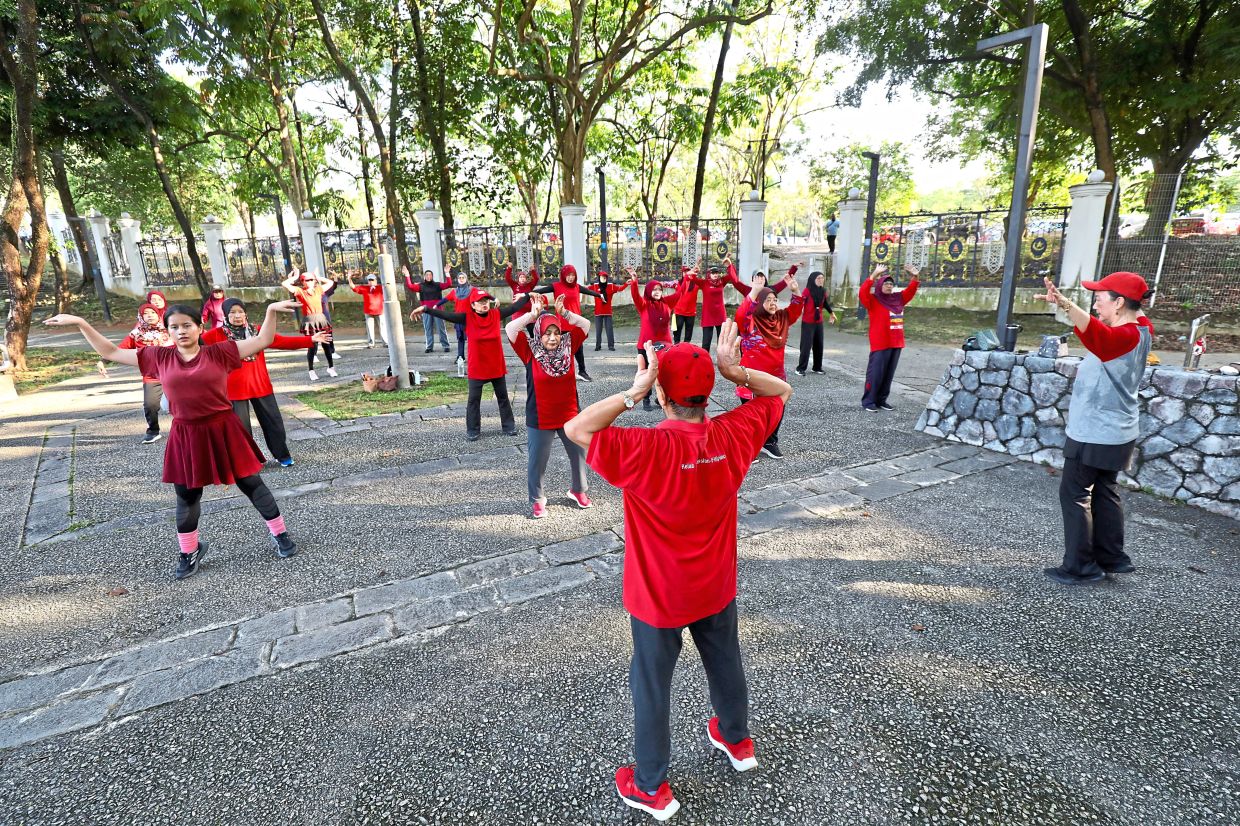
Similarly, Shah Alam City Council (MBSA) offers free tai chi sessions at the west lake of Taman Tasik Shah Alam.
MBSA Community Develop-ment Department director Shahrin Ahmad said the programme was a collaboration with Three-in-One-Fitness-Exercise-Group.
“MBSA has partnered with a trained tai chi instructor to offer free public sessions every weekend, giving residents a chance to improve their health and connect with one another in a relaxed, outdoor setting,” he said.
He added that the initiative aimed to make wellness activities more accessible while encouraging people of all ages to adopt a healthier lifestyle.
“Our collaboration reflects a broader commitment to promoting preventive healthcare and building stronger communities.
“We combine public infrastructure with grassroots expertise. The partnership is expected to foster social interaction and overall well-being among participants,” said Shahrin.
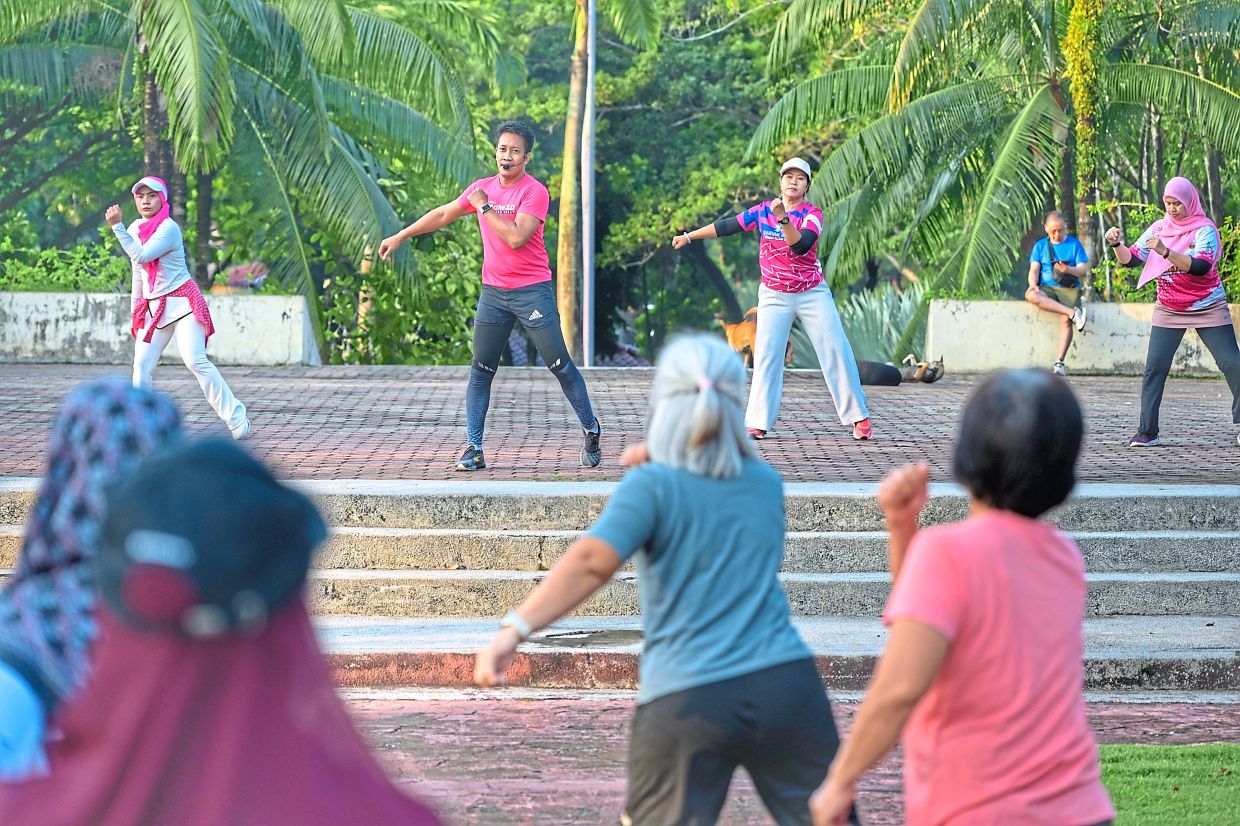
Three-in-One-Fitness-Exercise-Group tai chi instructor Jamilah Abdullah, 81, who leads the sessions, said participants could expect gentle, low-impact exercises that focuses on balance, flexibility and mindfulness.
“This makes the sessions especially suitable for seniors, beginners and anyone looking for a calming way to stay active.
“Our weekend sessions are open to all and require no prior experience.
“Currently we have 170 participants,” said Jamilah, a former staff nurse who lives in Shah Alam.
“My husband Capt (Rtd) Mohd Nor Abd Rahman and I started learning tai chi for our
well-being after he retired as a pilot examiner with an airline.
“Both of us were motivated by the positive impact tai chi had on our body and mind.
“I decided to offer free classes at the nearby park,” she said, and what began as an interest gradually grew into a passion.
The sessions started small, often with just a handful of curious joggers, but word quickly spread.
“Now, the sessions attract people from all walks of life, including seniors seeking gentle movement, beginners exploring new forms of exercise, and even younger participants looking for a break from fast-paced routines,” said Jamilah.
For 83-year-old Mohd Nor, what started as a personal journey evolved into a shared experience, one that continues to grow with each session.
“Through simple, consistent effort and a love for tai chi has
transformed into a meaningful contribution, making wellness more accessible to all,” he said.
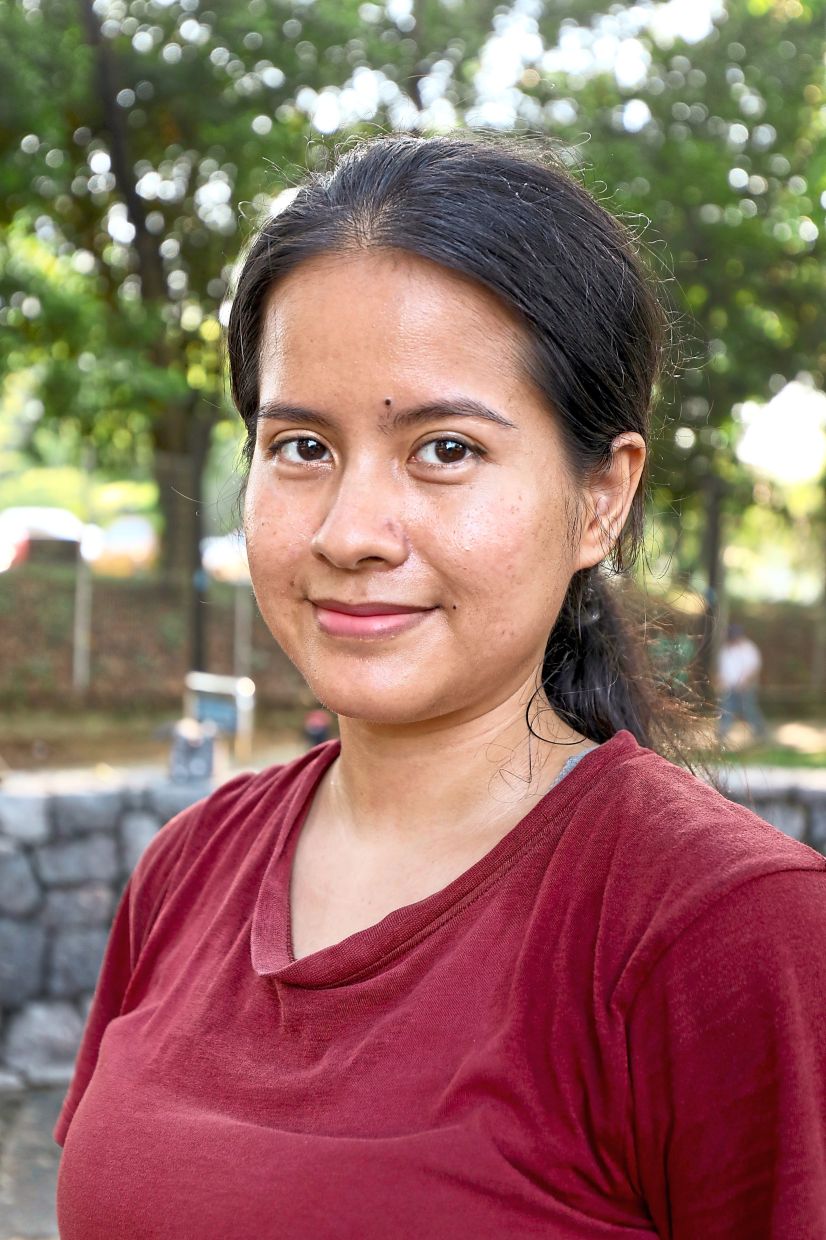
Aesya Mazeli, 35, who has been attending the tai chi
sessions for three years, said the unique foot work involving
slowly shifting the centre of gravity with a sliding step, was effective in cultivating a sense of balance.
“We are taught to use our own body weight as load, so we can safely increase muscle strength with less strain on the joints,” she said, adding that these movements helped improve stability in daily activities like walking.
Gentle aerobics for elderly
Over in Klang, mayor Datuk Abd Hamid Hussain said Royal Klang City Council’s (MBDK)
aerobics for senior citizens at Taman Rakyat in Taman Sri Andalas and Taman Kucing Bandar Bukit Raja has become a hit.
“The sessions draw enthusiastic crowds of about 80 to both parks every Sunday.
“It is designed to be gentle yet effective,” he said.
“The sessions offer senior residents a safe way to stay active while enjoying the benefits of structured exercise in a social setting.”
Abd Hamid added that the sessions led by certified instructors from Kelab Senamrobik 3 Ceria focused on rhythmic movements to improve balance, flexibility and cardiovascular health without putting strain on the joints.
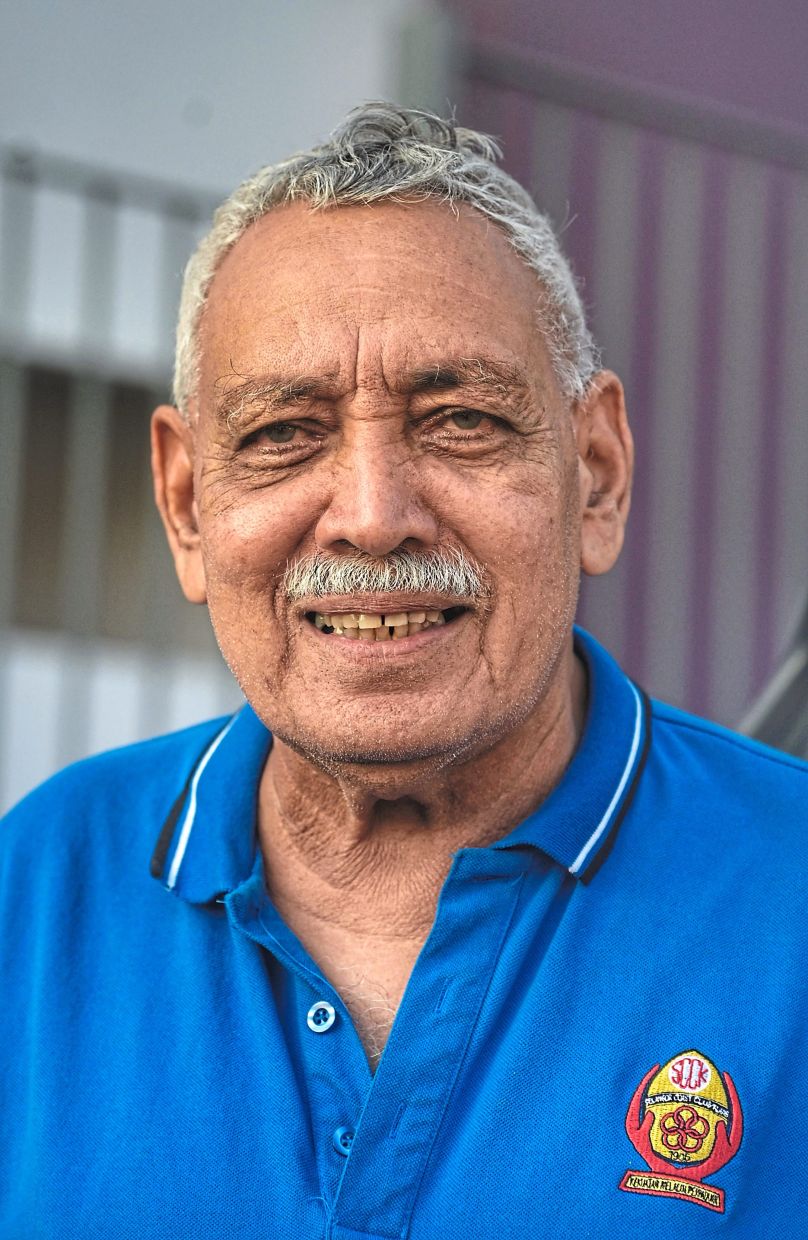
Serjeet Singh, 70, said many participants viewed the exercises as easy and adaptable to
different fitness levels, making the sessions accessible even for those who were new to regular physical activity.
“The strong turnout shows rising awareness of active ageing,” he said.
Homemaker Rini Komalasari, 39, who attends the aerobics session weekly, said the sessions have become a lively gathering point.
Scale to neighbourhood-level
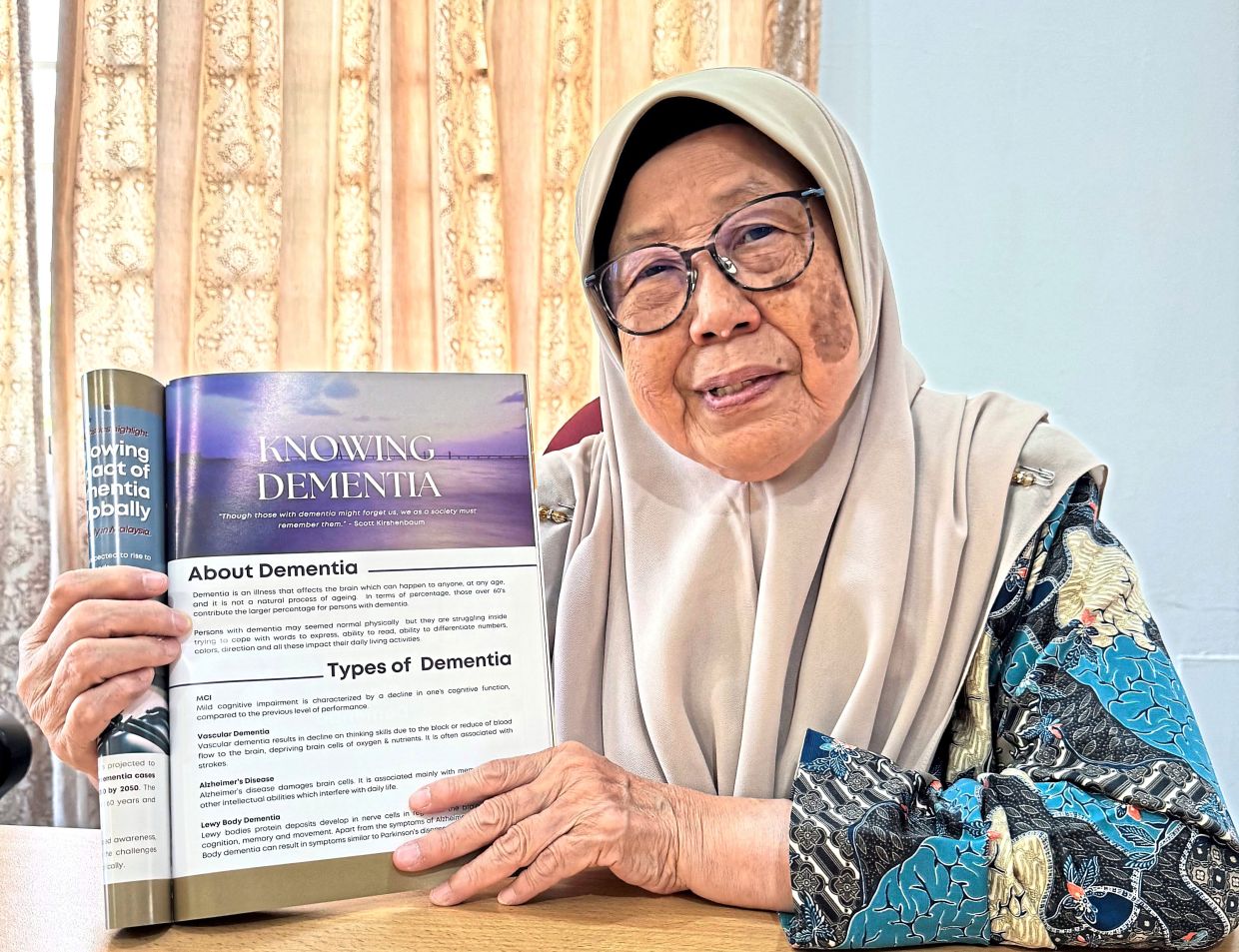
Alzheimer’s Disease Foundation Malaysia (ADFM) executive committee chairman Tan Sri Hasmah Abdullah said that while free exercise programmes for senior citizens in city spaces were a positive step, their impact would be much greater if they were replicated and brought into local community halls.
She said that not all elderly individuals could easily access city centres, because of mobility, transport or cost barriers.
“Community halls are typically closer to residential areas, more familiar and easier for seniors to attend regularly.
“Expanding these programmes into neighbourhood-level venues would make them more inclusive,” she added.
Hasmah said community exercise sessions in public halls could encourage stronger participation and reduce risks associated with ageing, including cognitive decline.
In short, she is pushing to scale city initiatives in a way that reaches the people who need them the most.
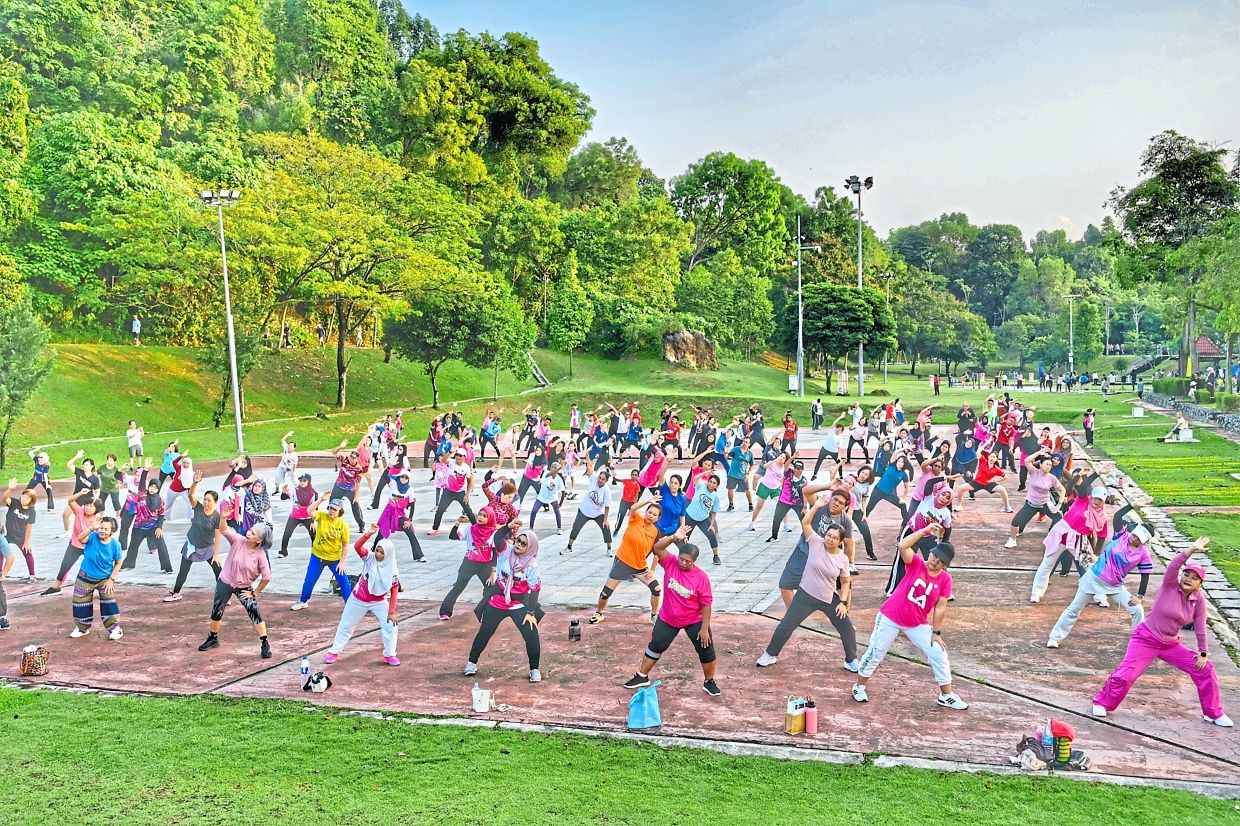
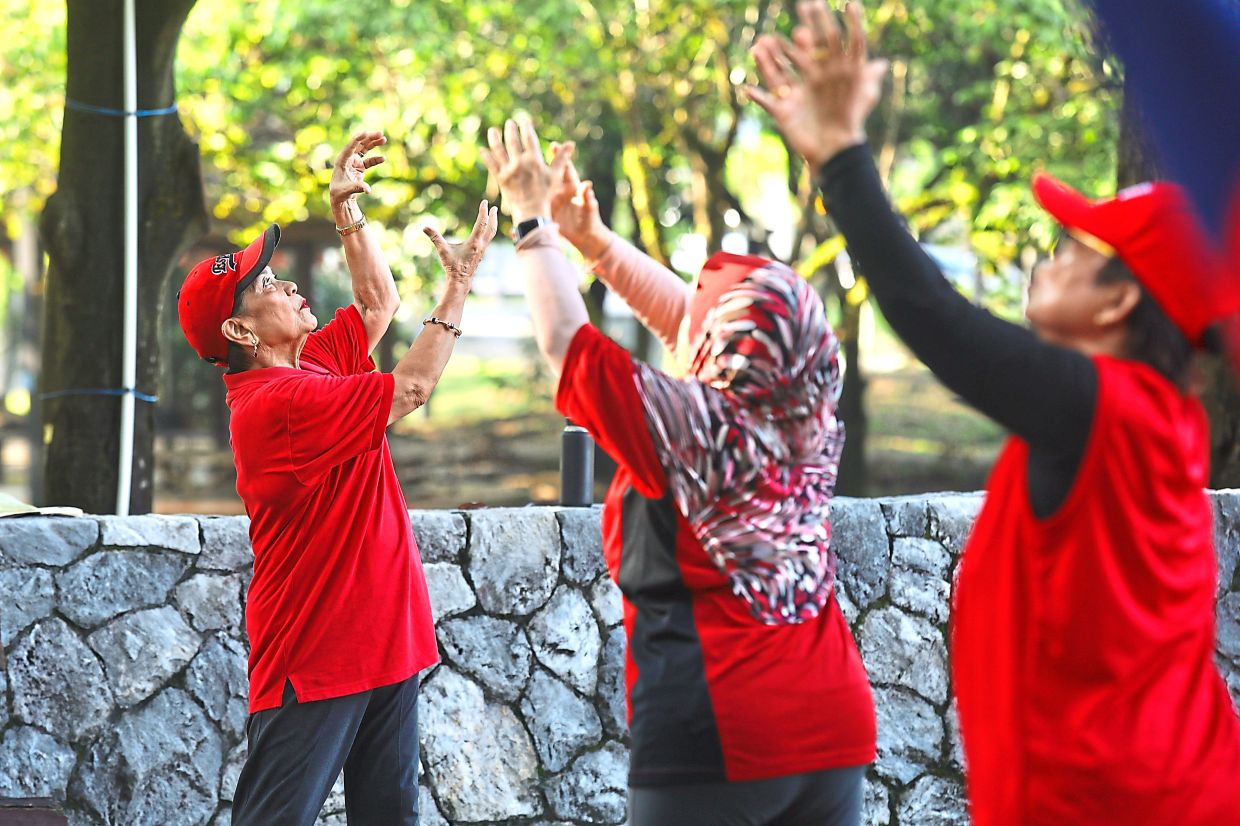
Senior citizens following MBDK’s free weekly low-impact aerobics session, focused on rhythmic movements to improve balance, flexibility and cardiovascular health without putting strain on the joints, at Taman Rakyat, Klang.
Senior citizens following MBDK’s free weekly low-impact aerobics session, focused on rhythmic movements to improve balance, flexibility and cardiovascular health without putting strain on the joints, at Taman Rakyat, Klang.
Chin running a qigong session for seniors in Taman Megah, Petaling Jaya. The programme held at a small neighbourhood garden is supported by MBPJ to promote an active lifestyle, social connection, overall well-being and a healthy community.
Jamilah teaching tai chi in Shah Alam. The weekly sessions at Taman Tasik Shah Alam’s west lake (left) use gentle, low-impact exercises focusing on balance, flexibility and mindfulness, and is suitable for participants of all ages and abilities.
Jamilah teaching tai chi in Shah Alam. The weekly sessions at Taman Tasik Shah Alam’s west lake (left) use gentle, low-impact exercises focusing on balance, flexibility and mindfulness, and is suitable for participants of all ages and abilities.
Hasmah says free exercise programmes for senior citizens in city spaces is a positive step, but the impact will be greater if they are brought into local community halls.
Serjeet: Participants say light aerobics are easy to follow and adaptable to different fitness levels.
Lim is grateful to MBPJ for allowing use of a neighbourhood garden for qigong sessions.
Aesya: Unique footwork in tai chi effective in cultivating a sense of balance.