STRICT enforcement and mandatory community service for littering offences are beginning to pay off with a sharp drop in repeat offences at several hotspots in Johor Baru.
Johor Solid Waste Management and Public Cleansing Corporation (SWCorp) director Zainal Fitri Ahmad said consistent operations under Sections 77A and 77B of the Solid Waste and Public Cleansing Management Act 2007 had led to noticeable improvements in public behaviour.
He highlighted that in some locations, repeated enforcement operations led to significant decline in offences, with certain areas showing no violations at all.
“This shows that consistent enforcement combined with community service orders are effective in curbing indiscriminate littering,” he told StarMetro.
Zainal Fitri said the introduction of Perintah Khidmat Masyarakat (PKM), or community service orders, marked a shift from purely punitive measures to a more educational approach.
The initiative, he said, was aimed at addressing low-civic consciousness by encouraging behavioural change through direct experience.
“Offenders are not only punished but educated through hands-on involvement in cleaning work,” he said.
The approach allowed offenders to better understand the consequences of their actions, he added.
Shared responsibility

Zainal Fitri said the community service also helped mitigate environmental and health risks linked to littering, including the spread of vector-borne diseases such as dengue and leptospirosis.
He stressed that poor waste disposal habits had contributed significantly to pollution and public health concerns.
He said the initiative was also in line with national aspirations to enhance Malaysia’s image as a clean and developed nation.
“This is especially important for tourism-driven initiatives such as Visit Johor 2026,” he added.
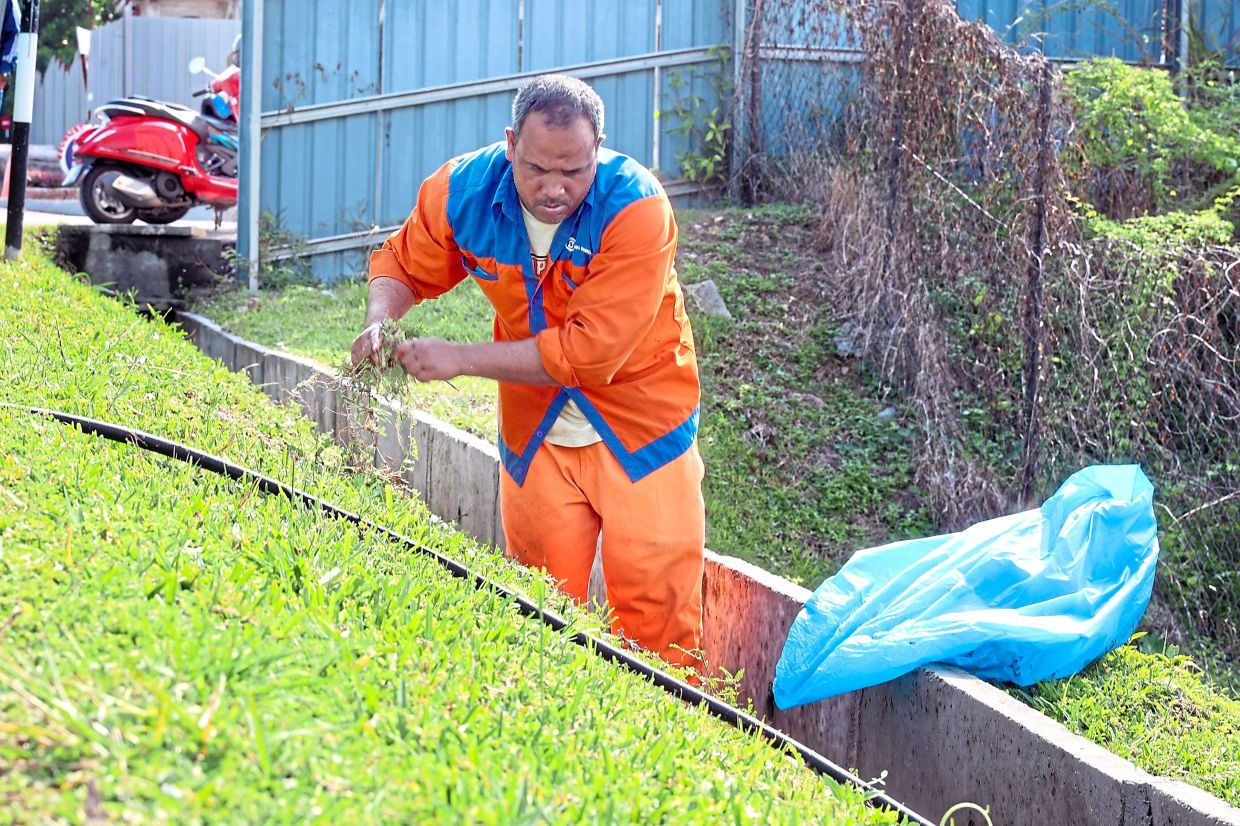
Zainal Fitri said community service orders exposed offenders to the daily realities faced by public cleaning workers.
“They carry out cleaning duties under challenging conditions, including hot weather and
physically demanding tasks,” he pointed out.
He said such exposure helped build empathy among offenders.
“Many begin to appreciate the effort required to maintain public cleanliness,” he said.
Zainal Fitri said fines alone were often insufficient as a deterrent.
“Fines can be paid and may not leave a lasting impression.
“In contrast, community service instils a deeper sense of remorse and responsibility,” he added.
Zainal Fitri said the initiative reinforced the idea that cleanliness was a shared responsibility.
“It should not be seen as the sole duty of authorities or cleaning contractors,” he said.
Hands-on lessons
According to Zainal Fitri, those sentenced to do community service for littering are assigned various cleaning-related tasks.
“These include sweeping and collecting waste at parks, pedestrian walkways and commercial areas as well as cutting grass and repainting public amenities.
“They may also be required to clean toilets and maintain hygiene at public facilities,” he said.
Other responsibilities include disposing of animal carcasses and handling waste according to proper procedures.
“This helps reduce the risk of disease transmission,” he added.

Zainal Fitri said these tasks contributed to restoring the cleanliness and appearance of urban spaces.
He also said many offenders expressed regret over their habit after completing their sentences.
“They acknowledge their mistakes and say they will not repeat the offence.”
On enforcement trends, he said overall statistics showed an increase in notices issued.
“Operations are now conducted more frequently and across more locations,” he said.
He further said that repeated operations in the same areas showed a decline in offences.
“This indicates that enforcement is having a sustained impact on behaviour.”
He said the visibility of offenders carrying out community service played an important role.
“It sends a clear message that cleanliness laws are being strictly enforced,” said Zainal Fitri.
He said this visibility indirectly raised awareness among the public.
However, he acknowledged challenges in managing public perception.
“Some still view offenders negatively rather than recognising the educational value of the punishment,” he said.
To address this, Zainal Fitri said SWCorp had intensified public awareness campaigns, including working closely with non-governmental organisations and local communities.
He said initiatives include public outreach programmes, installation of signage and activities such as plogging.
“These efforts aim to cultivate long-term behavioural change,” he said.
He added that SWCorp planned to expand awareness campaigns through digital and social media platforms too.
Community involvement
The agency, Zainal Fitri said, was also looking to introduce cleanliness and sustainability modules in schools.
“This is to instil civic responsibility from a young age,” he said.
He stressed that education was key to reducing reliance on enforcement alone.
“We want cleanliness to become a habit, not something driven by fear of punishment,” he reiterated.
He said collaboration with local authorities strengthened enforcement efforts.
“Joint operations allow us to maximise resources and legal frameworks.
“Community involvement is vital, people are encouraged to act as the ‘eyes and ears’ of the authorities.
“This helps improve monitoring and reporting of cleanliness issues,” he added.
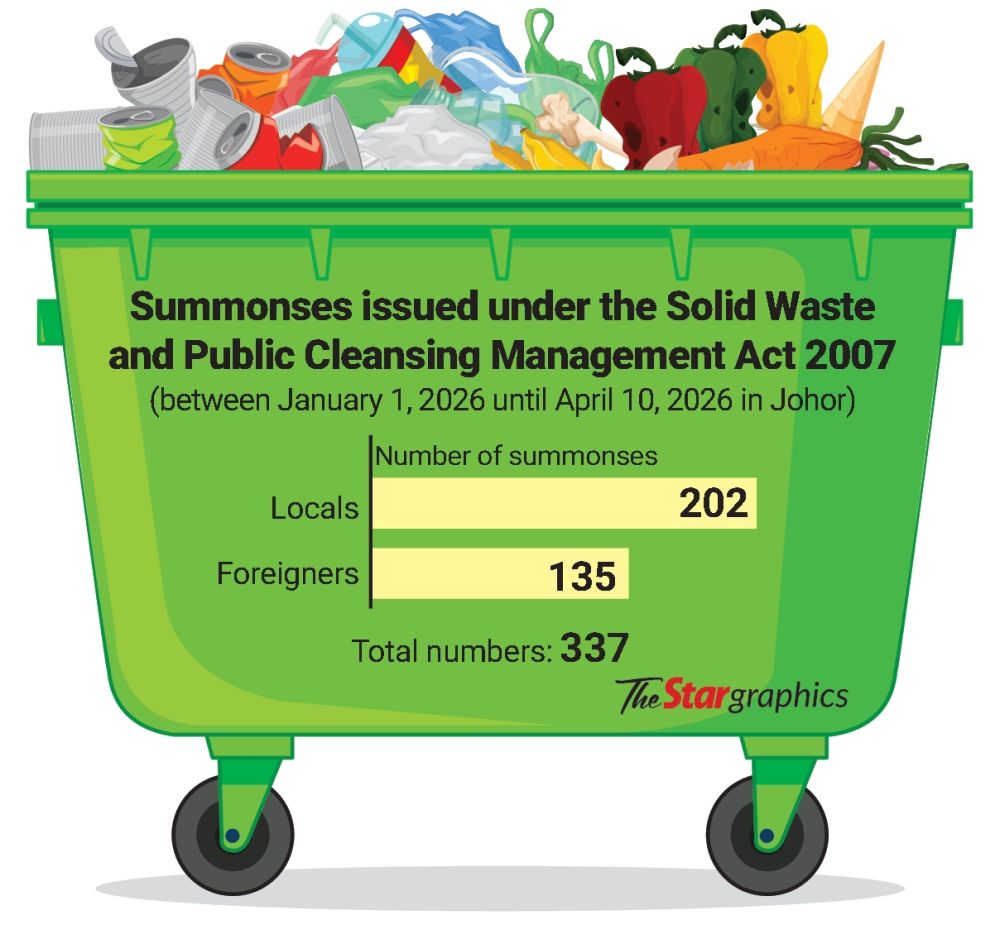
Zainal Fitri disclosed that a total of 337 summonses for littering have been issued in Johor this year as of April 10, with 202 being Malaysians and the rest non-citizens.
He also said that Johor SWCorp had carried out 485 enforcement operations statewide since Jan 1.
“When it comes to littering, the issue cuts across all segments of society.
“It is not limited to any specific group.”
He said the agency would not compromise on cleanliness offences.
“Littering can result in fines of up to RM2,000 or community service of up to six months,” he reminded.
“Failure to comply with community service orders may lead to fines of up to RM10,000.”
He said 15 offenders had been charged in court to date, with seven of them having completed between six and eight hours of community service.
Eight others are scheduled to begin their sentences on April 30.
Zainal Fitri said SWCorp aimed to further strengthen the implementation of community service orders.
“Our goal is to build a responsible society that values cleanliness and sustainability,” he said.
He urged the public to play an active role in maintaining cleanliness.
“This is essential if we want to achieve standards comparable to developed nations.
“Every act of littering, no matter how small, has consequences.
“Practise self-discipline when disposing of waste.
“Keep your rubbish until you find a proper bin, and avoid littering in public,” he said.
Zainal Fitri also encouraged the public to promote good behaviour.
“Advise others politely if you see them littering. Cleanliness must be a shared social norm.”
Johor Bersih agenda
Meanwhile, Johor housing and local government committee chairman Datuk Mohd Jafni Md Shukor said the implementation of the community service order was part of a broader legal framework that came into force on Jan 1, 2026.
He said enforcement of the order was already underway, with several individuals having completed their community service through public cleaning works.
“This shows that enforcement action is being carried out seriously and consistently,” he said when contacted by StarMetro.
He stressed that the initiative aligned with the Johor Bersih agenda introduced by Johor Mentri Besar Datuk Onn Hafiz Ghazi in July 2022, which aimed to instil a culture of cleanliness among the public.
He urged the people of Johor to take collective responsibility in maintaining cleanliness, rather than having to be penalised before changing their behaviour.
“Cleanliness is a shared responsibility. A developed Johor should not only be measured by its physical progress, but also by the discipline and civic-mindedness of its people,” he emphasised.
Mohd Jafni noted that littering not only affected the environment but also posed risks to public health, drainage systems and flood management.
“Indiscriminate waste disposal contributes to clogging of drains and increases the risk of flooding, which will ultimately affect communities and families,” he said.
He called for a shift in mindset, urging the people to cultivate good habits starting at home, including educating children and encouraging peers to adopt responsible behaviour.
“We want Johor to be recognised not only for its development and investment, but also for having a disciplined, responsible and civic-conscious society,” he added.