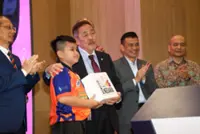
PRIMARY school pupils who never had the opportunity to represent their schools in sports are being given a chance to take part in a beginner-friendly walking football competition.
Organised by Universiti Malaya’s Community Engagement Centre (UMCares), the competition is part of a programme that introduces pupils to a lower-intensity version of the game with modified rules aimed at reducing injury risks and ease beginners into the sport.
The initiative aims to encourage pupils to be more active, build self-confidence and develop team spirit while promoting heart health, physical fitness and mental well-being.
In a press statement, UMCares said the programme focuses on Year Four to Year Six pupils, including those dealing with weight issues.
The latest edition, held at the UM Sports Centre Multipurpose Hall in Kuala Lumpur, was a collaboration with Watsons Malaysia and Bangsar Pudu District Education Office.
It brought together 24 school teams, comprising 12 boys’ and 12 girls’ teams.
UMCares said its walking football effort began as a 2017 pilot project involving eight schools in Petaling Jaya, Selangor, to encourage overweight and obese pupils to be more active in sport.
Originally introduced in the UK in 2011 for senior citizens, walking football has evolved into an accessible sport because it is less physically demanding than the conventional football game.
It also offered a fun way to stay active.
UMCares director Assoc Prof Dr Noraini Ahmad said the strategic collaboration reflected a commitment to bringing positive change to the community, particularly among the young.
Walking Football Introduction Programme head Dr Muhammad Kashani Mohd Kamil said every child deserved the opportunity to play, regardless of fitness level or background.
“This competition can serve as a stepping stone not only at district level, but also at state level, and could eventually become part of a national agenda,” he said.
The programme also involved introducing teachers to the rules to help them implement the sport in their respective schools.
Its modified rules were intended to ensure the activity was inclusive without exposing children to excessive competitive pressure.
The programme was carried out in selected schools in the district with support from teachers, coaches and medical experts from the university.