Conservation measures include cultivation of Napier grass along Sg Kinabatangan as alternative food source for Bornean elephants
UNDER the relentless sun, a boat glides through the murky waters of Sungai Kinabatangan, a habitat known for Sabah’s largest crocodile population.
Today, however, the focus is not on these reptilian giants but on the endangered Bornean elephant, which numbers have been steadily declining due to habitat loss.
This decline in their population is primarily due to the clearing of forests for agriculture and development, leading to conflicts between farmers and elephants displaced in search of food.
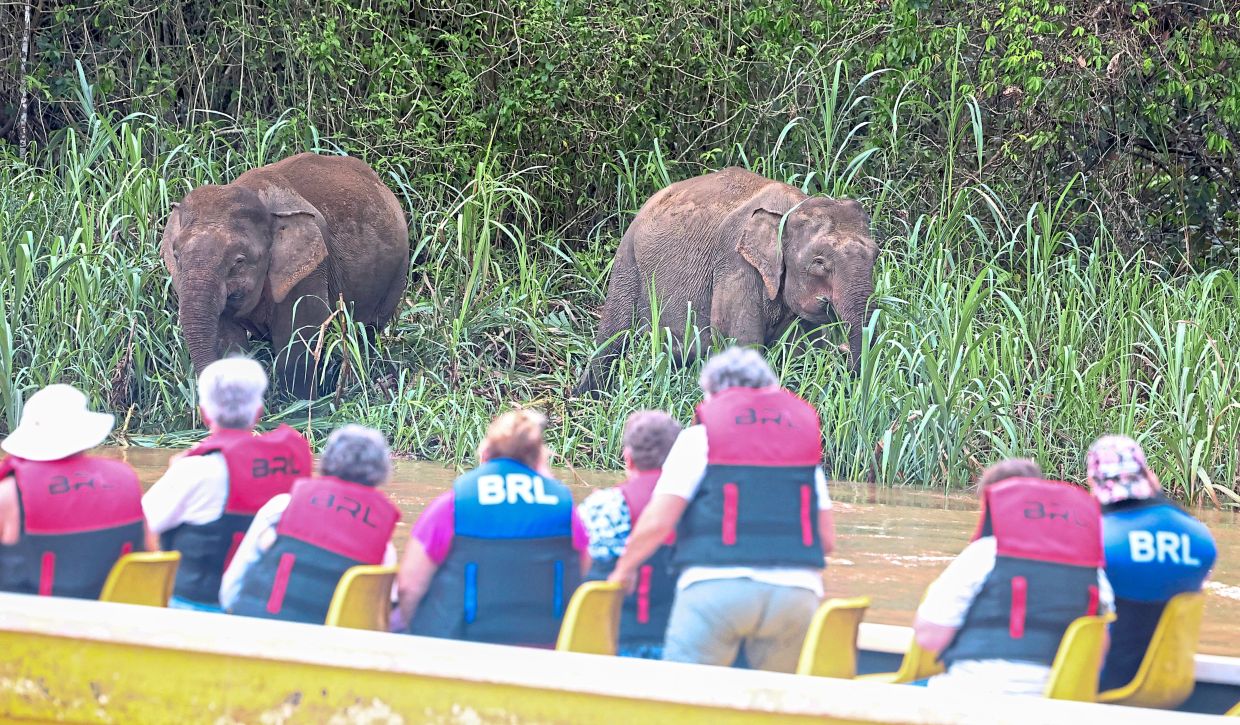
Guided by Sharon Rahman from the RESPonsible Elephant Conservation Trust (Respect), the boat passengers await a signal.
After nearly four hours, a crackling radio announces the sighting of wild elephants near Kampung Bilit, setting the stage for an awe-inspiring encounter.
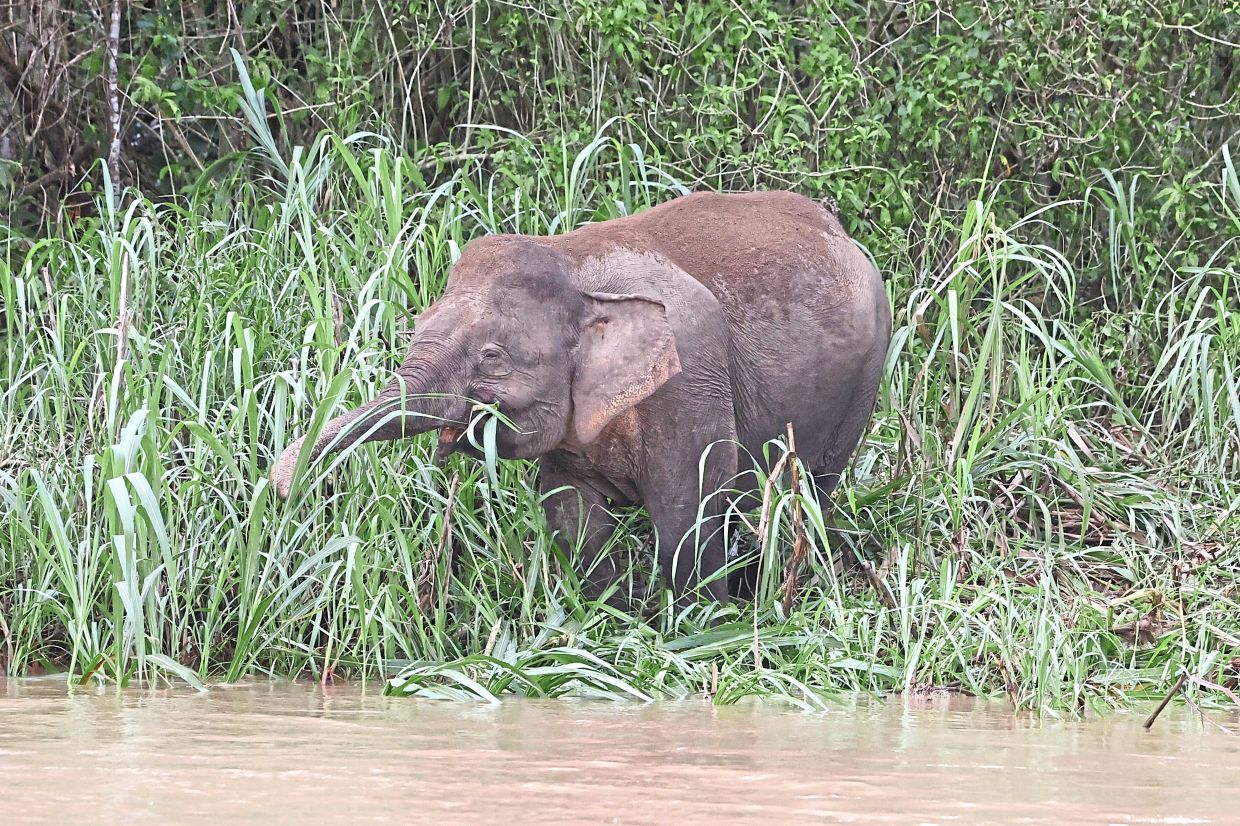
Two majestic adults first emerge from the dense forest, their movements with unexpected grace belie their massive size.
A curious calf follows and then two more adults join, creating a scene of serene beauty along the riverbank, observed by tourists in hushed silence.
The Bornean elephant (Elephas maximus borneensis), the smallest subspecies of the Asian elephant and endemic to northern Borneo, now numbers about 1,000, with the majority residing in the Kinabatangan region and some in Kalimantan, Indonesia.
Towards long-term survival
The solution to Sabah’s human- elephant conflict involves more than just physical barriers.
It requires finding a balance where both humans and elephants can coexist peacefully.
The Bornean elephants are protected by law, including Sabah’s Wildlife Conservation Enactment 1997.
Also in place is the state government’s Bornean Elephant Action Plan (2020-2029) to ensure the long-term survival of the species.
Viewed as a pragmatic policy by experts, the 10-year plan focuses on habitat protection, research and, most importantly, human-elephant conflict mitigation.
Sabah Tourism, Culture and Environment Minister Datuk Seri Christina Liew recently discussed the plan’s importance in an interview with Bernama.
“We are making genuine attempts to prevent these gentle giants from joining the ranks of the disappeared,” she stressed.
“Elephants are among the animals I am most passionate about,” said Liew.
“We are very lucky in Borneo that we have this particular species. So we must protect them.”
Despite interest from international zoos in Borneo’s elephants, Liew has remained firm in her resolve to keep them in their |natural habitat, stating, “They belong here, not in foreign zoos.”
The action plan outlines a |comprehensive approach, acknowledging that some elephants will inevitably require human care.
It emphasises humane treatment and dignity, moving beyond the outdated practice of displaying them as zoo exhibits.
Other items in the plan – elephant corridors, habitat restoration, community engagement and enforcement – read like a conservationist’s dream.
Progress reports are already rolling in and Liew can barely contain her excitement.
“The impact of the action plan has been significant, with several key initiatives now underway,” she said.
Rescue, Rehabilitation, Release
A cornerstone of this initiative is the Captive Elephant Manage-ment Plan, introduced by Liew in April.
The plan transitions from “free contact” to “protected contact” management, enhancing the safety of handlers while ensuring the elephants receive proper care.
This approach minimises direct physical interaction, prioritising the well-being of both elephants and their caretakers.
One of the key components of the plan is Sabah’s 3R programme – Rescue, Rehabilitation, Release – which embodies a pragmatic and compassionate approach to conservation.

The Bornean Elephant Sanctuary in Kinabatangan and Lok Kawi Wildlife Park near Kota Kinabalu are not mere tourist attractions; they serve as sanctuaries for elephants in need.
“When elephants are hurt, we bring them to the sanctuary for treatment and rehabilitation,” said Liew.
“Once they are well enough, we release them back into the wild.”
Referring to the sanctuaries, she said: “This is it. Our final ‘dance’ for these magnificent creatures.
“Failure isn’t an option when extinction is waiting in the wings.”
Napier grass: A peace offering
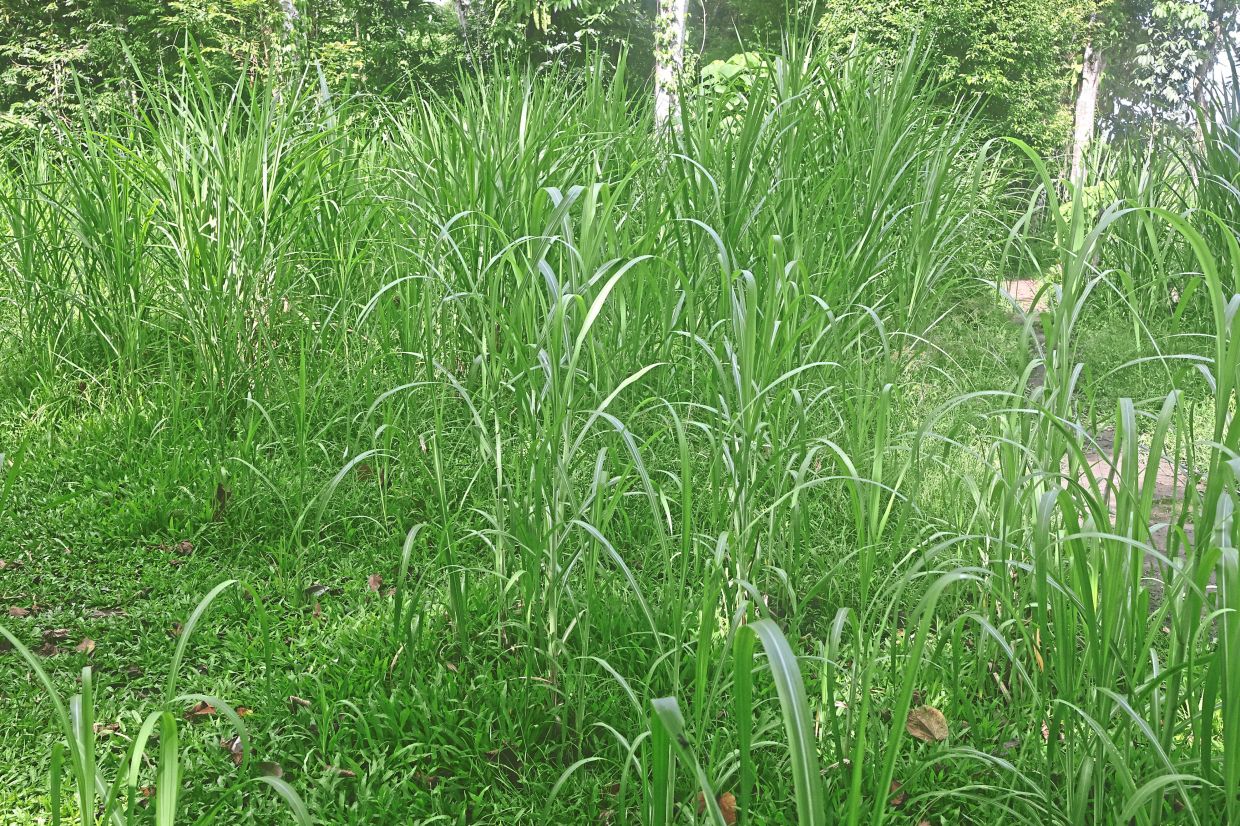
Another innovative strategy involves cultivating Napier grass within designated habitats, providing an alternative food source to deter elephants from encroaching on farmland.
A 9km stretch along Sungai Kinabatangan, managed by Respect with support from the Australian-based Intrepid Foundation and local communities, has shown promising results.
“We are rewriting an age-old conflict into one of coexistence,” remarked Respect chairman Alexander Yee, adding that the Napier grass they plant is sweeter than the variety commonly found on riverbanks.
Initially a modest 0.4ha experiment launched in March last year, the project has grown significantly.
Yee recounted a pivotal moment: “Two months after planting, seven elephants, including a calf, discovered and devoured half of the grass.”
This confirmed that wild elephants would consume human-cultivated grass within designated feeding areas, paving the way for broader acceptance and success.
By January, the initiative expanded to 13.5ha at Kampung Bilit riparian reserve along Sungai Kinabatangan, creating what they now call the Borneo Elephant Food Corridor.

Yee said more than 20 elephants were recently observed grazing peacefully from dawn until dusk, longer than they have ever stayed before, marking a significant shift towards a harmonious coexistence.
Villagers who once viewed elephants as nuisance are now actively involved in planting Napier grass.
Even resort operators along the river have taken to planting the grass.
Yee said this initiative is not just about feeding elephants. It is about creating harmony in a land where man-wildlife conflict has become all too common.
The strategy is straightforward: just give them their own “dining rooms”, far away from the farms and oil palm plantations they are forced to raid.
Besides Napier grass, elephants also favour Barau grass and perupok (a type of shrub), though more research is needed to determine which type of grass works best.
Elephants, it turns out, are master gardeners. As they move through the forest, they create natural clearings that allow sunlight to penetrate the canopy, fostering new growth.
Yet challenges remain. Incidents of intrusions are still reported, like a case where a baby elephant wandered into a house in Kalabakan, Tawau, searching for food and water.
But Yee and his team remain committed to their vision.
“We need long-term support from all parties, namely the government, NGOs and local communities,” he highlighted.
Blueprint for coexistence
In Lahad Datu, another ambitious grass-planting initiative has taken root – the 33ha Malambabula elephant pasture.
Initiated by the Borneo Rhino Alliance (Bora) and funded by The Hornbill Award, with assistance from Kuala Lumpur Kepong Bhd, the project began in August 2021.
It offers an “all-you-can-eat buffet” for elephants, meant to entice them away from neighbouring oil palm plantations.
“Buffet”, in this case, consists of tall, lush grasses, mostly Napier and a couple of other varieties.
Bora programme director Dr Zainal Zahari Zainuddin said the Malambabula pasture project architects have thought of everything these creatures need.
There is ample fresh water flowing from Sungai Malambabula. There is even an artificial salt lick, complete with all the essential nutrients their massive bodies require.
While initial visits to the project site were sporadic, the breakthrough came in June 2023 when a herd of 70 elephants showed up for an “extended feast”.
They consumed about 20 tonnes of grass – six days without any incident of human-elephant conflict in the area.
The project illustrates how nature and industry can coexist sustainably, Zainal said.
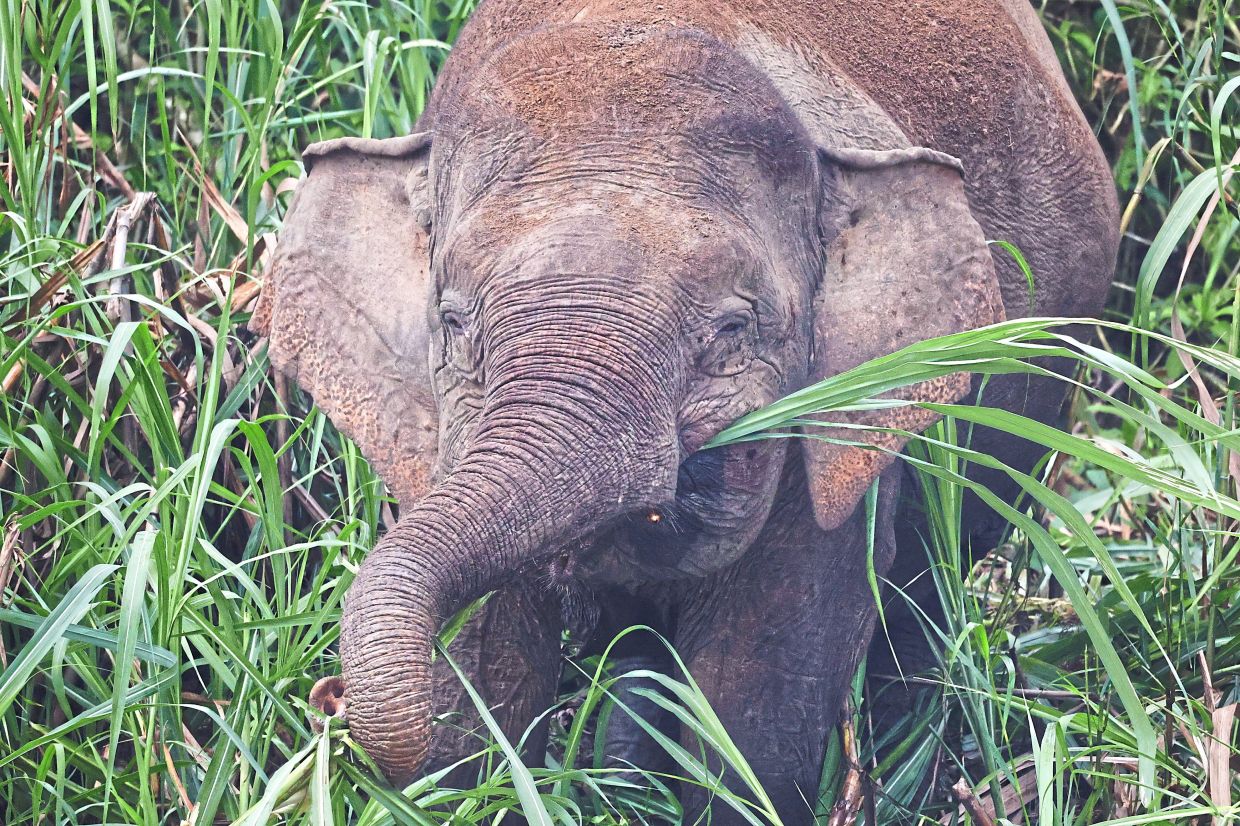
Elephants have shown a preference for Napier grass, particularly before it flowers, about a month after planting.
As the grass matures, it becomes less appealing, but its ability to regrow swiftly ensures a continuous supply.
“The Malambabula pasture is more than a feeding programme; it is a blueprint for coexistence,” Zainal emphasised.
“Even if the elephants stay in our area (elephant pasture) for just two days, that is two days of not disturbing people or entering plantations.
“Recently, they stayed there for three weeks. It was a bonus for us.
“But now they have moved to the far end of the pasture,” he noted.
The team managing the pasture studies every elephant visit and feeding pattern, learning their habits and preferences.
But while the adults can handle the tough, tall grass, the calves need something more tender and manageable.
“These giants are incredibly attentive parents,” said Zainal.
“If the little ones can’t eat, the whole herd moves, searching for more suitable feeding grounds. It is all or nothing with them.”
This insight has revolutionised how Bora manages the grass at the elephant pasture.
To ensure the entire herd gets to eat, young Napier grass is also made available so that the calves can eat too.
Oil palm and conservation
Sabah, with the second-largest oil palm cultivation in Malaysia, faces the challenge of balancing conservation with industry.
The Jurisdictional Certification of Sustainable Palm Oil (JCSPO) and the Jurisdictional Certification Steering Committee (JCSC), established in 2016, aim to harmonise these interests.
The initiative seeks broader commitments from stakeholders to sustainable practices, aligning the goals of conservation, supply chain sustainability, and green development.
Sabah’s chief forest conservator Datuk Frederick Kugan shares his vision for coexistence: “This isn’t just about protecting a few patches of forest. It is about creating a model where both nature and industry can thrive.”
Local communities play a crucial role in the success of these initiatives.
Respect guide Sharon underscores the importance of community engagement and support: “We are on the right track, but we need more people to join the efforts to protect these elephants.”