
Boys more likely to engage in risky behaviours such as climbing balconies, says clinical child psychologist
LISA was playing with her doll at the balcony when the familiar jingle of an ice cream truck caught her attention.
Eager to catch a glimpse, the four-year-old climbed onto a nearby shoe rack, inching dangerously close to the edge, unaware of the danger.
Fortunately, her mother spotted this just in time. She rushed over and pulled her down, while giving the girl a sound scolding.
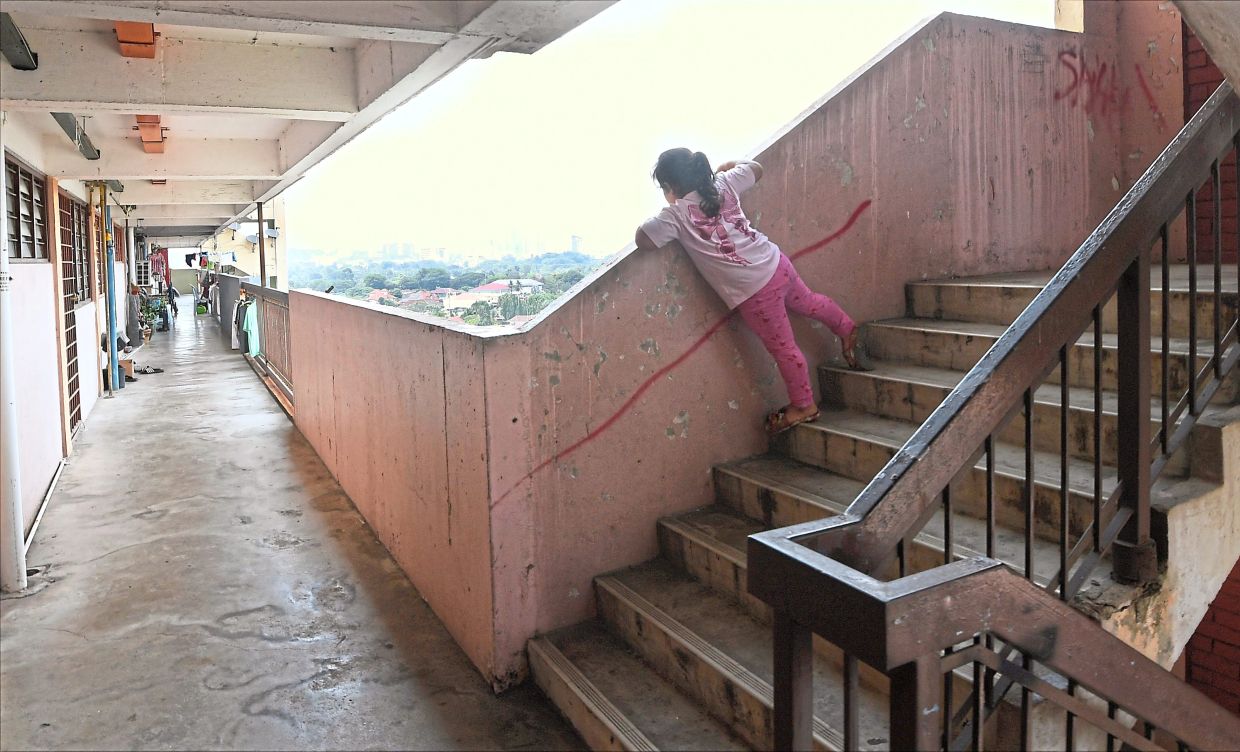
Scenes like this are common at high-rise residences, as vertical living becomes the norm to meet growing housing demands amid scarcer land in Klang Valley.
Recent weeks saw a spate of incidents of children falling to their deaths from balconies, reigniting calls for stronger safety measures at high-rises.
ALSO READ: ‘Children in high-rises need space for recreation’
On May 17, a two-year-old boy fell to his death from the seventh-floor balcony of a public housing flat in Precinct 9, Putrajaya.
Three days later, a seven-year-old girl died after falling from the 29th floor of her babysitter’s condominium in Puchong, Selangor.
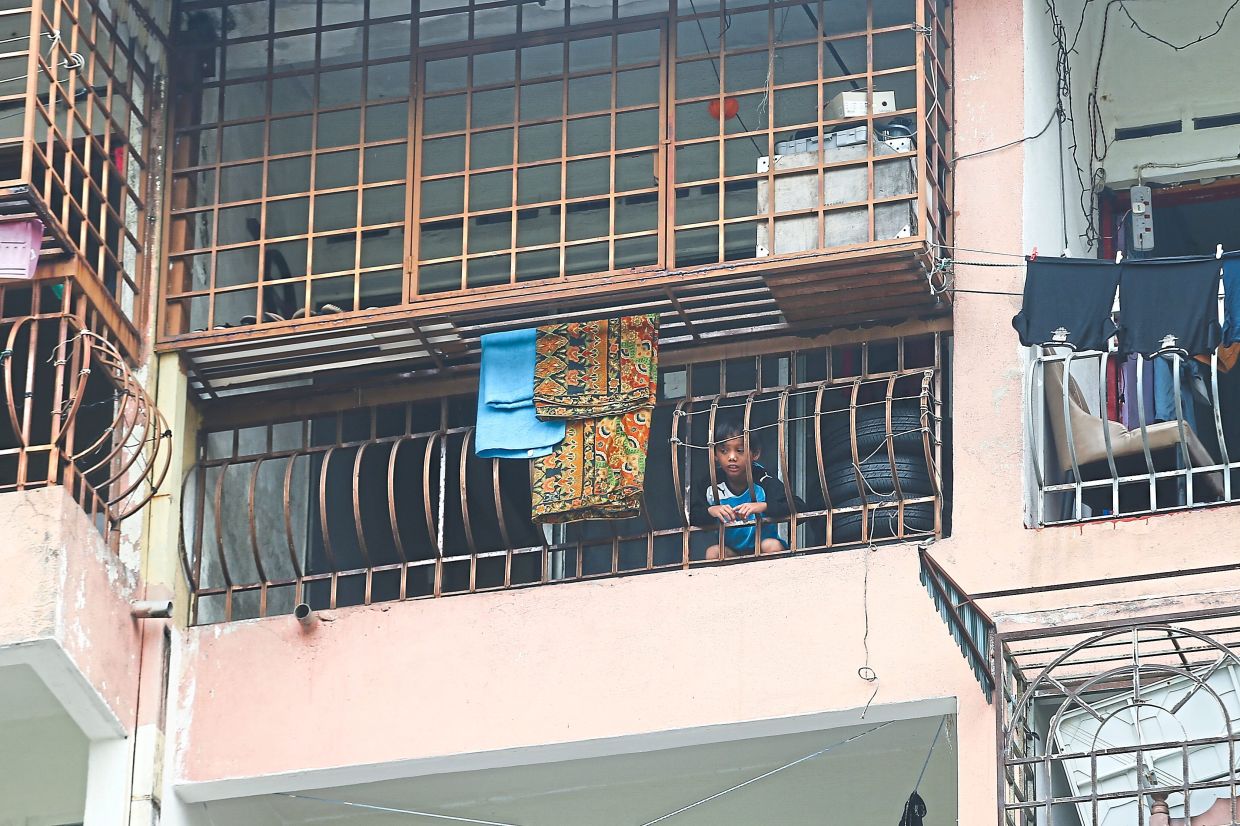
The most recent case is of a four-year-old boy who was killed after a fall from the balcony of his 30th-floor residence in Bukit Jalil, Kuala Lumpur last Thursday.
On May 26, The Star in a frontpage report, had highlighted the need for better protection for children living in high-rises.
Experts interviewed by StarMetro attribute these tragedies to a combination of young children’s cognitive limitations and insufficient safety infrastructure in high-rise residences.
Children’s psyche
Clinical child psychologist Dr Noor Aishah Rosli said children were naturally curious but possess underdeveloped awareness of risks and hazards in their surroundings.
“Children under seven are still developing cognitive and perceptual skills to assess distance, height and consequences of risky behaviours.
“They often overestimate their ability and underestimate dangers. This is because the frontal lobe of their brains, responsible for impulse control and decision-making, has yet to mature fully,” she said.
To address this issue, Noor Aishah said age-appropriate education and behaviour modelling were key.

“Use simple language to explain the dangers at balconies. Markers may also be placed on the floors to reinforce the message.
“Apart from close parental supervision, consistent reminders are also needed so children become aware of the risks,” she said.
Noor Aishah said clinical observations suggest that boys were more likely to engage in risky behaviours, while noting that biological, social, psychological and cultural factors may play a role too.
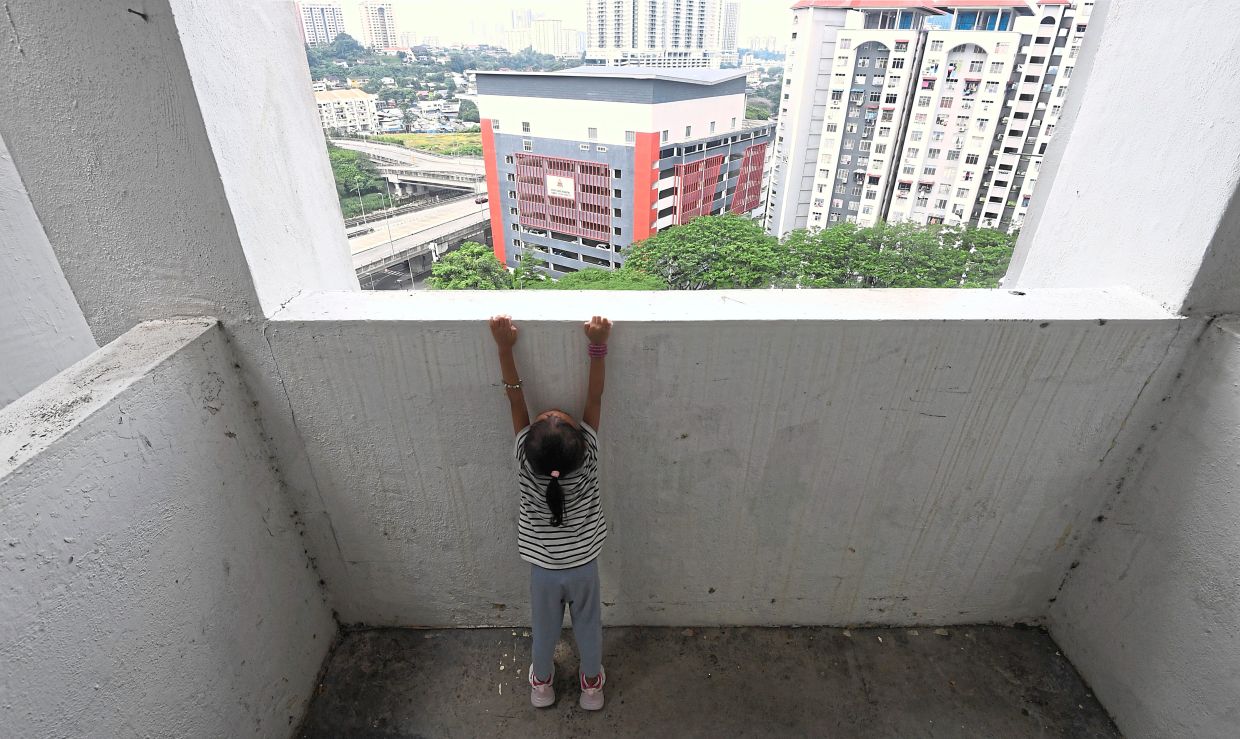
A 2021 study ‘Analysis of Elements Influencing Child Safety In High-Rise Buildings Using Analytical Method’ published in Journal of the Malaysia Institute of Planners appeared to support that observation.
It said boys are more likely than girls to fall off balconies, based on research found in existing literature.
“Moreover, more than two-thirds of falls happen to children below five, head injuries and fractures being the most common outcomes.
“Though not all falls are fatal, children may suffer internal trauma and brain injuries because they tend to topple head first, using arms and hands to break the fall,” the study noted.
Focus on design safety
Under the Uniform Building By-Laws 1984, balcony height at strata residences should not be less than 1m, though local authorities can impose stricter requirements.
Under the by-law, it is not mandatory for grilles to be installed, but the building management could regulate it or unit owners may voluntarily instal it.
Malaysian Institute of Architects (PAM) corporate member Mustapha Kamal, who runs an architecture and urban design consultancy firm in Petaling Jaya, said as a rule of thumb, the height for balconies should be between 1.1m and 1.2m.
For railing-type balconies, he recommended keeping a minimum gap of 65mm between the vertical railings to prevent accidents.
In terms of safety, he noted that balconies made of solid walls are generally harder to climb compared to those with railings.

“However, this comes at a cost – solid wall balconies tend to restrict air flow and proper ventilation,” he said.
Still, Mustapha cautioned that even the most well-designed balconies offer no absolute guarantee of safety for children.
“They can easily climb over using furniture. Ultimately, it is up to the parents or guardians to supervise their children,” he said.
Alliance for Safe Community founder and chairman Tan Sri Lee Lam Thye suggested that closed-circuit television (CCTVs) cameras be installed at all floors of high-rises for security monitoring.
“This allows alerts to be raised if children are at risk. It may be costly, but a worthwhile expenditure to prevent loss of life,” he said.
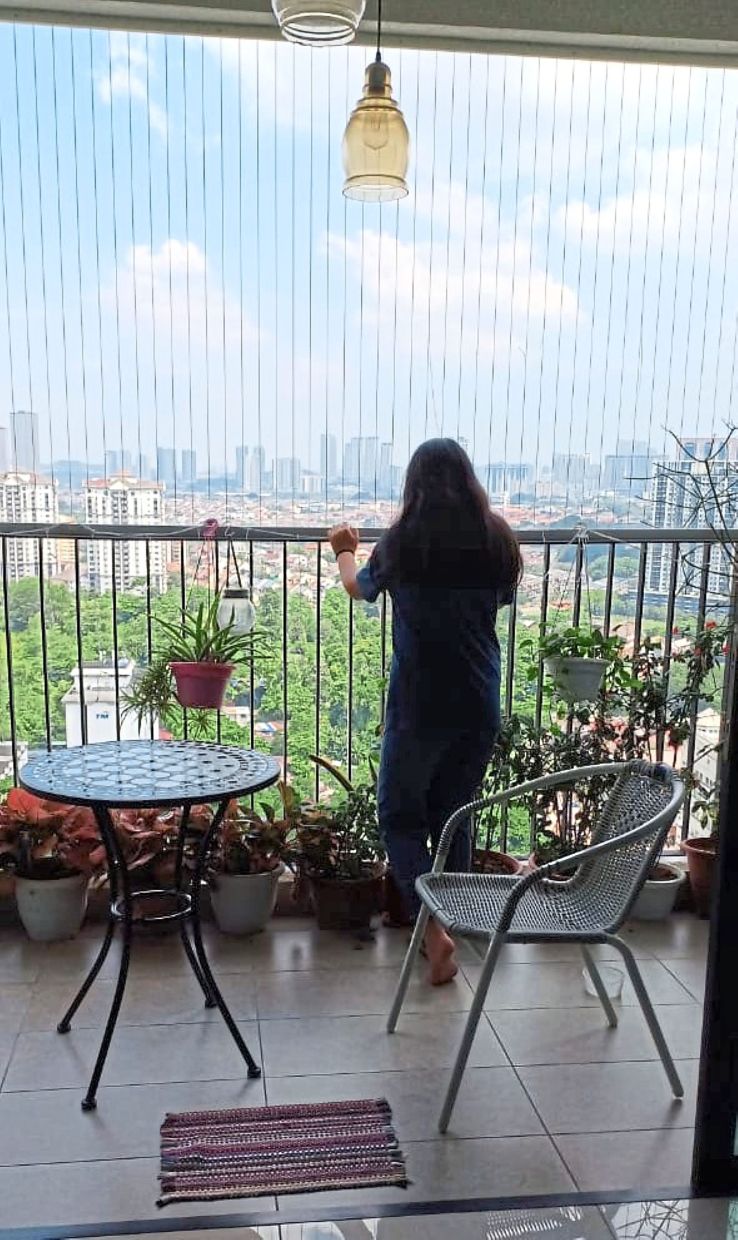
Father of one N. Fernandez, 49, said he had invisible grilles installed at the balcony of his condominium unit in Jalan Kelang Lama four years ago.
(Invisible grille is a nearly transparent safety feature made of thin, high-tensile stainless steel wires installed on windows or balconies to prevent falls without obstructing the view).
“It cost us RM1,600. My daughter was five at the time, so my wife and I were really worried about her safety.
“We know having grilles is not recommended as it could hinder evacuation, but we live on the 15th floor. We don’t think evacuation is likely to happen at that level.”
Global regulations
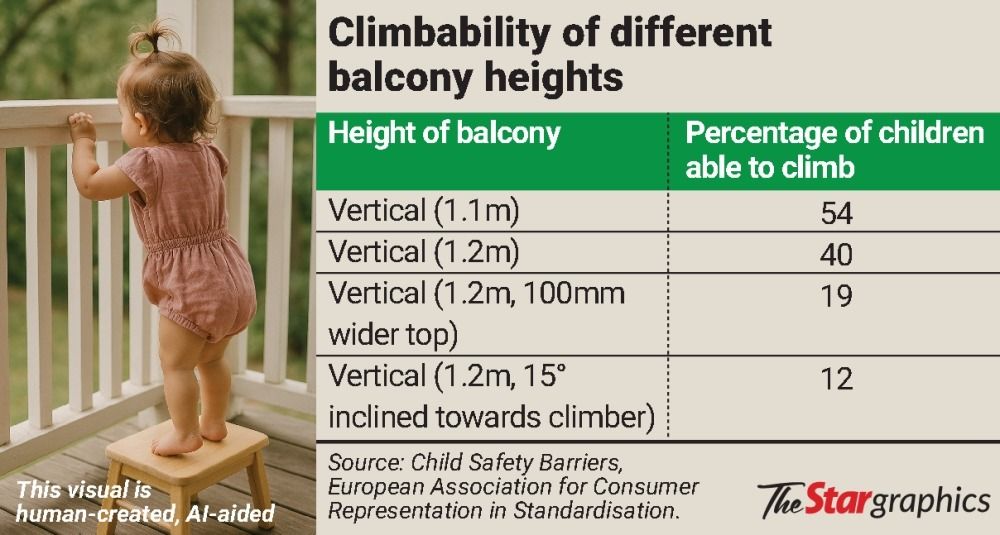
A study by The European Consumer Voice in Standardisation, a non-profit focusing on consumer issues, found children aged four to six could climb barriers between 1.1m and 1.2m high within 30 seconds.
To ensure a barrier is effective, the study recommended that it is inclined at an angle towards the children.
“An inclined barrier stops almost 90% of children from being able to climb over.
“None could pass within 10 seconds and only 7% succeeded climbing it in less than 30 seconds,” the study noted. (See graphic)
The study also suggested that the top part of balconies be made wider so that children cannot easily grip when they want to climb the wall.
Other countries have also instituted changes in balcony design to ensure child safety.
In Sharjah, United Arab Emirates (UAE), the local authorities have made several changes to technical requirements of balconies since 2017.
Landlords and contractors there were required to raise balcony heights from 1m to 1.2m, according to reports.
In Abu Dhabi, UAE, police advised homeowners to instal acrylic barrier on the balcony, with permission from the authorities.
In Vietnam, balconies must have a minimum height of 1.4m if the building is more than nine floors.
As for balconies not using solid walls, the gaps between the vertical bars must not exceed 100mm.