ALL parties including the authorities, non-governmental organisations and the local community, must do more to preserve whatever is left of the mangrove forests in the country.
According to the Malaysian Mangrove Research Alliance and Network (MyMangrove), mangrove forests are an important part of the ecosystem.
“The dense root systems help to stabilise the soil, acting as buffers against sedimentation, and protect seagrass and coral reefs from silt. They also provide shelter and breeding ground for coral fishes,” said MyMangrove coordinator and Universiti Kebangsaan Malaysia (UKM) research fellow Dr A. Aldrie Amir.
Dr Aldrie, who was one of the speakers at the “Biodiversity and Conservation of Mangroves in Malaysia: An Appraisal” seminar at UKM, said mangrove swamps are important to flood control and land building.
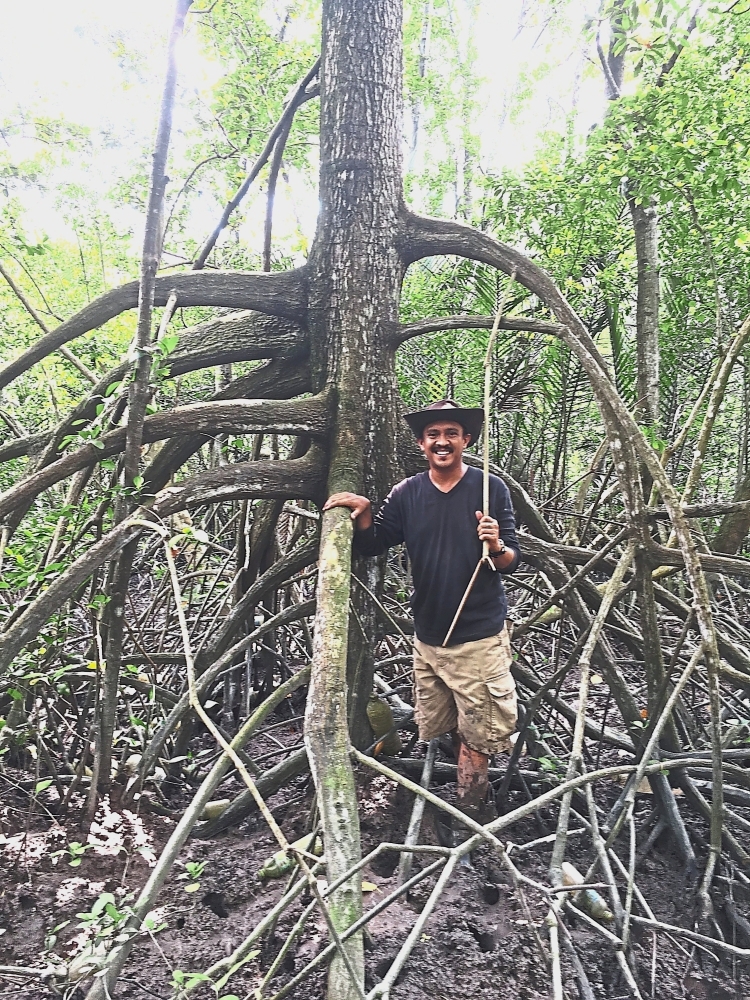
Dr Aldrie standing next to a root structure of a rhizophora mucronata at the Mangrove Forest Reserves off Port Klang.
In coastal areas, the swamps help recycle nutrients, produce oxygen and support various species of marine and wildlife.
“Mangrove forests influence land-building like the formation of lagoons and deltas.
“They act as a natural pollution trap, as without them, rubbish, surface run-off and farm effluents would go directly into the rivers and sea.
“There would be nothing to filter out the nutrients and sediments from going directly into the water,” said Dr Aldrie
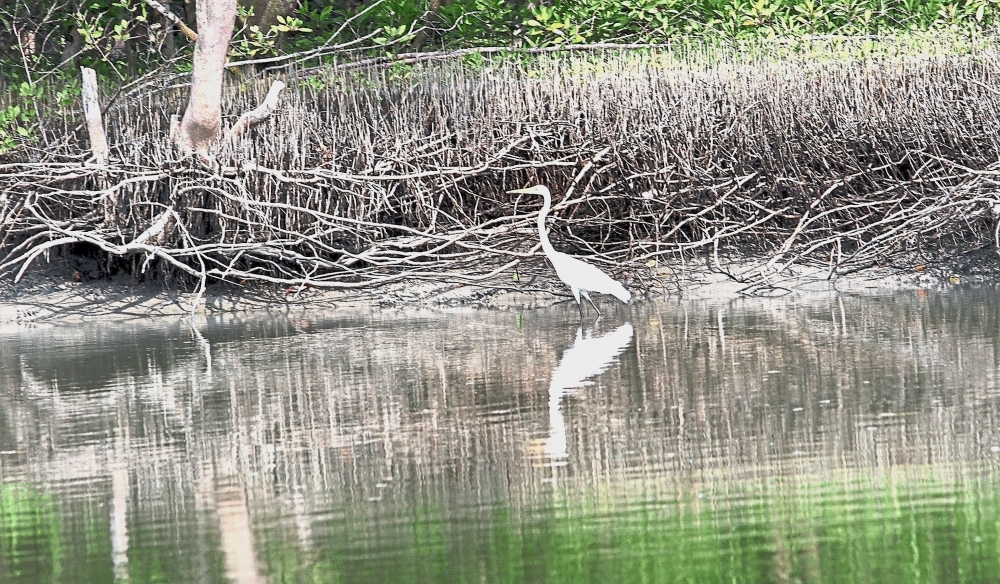
Kuala Gula sanctuary is a paradise for egrets hunting for food near the mangroves in Krian, Perak.
In 1988, when retired Universiti Putra Malaysia Prof Dr Ahmad Ismail was conducting studies on heavy metal contamination at Sungai Sepang in Bagan Lalang, Selangor, he found the river water to be black and smelly.
“There were dead piglets floating in black water! A year after the pig farms were removed due to the Nipah virus in 1999, the water was still black. This could clearly be seen even from the air before landing in KLIA,” said Dr Ahmad.
Prof Ahmad, who is also Malaysian Nature Society (MNS) president, explained that pollution from pig farms in Bukit Pelanduk had flowed into Sungai Rambai and Sungai Pelanduk, and these tributaries led directly into Sungai Sepang.
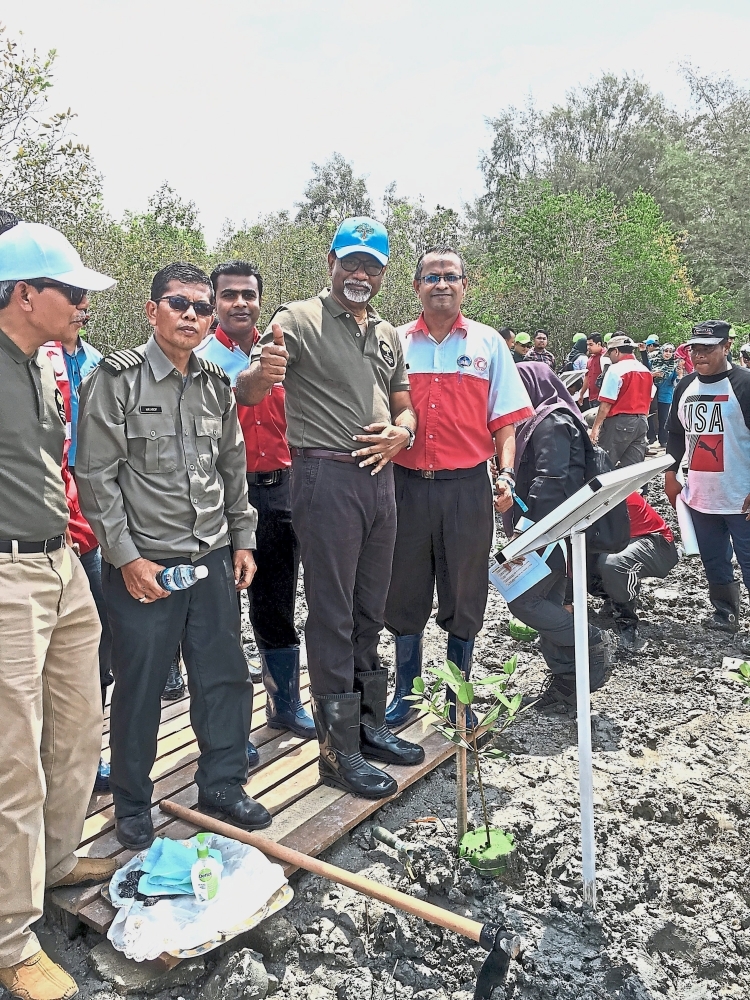
Water, Land and Natural Resources Minister Dr Xavier Jayakumar (second from right) planting a mangrove tree in Sabak Bernam last September.
But today, tourists are able to go for river cruises and anglers rent boats for fishing day trips at the same river.
This is because after the farms were removed in 1998, the natural intertidal activities at Sungai Sepang worked to improve the water quality, encouraging
fishing activities, recreation and ecotourism.
Though the natural intertidal process was crucial in cleaning the river, the result would have taken longer without the mangroves.
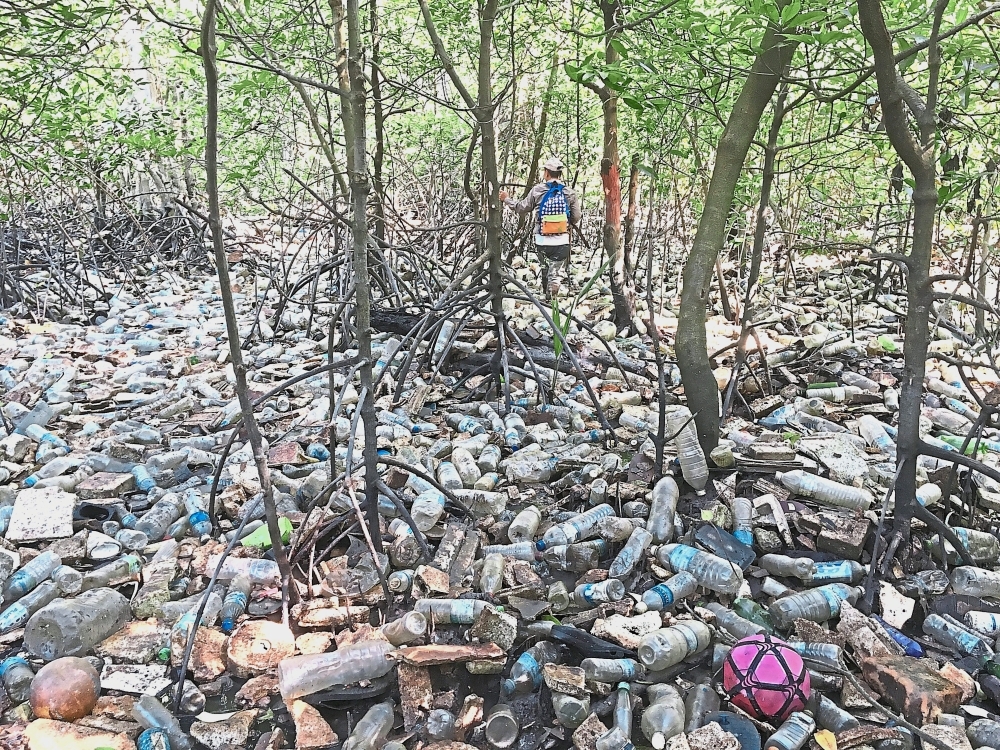
Plastic litter trapped in a mangrove forest off Sungai Kelang in November last year. (Pic courtesy of Dr A. Aldrie Amir)
However, not enough is being done for its preservation.
Universiti Teknologi Malaysia (UTM) Geoinformation and Real Estate Faculty Assoc Prof Dr Kasturi Devi Kanniah said Malaysia has been losing its mangrove forests at a rate of 1% a year since 1990.
The southern coast of Johor is experiencing the largest area of mangrove loss.
“From 1989 to 2014, Johor lost 6,700ha to massive reclamation works for housing, industry, power plants, ports and waterfronts,” said Dr Kasturi.
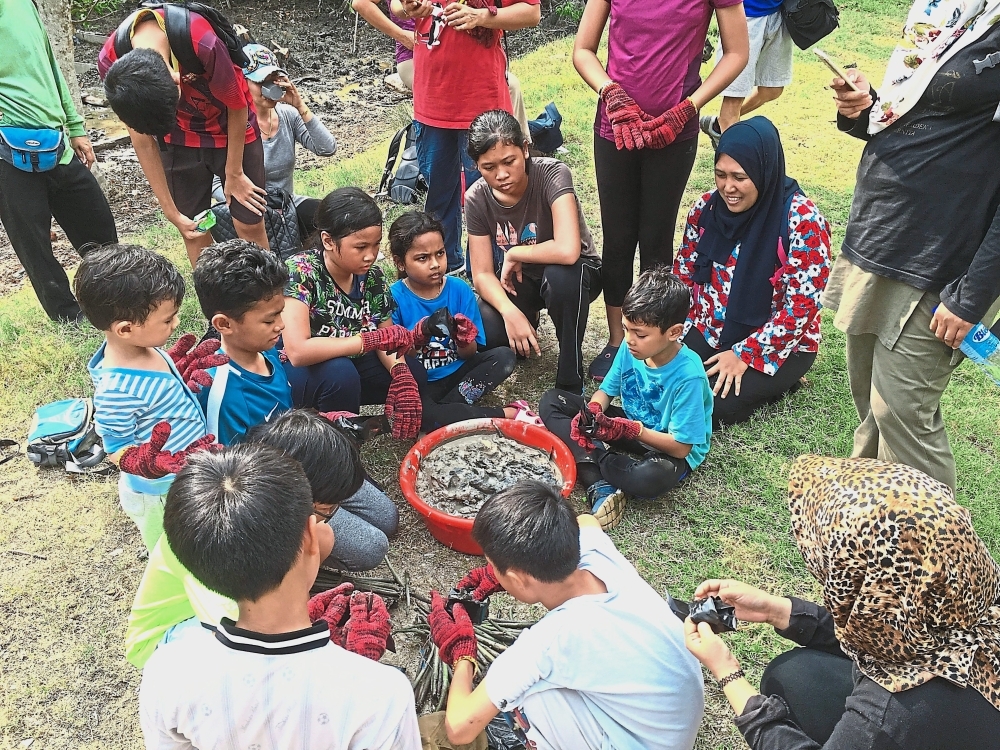
The younger generation being taught mangrove tree-replanting at Kuala Selangor Nature Park to raise awareness of conservation.
Environmental activists say the country has lost much of its mangroves that have been cleared for economic betterment.
“We need the support of scientific findings that will put value on a mangrove forest.
“We need to know how much oxygen an area of trees can provide; how much carbon dioxide from the atmosphere can be stored by it; the medicinal value of the plants; and possible returns of investment coming from sustainable ecotourism.
“All these need to be converted into a value for the landowner to understand. Only then can the Government convert this knowledge into policy to make stronger legal tools for mangrove conservation,” said Dr Aldrie.
Communities have a role to protect the mangroves too, said Prof Datuk Dr Abdul Latiff Mohamad.
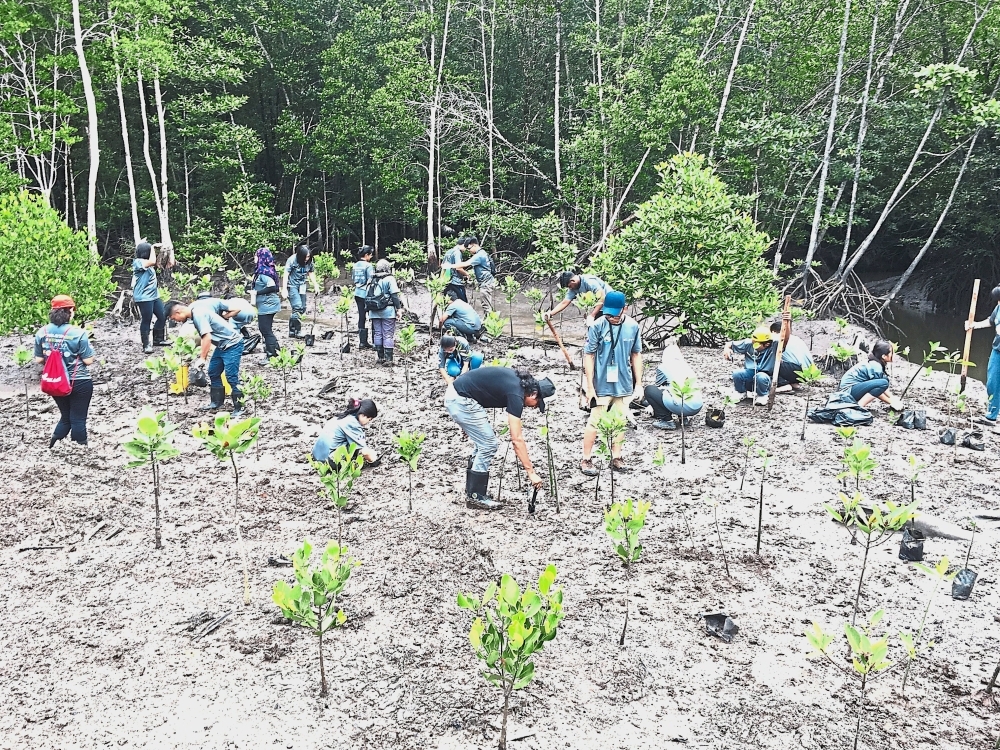
Volunteers taking part in a replanting exercise to rejuvenate mangrove habitats at the Kilim Geoforest Park in Langkawi last August. — Photos courtesy of Dr A. Aldrie Amir
He urged locals to develop tourism in these areas as mangroves have much to offer.
In Pulau Tioman, for example, remnants of tridacna (giant clam) shells and coral skeletons can be found on its shores, an indication of how old the mangrove forests are.
“We need to know what tourists want to see. Would they be interested in how seeds in mangrove plants grow while still attached to the parent plant or learn about facts such as how the annona glabra, a species native to South Africa, found its way to our shores?” Dr Abdul Latiff said.
He added that researchers should also document the variety of plants and wildlife as it would be educational to see updates of flora and fauna species from different regions, complete with anatomy drawings.
All this can then be compiled in a Malaysian mangrove encyclopedia.
Researchers interested in being part of the MyMangrove network can write to mangrove.my@gmail or look up The Malaysian Mangrove Research Alliance and Network (MyMangrove) on Facebook.
Malayan Nature Journal also welcomes scientific papers, especially research on Sundaland areas.
For details, refer to www.mns.my
Already a subscriber? Log in
Get 20% OFF The Star Digital Access
Cancel anytime. Ad-free. Unlimited access with perks.