CENTURY-OLD printing tools and technology were showcased during the Tin Mining Festival 2018 at the Kinta Tin Mining (Gravel Pump) Museum in Kampar.
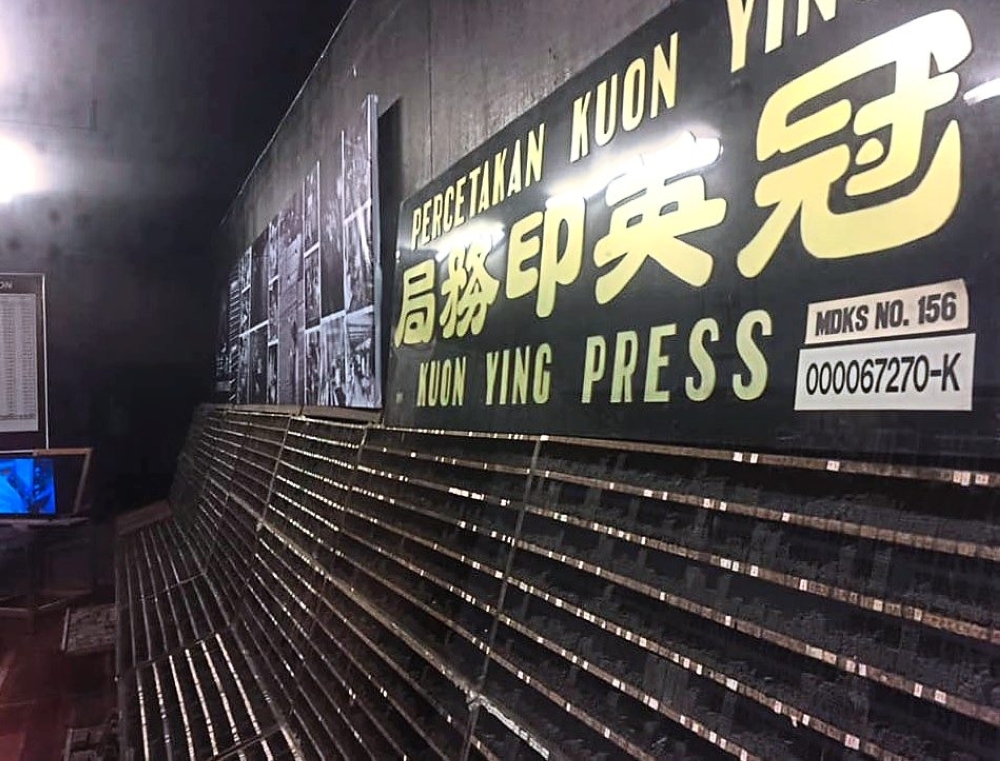
Held earlier this month, the items were displayed at the Kampar Letterpress Gallery and “Hundred Years Seal – Live Printing” Exhibition, as part of its historic ties during the tin-mining era.
The cultural relics in the gallery were donated by the scion of defunct Kampar-based printing company Kuon Ying Press, which was founded in 1916, as a means to preserve the items for historical, cultural and educational purposes.
Apart from the gallery and exhibition, other activities held during the festival included guided tours in the museum, talks, orang asli handicrafts showcase and a Kampar Hakka delicacies food bazaar.
Another activity was “The Past Glory of Kinta Sketchcrawl” where participants explore and sketch countryside scenery and century-old buildings in Kampar old town.
Among the visitors at the festival were former tin miners, history enthusiasts and academics from Sungai Lembing, Seremban, Kajang and Kuala Lumpur.
Museum founder and Perak Chinese Mining Association advisor Tan Sri Hew See Tong opened the festival, which was jointly organised with University Tunku Abdul Rahman (Utar).
In his speech, Utar Chinese Studies Institute dean Assoc Prof Dr Chong Siou Wei, who represented university president Prof Datuk Dr Chuah Hean Teik, said the tin mining industry, its related history and contribution was part of the country’s development and modernisation.
“Its history has always been closely related to the Chinese community but it’s more than that.
“It has its own cultural heritage value that should never be forgotten,” he said.

“The industry opened up employment opportunities, attracting Chinese immigrants to settle down permanently in the Kinta Valley as tin miners, subsequently leading to the building of towns like Taiping, Ipoh and Gopeng,” he added.
Dr Chong hoped the festival would continue to be held to provide a platform for people to have a deeper and more specific understanding of the history and the contribution of the tin miners.
He said the exhibition would allow the younger generation to learn of Malaysia’s forgotten tin mining history, especially the history of Kinta Valley’s tin mining industry, and to commemorate the contributions of the industry’s forerunners.
“As Utar is located in Kampar and within the Kinta Valley, we also hope the university can help create an academic atmosphere and enhance people’s historical understanding of the town and its nearby communities,” he added.
Already a subscriber? Log in
Get 20% OFF The Star Digital Access
Cancel anytime. Ad-free. Unlimited access with perks.