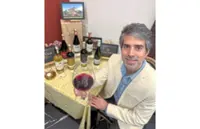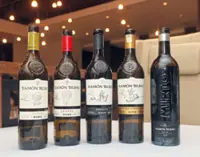
DURING a wine-and-food pairing event, guests learned how a 156-year-old Spanish winery pursues a gentler way of making wine.
Instead of mechanical pumps, gravity is used to move the grapes along the entire process, said Familia Torres Asia-Pacific regional export manager Gil Serra Arnau.
“The winery is built on different levels with the crushing process happening above the ageing cellars.
“When the wine needs to be transferred from one tank to another, a crane is used to lift the tank so that the wine can flow into the receiving tank below,” said Serra.
Known as gravity vinification, this method preserves the wine’s aromas.
It safeguards the purity of the grapes by avoiding shaking, bruising and later on, the wine itself from mechanical turbulence, thus protecting its texture and flavours.
The Familia Torres (FT) brand, which recently appointed Luen Heng F&B Sdn Bhd as its exclusive importer and distributor, has been in Malaysia for the past 20 years.
Spanning five generations, the family-run winery has an annual turnover of 250 million euros and 2,000ha of vineyards in Spain, Chile and US’ California.
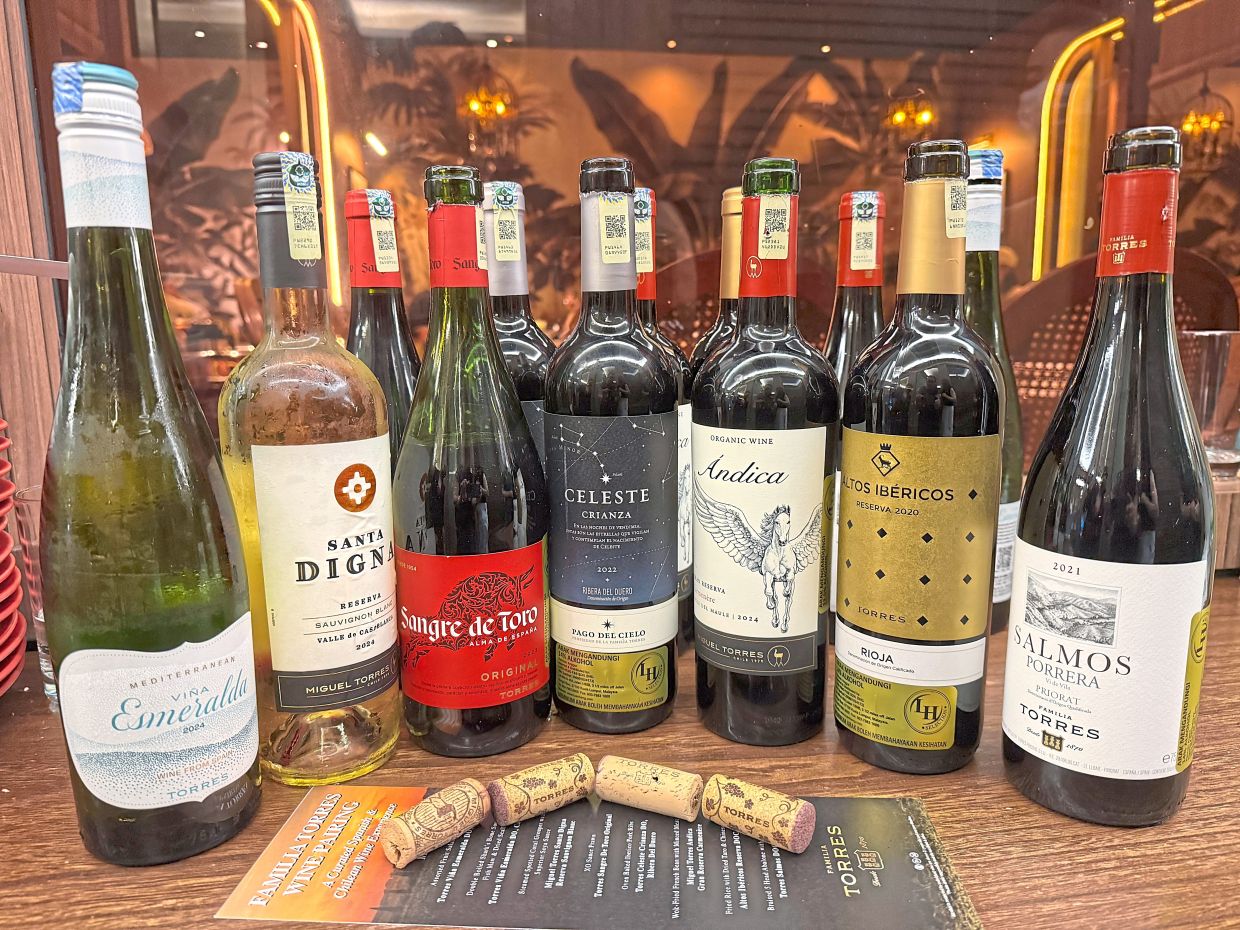
Torres Vina Esmeralda Denomination of Origin (DO), Catalunya 2024 was chosen to pair with two starters, a honeydew-and-mango-prawn cocktail and a soup of fish maw and dried scallops during the eight-course meal by Chinese Palace Restaurant in Kuala Lumpur.
As the waves on its label suggests, this white Muscat de Alejandria wine is best paired with seafood.
Fragrant with the floral aromas of cherry blossoms and orange flowers, this slightly sweet Spanish wine had hints of pineapples and lychee.
During the starter, we discovered a side dish of pickled carrots and radish topped with a spicy fermented bean sauce, which unlocked the wine’s silky texture to give off hints of apple and lemon.
Served with the steamed spotted coral grouper with superior soy sauce was a Miguel Torres Santa Digna Reserva Sauvignon Blanc 2024.
From Chile, this Sauvignon Blanc has a citrusy note similar to grapefruit and has hints of green peppers and asparagus.
Combined with the soy sauce and sprigs of fresh coriander, the wine released very faint notes of ripe mangosteen and was silky on the palate.
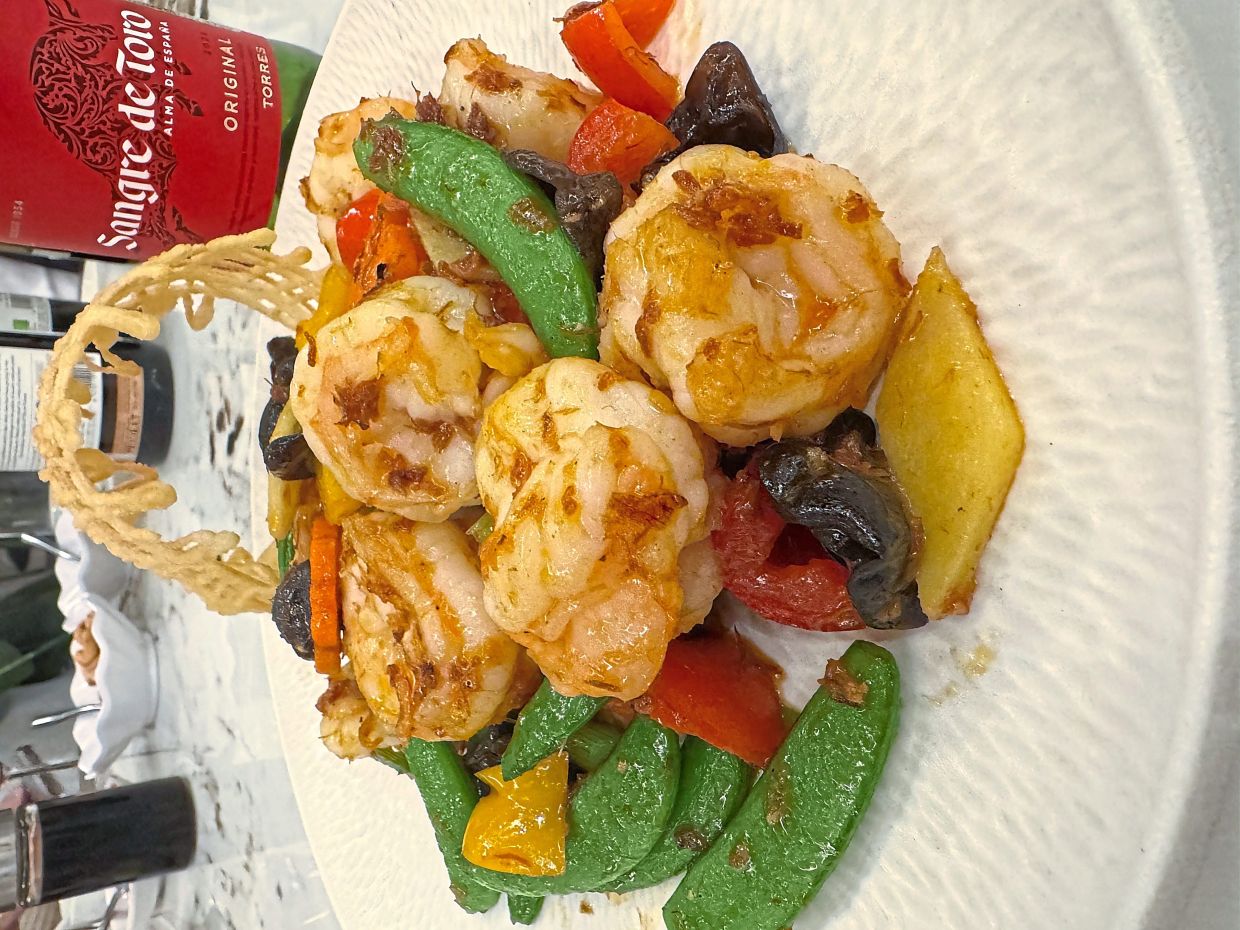
The fourth main course, prawns in extra old brandy sauce, found its soulmate in the Torres Sangre de Toro Original 2023.
This is one of FT’s top performers, with one bottle sold every five seconds around the world. In Malaysia, it retails at RM80 per bottle at premium supermarkets.
Fragrant with the aroma of strawberries, hints of black pepper can be found in this
full-bodied Spanish red, which has an earthy, honey taste.
Oven-baked Iberico pork ribs was paired with the Torres Celeste Crianza DO, Ribera del Duero, 2022.
Originating from the banks of the Duero River, this Spanish red is from a region where the vineyards are located 895m above sea level. The vineyards here appear to touch the sky and at night, the stars. This explains the label design, which features the Ursa Minor constellation.
Wine aficionados have described its flavours as deep and concentrated, likening its aromas to that of blackberry jam.
Paired with the ribs, Celeste revealed hints of black pepper, cloves, caramel and a tinge of liquorice. The more sensitive palates detected traces of aged black salted beans and an enhanced bacon flavour.
We also had Miguel Torres Andica Gran Reserva Carmenère 2024, an organic wine paired with wok-fried French beans with minced pork and black olives.
The Chilean medium-bodied red gave off gentle whiffs of vanilla and had notes of toasted coconut with whispers of anise, cardamom and coffee.
A 2020 Altos Ibericos Reserva Denominacion de Origen Calificada (DOCA, the highest quality classification for Spanish wine) accompanied the fried rice with dried taro and Chinese sausage.
Interestingly, the wine accentuated the flavours of the rice wine, an ingredient used in the making of Chinese sausage, to bring forth a flowery aroma within the palate.
The best was kept for the last.
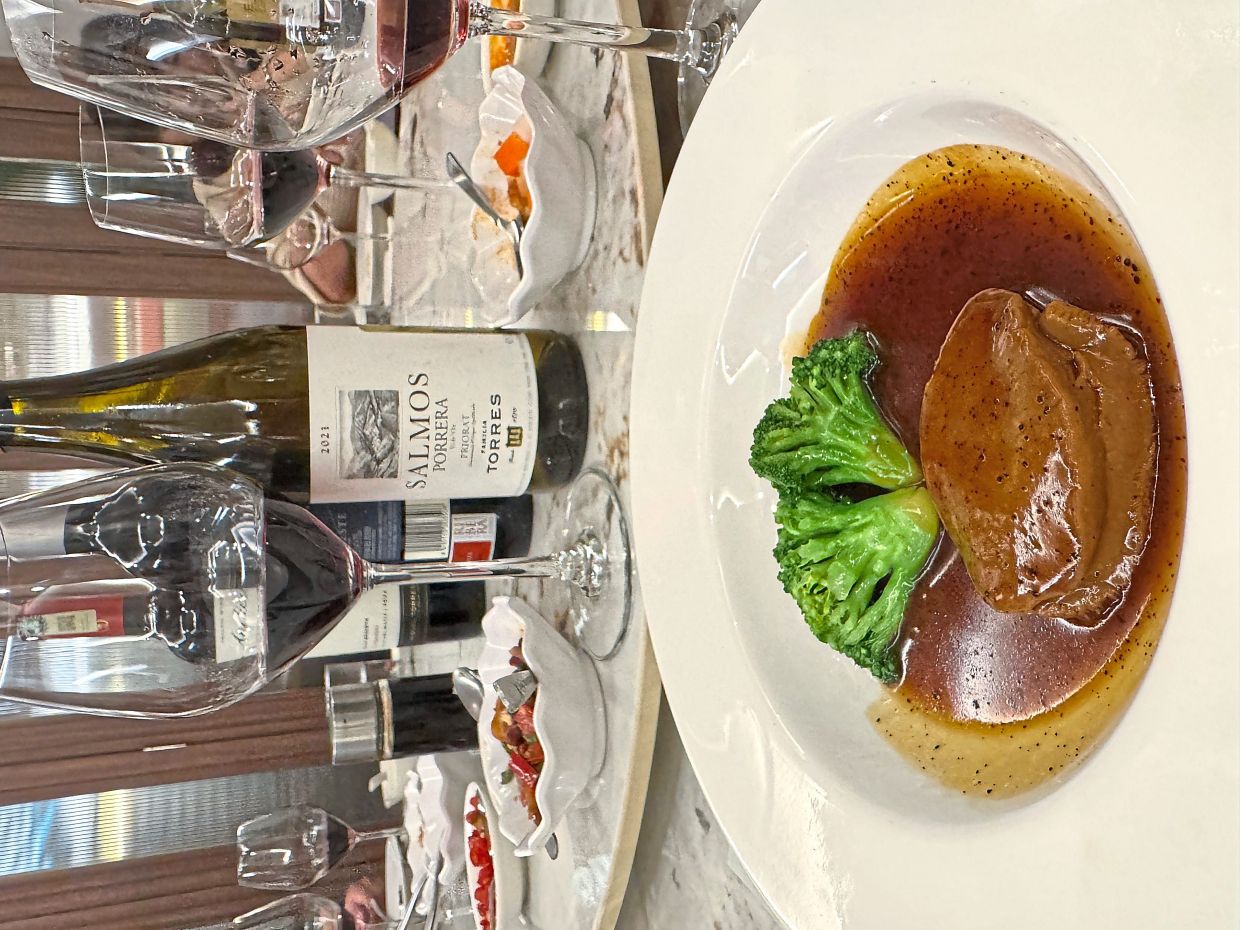
Torres Salmos Denominacio d’Origen Qualificada (DOQ) Priorat 2021, accompanied the final course, a five-head abalone with black truffle.
Tasting notes described it as coming across like chocolate milk, with an elegant profile.
Serra said that Priorat being a small region in Catalonia, Spain, which is less than 2,000ha, its yield was very low.
“The main varieties of grapes grown in this region are Garnacha and Carinena and are 100% harvested by hand.
“This is because the vineyards are located on very hilly terrain where the use of harvesting machines is not possible.
“The soil is also very special. Called llicorella, it is composed of reddish-black slate and mica quartz. Slate soils bring a lot of minerality, so the wine has a strong mineral character.
“This slate soil is excellent at retaining the sun’s heat during the day and radiating it back to the vines at night.”
He noted this constant warmth kept the vines warm, accelerating the ripening process and producing very high sugar levels in the grapes.
He said it explained why the wines from Priorat usually has high alcohol content at 14%, sometimes even 15%.
“In terms of production, depending on the vintage, we make around 10,000 to 20,000 bottles worldwide. In Malaysia, the allocation is only 300 bottles.”
Serra said allocation was based on a five-year forecast matched against current demand, and adjustments were made by discussing distribution by country.
Chinese Palace Restaurant, No.1, Jalan Maharajalela, Kampung Attap, Kuala Lumpur. (Tel: 016-833 6228) Business hours: Monday to Saturday, 11am to 2.30pm and 6pm to 10pm. Opens at 10am on Sunday. Non-halal.
This is the writer’s personal observation and is not an endorsement by StarMetro.