
During my 15-day journey through Oceania in August, what surprised me most was the weather. Almost every day brought sunshine, blue skies and fluffy white clouds. Beautiful weather, one would think.
And yet, on some Pacific Island nations, such fine weather does not necessarily put people’s minds at ease.
Tuvalu is perhaps the best example of this.
With a population of just over 10,000 and a total land area of only 26sq km, almost the entire country lies barely above sea level. Its highest natural point is only about 4-5m above the ocean.
Global warming, melting polar ice, El Nino and rising sea levels may sound to us like nothing more than a few familiar words in the news. But for the people of Tuvalu, they are a reality they wake up to and see right outside their front door every day.
Coastal defences are being strengthened. Land is being reclaimed. Ground levels are being raised. Yet everyone knows these are temporary measures rather than permanent solutions.
They can only “hold back” the sea for so long.
And Tuvalu is not alone in facing this situation. Nauru, the Maldives and even low-lying countries such as the Netherlands face similar challenges.
It sounds like a natural disaster. But how much of it is also man-made?
Experts have been warning us for years that global warming does not simply mean “hotter weather”. Melting glaciers, rising seas, warming oceans, avalanches, torrential rain, floods, landslides, droughts, wildfires and haze are all interconnected.
What we used to call a “once-in-a-century” extreme weather event no longer seems quite so rare today.
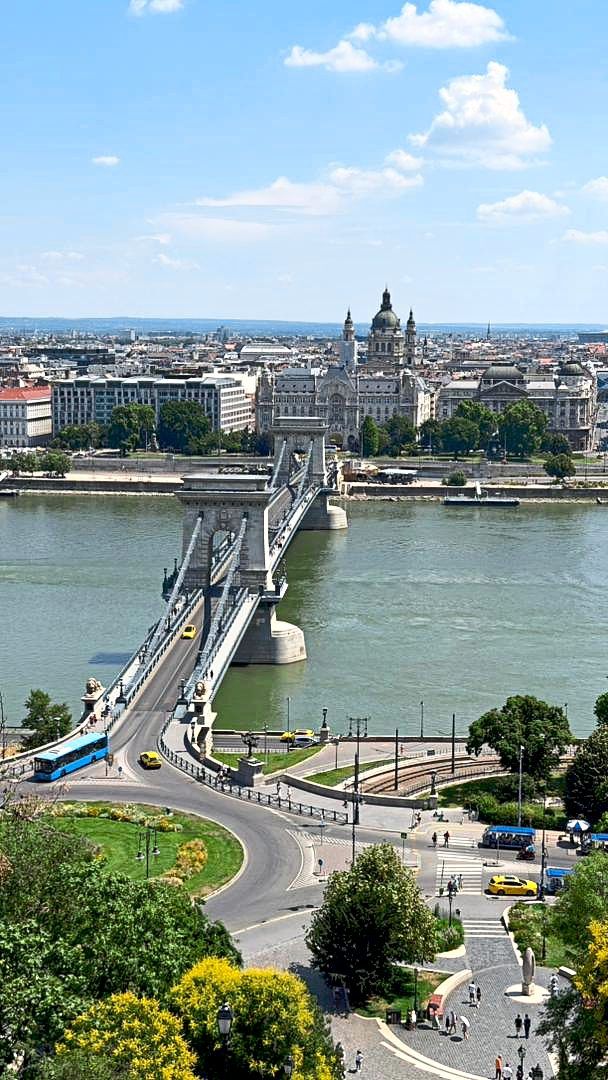
I experienced this changing climate myself while cruising the Danube River in Europe in June. Temperatures in Hungary soared to 38°C. While walking through the streets of Budapest with my travel companions, the heat was so unbearable it affected us physically and mentally.
Temperatures in France, Spain and other parts of western Europe also soared to over 40°C.
Many of Europe’s historic buildings were originally designed to retain warmth during harsh winters and were never equipped with comprehensive air-conditioning systems. As the climate changes, what was once an architectural advantage to these buildings are now seen as a weakness.
According to the World Health Organisation, Europe is one of the fastest-warming regions in the world, and more than 200,000 people have died from heat-related causes in the past four years. This summer has been particularly severe.
A heatwave – or what the Japanese call “mosho”, meaning extreme summer heat – is no longer merely “uncomfortable” to us. It can actually kill.
After the extreme heat and prolonged drought, now comes another threat: wildfire.
This year, severe forest fires have broken out across several European countries. In Belgium’s High Fens region, a major wildfire of a scale rarely seen in a century burned through roughly 30sq km of land.
A burnt forest can eventually be replanted. But damaged soil, ecosystems, water sources and wildlife may take decades to recover.
Then there is the haze that’s caused by human activity – particularly the burning of agricultural land. This is neither tolerable nor forgivable.
Recently, the haze has returned to Sarawak and Sabah, as well as parts of the Peninsular, with concentrations of fine PM2.5 particles rising and the Air Pollutant Index exceeding 100 in several areas, entering the “unhealthy” range.
The haze has already persisted for more than two weeks, and conditions continue to worsen.
While I was writing this column, almost by coincidence, another catastrophe struck.
At around 10am on Aug 26, a high-altitude glacier collapse occurred in the northern Himalayan region of Nepal. A massive volume of ice and rock plunged downhill at tremendous speed, rapidly developing into a gigantic debris flow that swept some 22km through the valley before striking the Gyirong border area in Shigatse, Tibet.
As of Sept 4, this shocking disaster has resulted in more than 1,280 deaths and 5,624 missing persons in China and Nepal combined, including 853 international travellers or pilgrims who have not been found.
This was a natural disaster – but perhaps, to some extent, a man-made one as well?
Of course, we cannot blame a particular wildfire, avalanche or flood directly on one politician or even a country’s single policy. But as extreme weather becomes increasingly worse, perhaps arguing endlessly over whether global warming is “real or not” needs to stop.
Maybe it is no longer a matter of whether the next natural or man-made disaster will come, but when.
How many more disasters must we witness before we are finally willing to take climate change issues seriously?
For the tourism industry, the increasing frequency of extreme natural disasters in recent years deserves particular attention. We can no longer afford to take them lightly.
In the old days, when leading a tour group, our biggest worries were probably flight delays, traffic jams, or a hotel that fails to live up to expectations. At most, we would add two words to the list: “weather conditions”.
Today, things are completely different.
A heatwave can make outdoor activities impossible. Drought can stop river cruises, even on major waterways like the Rhine or Danube. Torrential rain can wash away roads. Floods can shut airports. Typhoons can cause mass flight cancellations. Wildfires can close highways, while the resulting haze can pollute the air across an entire region.
And earthquakes need little explanation – within seconds, an entire destination can be paralysed.
The tourism industry must therefore relearn an old lesson: prepare before the storm arrives.
When travel agencies design itineraries, it is no longer enough to ask whether the attractions are beautiful or the hotels are luxurious. Seasonality, climate, alternative routes, medical facilities, transport disruptions and emergency evacuation accessibilities must all become part of the risk assessment.
Tour leaders and guides can no longer simply be good storytellers who count heads and take everyone to meals.
When disaster strikes, who contacts the airline? Who has access to the travellers’ passport information? Where is the nearest hospital? What happens if the road is cut off? What if there is no mobile phone signal? Are there elderly travellers or people with chronic medical needs in the group?
In the past, these might have seemed like questions beginning with, “What if?”.
Today, some of these “ifs” are likely to come true.
Travellers themselves must also take greater responsibility. Buy travel insurance when it is needed. Keep electronic copies of important documents. Never put essential medication into checked baggage.
When travelling in extreme heat, know how to stay properly hydrated.
And when warnings are issued for typhoons, floods or wildfires, do not insist on entering an attraction that may likely be affected simply because, “Well, we’ve come all this way.”
You can afford to miss one attraction on an itinerary.
You cannot afford to lose your life.
After travelling through so many parts of the world over the years, I increasingly feel that travel allows us to see more than beautiful sceneries. It also allows us to witness, with our own eyes, what is happening to this planet.
There is an old Chinese saying: The weather can change without warning.
That remains true.
But governments, tourism operators and travellers can still think ahead, anticipate the risks and prepare an escape route before it is needed.
Being prepared does not mean being afraid to travel. It means learning to respect the power of nature – and then continuing to travel the world with greater peace of mind.
The views expressed here are entirely the writer’s own.
Leesan, founder of Apple Vacations and group executive chairman of KITA Tours, has travelled to seven continents and visited 168 countries/territories. He has written seven books, and shares his travel stories, experiences and insights.