
Did you know that mangroves are among the few trees that can thrive in saltwater? While it would be difficult for most plants to survive in such conditions, mangroves have managed find ways to live in saltwater through evolution.
According to our guide Azman, many mangroves filter out the salt mineral at their roots; some species have specialised glands that remove excess salt through their leaves.
I learnt this and much more during a visit to Pertubuhan Sahabat Hutan Bakau Pulau Tanjung Surat in Kota Tinggi, Johor, where conservation is not just about protecting the environment but also supporting the local community.
Tourists are allowed to visit the mangrove area, so if you’re looking for something different to do in Kota Tinggi and are interested in learning (and planting) a tree, you can go on a guided mangrove tour here. Bookings must be made in advance through the Belungkor Adventure website.
Started eight years ago, the community-led initiative brings together local villagers who have been restoring mangrove forests along the area’s coastline after years of erosion and environmental degradation.
What started as a small effort has since turned into a conservation tourism programme where schools, universities, companies and independent visitors can come to learn more about mangroves.
Our journey began at Jeti Tanjung Belungkor, where we boarded a boat for the short ride across Sungai Johor to the mangrove site.
When we arrived, Azman welcomed us with a short briefing on the importance of mangroves and the role the local community plays in restoring them.
He explained that mangroves grow in salty, oxygen-poor environments.
“Their roots act as a natural filtration system, blocking much of the salt before it enters the plant,” he shared.
Unlike most trees, many mangrove species also have aerial roots that rise above the muddy surface, allowing them to absorb oxygen even when the soil is waterlogged.
“They know how to drink, and they know how to breathe,” Azman said.
Even the way they reproduce is unique.
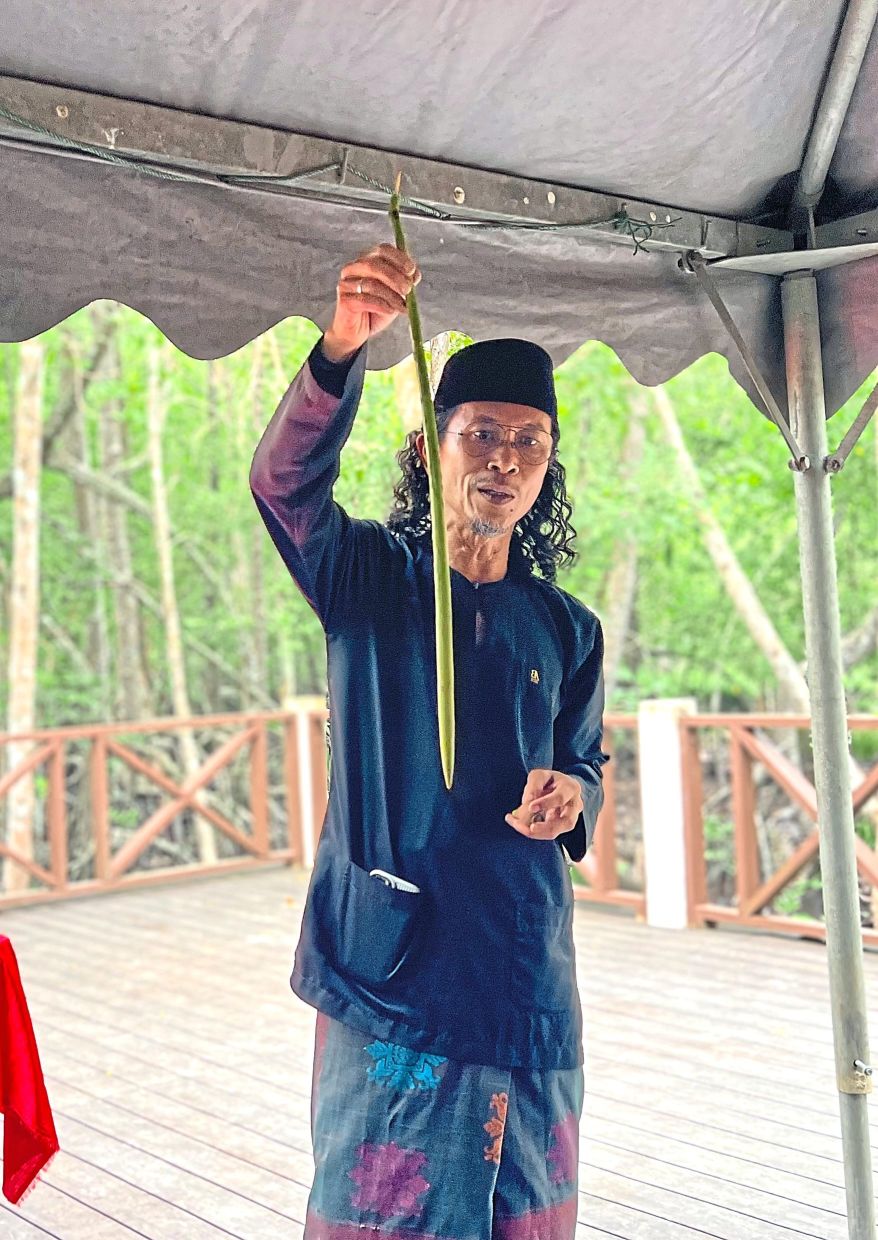
He said: “Instead of producing seeds that immediately fall to the ground, mangrove propagules (parts of the plant used to disperse and propagate) begin growing while still attached to the parent tree. Once mature, they drop into the water and flow with the tides until they find a suitable place, usually a patch of mud, where they can take root.”
To help us picture it, Azman said that the propagules have a spongy interior that helps them float on water, almost like a “life jacket”.
One question kept playing in my head: If mangroves already know how to reproduce themselves, why do people still need to plant them?
The question was answered when Azman explained that although mangroves regenerate naturally, many coastal areas have been damaged by erosion and development. In some places, natural recovery is too slow. Hence, community planting programmes give young mangroves a better chance of surviving.
The restoration work has also created new opportunities for the villagers.
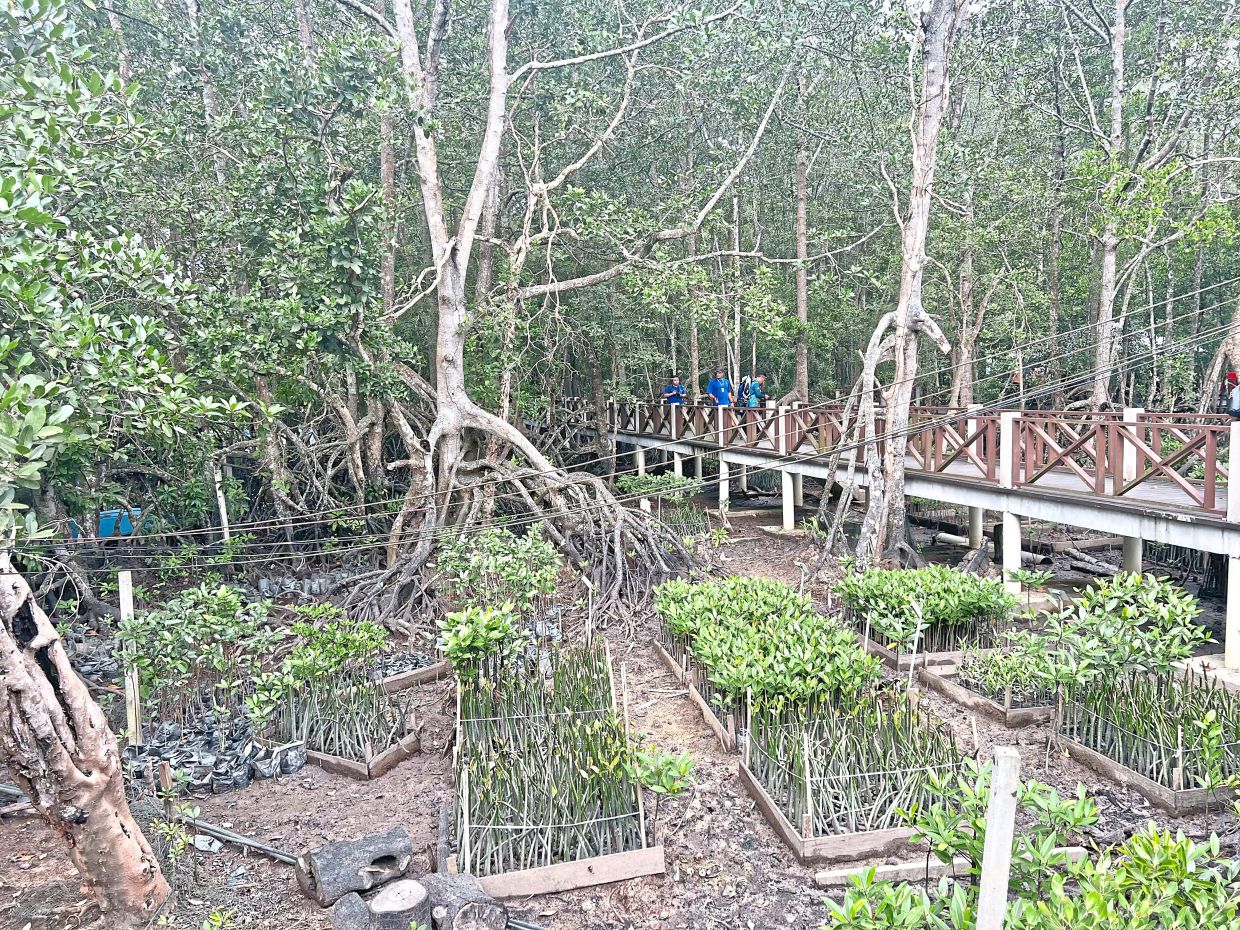
Besides protecting the coastline, the community does educational tours and tree-planting activities to supplement their income. They also operate mangrove nurseries and supply propagules for restoration projects in other states such as Perak and Selangor.
The Sahabat Hutan Bakau association has planted more than 84,000 mangrove trees, helping restore degraded stretches of coastline and bringing life back to the area.
Mangroves, however, do far more than protect the shoreline.
“Their intricate root systems trap sediment and help stabilise the coast, reducing erosion. During storms, they help slow down waves before they reach the shore, reducing their impact on nearby coastal communities,” Azman said, adding that they also provide a safe breeding and nursery habitat for fish, prawns and crabs, supporting marine life.
"A healthier ecosystem supports the growth of marine life, which increases the residents’ fish catch and, in turn, leads to higher incomes,” he added.
They are also excellent at storing carbon, locking away large amounts in both the trees and the surrounding soil, making them a “natural defence” against climate change.
Hands-on experience
Now we know what looks like a tangle of roots is actually one of nature’s most remarkable ecosystems – protecting coastlines, supporting wildlife and helping sustain the community that cares for it.
And then it was time to get our hands dirty.
With our gloves on, we carefully stepped onto the muddy flats beneath the mangrove trees. Each of us was given a mangrove propagule and a planting bag. We filled the bag with soil before placing the propagule inside. The villagers will later transfer the young mangroves into the forest once they are mature enough.
Although our role was only a small part of the process, it was satisfying to know we had contributed in some way to the restoration effort.
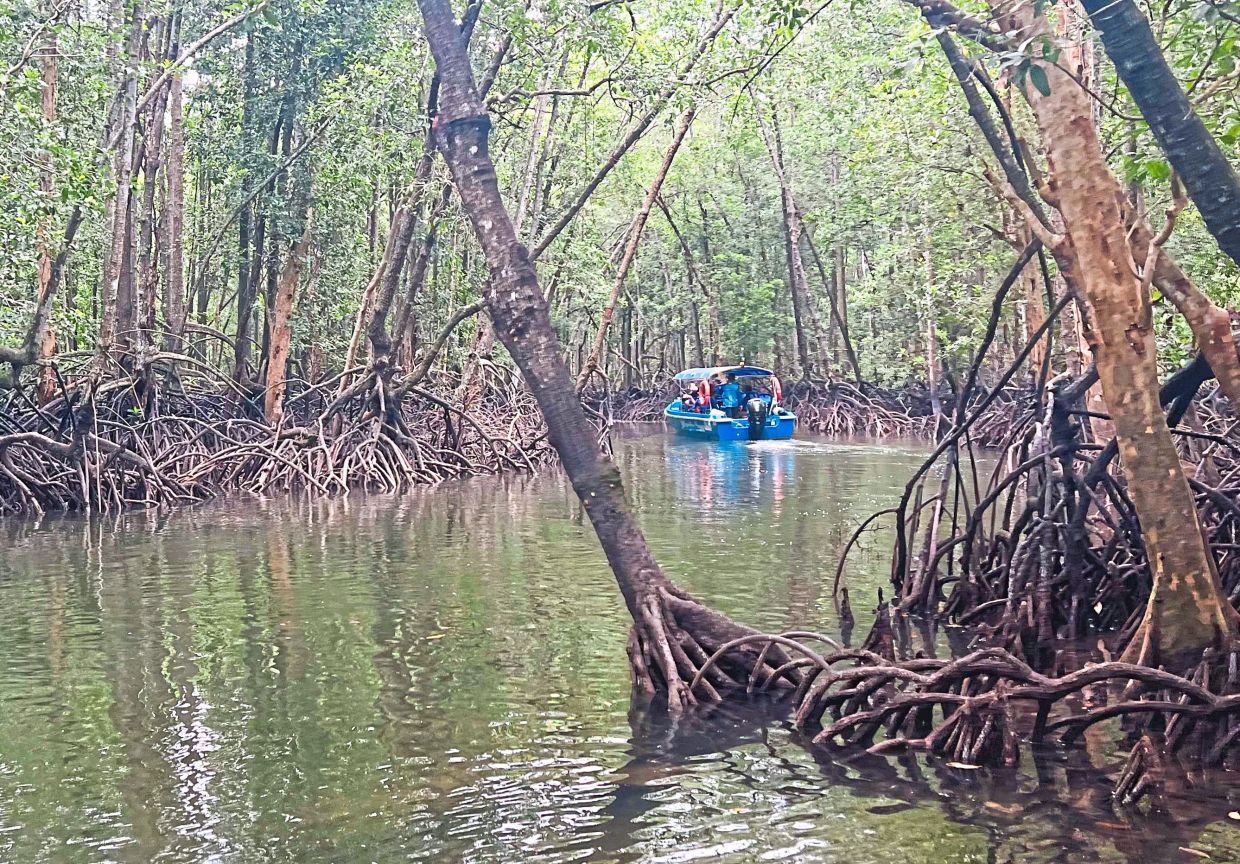
Before heading back, we climbed aboard the boat once again and cruised through the mangrove-lined waterways, where we got to admire the trees up close.
It was a peaceful end to the visit and a chance to appreciate the ecosystem, which made the experience feel all the more meaningful.