



Shape has always been more than a matter of design at the house of Cartier.
Long before unusual case silhouettes became a talking point in contemporary watchmaking, the Parisian maison was already experimenting with squares, rectangles, ovals and other forms that seemed to defy convention altogether.
At the Watches & Wonders, this longstanding fascination took centre stage, expressed through a collection that ranged from the return of a cult favourite to some of the year’s most technically ambitious creations.
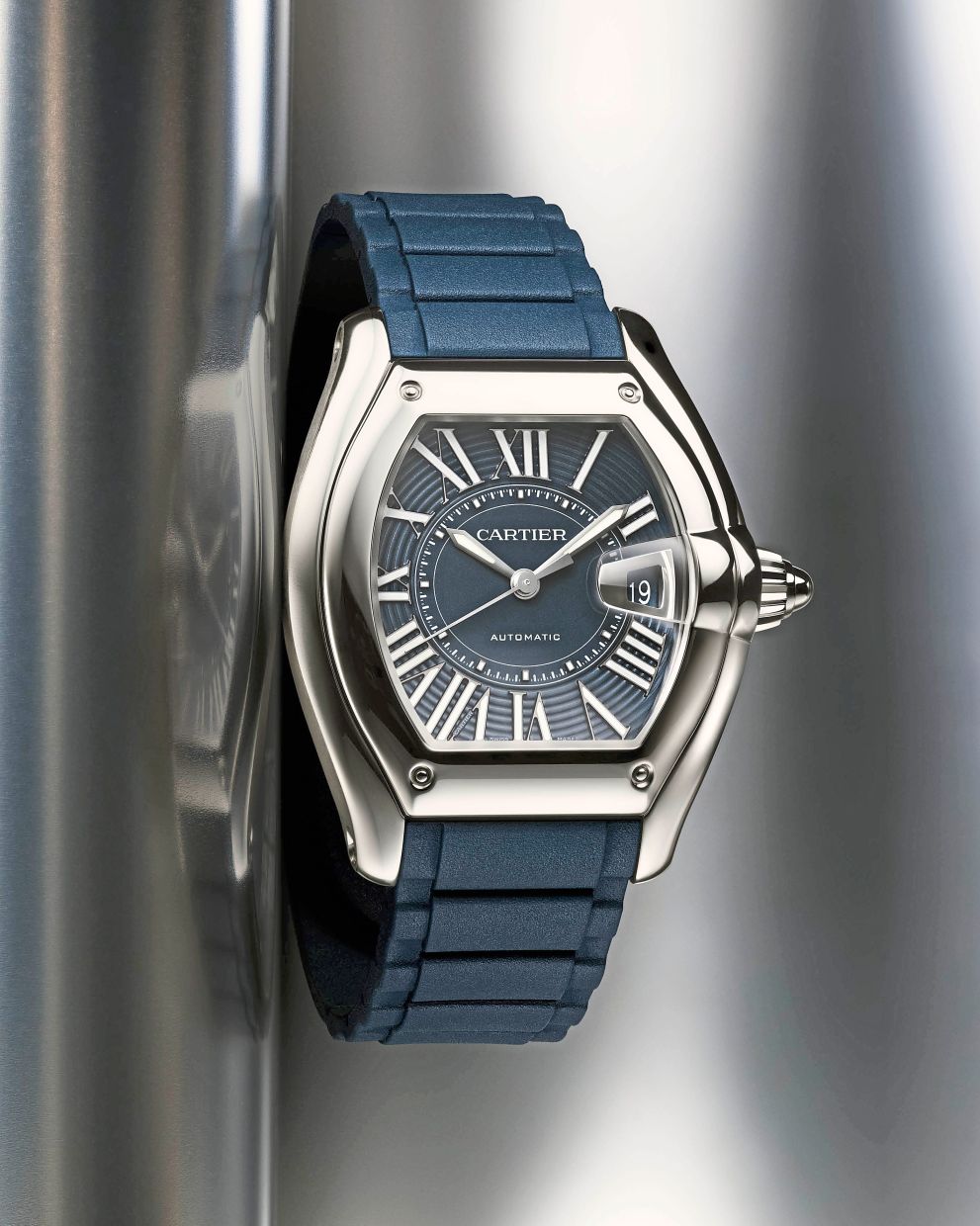
The Roadster returns
The Roadster revival sees this cult favourite returning, this time with a keen nod to automotive design.
Pundits will love that the original streamlined silhouette has been kept intact with refined adjustments that include reworking the relationship between bezel, case and crown for a more cohesive profile.
The crystal and metal surfaces interact to visually unify the crown, magnifier and dial, while the date aperture and metal cabochon reinforce the design’s distinctive character.
Depending on size, the Roadster is powered by either the self-winding 1847 MC or 1899 MC movement.
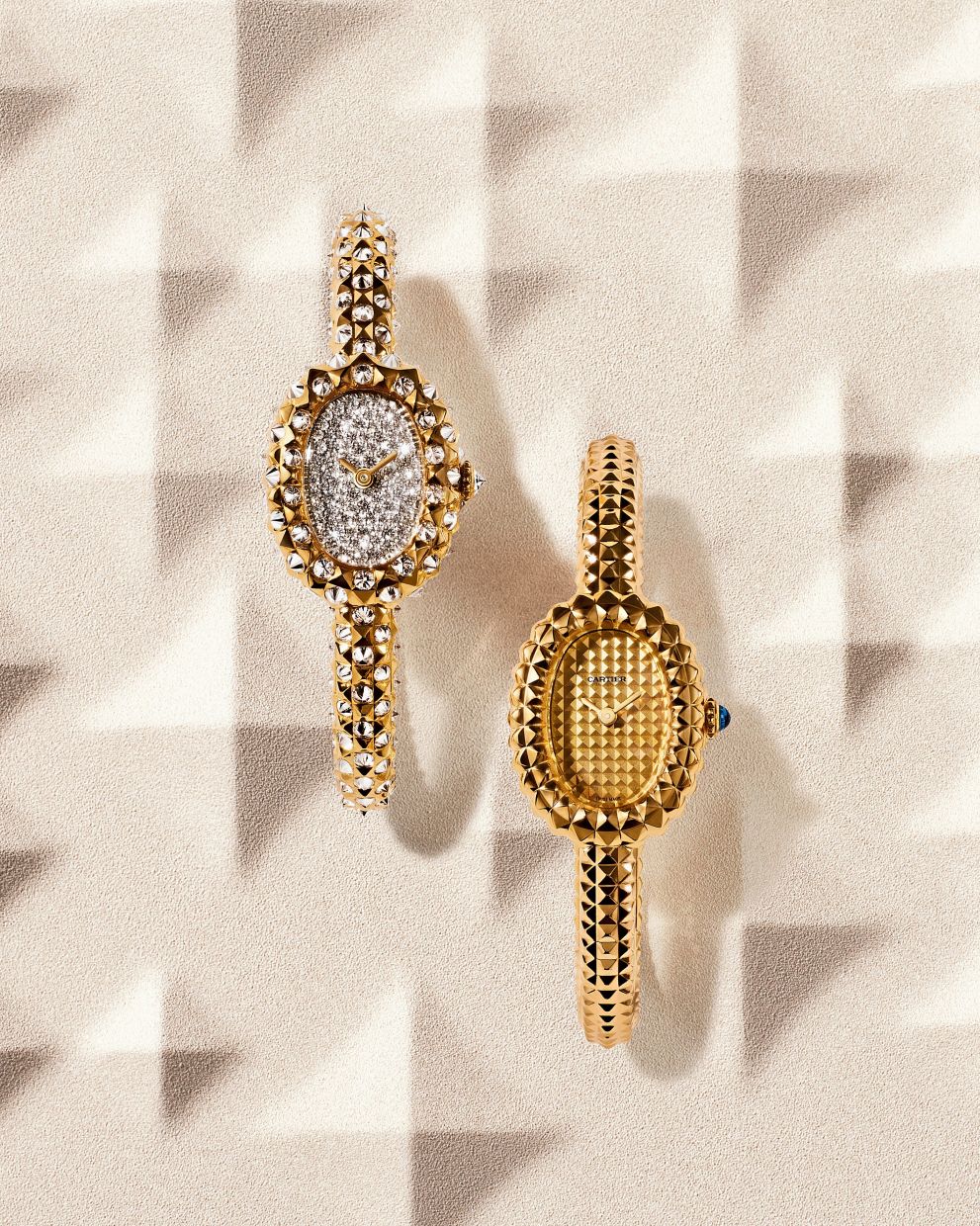
Bag the Baignoire
Cartier’s jewellery heritage also plays a prominent role this year.
The Baignoire receives a new interpretation through the application of the Clou de Paris motif, a decorative element that has been part of the maison’s visual vocabulary since the early 1920s.
Executed entirely in gold, the pattern lends rhythm and structure to the watch while creating continuity between bracelet and dial.
The proportions have been subtly revised, while the yellow-gold push-buttons are integrated into the bracelet’s curve.
Craftsmanship extends to the Baignoire’s finishing, with every surface polished by hand.
The diamond-set version, meanwhile, features 100 brilliant-cut snow-set diamonds on the dial alongside inverted pavilion diamonds on the case.
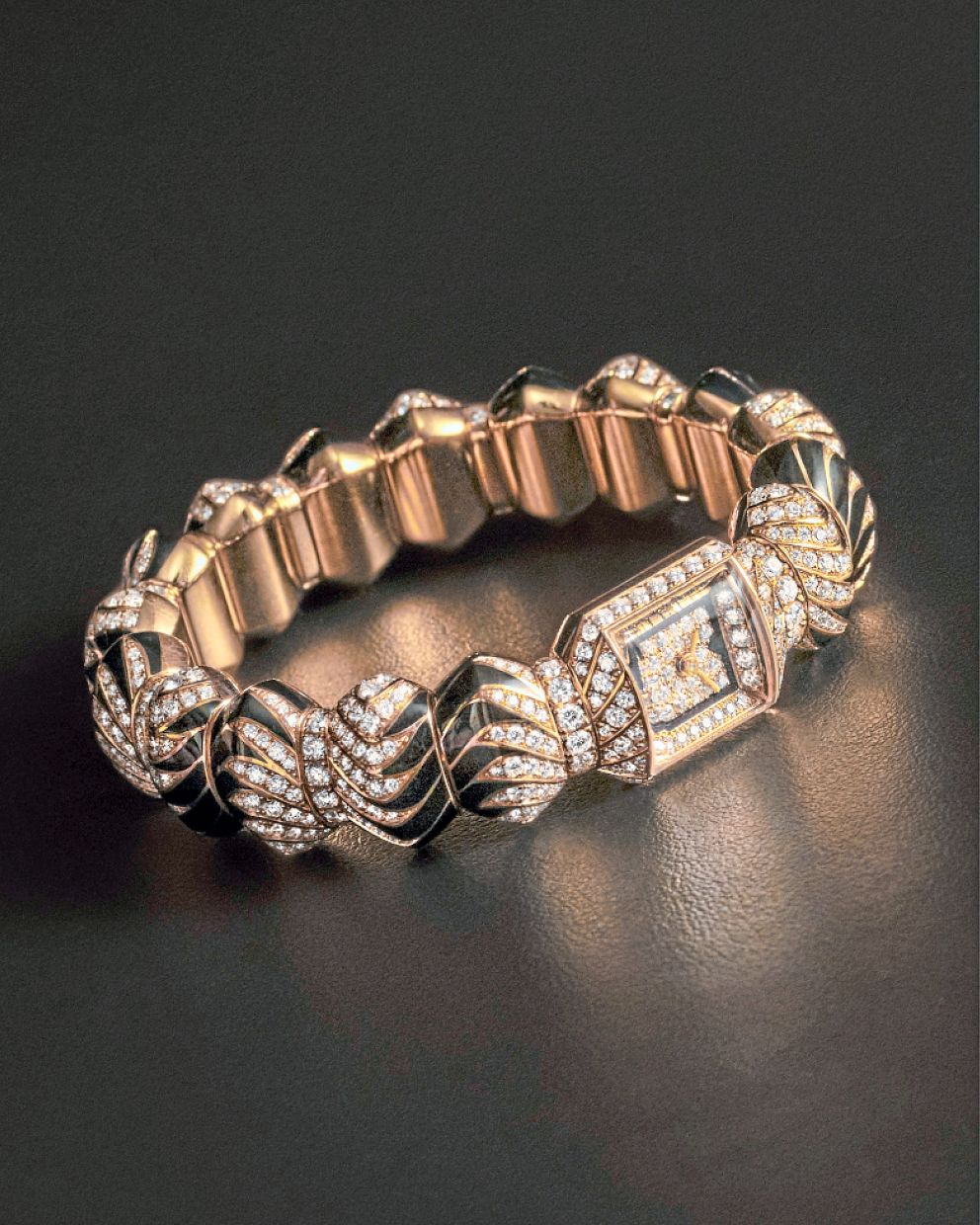
Myst goes mythic
The intersection between jewellery and watchmaking reaches its most sculptural expression in Myst de Cartier.
Defined by alternating curves, a domed crystal and a geometric pavé dial framed by onyx, the timepiece draws the eye through a carefully orchestrated play of symmetry and volume.
Black lacquer spots are applied individually by hand while stones of varying sizes are bead-set across the bracelet to create depth and perspective.

Construction required 112 hours of gem-setting work.
Yet, despite this rich adornment, its novel clasp-free elastic structure − the result of extensive research and development − still manages to allow the timepiece to slip effortlessly onto the wrist.
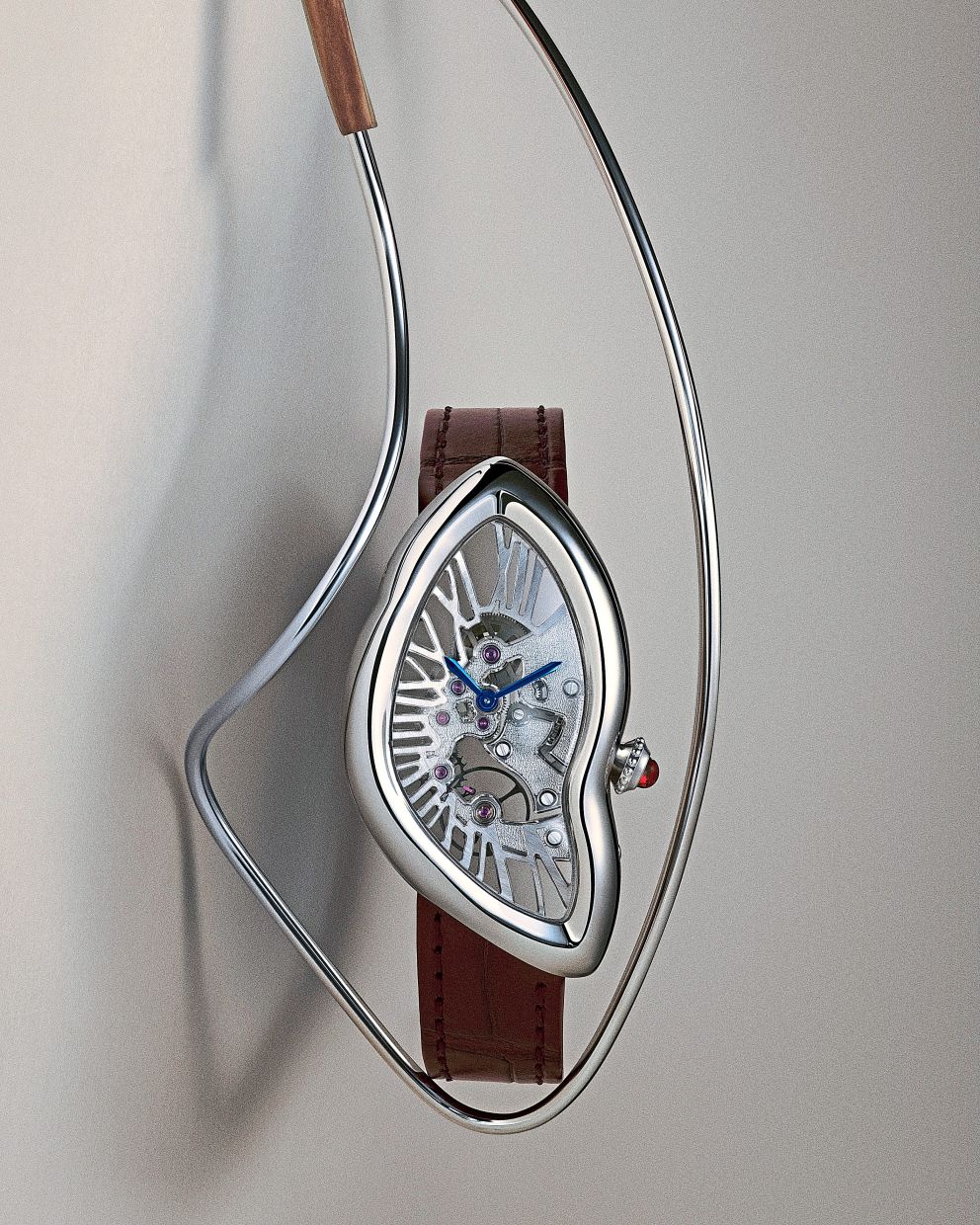
Crash course
For the 10th edition of Cartier Privé, the maison turns to one of its most celebrated creations, Crash.
The asymmetrical watch, first introduced in 1967, now appears as the Crash Skeleton, powered by the manually wound Manufacture 1967 MC movement.

Developed specifically for the watch’s unconventional case, the movement’s bridges are sculpted into Roman numerals and hammered by hand using a traditional decorative technique.
The resulting architecture appears stretched and distorted, heightening the surreal quality that has made the Crash a legend.
The watch is limited to 150 numbered pieces.
Santos-Dumont reinterpreted
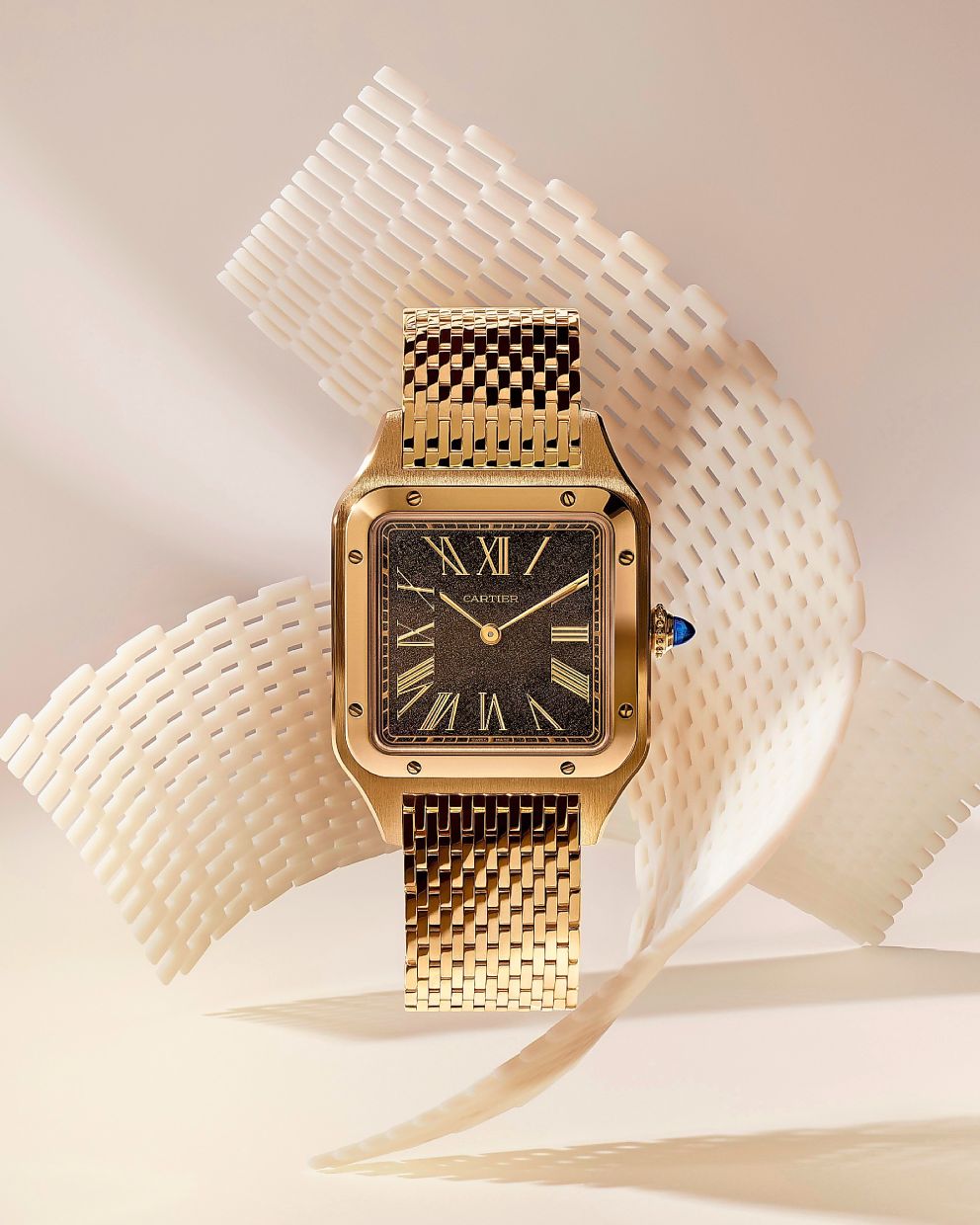
The Santos-Dumont, meanwhile, receives a particularly refined iteration.
Its centrepiece is a dial crafted from gilded obsidian, a volcanic stone from Mexico that has iridescent reflections created by tiny air bubbles trapped within the material.
At just 0.3mm thick, the stone presents a significant challenge to work with, demanding exceptional precision from Cartier’s craftsmen.
Equally impressive is the newly developed yellow-gold bracelet, inspired by the Maison’s made-to-measure metal bracelets of the 1920s.
Composed of 394 individually machined, finished and assembled elements, its remarkably slender 1.15mm links create a fluid, almost fabric-like flexibility and softness on the wrist, demonstrating how Cartier continues to balance technical ingenuity with elegance.
Cartier’s continued exploration of shape this year is certainly impressive, from movements to bracelets and dials.
What is apparent is that shape is not treated as surface at the Maison, but as something worked through every layer of its watchmaking.
