
Sustainability in fashion is often framed in terms related to materials, labels or marketing language that signals intent.
In reality, it tends to be far more layered, shaped by a series of choices that aren’t always visible to the end consumer.
For Malaysian activewear brand Terrae, helmed by Azalea Marzuki and Jenn Chia, this idea sits at the core of their business.
Terrae (derived from the word “Terra” which means Earth in Latin/Italian), offers activewear made of recycled materials as well as organic cotton, crafted with breathability and ease of movement in mind.
Approaching sustainability less as a defining feature and more as an ongoing consideration, Azalea and Chia’s goal apart from mindful manufacturing and integrating more environmentally low-impact practices is producing pieces that can be worn beyond a handful of uses.
For Azalea, who previously worked in fashion, the turning point came from witnessing the sheer scale of waste within the industry.
“Terrae really came from wanting cute activewear without causing harm to the people making it and the planet,” says Azalea.
“There’s already so much existing waste like plastic bottles, discarded textiles, fishing nets, so I kept questioning why we weren’t using what’s already there.”
It also felt like there was a gap in the way activewear was designed. It was always one of two extremes. Either very performance-heavy activewear, or pieces that looked good but didn’t really hold up in real life,” she adds.
With this realisation, she decided to start her own thing in 2020.
“Jenn came on a little later, and we’ve been building it together ever since,” says Azalea. “Activewear felt like the right place to start because it adapts with you. Your body changes, your routine changes, but these are pieces that can stay with you through all of that.”
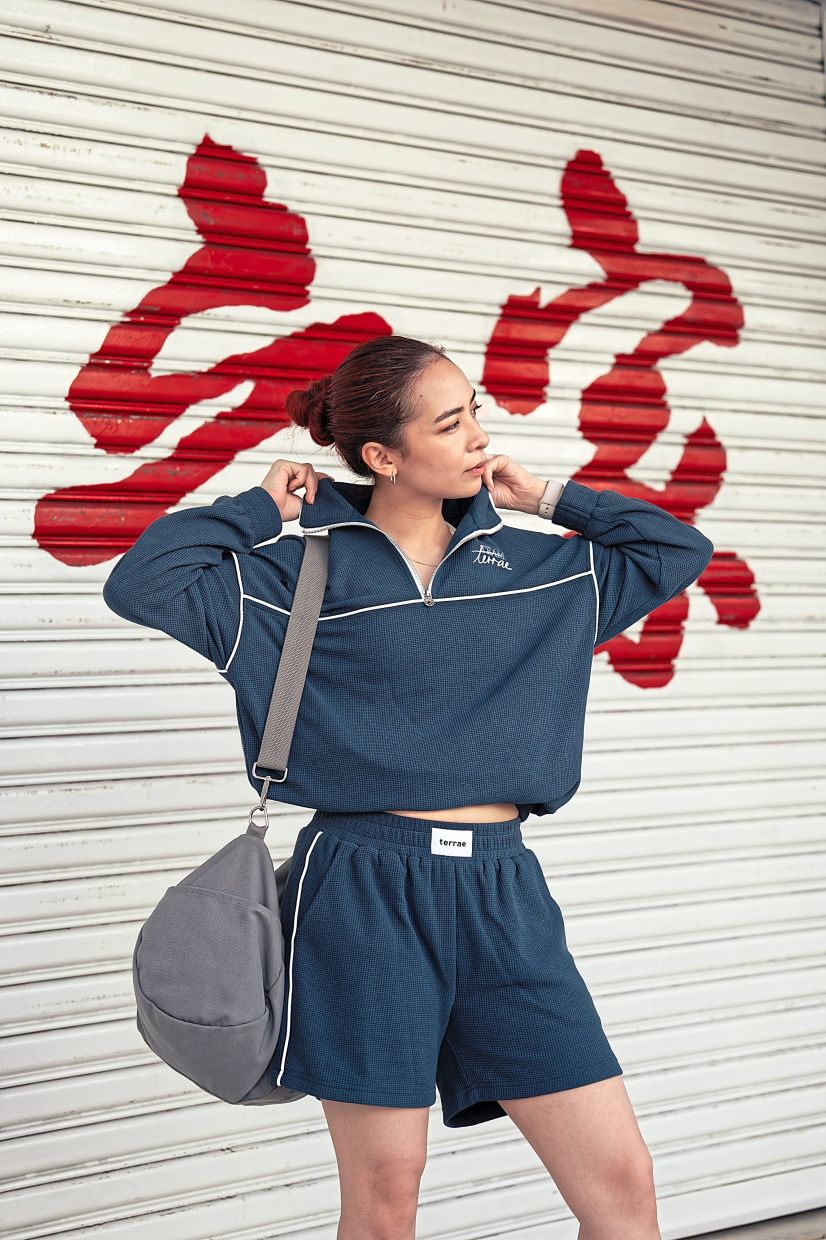
“So we try not to look at sustainability as a single checkbox, like ‘oh it’s recycled, we’re good’,” she says.
“It’s more like... a series of decisions you keep making, some of them less glamorous than others. The real work is making sure what we create actually deserves to exist, and more importantly, deserves to be kept,” says Chia.
How do you translate the idea of sustainability into real business decisions – from sourcing to pricing to production?
Azalea: We always come back to three things: people, planet, product. That’s our baseline for every decision we make.
For people, it’s about making sure the products are made ethically. Fair pay, proper working conditions, not overworked. We work with partners that have certifications in place, so there are actual checks behind it.
For planet, this is where most of the trade-offs come in. Recycled materials are one part of it, but not the only part.
When we’re not using recycled fabrics, we work with certified mills and factories that are set up to reduce environmental impact. That includes things like lower water and energy usage, safer chemical management and proper waste treatment, especially in dyeing.
All of this does come at a cost. We’re very aware we’re not the cheapest option, especially compared to fast fashion.
But we try to find a middle ground that’s fair to the people we work with, while still being accessible to our customers.
Read more: Beyond corporate life, silversmith Jessie Koh finds her true calling in fashion
How do you design pieces that resonate with a younger audience while still meeting your environmental goals?
Chia: Younger consumers can spot something that’s all style and no substance from a mile away.
But more importantly, they move on very quickly.
So for us, the question isn’t just “does this look good?” It’s “will this still make sense after the moment passes?”
That shifts how we design quite a bit.
We focus less on creating something new for the sake of it, and more on creating something people will return to, pieces that feel current, but don’t expire with the trend.
Because if something only works for a short window, it naturally has a shorter life in your wardrobe.
So instead of designing for occasions, we design for behaviour: pieces that can move across your day, be worn in different contexts, and still feel relevant over time.
That’s also why we’re exploring dri-fit capabilities in more everyday silhouettes, so one piece can do more.
What does your material sourcing and development process look like, and how does it differ from conventional activewear production?
Azalea: Working with recycled and eco-friendly fabrics are definitely less straightforward.
On sourcing, we start by filtering partners from the get go.
Whether it’s fabric mills, factories, or packaging suppliers, we always ask for certifications upfront. It helps us make sure they meet certain standards, both in terms of working conditions and environmental practices.
When possible, we also visit and stay in close contact to understand how things are run.
For materials, we prioritise recycled options and certified fabrics like organic or dead stock. But this does come with a lot of limitations.
Things like colour options, performance capabilities, and even design choices can be more restricted.
The development timeline is also longer, since these materials aren’t always readily available the way conventional fabrics are.
During development, there’s a lot more trial and error.
Testing fits, durability, making sure the fabric performs the way we need it to. It’s slower, but it forces us to be more intentional with what we’re creating.
How do you navigate pricing, margins and growth while staying committed to low-impact practices?
Azalea: It’s really about being clear on where you’re willing to compromise, and where you’re not.
We don’t try to compete on being the cheapest, because that usually means something else gets sacrificed.
At the same time, we don’t want to sit at a price point that feels out of reach.
So internally, we’re quite disciplined. Fewer, more considered styles. Tighter production runs.

On margins, we’re mindful, but not at the expense of how the product is made.
If something doesn’t make sense from a production or sourcing standpoint, we just won’t do it.
For growth, we’ve taken a slower approach.
Building products that people come back for, instead of chasing the “next big thing”. It’s less aggressive, but it’s more sustainable long term – both for the business and the way we produce.
Have you noticed a change in how Malaysian consumers engage with sustainability – and are they willing to pay more or change habits for it?
Chia: I’ve definitely seen a shift. People care more, but they’re also more skeptical than ever.
Sustainability used to feel quite straightforward. Now it’s harder to tell what’s genuinely better and what’s just better marketing, so people are asking more questions.
At the same time, Malaysian consumers are very practical.
Price, convenience, and how something actually fits into their lifestyle still matter a lot, and I think that’s fair.
So instead of expecting people to suddenly change everything, we think about how to meet them where they are.
Not by asking them to be “more sustainable”, but by designing things that naturally make better choices easier.
Because in reality, people don’t change habits because they should. They change when it feels effortless enough to sustain.
Read more: Fashion ties that bind: Siblings at the heart of Malaysian label Yuleza
What is your personal style, and how do you incorporate sustainability into your daily lives?
Azalea: I think it’s been over 10 years since I bought from fast fashion brands.
Most of what I wear comes from local brands, pieces I’ve picked up while travelling, or things I’ve thrifted over time.
I’ve also been really lucky to inherit a lot of pieces from the women in my life – my mom, my mother-in-law and her mother – so there are items in my closet that are easily 40 to 50 years old.
It’s quite a mix, older pieces alongside newer ones, but that’s what makes it interesting.
I enjoy getting dressed daily, so I don’t really save clothes for “special occasions”.
Everything gets worn regularly. I re-wear pieces a lot, mix them differently, and when I’m done with something, I’ll resell or give it away so it can keep being worn by someone else.
For me, sustainability in personal style is just as much about how you wear your clothes as what you buy. Rewearing, finding new ways to style what you already own, and not treating clothes as one-time use.
Chia: Day to day, I’m quite simple: jeans and Terrae’s bra tops. I live quite an active lifestyle so this is easy, comfortable, chic and works for most parts of my day without much thought.
For special occasions, I’ve actually learnt a lot from my partner, Azalea. I watch how she repeats her looks, styled differently and turns them into her signature.
I love that and I’ve been inspired by that, it makes fashion feel more personal, not disposable. Sustainability for me shows up in those small decisions.